Shoulder Bursitis


Many people think that shoulder pain is a problem for the elderly. However , shoulder bursitis, or inflammation of the shoulder socket, can affect people of all ages, regardless of lifestyle or sport. This is due to the complexity of the shoulder, which allows a wide range of joint movements. However, this complexity comes at a price, not least an increased tendency to shoulder disorders such as shoulder bursitis.

Dr. Balázs Gloviczki PhD
Chief Orthopedic-Traumatologist, Shoulder Specialist
Online appointment booking for Budafoki út clinic:
Please choose the service that suits you
The fee for a follow-up consultation is 35,000 Ft, within 3 months after the initial examination, for the same complaint.
- 1. Select the service you want from the drop-down box.
- 2. Use the calendar to choose a date that suits you!
- 3. Enter your details to register or login with your previous registration.
- 4. If you would like to book on behalf of someone else (e.g. your child), please let us know at the place indicated.
- 5. Briefly describe your complaints!
- 6. Choose the type of consultation: initial examination, control examination or prescription.
- 7. Click on the button to book your appointment. Thank you for choosing BMM!
If you are not able to come to the appointment you have already booked, please let us know at least 24 hours in advance.
This gives other patients the opportunity to get the medical care they need in time. Thank you for your cooperation and understanding!
Cancellation: +36 1 44 33 433
If you can’t find an appointment for the week of your choice , please call our call-centre on+36 1 44 33 433 for further assistance. Our staff will be happy to help you make an appointment with the doctor of your choice or another specialist according to your complaint.
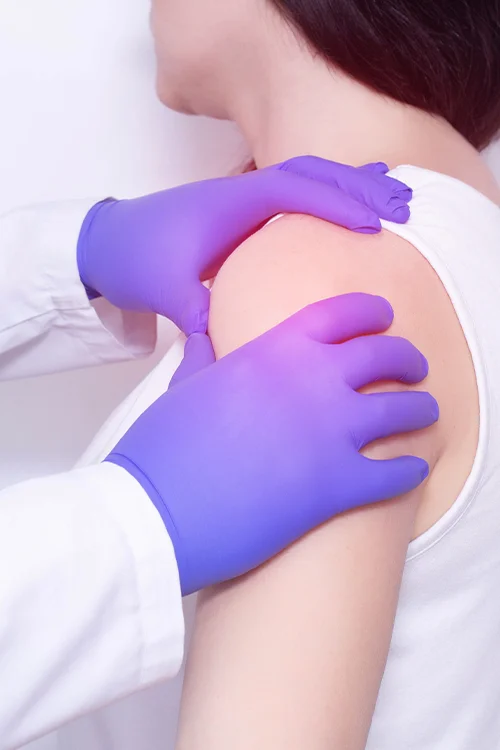
What is shoulder bursitis and how does it develop?
Shoulder bursitis, also known as bursitis, is an inflammation of a small fluid-filled sac called the bursal sac in the shoulder. The bursal sac helps to keep joints running smoothly and painlessly, reducing friction between bones and muscles, among other things. The healthy function of bursitis allows the shoulder to move without friction.
Inflammation is the most common disease of the sphincter, usually caused by cyclical movements. And the same, often repetitive, movements put excessive strain on the shoulder. Trauma, such as a shoulder hit by a fall, can also cause problems. In rare cases, bacterial infection can also lead to bursitis.
Because there are so many muscles, tendons, ligaments and bones in a small, confined space in the shoulder, it is possible that disease in other parts of the shoulder joint can affect the bursitis and cause inflammation.
Many other factors may also contribute to the development of shoulder bursitis. Genetic predisposition, the state of the immune system, and an individual’s lifestyle, such as diet, alcohol and tobacco consumption, can all influence the risk of developing the disease.
People whose occupations or hobbies often put a lot of strain on their shoulders are at a higher risk of developing inflammation in their bursae.
Previous interventions in the shoulder area or other diseases affecting the shoulder, such as joint inflammation or tendon inflammation, also increase the risk of bursitis. In addition, obesity and chronic stress can also contribute to the development of inflammation, as both can weaken the immune system and increase inflammatory responses in the body.
In understanding joint inflammation and in preventing and treating shoulder bursitis, it is important to have a full understanding of the context and causes. If someone suspects they have bursitis, it is important to seek medical advice as soon as possible to ensure an accurate diagnosis and appropriate treatment.
The main cause of inflammation of the sphincter
- Sudden trauma, such as a fall or a bump. Such injuries can damage the sphenoid sinus, causing swelling and inflammation.
- Overwork and repetitive movements, such as playing tennis, throwing or painting, can cause long-term irritation and inflammation of the lymphatic system. In addition, natural joint degeneration and degenerative changes in the elderly also predispose to the development of bursitis.
- Certain diseases, such as rheumatoid arthritis or diabetes, can increase the risk of developing bursitis. In some cases, the cause of the inflammation of the sphincter cannot be identified and is known as idiopathic bursitis.

Dr. Bálint Major
Shoulder Specialist
Chief Orthopedic Traumatologist
Online appointment booking for Bokor Street:
Please choose the service that suits you
The fee for a follow-up consultation is 35,000 Ft, within 3 months after the initial examination, for the same complaint.
- 1. Select the service you want from the drop-down box.
- 2. Use the calendar to choose a date that suits you!
- 3. Enter your details to register or login with your previous registration.
- 4. If you would like to book on behalf of someone else (e.g. your child), please let us know at the place indicated.
- 5. Briefly describe your complaints!
- 6. Choose the type of consultation: initial examination, control examination or prescription.
- 7. Click on the button to book your appointment. Thank you for choosing BMM!
If you are not able to come to the appointment you have already booked, please let us know at least 24 hours in advance.
This gives other patients the opportunity to get the medical care they need in time. Thank you for your cooperation and understanding!
Cancellation: +36 1 44 33 433
If you can’t find an appointment for the week of your choice , please call our call-centre on+36 1 44 33 433 for further assistance. Our staff will be happy to help you make an appointment with the doctor of your choice or another specialist according to your complaint.

Symptoms of shoulder bursitis: how to recognise it
The obvious symptom of bursitis is shoulder pain, which is particularly severe when the arm is raised (especially above the head) or moved. The shoulder may be sensitive to touch and sometimes there is swelling in the area. In some cases, the pain can be so intense that it interferes with sleeping at night or carrying out daily activities.
Overall, the following symptoms should be taken seriously:
- Tenderness of the outside of the shoulder
- Limited mobility
- Pain at night
- Swelling of the shoulder
- Pain that increases with exercise or movement and does not go away
- Weakness or tightness in the muscles around the arm
- Redness or warmth of the shoulder skin in the area of inflammation
- Pain in areas outside the shoulder joint, such as under the shoulder strap
- Painful lumps or bumps on the skin around the shoulder
- Stiffness, especially in the morning or after prolonged inactivity
- Restricted shoulder movement, especially when raising or extending the arm
When should you see a doctor?
If the shoulder pain does not subside in a few days or is so severe that it limits your movement and daily activities, you should seek medical advice. In addition, if the pain is associated with fever, swelling or redness, it requires emergency medical attention.
Determining the diagnosis
The diagnosis of shoulder bursitis is usually based on physical examination. The doctor may also perform additional imaging procedures, such as X-rays or ultrasound. Imaging diagnostics can rule out other possible causes and also help determine the extent of inflammation.
In addition to these procedures, the doctor takes a detailed anamnesis from the patient. He or she will ask about the onset of pain, its duration, its intensity and how it changes throughout the day, as well as any previous injuries or other illnesses.
During the physical examination, the doctor examines the shoulder area, palpates it and performs range of motion tests to determine the range of motion and sensitivity of the affected area. In addition, the doctor will also look for tenderness, swelling and redness, which can be further signs of bursitis.
These imaging techniques, such as X-rays and ultrasound, can be particularly useful in ruling out damage or lesions to other structures in the shoulder area. Ultrasound can visualise soft tissues, including inflamed lumbar sphincters, while X-rays mainly show the condition of the bones.
In rarer cases, if the symptoms are not clear, the doctor may order further tests. For example, a magnetic resonance imaging (MRI) scan or, if infection is suspected, a laboratory blood test.

Causes, risk factors and prevention of shoulder bursitis
The most common cause of shoulder bursitis is overuse of the joint, especially in people who regularly engage in activities that involve the shoulder, such as lifting weights or intensive sports, or gardening. In the long term , improper posture, such as hunching over a desk, can also lead to bursitis.
Risk factor
Although bursitis can occur in anyone, there is a tendency for middle-aged and elderly people to develop the disease more often than young people. In addition, if someone has had bursitis once, they are more likely to have it again, or more than once, in their lifetime.
- Other diseases and conditions, such as rheumatoid arthritis or diabetes, can also be a cause.
- Excessive and repetitive movements also have a negative impact on the condition of the bursa.
- Previous injuries, surgery near or on the shoulder can also predispose to inflammation.
It is important for prevention:
- Regular strengthening of the shoulder muscles.
- Increased attention to correct posture.
- Rest and ice application after intense physical activity or injury to help reduce inflammation and swelling.
- Strengthening and mobility exercises.
- Use appropriate equipment and techniques when playing and working in sport.
- Stretching the shoulder muscles, moving them in the right way and avoiding increased strain all contribute to avoiding the development of bursitis.
- Stretching the shoulder muscles, moving them in the right way and avoiding increased strain all contribute to avoiding the development of bursitis.
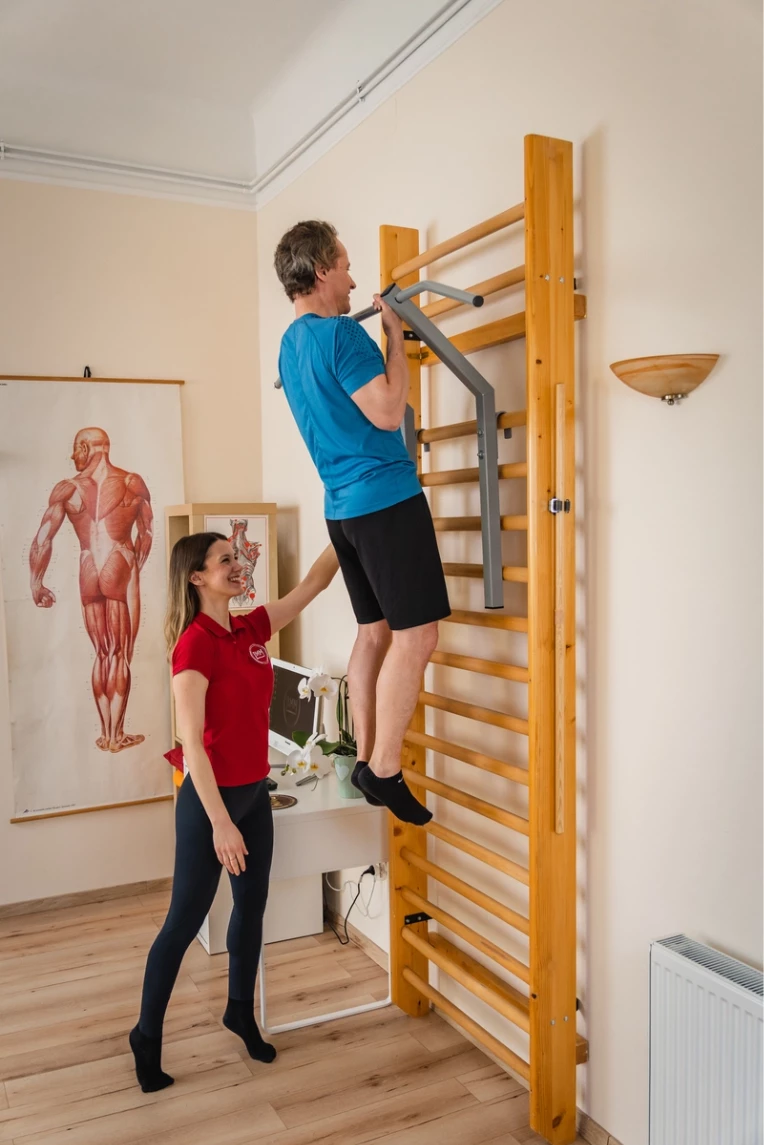
Shoulder bursitis treatment
Treatment of bursitis is usually based on
- The rest ande
- Taking anti-inflammatory medicines
– Physiotherapy, or physical therapy, can also be effective in treating the condition, as it helps to restore normal shoulder movement and strengthen the muscles.
– Further steps in the treatment may include icing the affected area to reduce swelling and pain.
– In addition, corticosteroid injections may be given directly into the inflamed lymph nodes to relieve inflammation and pain.
– If bursitis is caused by a bacterial infection, antibiotics may be needed.
– In rare cases, when conservative treatments are ineffective, surgical intervention may be used to remove the inflamed lymph nodes.
Recovery time from shoulder bursitis varies from person to person. Some patients recover completely in a few weeks, while others may take months. However, in the majority of cases, patients are able to return to their previous activities, work or favourite sports after treatment is completed.
Shoulder bursitis can be a serious problem, especially for people whose work or lifestyle puts regular strain on the shoulder. However, early diagnosis and treatment can significantly improve the chances of a speedy and full recovery.
It is important to listen to the body’s signals. Not fleeting shoulder pain it is advisable to seek medical help. The sooner we contact a shoulder specialistthe sooner we can get rid of the pain.
Most common complaints treated by our shoulder specialists:
Our shoulder specialist physicians
Dr. Bálint Major
Specialist in orthopedics and traumatology
Dr. Balázs Gloviczki PhD
Chief Orthopedic-Traumatologist, Shoulder Specialist

Dr. György Kocsis PhD
Orthopedic-Traumatologist, Chief Hand Surgeon, University Assistant Professor, Wrist, Elbow, and Shoulder Surgeon, Upper Extremity Specialist

Dr. Ferenc Tompai
Chief Orthopedic and Trauma Surgeon