When should you see a doctor for lower back pain?



What is called lower back pain?
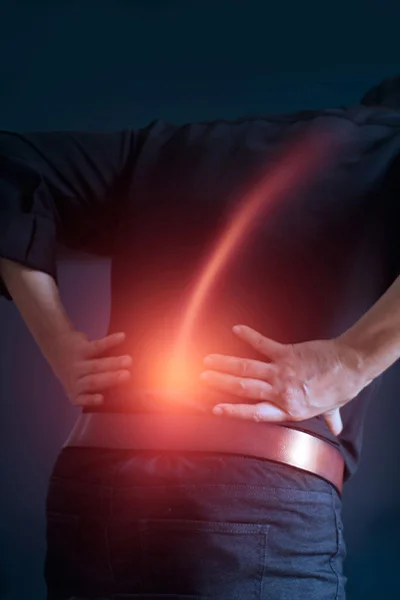
Lower back pain is when pain or discomfort occurs in the area between the lower rib cage and the gluteal- lower gluteal fold. The pain may radiate to the buttock-buttock-lower limb. The different types of lower back pain are grouped according to their location and duration in the literature.
When should you see a doctor for lower back pain?
Lower back pain is one of the most common musculoskeletal complaints, affecting around 80% of the population at least once in their lifetime. Lower back pain is a single symptom that can be caused by a variety of different factors. It is recommended thatyou consult an orthopedics or rheumatology specialist to clarify and treat the underlying cause.
How long has your lower back pain lasted?
- Acute lower back pain is when it comes on suddenly and has been present for less than a month.
- We call it subacute lower back pain if it has been present for 1-3 months continuously.
- Chronic lower back painis defined asrecurrent lower back pain that has been present for more than 3 months.
Misconceptions about lower back pain
"Ah, it will pass" - we trivialise, we don't take the signs seriously. The most common misconception about lower back pain is that symptomatic treatment is enough and it is not too late to investigate. Although the onset of low back pain may be mild, it may only be accompanied by a feeling of discomfort in the lower back, which quickly disappears with rest and a little ointment. However, there is always a cause for low back pain, which will not go away with symptomatic treatment. In case of recurrence or worsening of the complaint, it is essential to see a specialist.
"I must have a herniated disc" - panic. Many people tend to think the worst when they experience lower back pain. They may find it reassuring that only 4-5% of cases of low back pain are caused by disc herniation. In contrast, a much more common, real cause is strain in the surrounding soft tissues, small joints, muscles and ligaments, which is present in almost 70% of cases. Read more about the causes of lower back pain below.
Identifying the real cause of your back pain will help dispel any misconceptions. To do this, it is recommended to consult an orthopedics or rheumatology specialist.
What is the difference between back pain and lumbar pain?
Lumbar sprain is a Latin term meaning pain in the lower back, hence the often conflated use of the two terms. The difference lies in the type and location of the pain. Lumbago is a type of lower back pain.
What are the possible causes of lower back pain?
The cause of lower back pain can be inferred from the circumstances and qualitative characteristics of the complaint. After thorough questioning and physical examination by a specialist, an imaging diagnostic test can confirm the cause of the complaint.
In the case of movement-related lower back pain, a mechanical origin is suspected. In this case, the pain originates from different components of the motion segment of the spine. This may be pain arising from the intervertebral disc, the intervertebral facet joint, the ligamentous system between the vertebrae, and the surrounding musculature.
The pain varies depending on the physical stress: it increases when standing, in static positions; it decreases when lying down or resting. Pain at night when resting may indicate inflammation or cancer. However, other symptoms (malaise, weight loss, fever) may also be associated with low back pain.
Disc herniation, also known as disc herniation , is a common cause of back pain . The fibrous ring is located between the vertebrae that make up the spinal column. This fibrous ring is made up of two parts: an outer, harder covering and an inner, soft, jelly-like, elastic material. Disc herniation is said to occur when the outer shell ruptures and tears, causing the soft, elastic, gelatinous material to 'leak' into the spinal canal and put pressure on the nerves. The pressure on the nerves creates a characteristic set of symptoms, one of which is severe lower back pain - if there is a disc herniation in the lumbar part of the spinal column. It is not uncommon for disc herniation not to be associated with low back pain.
In the case of non-movement-related lower back pain, the origin of the complaint cannot be directly linked to changes in the musculoskeletal system. In this case, the pain radiates from the surrounding organs due to other diseases - for example kidney stones, gynaecological problems. This group also includes lower back pain that is psychological or psychological in origin, caused by stress or, in rare cases, depression.
When should we see a doctor?
When to wait and when not to wait?
It's time to see a doctor: if the pain goes away with banal painkillers, ointments or a gentle treatment, is not accompanied by any other symptoms and does not last longer than 3 days.
See a specialist in spine medicine, a rheumatologist:
- if the complaint returns within 2 months
- always increased in certain body positions
- pain is constant, regardless of body position
- pain radiates to the lower limbs
- weakness, numbness, loss of sensation in the limb
- problems passing stools or urine
- abdominal pain, also fever
- the pain is severe and caused by an accident or a blow
- known cancer, pain
- is associated with undue weight loss
- osteoporosis
- pain increases with steroid treatment
Lower back pain can be a symptom of serious illnesses, so always consult a doctor if you have co-symptoms!
Our mission is to help our patients regain their freedom of movement as soon as possible, and to permanently and long term relief from painful complaints.
Investigating lower back pain
It can be important to find the cause of a common lower back pain, as only symptomatic treatment is possible before diagnosing the underlying problem.
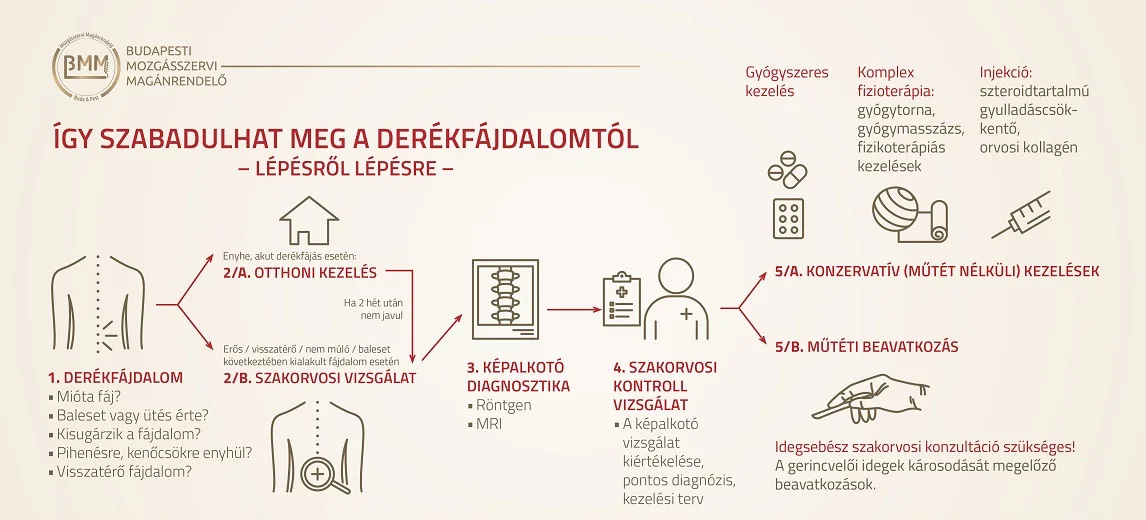
The basics of a successful investigation are based on the BMM patient journey protocol:
- The medical history is half the diagnosis, and many diseases can be ruled out by detailed questioning.
- A thorough physical examination by a specialist. On the basis of the physical examination, a specialist will determine the need for any diagnostic imaging tests:
- X-ray examination can confirm bony lesions. X-rays are usually taken of the spine, hip joints, knees and feet. This is often necessary for isolating purposes related to diagnostics.
- The condition of the soft tissues, discs, articular cartilage, muscles and tendons is accurately assessed by the radiograph.
- The soft tissues are the intervertebral disc, articular cartilage, muscles and tendons can only be accurately identified by a radiograph.
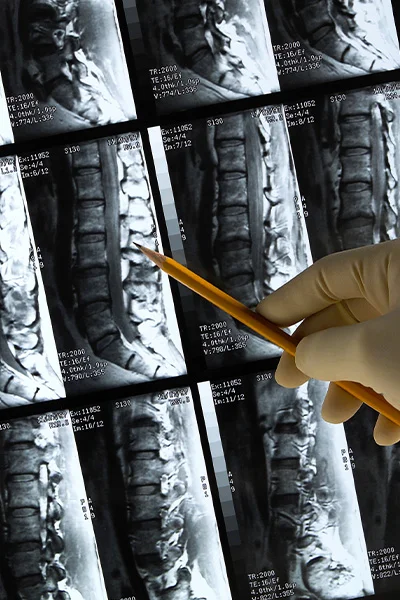
- In some cases, a CT (computer tomography) scan or MRI ( magnetic resonance imaging ) scan is also needed to make an accurate diagnosis.
- In the case of nerve involvement, neurophysiological testing, ENG or EMG is required to determine the extent of suspected nerve damage.
Diagnostic imaging
Diagnostics tests can help to visualise and measure anatomical structural changes and reveal the true cause of the complaint.
Neuroconductive neurophysiological examinations (ENG/EMG) are available at BMM's clinics in Pest and Óbuda. X-ray examination in our private clinic in Óbuda. If you need an ultrasound examination, MRI scan or CT scan, we can arrange these at an external location of our partner institutions for an additional fee.
- Based on the medical history, physical examination and imaging diagnostics, the specialist makes an accurate diagnosis.
- A personalised treatment plan is drawn up. We guide our patients through the healing process
What are the treatment options?
There can be different causes of lower back pain, so pinpointing the cause is essential for effective treatment. Once an accurate diagnosis has been made, an expert rheumatologist, specialist in spine medicine or specialist in orthopedics can develop an effective treatment plan.
There are 2 ways to treat lower back pain:
- Conservative way: conservative therapy is the term used to describe treatments that correct the symptoms without surgical treatment. The aim of conservative treatment is to relieve pain quickly and to ensure continued recovery. If necessary, the specialist may recommend the use of anti-inflammatory and muscle-relaxing drugs, or an injection or painkiller patch to relieve the pain. Physiotherapy is a very important part of the treatment for low back pain, including physiotherapy and physical therapy, possibly including therapeutic massage. A combination of short-, medium- and long-term treatments can help to improve recovery by identifying the underlying cause.
- Surgical treatment: in cases that do not respond to conservative treatments, surgical intervention can provide a solution. In the case of disc herniation, slipped vertebrae, spinal stenosis, and complaints due to tumours of the spine, surgery is recommended, and a neurosurgeon should be consulted to decide whether surgery is the best option. Surgical treatment of established spinal hernias is no longer limited to open interventions, but can be performed using minimally invasive surgical techniques.

Most Common Complaints Treated by Spine Medicine Center Specialists
- lower back pain
- lower back pain
- scoliosis
- nerve compression
- back pain
- neck pain
- stiff neck - neck stiffness
- osteoporosis
- spinal pain
- spinal stenosis
- back pain
- lumbar spine pain
- gluteal muscle pain
- poor posture
- sacrum pain
- shoulder blade pain
- morning lower back pain
- neck pain
In the vast majority of cases of lower back pain, an intervention can be avoided with professional physiotherapy and complex conservative therapy. The key to success: doctor-patient cooperation and trust.
Our Spine Medicine Specialists

Dr. Katalin Bán
Rheumatologist specialist

Dr. Éva Bordán
Rheumatologist general practitioner

Dr. Flórián Szeles
Rheumatologist general practitioner

Dr. Dóra Mihola
Rheumatologist specialist

Dr. Bence Moravcsik
Orthopedic-Traumatologist
We can make an appointment for today, tomorrow, Saturday or Sunday