Neurological Examinations
(ENG, EMG)
Neurology is the medical discipline that deals with structural and
functional disorders of the central and peripheral nervous system. At the Buda Musculoskeletal Private Clinic, the location and extent of nerve damage can be mapped using modern diagnostic tools, enabling a more precise surgical and treatment plan for our patients.

Dr. Beatrix Vághy
Chief Neurologist and Neurophysiologist
Electroneurography (ENG)
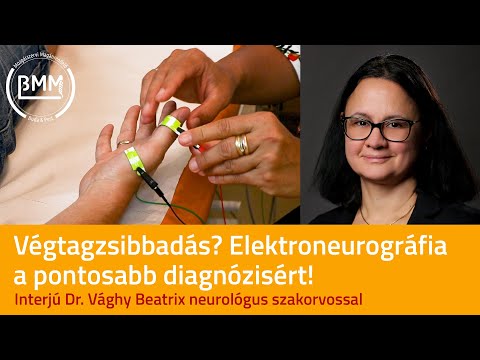
The ENG (electroneurography) examination provides data on the condition and function of peripheral nerves. During the examination, the nerves are stimulated with electrical current and the response detected by an electrode placed on the muscle supplied by the given nerve is recorded.
What is the examination method suitable for?
The examination method is suitable for confirming diseases of individual peripheral nerves (mononeuropathies), such as tunnel syndromes (e.g., carpal tunnel syndrome), and general disorders of the peripheral nervous system (polyneuropathy). It is also suitable for detecting diseases of the neuromuscular junction (myasthenia gravis). In addition, it is useful for distinguishing between nerve root damage (radiculopathy) and involvement of nerve plexuses, and can also confirm diseases of spinal motor neurons.
Electromyography (EMG)
EMG (electromyography) examination provides information about muscle function. During the examination, a thin needle electrode is inserted into the muscle and the electrical response is recorded at rest and during muscle movement or contraction. The examination often provides information when evaluated together with the ENG examination.


Dr. Magdolna Simó PhD
University Associate Professor, Neurologist, Clinical Neurophysiologist
When is the examination method recommended?
It is a procedure of primary importance in cases of intrinsic muscle diseases and conditions involving muscle inflammation, but it is also suitable for assessing the degree of nerve regeneration and for distinguishing between acute or chronic forms of certain diseases (e.g., polyneuropathy).
EMG (electromyography) examination provides information about muscle function. During the examination, a thin needle electrode is inserted into the muscle and the electrical response is recorded at rest and during muscle movement or contraction. The examination often provides information when evaluated together with the ENG examination. It is a procedure of primary importance in cases of intrinsic muscle diseases and conditions involving muscle inflammation, but it is also suitable for assessing the degree of nerve regeneration and for distinguishing between acute or chronic forms of certain diseases (e.g., polyneuropathy).
Electroneurography (ENG) and electromyography (EMG) examinations are performed by Dr. Magdolna Simó, chief physician in clinical neurophysiology, and Dr. Beatrix Vághy, chief neurologist, at our private outpatient clinic in Pest (District XIII).

Book an appointment by phone

Online Appointment Booking