Muscle-sparing hip replacement with anterior approach
Types of Hip Joint Approaches
When implanting a hip prosthesis, it is essential that the intervention is performed using a surgical technique that is the safest and produces the best results in your case. Two main approaches can be used for hip replacement surgery. These can be categorized according to which muscles are crossed or alongside which muscles the hip joint is accessed during surgery. The type of approach is not only decisive during the intervention but also influences post-operative rehabilitation. It affects the intensity of pain experienced after surgery, the stability of the joint, and when the patient can begin rehabilitation and how fast and successful it will be.

Hip Replacement Surgery via Lateral and Posterior Approaches
The essence of hip replacement surgery performed via lateral and posterior approaches is that the surgeon detaches the muscle surrounding the hip joint, or part of it, from the femur and accesses the joint from the side or back during surgery. This method can be safely used for both primary prosthesis implantation and hip prosthesis revision.
The essence of the posterior approach is that the surgeon detaches the short external rotator muscles of the joint and exposes the joint by incising the posterior capsule, where the hip prosthesis is implanted. The detached muscles and posterior capsule are then restored. With this approach, the joint is easily accessible.
In the case of a minimized lateral approach, the detachment of muscles is smaller, resulting in less muscle damage and less pain experienced after surgery.
However, it is important to know that with these surgical techniques, muscles must be cut, which increases the chance of complications during surgery and slows recovery.
Hip Replacement Surgery via Anterior Approach
Performing hip replacement surgery via the anterior approach is a modern surgical solution. Its execution requires extensive experience and precision. The essence is that during the approach, the surgeon accesses the hip joint at the anterior part of the hip joint, between the muscle bellies. With this hip replacement surgery technique, it is not necessary to detach the muscles, so patients experience minimal pain after surgery and their rehabilitation is rapid.
Prosthesis revision is performed when the primarily implanted prosthesis becomes loose or a component wears out and causes symptoms. Due to this risk, it is necessary to regularly check the implanted prostheses with X-ray examination every 1-2 years. Modern prosthesis systems are assembled from multiple components, so sometimes only one component needs to be replaced, which can prevent complete loosening.

Dr. Péter Molnár
Orthopedic-Traumatologist, Chief Operating Surgeon, Robotic Surgeon
Online appointment booking for Bokor Street:
Please choose the service that suits you
The fee for the follow-up examination is valid for 3 months after the initial examination for the same complaint, depending on the examination location.
- 1. Select the service you want from the drop-down box.
- 2. Use the calendar to choose a date that suits you!
- 3. Enter your details to register or login with your previous registration.
- 4. If you would like to book on behalf of someone else (e.g. your child), please let us know at the place indicated.
- 5. Briefly describe your complaints!
- 6. Choose the type of consultation: initial examination, control examination or prescription.
- 7. Click on the button to book your appointment. Thank you for choosing BMM!
If you are unable to attend your scheduled appointment, please notify us of your cancellation at least 24 hours in advance. This allows other patients the opportunity to receive timely medical care. Thank you for your cooperation and understanding!
Cancellation: +36 1 44 33 433
If you cannot find an available appointment for your selected week, please call our call center at +36 1 44 33 433 for further assistance! Our staff will be happy to help you schedule an appointment with your chosen physician or another specialist according to your complaint.
How Is Hip Replacement Surgery Performed via the Anterior Approach?
Muscle-sparing hip replacement surgery can be performed with spinal anesthesia and sedation or under general anesthesia. After thorough disinfection of the surgical area and covering the surrounding area, the surgeon makes an incision approximately 5-8 cm long on the skin. During the intervention, it is not necessary to cut the muscles, as the surgeon gently retracts them out of the way using special instruments, thus accessing the joint.
During the hip prosthesis implantation surgery, the surgeon removes the diseased femoral head from the femur, then removes the cartilage from the acetabulum of the pelvis and reams it with a series of hemispherical reamers. A hemispherical metal acetabular cup is then implanted, into which a hardened plastic liner is inserted or a plastic cup is cemented with bone cement (bone adhesive). The metal stem of the prosthesis is then implanted into the medullary cavity of the femur. This can be done by cementing it with bone cement or using a cementless method. The surgeon fits a metal or ceramic femoral head onto the stem, which moves within the plastic part of the cup, thus replacing the original functions of the hip joint. After the rehabilitation period, the newly created joint restores the joy and freedom of movement.
Does Muscle-Sparing Hip Replacement Surgery Reduce the Risk of Surgical Complications?
Yes, absolutely. If hip replacement surgery is performed via the anterior approach using muscle-sparing surgical technique, a smaller incision is sufficient on the skin and the muscles do not need to be cut. This significantly reduces the risk of infections.
With this type of hip replacement surgery, it is not necessary to use tubes (drains) to drain fluid or blood from the surgical wound, as they are not needed. Instead, at the end of surgery, it is sufficient to apply a special medicinal cocktail with hemostatic and analgesic effects into the tissues around the prosthesis. This minimizes post-operative bleeding and significantly reduces the risk of infections. After muscle-sparing hip replacement surgery, the joint is more stable and the risk of prosthesis dislocation is lower than with traditional surgical solutions. On average, 3 days must be spent in the hospital after surgery.
Rehabilitation After Hip Prosthesis Implantation
Following muscle-sparing hip replacement surgery, the patient can sit up on the day of surgery and may even stand beside the hospital bed. Our patients are surprised to find that there is no significant pain immediately after surgery, thanks to the modern surgical technique and the anesthetic injection administered into the wound before the end of surgery.
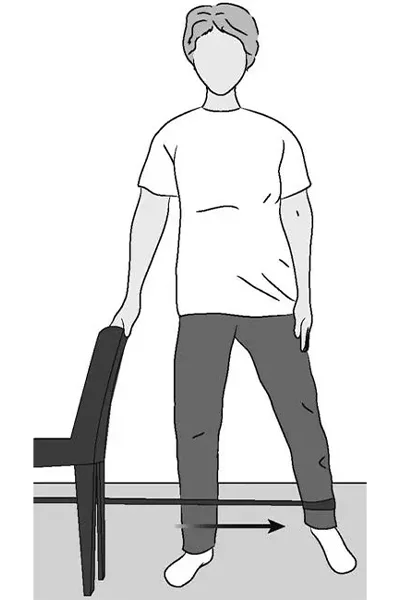
Rehabilitation begins the day after surgery, when a physiotherapist visits the patient, helps them stand up, and teaches them how to move with the assistance of a walking frame or elbow crutches. Rehabilitation continues at the patient's home, focusing on physiotherapy, which accelerates the healing process, helps restore optimal range of motion, and strengthens the muscles. The exercises prescribed by the physiotherapist must be performed daily. Regular meetings with the physiotherapist are important, as they teach the patient new exercises according to the degree of improvement. The rehabilitation period typically lasts 3-6 months.
When Can You Drive and Exercise After Hip Replacement Surgery?
It is understandable if someone wants to get back behind the wheel as soon as possible after surgery. After muscle-sparing hip replacement surgery, there are not many obstacles to this. If the car has an automatic transmission and the left hip joint was operated on, driving may be possible as early as 3-4 days after the intervention. If the vehicle has a manual transmission or the right leg was operated on, it is advisable to wait at least 1-2 weeks after surgery, and it is worth discussing with the physiotherapist how vehicle use can be safe.
After hip replacement surgery, you must consult with the specialist about when and what sports can be performed. Generally, 1.5 months after hip replacement surgery, the leg can already be loaded quite well and walking is easy. The load can be gradually increased, and sports such as yoga, swimming, and stationary cycling are particularly recommended. A few months after surgery, those who previously led an active life can dance and jog again.
Does hip pain make your daily life difficult? Would you like to move easily again? Contact the Budapest Musculoskeletal Private Outpatient Clinic, where our highly knowledgeable and experienced doctors help patients recover with personalized solutions.
Request an appointment now at the following phone number: +36 1 44 33 433
Our specialist surgeons performing hip replacement surgery via the anterior approach:
Dr. Péter Molnár
Orthopedic-Traumatologist, Chief Operating Surgeon, Robotic Surgeon
WHY IS BMM THE SAFEST SOLUTION?
Coordinated Surgical Team
Our orthopedic surgeons performing hip replacement surgery have been working together for decades and know each other's every move.
Thousands of Surgeries Experience
Our orthopedic surgeons have performed thousands of successful hip prosthesis implantations; there is no case they have not encountered.
Modern Technology
Our surgeons apply hip joint endoprosthesis implantation without muscle cutting, which greatly reduces postoperative pain and accelerates rehabilitation.

Dual-specialist surgeries for the best outcome

A complete patient journey from booking to recovery

Priority care for patients awaiting surgery
| Hip prosthesis implantation without muscle cutting | Traditional hip prosthesis implantation | |
|---|---|---|
| Time spent in hospital | 1-3 days | 3-10 days |
| Rehabilitation time | 3-4 weeks | 6-12 weeks |
| Can begin office work | 14 days | 21-28 days |
| Can begin physical work | 8 weeks | 12 weeks |
| Driving | 6 weeks | 12 weeks |
| Restrictions after surgery | lower limb rotation and crossing, deep sitting, squatting are prohibited for the first 6 weeks! | lower limb rotation and crossing, deep sitting, squatting are prohibited for the first 10-12 weeks! |
| Surgical time | 50-70 minutes | 50-70 minutes |
| Blood loss | less | average |
| Pain level | less | average |
| Early joint stability (first 6 weeks) | better | average |
| Prosthesis dislocation frequency | 0.1-1% | 2-4% |
| Surgical scar size | depends on patient's build and musculature | depending on patient's build and musculature, larger than with the muscle-sparing technique |
| Possibility of aesthetic (bikini) surgical incision | available | not available |
For hip joint pain or questions regarding hip replacement surgery, please contact our specialist physicians with confidence!
Request an appointment for consultation or examination at +36 (1) 44-33-433!

Book an appointment by phone

Online Appointment Booking