Treatment of patellar dislocation:
when does MPFL reconstruction help?
Patellar dislocation is a sudden, very unpleasant and painful condition that most often occurs during sports or sudden movements. When the patella slides sideways out of the groove of the femur, it can cause not only severe pain but also persistent instability. Repeated dislocations can lead to cartilage surface damage and premature wear in the long term. We will explain when conservative therapy is sufficient and when surgical stabilization of the patella, summarizing the essence and benefits of MPFL surgery (MPFL reconstruction), may be considered.
Why does the patella dislocate? – The most common causes of patellar dislocation
Normally, the patella moves in the groove in front of the femur while the thigh muscle contracts. In certain cases, however, it can shift sideways or even dislocate from its place – this is called patellar dislocation. This phenomenon can be not only painful but also frightening, especially if it occurs for the first time.
Single dislocation or recurrent problem?
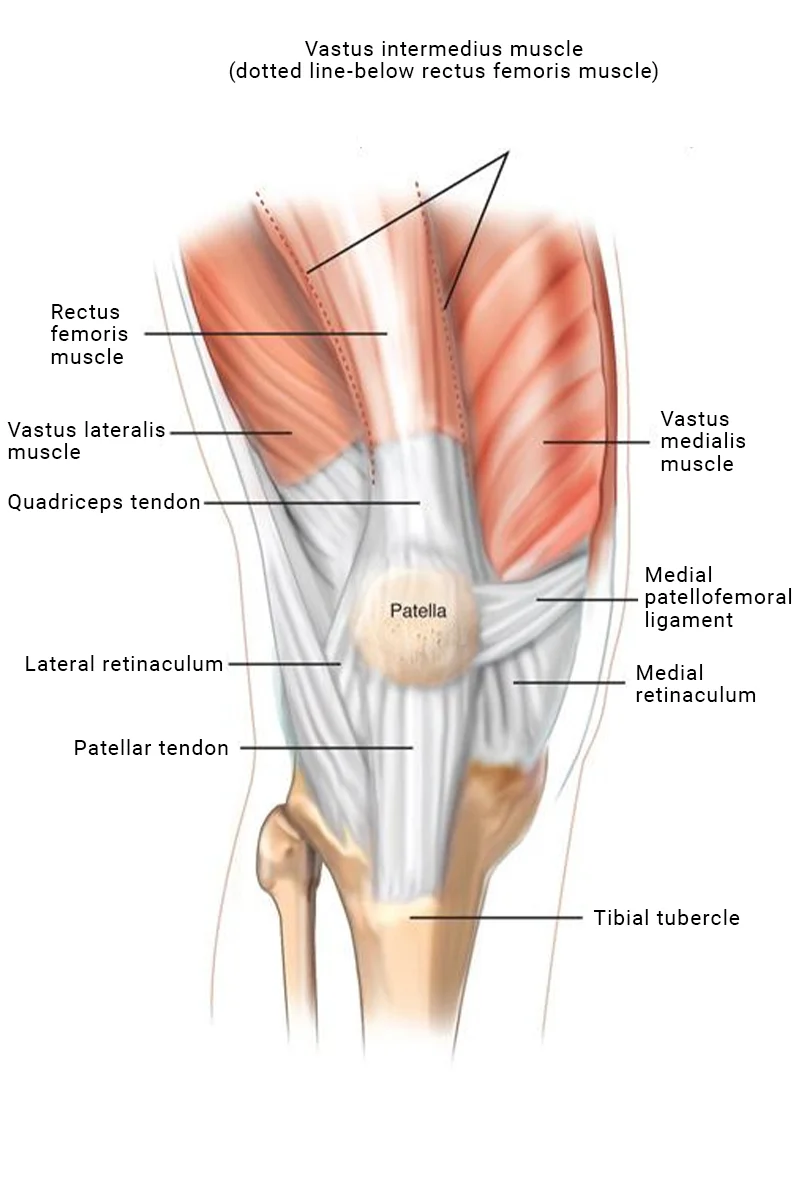
The first dislocation is often attributable to a sudden, awkward movement or a sports injury. In such cases, the ligaments that stabilize the patella laterally (MPFL = medial patellofemoral ligament) may stretch or be injured, but in many cases, complete recovery can be achieved with adequate rest, bracing, and physiotherapy.
However, if the patella repeatedly slips out of place, then recurrent patellar dislocation can be discussed. This means that the ligaments can no longer hold the patella in the correct position, the patella becomes unstable, which can lead to further dislocations, cartilage, and tissue damage. In this case, conservative treatments are no longer sufficient, and surgical stabilization of the patella, such as MPFL reconstruction, becomes necessary.

Dr. Péter Doszkocs
Orthopedic-Traumatologist Chief Physician, Hip and Knee Surgeon, Lower Limb Specialist, Robotic Surgeon
Online appointment booking:
Budafoki Road Clinic: Thursday
Bokor Street Clinic: Other days of the week
Please select the service that suits you
The follow-up fee is valid for 3 months after the initial examination for the same complaint.
- 1. Select the requested service from the drop-down menu!
- 2. Use the calendar to choose a suitable appointment time!
- 3. Register by entering your details, or log in with your previous registration!
- 4. If you wish to book on behalf of another person (e.g., your child), please indicate this in the designated field!
- 5. Briefly describe your complaints!
- 6. Select the type of consultation: initial examination, follow-up examination, or prescription.
- 7. Click the button to complete the appointment booking. Thank you for choosing BMM!
If you are unable to attend your scheduled appointment, please notify us of your cancellation at least 24 hours in advance.
This allows other patients the opportunity to receive timely medical care. Thank you for your cooperation and understanding!
Cancellation: +36 1 44 33 433
If you cannot find an available appointment for your selected week, please call our call center at +36 1 44 33 433 for further assistance! Our staff will be happy to help you schedule an appointment with your chosen physician or another specialist according to your complaint.
Injury or anatomical predisposition?
The development of patellar dislocation can be due to several reasons. One may be an injury occurring during direct trauma or an awkward movement, which stretched or tore the internal stabilizing ligaments of the knee.
However, in many cases, anatomical features can also predispose to dislocation:
- shallower femoral trochlea (trochlea dysplasia),
- high-riding patella,
- loose ligaments (hypermobility),
- knock-knee deformity,
- muscle imbalance in the anterior thigh muscles.
In these cases, even a mild load or simple everyday movement can trigger a dislocation. Medical examination and imaging studies (MRI, X-ray) help determine whether the symptoms are caused by a simple injury or other constitutional factors.
Patellar instability:
when is physiotherapy enough, and when is surgery considered?
Initially, many patients hope that stability can be restored without surgery – and in some cases, this is indeed possible. The method of treatment is always determined by the severity and frequency of the dislocation, the patient’s age, activity level, and anatomical characteristics.
Conservative treatment options
After the first patellar dislocation, if there is no serious ligament injury or cartilage damage, the orthopedic specialist usually recommends conservative treatment. The main elements of this are the following:
- Rest and pain relief – Unloading the knee, icing, and, if necessary, the use of anti-inflammatories can help alleviate initial symptoms.
- Wearing a knee brace – A special brace designed to stabilize the patella prevents lateral displacement and supports ligament regeneration.
- Physiotherapy – The key to treatment is targeted muscle strengthening, especially developing the inner part of the quadriceps muscle (VMO), which helps keep the patella in the midline.
- Rehabilitation – In the later stages of therapy, developing coordination, balance, and joint sensation (proprioception) is also essential, especially for athletes.
The effectiveness of conservative treatment largely depends on the degree of patellar instability and the condition of the affected tissues. If the dislocation becomes recurrent, or the patella continues to move uncertainly, surgical intervention may be indicated, such as MPFL reconstruction, which can provide long-term knee stability.

What is MPFL reconstruction, and how does it help stabilize the patella?
Several structures are responsible for patellar stability, among which one of the most important is the medial ligament, the MPFL (medial patellofemoral ligament). If this ligament is injured, the patella can more easily slip out of place sideways, especially during flexion.
The role of the MPFL ligament in knee function
The primary function of the MPFL ligament is to prevent lateral displacement of the patella during movement. In case of injury, recurrent dislocation is common, even if the external bony elements are intact. In such cases, muscle strengthening alone is not sufficient to ensure stability.
How is MPFL reconstruction surgery performed?
During MPFL reconstruction, the injured ligament is replaced with a graft made from a tendon harvested from the thigh muscle, which is fixed in an anatomically precise position. The intervention is performed with small incisions, under general anesthesia, and can usually be done as a day surgery. The goal is to stabilize the patella’s movement, preventing further dislocations.
Recovery after MPFL surgery: healing, rehabilitation, and return to sports
In the post-operative period, the goal is to gradually restore thigh muscle strength and regain the full range of motion of the knee joint. Recovery consists of several stages, always followed by an individualized rehabilitation plan.
Post-operative care and pain management
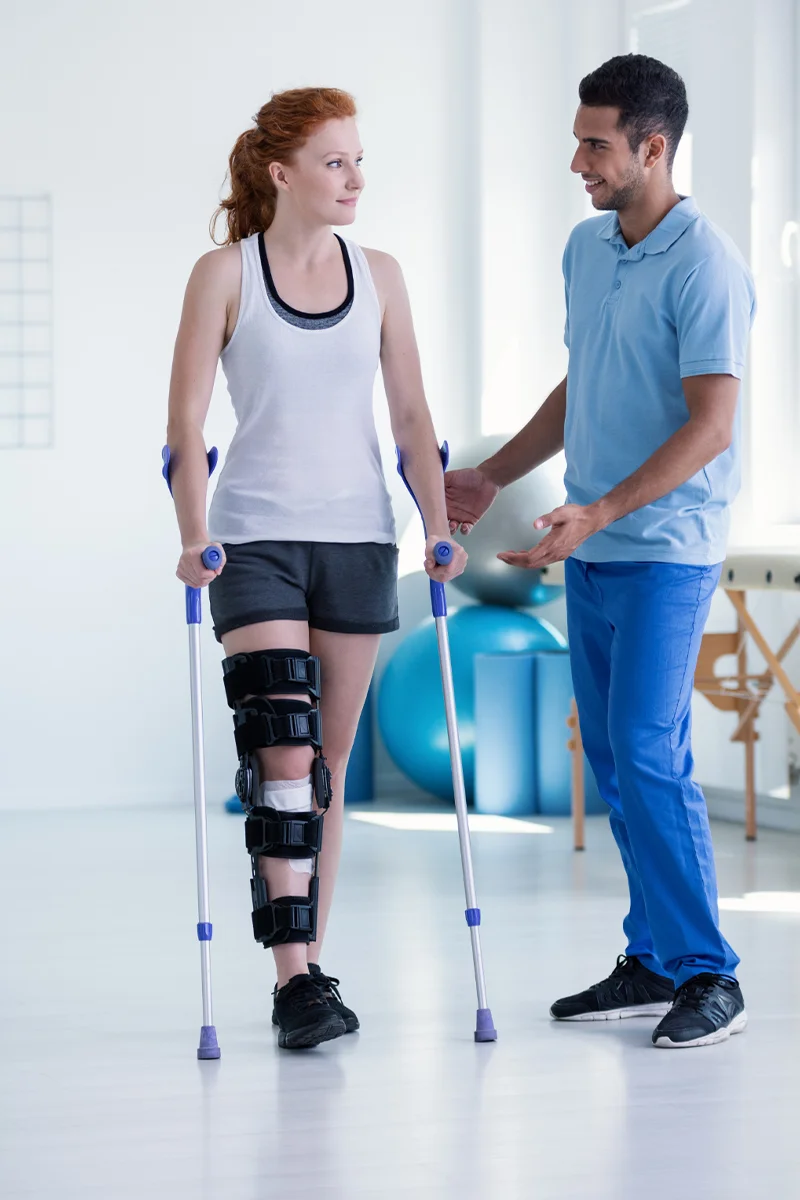
After the intervention, the knee is protected with a special knee brace, which ensures the correct position and limits the range of motion for healing. Post-operative pain can be well controlled initially with medication. Passive mobilization can begin in the days following the surgery to prevent joint stiffness.
Rehabilitation and return to sports
Physiotherapy is key to recovery: first, the gradual restoration of the range of motion, followed by muscle strengthening. Restoring the symmetry of the muscles around the knee and improving motor coordination are particularly important. The return to sports occurs gradually, typically within 4–6 months, depending on the knee’s stability and the patient’s load-bearing capacity.
MPFL reconstruction – frequently asked questions
The intervention usually takes 60–90 minutes and is performed under general anesthesia.
Several small incisions are made during the surgery, so the scar is minimal, heals well, and is aesthetically favorable.
The cost of MPFL surgery depends on several factors, so we can provide an exact amount only after a personal consultation. Please feel free to contact Dr. Péter Doszkocs, who will be happy to provide detailed information.
Yes, after proper rehabilitation, most patients can fully return to sports, typically within 4–6 months.
Dr. Péter Doszkocs
Orthopedic-Traumatologist Chief Physician, Hip and Knee Surgeon, Lower Limb Specialist, Robotic Surgeon
Do not delay the treatment of patellar problems – when can a knee specialist help?
If your patella has dislocated multiple times, or you experience a feeling of instability when climbing stairs, running, or playing sports, you should seek specialist medical help. Recurrent patellar dislocation is not only unpleasant but can also lead to long-term cartilage damage and persistent pain.
Dr. Péter Doszkocs, chief orthopedic-traumatologist, is a recognized expert in the treatment of patellar instability, performing MPFL reconstruction surgery with modern, precise techniques.
Request an appointment with Dr. Péter Doszkocs and take the first step towards a more stable, secure knee!

Book an appointment by phone

Online Appointment Booking