Prosthesis Revision
What does revision surgery mean?
The surgical replacement of previously implanted joint prostheses (shoulder, hip, knee) is called a revision. In cases of an emerging problem, revision surgeries are short interventions. In more severe cases, however, they are larger and more complex than traditional implant implantations.
The need for a revision is always decided by the treating physician, based on the patient's condition.

Why is it necessary to attend annual follow-up examinations after prosthesis implantation?
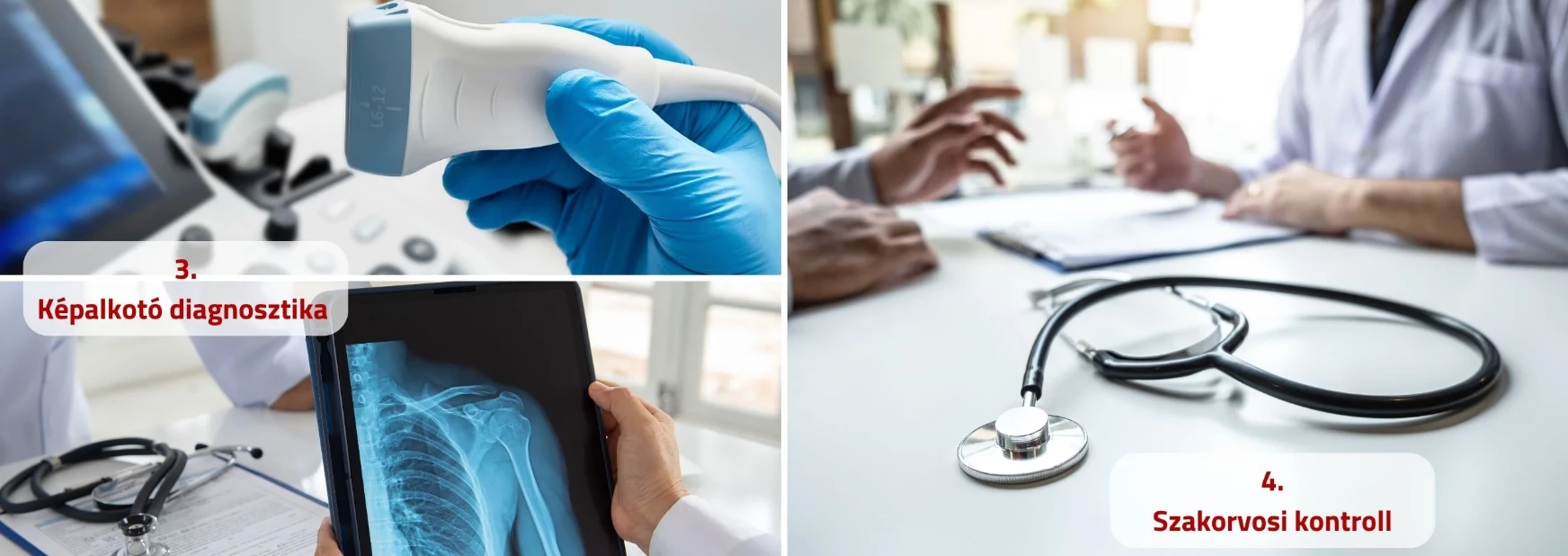
It is mandatory to attend an annual follow-up examination after prosthesis implantation. This is necessary even if the patient is completely asymptomatic!
The follow-up serves not to treat an existing problem, but to prevent it. In addition to a physical examination, X-ray diagnostics are also performed. Annual X-rays are extremely important, as they can reveal problems that do not cause symptoms but could lead to serious complications, such as osteolysis, if left untreated.
Osteolysis involves the pathological breakdown of bone tissue around the implant. In such cases, revision surgery is lengthy and may require bone grafting.
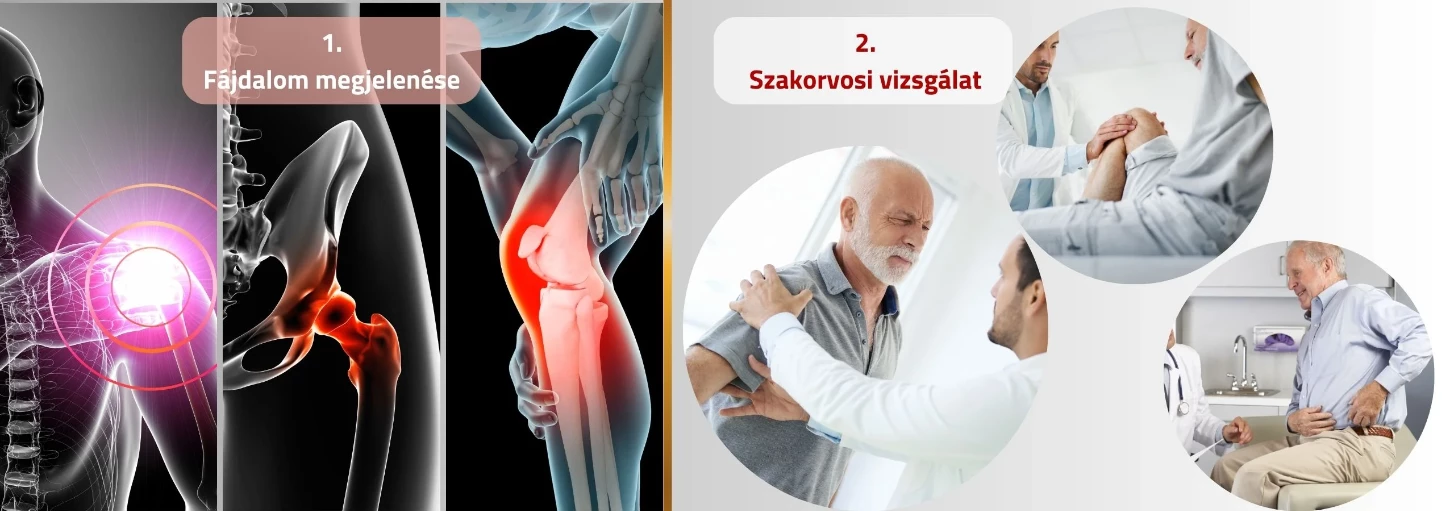




When should a revision be performed?
During primary prosthesis implantation, the patient decides, after consultation with the doctor, whether they wish to replace their worn/damaged joint with an implant. In this situation, there may be months available to make a decision.
In contrast, when replacing an existing implant, there is no time for deliberation. If the doctor deems the revision to be justified and necessary, it must be performed immediately. Delaying the surgery can worsen problems and lead to serious complications, which may have long-term negative consequences for the patient's health.
Annual follow-up examinations can detect emerging problems even in asymptomatic cases:
- Prosthesis loosening
- Wear or fracture of implanted prosthesis components
- Infection-induced inflammation in the tissues around the prosthesis
- Bone fracture due to weakened bone structure, known as periprosthetic fracture
- Dislocation

What symptoms indicate the need for revision?
In many cases, there are no clear signs or complaints. Early prosthesis wear often shows no warning symptoms, just as the presence of low-virulence pathogens often goes unnoticed.
Without regular medical examinations, years can pass without warning signs. However, this is very dangerous, as conditions involving severe infection or bone tissue damage can develop.
Of course, there are also cases where clear signs warn of the need for revision:
- Pain around the prosthetic joint
- Radiating pain into the limb
- Restricted movement
- Dislocation
What can the patient expect during revision surgery?
Whether a relatively short and simple, or a larger and more complex revision surgery is needed depends on the type and severity of the problem.
- In milder cases, partial replacement of the prosthesis may suffice – for example, only the prosthetic head is renewed.
- In more severe problems, however, surgery involving increased strain, greater blood loss, and a longer recovery period should be expected. Bone grafting and other internal fixation (e.g., screws, plates) may also be necessary.
In revision surgeries, cementless prostheses are most commonly implanted.

Course of Surgery
- The joint is exposed using a minimally invasive procedure.
- The surgeon removes the previous prosthesis (partially or entirely). – This process is slightly longer for cemented prostheses.
- The ends of the bones – and the acetabulum in the case of shoulder and hip prostheses – are cleaned and prepared.
- The doctor inserts the new prosthesis.
- Especially in hip and shoulder revisions, a component with a longer stem than the original prosthetic stem may be implanted.
- If necessary, the implant is also secured with screws.
- The surgeon checks the fit of the new components.
- After infiltration of the surgical area, the wound is closed with staples or sutures.
Recovery Time and Life After Revision
The nature of the recovery period depends on the type of revision surgery.
- For milder revision surgery, recovery can be expected to be similar to, or minimally faster than, the initial implantation.
- In severe revisions, the rehabilitation period is longer compared to primary prosthesis surgery. One reason for this is that the surgery itself is more prolonged and often involves greater blood loss.
In both cases, it is important to strictly follow the instructions of the doctor and the physiotherapist to avoid complications and ensure optimal rehabilitation.
The expected recovery time is 3-6 months. After this, the patient can live a pain-free and full life again.

What complications can arise from revision surgery?
As with any surgery, unexpected consequences can occur during prosthesis revision. Due to the repeated operation on the affected joint, complications are more likely to occur than during primary surgery.
- Blood clot
- Wound infection
- Hematoma
- Dislocation
- Nerve damage
- Fracture of surrounding bones
- Prosthesis fracture
It is important to be aware of potential risk factors, but it is also crucial to remember that delaying or refusing surgery can lead to consequences even more severe than potential complications.
Our Specialist Physicians:

Dr. Gergely Holnapy, PhD
Chief Orthopedic-Traumatology Physician, University Adjunct, Robotic Surgeon

Dr. Péter Molnár
Orthopedic-Traumatologist, Chief Operating Surgeon, Robotic Surgeon

Dr. Zoltán Bejek PhD
Orthopedic Associate Professor, Robotic Surgeon

Dr. Szabolcs Gáspár
Orthopedic-traumatologist, head physician, robotic surgeon

Dr. Péter Doszkocs
Orthopedic-Traumatologist Chief Physician, Hip and Knee Surgeon, Lower Limb Specialist, Robotic Surgeon

Dr. János Bartha
Chief Orthopedic-Traumatologist, Robotic Surgeon

Dr. Dániel Kincses
Orthopedic-Traumatologist Specialist, Robotic Surgeon

Dr. Maysam Moghaddam Amin
Orthopedic-Traumatologist Specialist, Robotic Surgeon

Dr. Ferenc Tompai
Chief Orthopedic and Trauma Surgeon

Book an appointment by phone

Online Appointment Booking