Meniscus Surgery – Treatment of Cartilage Detachment
What is the meniscus?
The meniscus is nothing other than the cartilage ring located in the knee joint, which plays an essential role in healthy movement. In terms of structure, it consists of two C-shaped (or crescent-shaped) fibrous cartilages. One is the medial (inner), and the other is the lateral (outer) meniscus.
Both play an important role in the stability and movement of the knee.


Dr. Péter Doszkocs
Orthopedic-Traumatologist Chief Physician, Hip and Knee Surgeon, Lower Limb Specialist, Robotic Surgeon
Online appointment booking:
Budafoki Road Clinic: Thursday
Bokor Street Clinic: Other days of the week
Please select the service that suits you
The follow-up fee is valid for 3 months after the initial examination for the same complaint.
- 1. Select the requested service from the drop-down menu!
- 2. Use the calendar to choose a suitable appointment time!
- 3. Register by entering your details, or log in with your previous registration!
- 4. If you wish to book on behalf of another person (e.g., your child), please indicate this in the designated field!
- 5. Briefly describe your complaints!
- 6. Select the type of consultation: initial examination, follow-up examination, or prescription.
- 7. Click the button to complete the appointment booking. Thank you for choosing BMM!
If you are unable to attend your scheduled appointment, please notify us of your cancellation at least 24 hours in advance. This allows other patients the opportunity to receive timely medical care. Thank you for your cooperation and understanding!
Cancellation: +36 1 44 33 433
If you cannot find an available appointment for your selected week, please call our call center at +36 1 44 33 433 for further assistance! Our staff will be happy to help you schedule an appointment with your chosen physician or another specialist according to your complaint.

The meniscus is made of elastic and resilient material. This special material, which also contains collagen, allows the cartilage ring to withstand pressure and regain its shape after loading.
The structure of the meniscus is unique, as it is more fibrous on the outside, while soft and elastic on the inside. Its special structure is crucial to the function of the knee joint, as it allows the meniscus to effectively distribute the load.
The cartilage ring helps reduce friction between the joint surfaces and absorbs impacts when we walk, run, or jump. In addition, it contributes to the stability of the knee joint and helps ensure the even distribution of lubricants in the knee joint.
Despite the flexibility of the cartilage ring, it can easily be injured, especially during sports.
In sports where sudden changes of direction are common, such as football or basketball, meniscus injuries are more frequent.
Treatment may vary depending on the severity of the problem, but in the vast majority of cases, surgery is unavoidable.
Proper warm-up is crucial in preventing meniscus injury. In addition, it is advisable to pay attention to maintaining fitness levels and using proper technique during sports activities.
To preserve the health of the knee, it is important to regularly strengthen the surrounding muscles and joints.
The structure of the knee joint
Our knee is an extremely complex joint, which is formed by the connection of the following main parts:
- femur
- tibia
- patella
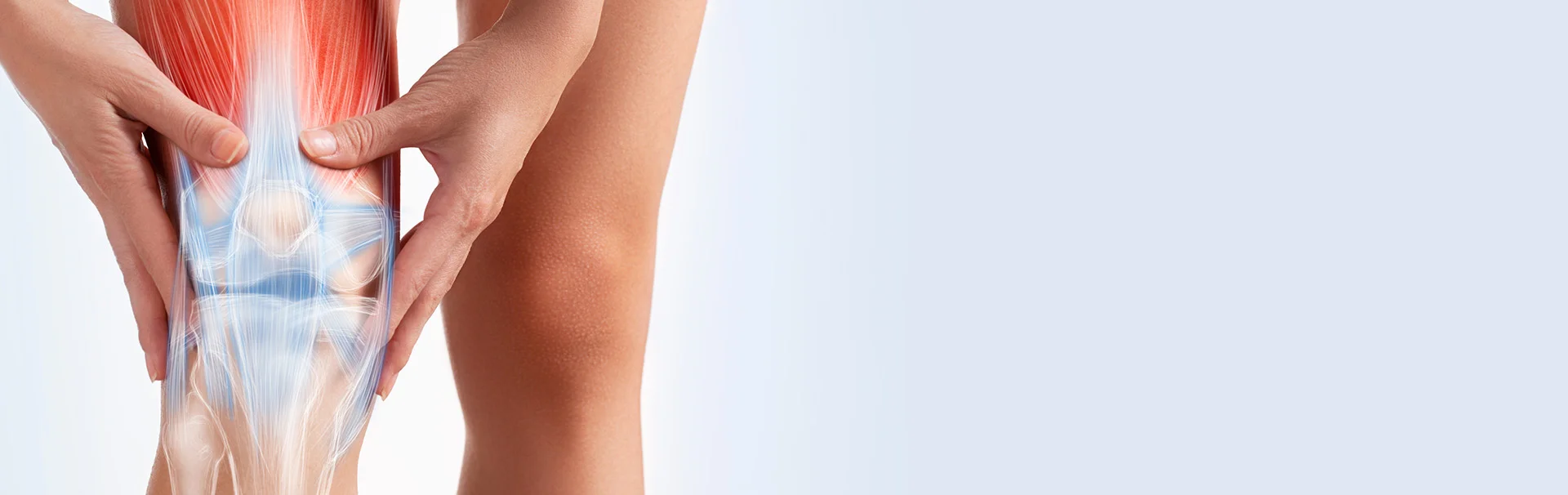
These joint surfaces are covered with cartilage, allowing smooth, painless movement. The two crescent-shaped menisci mentioned above are located between the femur and the tibia.
The position of the meniscus in the knee joint is critical. It aids stability and contributes to the even distribution of load between the joint surfaces.
Furthermore, the cartilage ring increases the contact area of the joint surfaces, thereby reducing the pressure on individual areas. – This function is particularly important in preventing degenerative joint diseases, such as arthrosis.
What does cartilage detachment in the knee joint mean?
The term cartilage detachment in the knee joint refers to meniscus injury – it involves partial or complete tearing of the cartilage.
The torn piece of the cartilage ring can become stuck within the knee joint, thereby impeding smooth movement. In addition, it can also cause pain and knee instability.
A piece of cartilage moving freely within the joint can cause inflammation and further damage, which can lead to long-term problems, such as joint inflammation.
The meniscus is a cartilage ring located in the knee joint. It helps reduce friction between the joint surfaces and absorbs impacts. Despite its flexibility, it can be easily injured, especially during sports activities. Treatment of cartilage tears most commonly involves surgery.
What are the most common causes and symptoms of meniscus injury?
The most common factors causing cartilage detachment:
- Physical activity: Meniscus injury most commonly occurs during sports involving sudden and rapid changes of direction (handball, basketball, skiing, or football).
- Old age: As age advances, the meniscus weakens, thus increasing the risk of injury, even with minor stress.
- Improper movement: During everyday life, it can also happen that a person makes an incorrect movement, thereby endangering the health of the cartilage ring. Such unwanted movements can include excessive bending or rotation of the knee.
The most characteristic symptoms of cartilage detachment:
- Pain: Especially on the inner or outer side of the knee, depending on whether the medial or lateral meniscus is affected.
- Swelling and inflammation: Often occurs following cartilage detachment, but is most intense a few hours after the injury.
- Limited mobility: Cartilage detachment typically prevents full extension or flexion of the lower leg. The torn piece of cartilage can become trapped in the joint space, blocking the movement of the knee.
- Feeling of instability: The knee may feel unstable, as if it is "giving way" during movement.
- Unusual sounds: Cracking, clicking sounds can be heard during movement of the lower leg.
How can meniscus injury be treated?
Meniscus injuries most commonly require surgical intervention. However, there are also milder cases where conservative therapy may be sufficient.
Conservative solutions
This form of treatment is generally recommended for minor injuries and for those who are less active. Conservative therapy may include:
- Rest: Reducing the load on the knee is vital during the healing process.
- Icing: Can be used to reduce swelling and pain, especially in the first few days after the injury.
- Use of pain relievers and anti-inflammatory medications: Can help manage pain and inflammation.
- Physiotherapy: Exercises and treatments performed to increase the strength and mobility of the knee.
Meniscus Surgery
Surgery is necessary in cases of more significant cartilage detachment. The most common factors indicating surgery:
- The injury impedes normal movement of the knee
- Pain
- Instability
- Prevention of further injuries in athletes
- Joint inflammation
Meniscus surgery
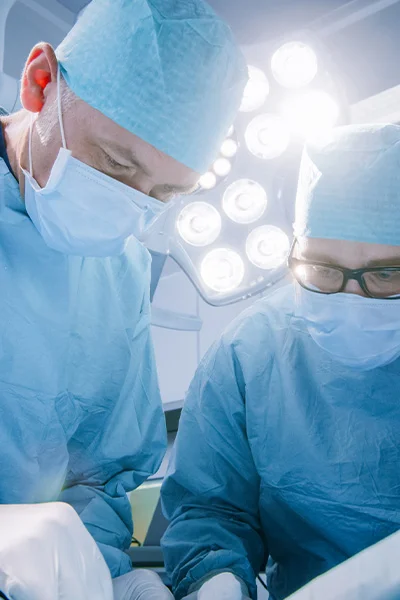
Arthroscopic meniscus surgery is a minimally invasive procedure in which the surgeon introduces the arthroscope – a thin, camera-equipped instrument – into the knee joint through small incisions. This allows precise mapping and treatment of the extent of cartilage detachment without the need for a large incision.
The procedure is generally performed under general anesthesia or spinal anesthesia, and patients can often go home on the day of surgery.
Removal of torn cartilage fragment:
When a piece of the meniscus breaks off and moves freely in the knee joint, it can cause pain, swelling, and limited mobility.
During arthroscopic surgery, the surgeon removes the torn cartilage fragment or fragments to restore normal movement of the knee and reduce pain.
Suturing in case of partial injury:
If the meniscus injury is partial and located in an area with good blood supply, the surgeon attempts to suture the injured parts together.
Suturing can help preserve the function and structure of the meniscus, which is beneficial for the long-term health of the knee.
The healing time may be longer than in the case of removal of the torn fragment and generally requires a stricter rehabilitation protocol.
Preparation for meniscus surgery
Meniscus surgery does not require special preparation. Naturally, it is advisable to pay attention to maintaining optimal body weight in this case as well. After surgery, assistive devices are generally not needed, but if necessary, crutches are recommended.
The course of meniscus surgery
The intervention takes place under general anesthesia or spinal anesthesia. The knee surgeon makes several small incisions of 0.5-1 cm along the patella. Through these, the instruments necessary for surgery are introduced and the removal or suturing of the cartilage fragment is performed.
At the end of the procedure, the wound is closed with sutures.
After surgery
- Surgery generally requires a one-day hospital stay.
- On the day after the intervention, walking exercises and physiotherapy begin with the help of a physiotherapist. Rehabilitation physiotherapy plays an extremely important role in recovery, so the exercises must be performed at home according to the instructions.
- Suture removal takes place 7-10 days after surgery.
- Light sports activity can begin with cycling, generally 3-4 weeks after surgery.
- After 6 weeks, the operated limb can be fully loaded.
It is important that the recommendations for the recovery period vary from individual to individual. Medical instructions may differ somewhat in the case of cartilage detachment removal and suturing of a partially torn cartilage fragment.
In all cases, the physician provides personalized advice on post-operative care.
Our specialists performing meniscus surgery

Dr. Gergely Holnapy, PhD
Chief Orthopedic-Traumatology Physician, University Adjunct, Robotic Surgeon

Dr. Péter Molnár
Orthopedic-Traumatologist, Chief Operating Surgeon, Robotic Surgeon

Dr. Zoltán Bejek PhD
Orthopedic Associate Professor, Robotic Surgeon

Dr. Szabolcs Gáspár
Orthopedic-traumatologist, head physician, robotic surgeon
Dr. Péter Doszkocs
Orthopedic-Traumatologist Chief Physician, Hip and Knee Surgeon, Lower Limb Specialist, Robotic Surgeon
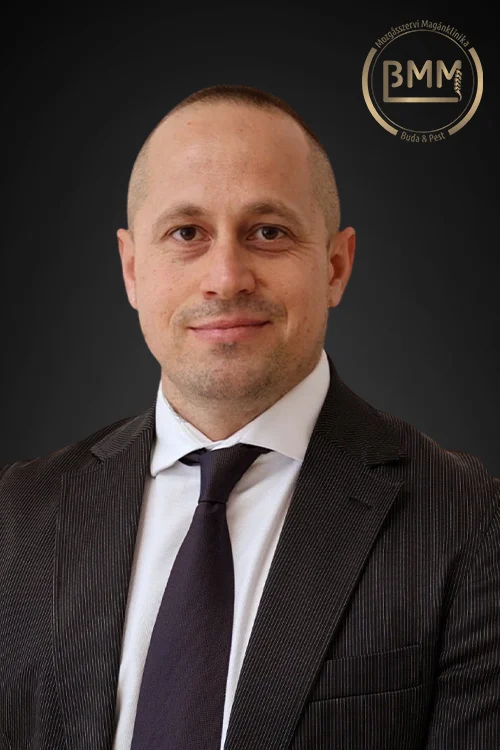
Dr. János Bartha
Chief Orthopedic-Traumatologist, Robotic Surgeon

Dr. Maysam Moghaddam Amin
Orthopedic-Traumatologist Specialist, Robotic Surgeon

Dr. Dániel Kincses
Orthopedic-Traumatologist Specialist, Robotic Surgeon

Dr. Ferenc Tompai
Chief Orthopedic and Trauma Surgeon

Book an appointment by phone

Online Appointment Booking