Hip Replacement Surgery
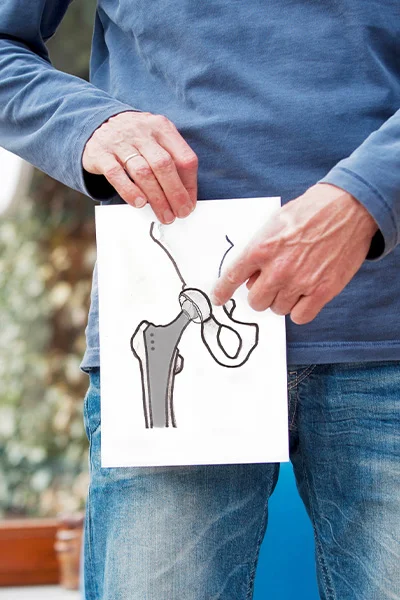
When is hip replacement surgery necessary?
In practice, two types of hip replacement surgery are performed: hip prosthesis implantation and prosthesis revision. In prosthesis implantation, the original human hip joint is removed and replaced with a prosthesis. In prosthesis revision, a previously implanted hip prosthesis is replaced again.
Hip prosthesis implantation is most often considered in cases of chronic hip joint pain, when conservative treatment can no longer relieve the patient's pain and it prevents daily activities. This is called advanced hip joint cartilage degeneration.
Hip joint pain and cartilage degeneration can have several underlying causes:
- Osteoarthritis (degenerative joint inflammation),
- Rheumatoid arthritis (autoimmune polyarthritis)
- Post-traumatic joint degeneration (e.g., after femoral neck fracture, pelvic bone fracture)
- Avascular necrosis, i.e., femoral head necrosis (usually caused by arterial circulatory disorder),
- Hip joint dysplasia, i.e., congenital hip deformity.
Prosthesis revision is performed when the primarily implanted prosthesis becomes loose or a component wears out and causes symptoms. Due to this risk, it is necessary to regularly check the implanted prostheses with X-ray examination every 1-2 years. Modern prosthesis systems are assembled from multiple components, so sometimes only one component needs to be replaced, which can prevent complete loosening.

Dr. Gergely Holnapy, PhD
Chief Orthopedic-Traumatology Physician, University Adjunct, Robotic Surgeon
Online appointment booking for Budafoki út clinic:
Please select the service that suits you
The follow-up fee is valid for 3 months after the initial examination for the same complaint.
- 1. Select the requested service from the drop-down menu!
- 2. Use the calendar to choose a suitable appointment time!
- 3. Register by entering your details, or log in with your previous registration!
- 4. If you wish to book on behalf of another person (e.g., your child), please indicate this in the designated field!
- 5. Briefly describe your complaints!
- 6. Select the type of consultation: initial examination, follow-up examination, or prescription.
- 7. Click the button to complete the appointment booking. Thank you for choosing BMM!
If you are unable to attend your scheduled appointment, please notify us of your cancellation at least 24 hours in advance. This allows other patients the opportunity to receive timely medical care. Thank you for your cooperation and understanding!
Cancellation: +36 1 44 33 433
If you cannot find an available appointment for your selected week, please call our call center at +36 1 44 33 433 for further assistance! Our staff will be happy to help you schedule an appointment with your chosen physician or another specialist according to your complaint.
Our patients' recovery stories - click for videos (34+ videos)

















About Hip Prosthesis
Thanks to the rapid development of medical science and technology, hip joint prosthetics has also advanced significantly in recent decades. The qualitative progress is remarkable both in terms of the surgical technique applied and the prosthesis systems implanted. Our orthopedic-traumatology specialists, experienced in large joint prosthetics, now treat patients with particularly soft tissue-sparing surgical techniques and the most modern, excellently certified prosthesis implants. The implanted hip prosthesis practically immediately replaces the function of the original, damaged hip joint, while also enabling much faster and pain-free rehabilitation.
The Healthy Hip Joint
The hip joint is a large ball-and-socket joint. The ball part is formed by the femoral head, which is the cartilage-covered, spherical end of the femur. The socket that receives the ball is called the acetabulum, which is a cartilage-covered cavity of the pelvic bone. In a healthy hip joint, the cartilaginous surfaces glide smoothly over each other. The smooth movement is lubricated by synovial fluid, which also nourishes the articular cartilage.
The hip joint is surrounded by strong ligamentous connections that provide joint stability. The femoral head is supplied by terminal arteries from the femoral neck, which ensure the circulation of the femoral head.
Robot-Assisted Hip Prosthesis Implantation with Robotic Navigation
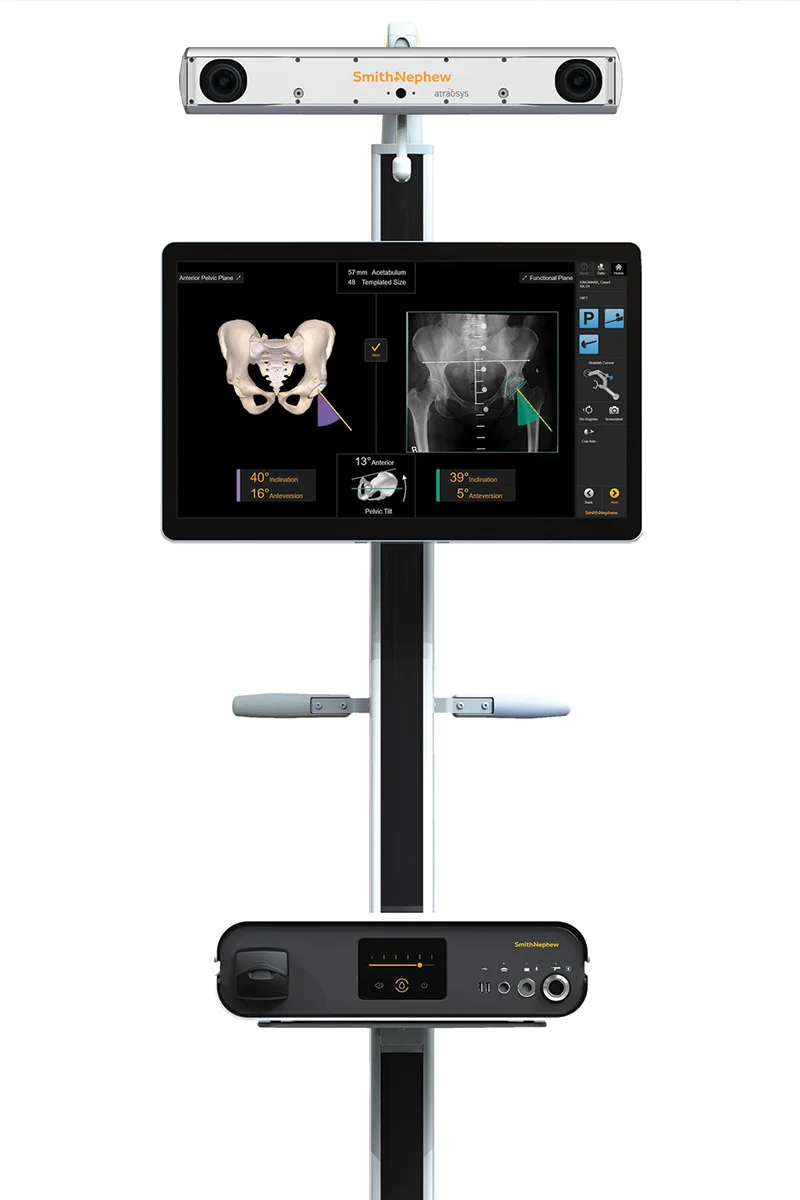
Robotics is increasingly transforming medicine, and in the future, physicians will apply robotic technology more widely. These systems can work and assist the physician with a precision that exceeds human perception and performance. One of the most modern procedures for hip prosthesis implantation is the robot-assisted surgical technique with robotic navigation, which represents a revolutionary advancement over traditional manual implantation. By applying robotics and precision technology, the intervention becomes even more accurate, safer, and more personalized.
While this technology is not yet available in many places, we already apply it, and an increasing number of our patients choose this type of surgery to ensure successful recovery and long-term mobility with the most modern procedure.
Advantages of Robot-Assisted Surgical Technique with Robotic Navigation
- Maximum Precision
The robotic system ensures perfect implant fit based on computer planning, which virtually eliminates leg length discrepancy. - Minimally Invasive Procedure
Muscles and soft tissues remain intact, resulting in faster recovery and less postoperative pain. - More Durable Prosthesis
Due to the nearly perfect personalized fit, the implant components wear less, significantly extending the prosthesis lifespan. - Fewer Complications
Precise implantation reduces the risk of prosthesis loosening and other complications. There is no need to worry about potential hip dislocation.
How Does Robot-Assisted Hip Prosthesis Implantation with Robotic Navigation Work?
One of the greatest advantages of CORI robot-navigated hip replacement surgery is that it requires neither CT nor MRI scans for preoperative planning. This not only makes the intervention more accurate but also reduces radiation exposure that would occur during a CT scan. Based on this, the robotic system creates a 3D virtual model on which the surgeon can precisely determine the optimal size and implantation position of the prosthesis. During surgery, the surgeon performs the intervention based on live feedback provided by the robotic navigation system, achieving accuracy to a tenth of a millimeter.
How Does Robot-Navigated Hip Replacement Surgery Perform Compared to Traditional Surgery?
Robot-navigated hip replacement surgeries offer significant advantages over traditional surgical procedures. Below you will find specific comparisons across various factors:
Based on the above data, it is evident that robot-assisted surgeries are not only more accurate but also ensure longer lifespan for the implant, reducing complications and the need for revision surgeries.
The orthopedic surgeons of the Budapest Private Orthopedic Clinic are committed to applying the most modern technologies, so robot-assisted hip prosthesis implantation with robotic navigation is also available at our clinic.
BMM specialists discuss hip replacement surgery in detail:


The Hip Replacement Surgery Procedure
The surgical procedure is fundamentally determined by the type of surgery (implantation or revision), the selected prosthesis type (cemented or cementless), and the surgical technique. Our specialists apply the currently most modern and effective minimally invasive surgical technique, which is performed without muscle cutting, using the so-called muscle-sparing method. This is a special soft tissue-sparing surgical procedure that enables much faster postoperative rehabilitation with less pain.
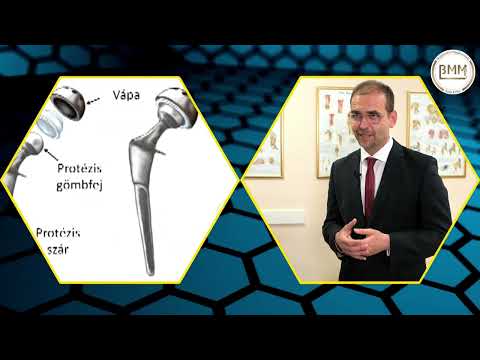
During hip prosthesis implantation surgery, the diseased femoral head is removed from the femur. The acetabulum in the pelvic bone is decartilaged and reamed with a series of hemispherical reamers. A metal, hemispherical acetabular component is implanted here, into which a hardened plastic liner is placed, or a plastic acetabular component is cemented in with bone cement (bone adhesive). Then the metal stem of the prosthesis is also implanted into the medullary cavity of the femur. This is done either by a cementless method, where it wedges into the bone, or by a cemented method (with bone cement). A metal or ceramic femoral head is placed on the stem component, which moves in the plastic part of the acetabulum, thus replacing the function of the original joint.
Types of Hip Prostheses
One of the key elements in planning hip replacement surgery is selecting the type of prosthesis. The main consideration is that the implanted implant should be most suitable for the patient, taking into account their age, bone stock, and lifestyle. Hip prostheses can be fundamentally divided into two groups: cemented or adhesive prosthesis, and cementless or non-adhesive prosthesis. Nowadays, the cementless prosthesis is increasingly widespread and most commonly used by experienced orthopedic surgeons, as it is specifically designed to allow bone tissue to grow onto it. Additionally, important factors include selecting the prosthesis stem length and determining the prosthesis material.
The hip prosthesis specialist orthopedic surgeons of the Budapest Private Orthopedic Clinic use prosthesis systems during surgeries that have outstanding durability statistics in the international prosthesis registry.
Preparing for Surgery
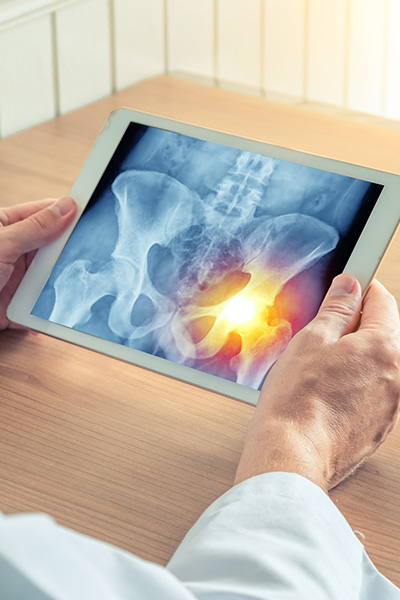
Preparation for the surgery begins with an orthopedic specialist examination, when the need for hip prosthesis implantation arises. The thorough examination includes taking an anamnesis, examining the movement of the hip joints, and analyzing the results of imaging diagnostic medical reports (X-ray, CT, MRI). Based on these, the diagnosis and treatment plan can be established. Amennyiben a csípőízület állapota azt indokolja, műtéti csípőprotézis beültetés jön szóba.
Before hip surgery, emphasis must be placed on several factors. One of the most important is body weight, which also significantly affects prosthesis survival after surgery. Additionally, a thorough preoperative examination protocol must be completed before surgery (laboratory tests, anesthesiology consultation, etc.). If necessary, physiotherapy should be started before surgery.
What to Expect After Hip Replacement Surgery?
After hip replacement surgery, the patient can sit up on the day of surgery, possibly stand beside the bed, and sometimes even take cautious steps. Immediately after surgery, there is no significant pain because modern surgical technique and anesthesia, along with the anesthetic injection given into the wound before completing the surgery, provide comfortable pain relief. The day after surgery, a physiotherapist visits the patient and mobilizes them with the help of a walking frame or elbow crutches. After hip replacement surgery, it is generally necessary to spend 3 nights in the hospital. Suture or staple removal occurs approximately 10-14 days after surgery.
During the first 6 weeks after surgery, more cautious weight-bearing is recommended, so the patient can walk, but it is advisable to use assistive devices (elbow crutches, walking frame), even if full leg weight-bearing is permitted. After the 6th week from surgery, a specialist follow-up and X-ray examination are necessary. If the prosthesis position has not changed compared to implantation, full weight-bearing without assistive devices is then permitted. Regular physiotherapy with a qualified physiotherapist is crucial in postoperative rehabilitation.
Our hip prosthesis specialist physicians:
Dr. Gergely Holnapy, PhD
Chief Orthopedic-Traumatology Physician, University Adjunct, Robotic Surgeon

Dr. Péter Molnár
Orthopedic-Traumatologist, Chief Operating Surgeon, Robotic Surgeon

Dr. Zoltán Bejek PhD
Orthopedic Associate Professor, Robotic Surgeon

Dr. Szabolcs Gáspár
Orthopedic-traumatologist, head physician, robotic surgeon

Dr. János Bartha
Chief Orthopedic-Traumatologist, Robotic Surgeon

Dr. Péter Doszkocs
Orthopedic-Traumatologist Chief Physician, Hip and Knee Surgeon, Lower Limb Specialist, Robotic Surgeon

Dr. Dániel Kincses
Orthopedic-Traumatologist Specialist, Robotic Surgeon

Dr. Maysam Moghaddam Amin
Orthopedic-Traumatologist Specialist, Robotic Surgeon

Dr. Ferenc Tompai
Chief Orthopedic and Trauma Surgeon
WHY IS BMM THE SAFEST SOLUTION?
Coordinated Surgical Team
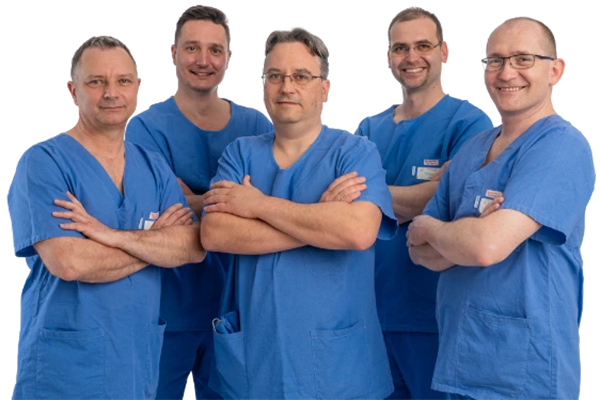
Our orthopedic surgeons performing hip replacement surgery have been working together for decades and know each other's every move.
Thousands of Surgeries Experience
Our orthopedic surgeons have performed thousands of successful hip prosthesis implantations; there is no case they have not encountered.
Modern Technology
Our surgeons apply hip joint endoprosthesis implantation without muscle cutting, which greatly reduces postoperative pain and accelerates rehabilitation.

Dual-specialist surgeries for the best outcome

A complete patient journey from booking to recovery

Priority care for patients awaiting surgery

Lucia Szentirmai
Patient of Dr. Péter Molnár
"I am so happy that I underwent hip surgery. I move just as well as before the symptoms appeared; I cannot stay in one place for two minutes; I really enjoy being able to move freely again! I am extremely grateful to the head physician; I am very glad that he restored my former, mobile and active life with the hip prosthesis implantation."

Ilona Danyiné Varga
Patient of Dr. Zoltán Bejek
"Everything went very well and I am grateful that I went to Dr. Zoltán Bejek for hip prosthesis implantation. My possibilities and living conditions have significantly improved with being able to move without obstacles and pain; this means a lot. I have been doing sports all my life and have been running regularly for 30 years; this was very important."

János Markó
Patient of Dr. Gergely Holnapy
"I was working as a courier when the hip pain started; unfortunately, my condition deteriorated so much that I could not walk and had to leave that job. However, thanks to the successful surgery, I returned. Within 3 months after surgery, I was a courier again, without pain."

Mrs. Géza Michnay
Patient of Dr. Szabolcs Gáspár
"I feel like the world has opened up before me. Walking, shopping, climbing stairs are no longer a problem, and I can easily board the bus. I still exercise to this day and love using the stationary bike. The two knee and one hip prosthesis have enabled me to go hiking and swimming. I absolutely love dancing, and now I can do that too."
| Hip prosthesis implantation without muscle cutting | Traditional hip prosthesis implantation | |
|---|---|---|
| Time spent in hospital | 1-3 days | 3-10 days |
| Rehabilitation time | 3-4 weeks | 6-12 weeks |
| Can begin office work | 14 days | 21-28 days |
| Can begin physical work | 8 weeks | 12 weeks |
| Driving | 6 weeks | 12 weeks |
| Restrictions after surgery | lower limb rotation and crossing, deep sitting, squatting are prohibited for the first 6 weeks! | lower limb rotation and crossing, deep sitting, squatting are prohibited for the first 10-12 weeks! |
| Surgical time | 50-70 minutes | 50-70 minutes |
| Blood loss | less | average |
| Pain level | less | average |
| Early joint stability (first 6 weeks) | better | average |
| Prosthesis dislocation frequency | 0.1-1% | 2-4% |
| Surgical scar size | depends on patient's build and musculature | depending on patient's build and musculature, larger than with the muscle-sparing technique |
| Possibility of aesthetic (bikini) surgical incision | available | not available |
For hip joint pain or questions regarding hip replacement surgery, please contact our specialist physicians with confidence!
Request an appointment for consultation or examination at +36 (1) 44-33-433!

Book an appointment by phone

Online Appointment Booking