Lumbago



What is called a lumbago?
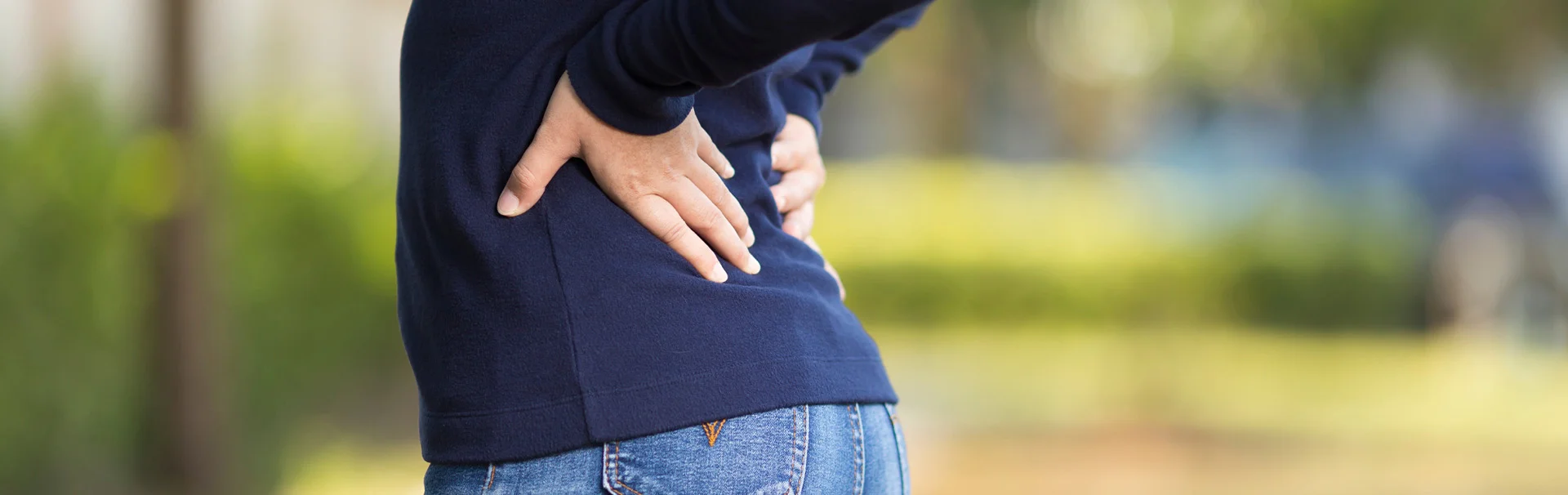
Lumbar spasm is a shooting pain in the lower back, around the sacrum, which is accompanied by a sharp reflex tensing of the thick back muscle that runs along the spinal column. The word "lumbago" itself is a medical term of Latin origin, meaning pain in the lower back. It is one of the most common musculoskeletal complaints, affecting one in three people in their lifetime.

Dr. Flórián Szeles
Rheumatologist general practitioner
What are the possible causes of lumbago?
The most common cause of lumbar strain is physical strain on the spine. This can be caused by playing sports, hard physical work or even just a wrong movement. However, lumbar spondylolisthesis is also often caused by a degenerative, abrasive lesion, typically after the age of 50. In older age, the bones, cartilage, joints and muscles may become weaker and lower back pain may occur more easily. In young people, lumbar sprains are usually caused by a muscle strain or some other injury. Some developmental disorders, such as scoliosis, also predispose to lumbar hernia. It is important to know that low back pain can recur in those who are prone to it, and can even be caused by psychological factors, such as stress, anxiety or overwork.
Less commonly, other, more serious musculoskeletal conditions may cause lumbago or lumbago-like lower back pain. This may be indicated by the presence of prolonged, chronic low back pain, as well as any accompanying symptoms (e.g. fever, numbness, loss of sensation, urinary problems, abdominal pain, weight loss). In such cases, a specialist should be consulted as soon as possible to make an accurate diagnosis and start treatment.
Dr. Éva Bordán
Rheumatologist general practitioner
When should you see a specialist?
In the case of a lumbar hernia, it is not always appropriate to see a specialist immediately. If the severity and duration of the pain does not warrant specialist care, it can be treated at home. It is worth seeing a doctor if the low back pain resolves within 3 days after relief with ordinary painkillers and/or ointments and is not accompanied by other symptoms.
Consult an orthopedic spine medicine specialist or rheumatologist as soon as possible if you notice any of the following symptoms:
- the lumbago returns within 2 months,
- pain is always increased in certain postures,
- the pain does not go away, it is constant, regardless of the position of the body,
- pain radiates to the lower limbs,
- weakness, numbness, loss of sensation in the limb,
- problems passing stools or urine,
- experience abdominal pain,
- catches a cold,
- severe pain caused by an accident or a blow,
- for known cancer,
- for osteoporosis,
- the pain is accompanied by undue weight loss,
- pain increases with steroid treatment.
Types of lumbago
There are basically two types of lumbago: acute lumbago, when the first onset of low back pain is less than a month old, andchronic lumbago, whenthe onset of symptoms is more than 3 months old.
Misconceptions about lumbago
"Lumbar spondylolisthesis is a disease of the elderly" - It is true that the incidence of lumbar spondylolisthesis increases with age, but it is also a common problem in young people. The severe low back pain associated with lumbago can have a number of causes, including age-related cartilage degeneration or sudden, pronounced strain on the spinal column. People at risk include athletes, people doing heavy physical work and even sedentary workers.
"The lumbago must be laid out" - The severe pain associated with a lumbago often causes reduced mobility, possibly even immobility. In such cases, rest is indeed recommended at first to relieve the spinal column. However, continuous lying for several days, or even weeks, is not recommended as it can cause muscle weakness and further musculoskeletal problems. After a short period of rest, it is preferable to treat the painful area with movement therapy. If the situation does not improve in a few days, a visit to a rheumatologist or specialist in orthopedics is recommended.
"Lumbar spondylolisthesis is not curable" - First of all, it should be made clear that lumbar spondylolisthesis is not a disease, but a complaint. The root cause needs to be found and treated so that it can be cured. People prone to lumbago need to pay more attention to themselves if they want to avoid the pain returning, but this can be done with a little effort.
"Lumbago needs surgery" - Lumbago does not in itself warrant an intervention. If there is a more serious underlying condition, such as a disc herniation or spinal stenosis, an intervention may be considered. This occurs in up to 5% of lumbago cases. However, in the majority of our patients, conservative therapy can bring a cure before surgery.
Is the health of your spine important to you?
Do you want to avoid painful back problems?
BMM's team of specialists can help!
Free video series
We've put together a selection of useful tips, information and videos, which we're now offering you for FREE! Enter your name and email address in the form below and we'll send you an email every day for the next week with details of the GERINVESTION STUDY-COMMAG compiled by our musculoskeletal experts! Content of the first letter: 6 good tips against back pain.

Dr. Dóra Mihola
Rheumatologist specialist
Investigating the lumbago
The rheumatologist and an orthopedic specialist will also examine your lumbago . At the Budapest Musculoskeletal Private Outpatient Clinic, we have developed a special patient journey protocol to ensure thorough examination and effective, targeted therapies.
Our mission is to help our patients regain their freedom of movement as soon as possible, and to permanently and long term relief from painful complaints.
An ordinary lumbago can be caused by a serious musculoskeletal condition - to find out what is causing the pain, it is always advisable to identify the cause and make a diagnosis. In its absence, only symptomatic treatment is possible.
The cornerstones of a successful investigation based on the BMM patient journey protocol:
- The medical history is half the diagnosis, and many diseases can be ruled out by detailed questioning.
- A thorough physical examination by a specialist. On the basis of the physical examination, a specialist will determine the need for any diagnostic imaging tests:
- X-ray examination can confirm bony lesions. X-rays are usually taken of the spine, hip joints, knees and feet. This is often necessary for isolating purposes related to diagnostics.
- The condition of the soft tissues, discs, articular cartilage, muscles and tendons is accurately assessed by the radiograph.
- In some cases, a CT (computer tomography) scan or MRI (magnetic resonance imaging) scan is also needed to make an accurate diagnosis.
- In the case of nerve involvement, neurophysiological testing, ENG or EMG is required to determine the extent of suspected nerve damage.
Diagnostics tests can help to visualise and measure anatomical structural changes and reveal the true cause of the complaint.
Neuroconductive neurophysiological examinations (ENG/EMG) are available at BMM's clinics in Pest and Óbuda. The necessary X-ray examinations, ultrasound examinations, CT scans and MRI examinations are provided by our partner institutions at an external location for an additional fee.
- Based on the medical history, physical examination and imaging diagnostics, the specialist makes an accurate diagnosis.
- A personalised treatment plan is drawn up. We accompany our patients all the way to recovery!
The key to success is doctor-patient cooperation and trust!
Treatment of acute lumbago
For acute lumbar sprains that are not too painful - if the pain is not accidental - home treatment is often sufficient. In such cases, spinal manipulation, painkillers, muscle-relaxing ointments, perhaps some gentle stretching exercises and gentle massage are recommended. If after 3 days there is no noticeable improvement, or even a worsening of the condition, a specialist examination and treatment cannot be avoided.
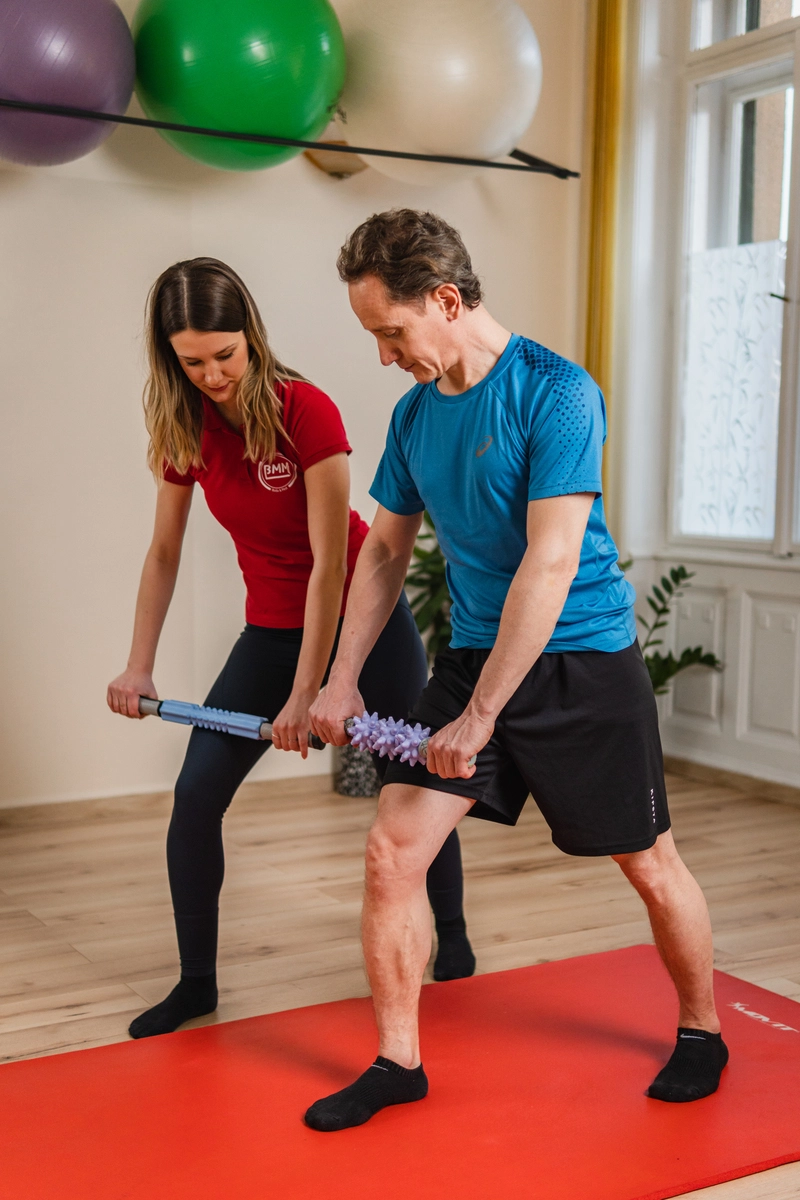
The aim of treatment for acute lumbar sprain is to relieve muscle tension and restore mobility. For severe, debilitating lower back pain, your specialist may recommend steroid pain and anti-inflammatory injections. In addition to medication, movement therapy plays a major role in recovery: personalised individual physiotherapy, manual therapy, therapeutic massage and physiotherapy treatments (ultrasound therapy, laser therapy) can help to control lumbar pain.
Treatment of chronic lumbago
Recurrent or chronic lumbago is usually less intense, but in the long term it can have a significant impact on quality of life. If your lower back pain persists for 3 months or returns regularly, it is always worth investigating the underlying cause. For an accurate diagnosis, a visit to an orthopedic spine medicine specialist or rheumatologist is recommended. The treatment plan for chronic lumbago will be tailored by the specialist on the basis of the examination. Most often, a combination of anti-inflammatory medication, medical collagen therapy, laser therapy, ultrasound therapy, TENS electrotherapy, manual therapy, individual physiotherapy and therapeutic massage treatments will bring a long-term solution.
Surgical intervention is only necessary in a minority of cases when a particularly serious disease (e.g. spinal tumour, disc herniation) is confirmed as the cause of the pain.
How to prevent lumbago?
Lumbar spondylolisthesis can occur at almost any time, in anyone, but with a little care the risk of developing it can be reduced. The older age group is the main group at risk, but athletes, people with heavy physical work and office workers are also at higher risk of lumbar spondylolisthesis than average. The first step in prevention is to eliminate predisposing factors.
Lifestyle factors that predispose to lumbago:
- a sedentary lifestyle,
- smoking,
- overweight,
- unhealthy diet,
- wearing high heels,
- prolonged incorrect posture.
Lumbago is less likely to occur if healthy muscles and bones are maintained. For those prone to lumbago, it is worth seeking the help of a physiotherapist to practise and learn correct posture and lifting technique and apply this on a daily basis. Include in the diet foods high in calcium, magnesium and vitamin D, which help to keep bones and muscles healthy.

Most Common Complaints Treated by Spine Medicine Center Specialists
- lower back pain
- lower back pain
- scoliosis
- nerve compression
- back pain
- neck pain
- stiff neck - neck stiffness
- osteoporosis
- spinal pain
- spinal stenosis
- back pain
- lumbar spine pain
- gluteal muscle pain
- poor posture
- sacrum pain
- shoulder blade pain
- morning lower back pain
- neck pain