Tenosynovitis



Tendonitis is a common and unpleasant hand condition in which the tendons running along the wrists and hands become inflamed. It can be a recurring problem, so it is advisable to consult a specialist in hand surgery as soon as possible if symptoms occur.
Symptoms of tendonitis
The most common symptom of tendonitis is sudden onset of pain and swelling of the tendon sheath, most commonly in the hand and wrist area. Inflammation can cause the affected area to become hot, sometimes accompanied by fever or temperature, and may be caused by an infection.
The pulling sensation of members with inflammation is a common complaint. According to patients, this sensation is most similar to when snow crunches between your hands or under your feet. If a similar sensation is experienced, there is a high likelihood of tendonitis.
Incidence of tendonitis
In today's digital world, the incidence of tendon inflammation is on the rise, as overuse of tendons due to monotonous movements causes tendon inflammation. This can be due to constant use of our mobile phones, but there are also predisposing factors such as diabetes.
It's not just in the hand: where tendons run directly along the bones or come into contact with the bony prominences, they are surrounded by a tendon sheath , which is designed to protect the tendons from excessive rubbing and friction. Thus, the joints of the thumb, elbow, forearm, hand and foot can all become inflamed.
Who can develop it?
The unpleasant symptoms of tendonitis can develop regardless of age and gender, as it is caused by frequent, repetitive movement and strain. In the past, it was typically known as a disease of cleaners and hairdressers , who performed monotonous, strenuous manual work, but in today's modern age, the use of mobile phones and computers has increased the number of cases of tendonitis. It can affect young people as well as older people.
Where does tendonitis develop?
One-off, prolonged and monotonous activities that use smaller muscles can also cause tendonitis.
Wrist
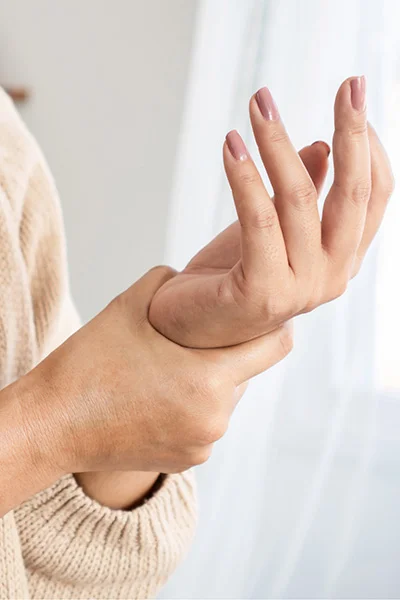
Tendinitis most often occurs in the wrist area, where swelling is often visible to the naked eye.
Foot
Because there are so many small muscles and tendons in the foot, there are many different ways that tendonitis can occur. However, we use our feet relatively often, so tendonitis around the toes is relatively rare. It is most common in women wearing high heels.
Ankle and calf
Ankle tendinitis is most commonly caused by improper running technique.
Elbows
Elbow tendinitis is colloquially known as tennis elbow. The inflammation around the elbow can be caused by tennis, as the name suggests, but also by frequent intensive typing or mouse use. When it develops, the muscles of the forearm become overworked and the tendons of the muscles become inflamed.
Knee
Knee tendinitis is called runner's knee because it is most commonly caused by overuse or improper use of the knee during running and cycling.
When a running knee develops, the tendons surrounding the muscles that flex and stretch the knee experience inflammation. Unfortunately, because it is difficult to fully rest our knees, the healing process for knee tendonitis is relatively slow.



Many people mistake the pain from overuse, the onset of tendonitis, for simple muscle fever. If you feel this way, wait a few days. If the pain doesn't subside and go away completely in a few days, you probably have tendonitis. Physical therapy can help speed up the healing process.
Causes of tendonitis
Tendonitis is caused by monotonous, repetitive movements that put strain on the joints and tendons. The disease can be caused not only by mechanical irritation but also by infection through injury. It is also relatively common in people with diabetes, although the cause is not known.
The psychological causes of tendonitis
As with most diseases, the development of tendonitis can be contributed to by mental health, emotional overload and constant stress. If someone feels constantly overwhelmed and overburdened by the work they have to do, they can easily develop the symptoms of tendonitis.
In addition to the physical causes, it is also worth looking at the psychological background. A complex approach to the problem is essential for a full recovery.
How long does tendonitis last?
Unfortunately, tendonitis can last for several weeks, during which time the affected part of the body must be rested and spared. Strain on the affected part of the body can hinder healing and the disease can easily recur.
Treatment of tendonitis
The first step in conservative treatment is to immobilise and immobilise the joint, which can be done classically with a plaster splint or the more modern version, a plastic brace.
The latter is more comfortable for everyday use as it can be removed, making it easier for the patient to clean and dress themselves. It is very important to rest the affected area, as the healing process is long and the disease can easily recur.
The use of topical, non-steroidal anti-inflammatory ointments and patches can also help, and should be complemented by gentle physiotherapy . If conservative treatments have not been successful, a surgical intervention to open the narrowed tendon sheath and remove the accumulated inflammatory tissue may be an option.
There is a more dangerous form of tendonitis called suppurative tendonitis. This should be diagnosed by a specialist in hand surgery, but it is a warning sign if symptoms have been present for more than 3 weeks and the swelling has not gone down.

Prevention of tendonitis
Tendonitis can be prevented if the patient avoids one-sided, monotonous movements and sports. Warming up before sport is also very important.
Also, when working on the computer , take frequent breaks, move your hands, massage your wrists and get wrist rests for mouse use.
Tendonitis surgery
Chronic unidirectional strain causes a build-up of fluid in the peritoneum, and the resulting tension causes the discomfort, stabbing , burning pain and swelling. You may even hear an audible, noticeable click when you move. If not treated properly, the thickening of the outer wall of the tendon sheaths will prevent the tendon from moving freely and may lead to bunions syndrome.
Tendonitis is treated with a day hand surgery intervention under local anaesthesia.
Massage for tendonitis
Later in the healing process, the tendon can be gradually loaded, with the help of a physiotherapist. Massage the affected area using anti-inflammatory creams and start to use the healing part of the body again with frequent rest.
Our Orthopedic Specialists

Dr. Zoltán Bejek PhD
Orthopedic Associate Professor, Robotic Surgeon

Dr. Tamás Hábel
Traumatologist, Hand Surgeon