Gout




What is gout?
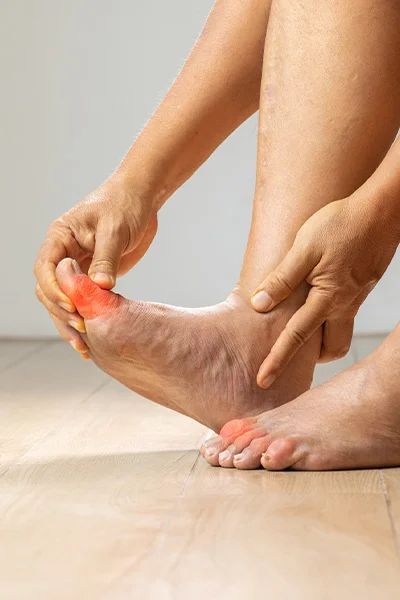
Gout is a type of joint inflammation caused by a metabolic disorder that causes painful spasms in the affected joints. It most commonly occurs in the joints of the big toe of the foot, but can also occur in the joints of the ankle, knee, elbow, wrist and hand. It affects both men and women and can occur from a young age.
The causes of gout
The main cause of gout is lifestyle, including diet. The disease is caused by high levels of uric acid, also known as purine, accumulated in the joints. Purine is an organic compound found in many foods, with high levels in meats, animal proteins and fish, but also in some vegetables, mushrooms and legumes. This is why the old saying goes that gout is a disease of the rich. Excessive consumption of foods high in purines is particularly unhealthy and can lead to obesity and gout.
Normally, uric acid is secreted and excreted by our kidneys. In gout , however , purine accumulates in the blood and precipitates as needle-like crystals in one or more joints. These uric acid crystals cause inflammation and pain.
Less commonly, however, the underlying cause of the problem may be an autoimmune disease or bacterial infection. It is the responsibility of a specialist rheumatologist to determine the origin of the condition, make an accurate diagnosis based on a thorough examination and recommend appropriate treatment.
Symptoms of gout
Gout disease is usually signalled by the gout attack itself. It is associated with severe joint pain, often at night and lasting up to 5-7 days . In addition to the pain , the affected joint becomes red, swollen and very sensitive to pressure, and may even develop a fever during the gout attack . The attack may go away without a trace, either on its own or with painkillers after 5-7 days, but it can return at any time if left untreated. Repeated attacks can cause serious joint damage and deformity, in addition to pain and loss of quality of life, so it is worth consulting a specialist rheumatologist at the first sign of an attack.
To read more about the symptoms and psychological causes of the disease, click here!
When should you see a specialist?
Consult a specialist rheumatologist as soon as possible if you experience any of the following symptoms:
- Severe joint pain (toe, ankle, knee, elbow, wrist, fingers)
- Swelling develops in the affected area, the skin becomes red, warm and tight, sensitive to touch and pressure.
- If your symptoms are accompanied by fever, chills, weakness (not always the case)
- If you have no complaints but your blood count is high in uric acid.

Risks of chronic gout
Gout becomes chronic if it is not treated. Many people ignore the attacks, perhaps confusing them with other conditions of joint inflammation, and after a few days of pain relief, do not consult a specialist. However, the precipitated uric acid crystals are still present in the joints during asymptomatic periods, constantly destroying them and keeping the whole body in a constant state of inflammation. Untreated gout can lead to kidney stones, kidney failure, diabetes, for example , and also increases the risk of cardiovascular problems and certain liver diseases. In the long term, uric acid crystals can also cause joint deformities, which are not just an aesthetic problem: they cause reduced mobility and therefore also hinder everyday life.
The horror of kidney stones
Around one fifth of patients with gout develop a uric acid kidney stone, which can block the urinary tract. This not only causes excruciating pain but, if left untreated, can lead to inflammation and kidney damage.
In patients with gout who also have other kidney-damaging conditions, such as high blood pressure or diabetes, the progressive deterioration of kidney function reduces uric acid excretion, causing joint damage to get progressively worse.
Can gout be prevented?
High uric acid levels are a warning sign that it is worth changing your lifestyle and preventing the development of the disease. In addition, genetic predisposition should also be taken into account, as people with a family history of gout are more likely to suffer from the same disease. The first method of prevention is good nutrition. In this case, it is a matter of following a diet low in purines and drinking plenty of fluids (water, herbal teas).
Observations have shown that being overweight can also cause an increase in uric acid levels, in which case weight loss alone is often enough to relieve the symptoms of gout. Smoking also increases the risk of developing the disease, so quitting smoking is an important part of prevention.
Some people believe that pineapple, celery and black cherries are effective in preventing (and curing) the disease . The enzymes found in pineapple reduce inflammation and pain. And celery, according to folk medicine, is a great help in maintaining uric acid levels. And black cherries, blueberries and strawberries help relieve joint pain. Another folk remedy is to drink nettle tea as a cure.

Treatment options
The treatment is always decided by a specialist in rheumatology, based on a thorough examination and diagnostics. The underlying cause of the disease, its progression and whether or not there is acute inflammation play an important role in determining the personalised therapy .
The first step is to reduce the inflammation, which is usually achieved with oral medication, in some cases injections, lots of rest and gentleness. In the vast majority of cases, non-steroidal analgesics and anti-inflammatory drugs are already effective, but sometimes the inflammation is so severe that it can only be controlled by steroid treatment.
After treatment of the acute phase, an important goal is to reduce uric acid levels!
In order to achieve this , the rheumatologist will need to take into account the person - and their weight! - gout diet based on vegetables, fruits and cereals. The patient should therefore avoid foods with a high purine content such as fish, offal, poultry, yeast, smoked meat, pork, beef, green peas, peanuts and spinach.
Avoid baked goods high in fat and sugar. Low-fat milk, skimmed cheese and cottage cheese should be consumed. Broth and broth should also be excluded from the normal diet. Vegetable and fruit soups should be consumed instead. This sparing diet can be supplemented with salads and potatoes in their skins, which are the preferred foods, along with rice and lemon. Sugar and sweets should also be avoided. It is important to drink plenty of fluids, at least 3 litres a day in the form of non-carbonated water and teas. Balfi and Salvus waters, for example , and nettle tea are valued as excellent purine drinkers. The latter is considered one of the best blood purifying herbs. In addition to diet, medication is often needed to maintain uric acid at the right level, at the discretion of the specialist.
Our rheumatologist specialists

Dr. Dóra Mihola
Rheumatologist specialist

Dr. Flórián Szeles
Rheumatologist general practitioner

Dr. Katalin Bán
Rheumatologist specialist

Dr. Éva Bordán
Rheumatologist general practitioner