Complex rehabilitation after plastic surgeries
Plastic surgeries have become increasingly common nowadays. Following these interventions, a shorter or longer recovery period and complex rehabilitation await the person who has undergone the operation. Various websites offer numerous summaries about the post-operative period, including very brief versions that do not provide reliable information. Like all surgeries, plastic surgeries can also lead to complications. It is advisable to be aware of these before making a final decision about the operation, as recognizing and treating any unexpected changes in the surgical area will be easier.
What complaints can you address at our musculoskeletal private outpatient clinic?
Scarring defects
Following a plastic intervention, impaired wound healing may occur, requiring the fresh scar to be reopened once, or even multiple times, which increases the likelihood of scarring defects. Such defects can develop even without wound infection, often depending on the operated person’s predisposition to scarring.
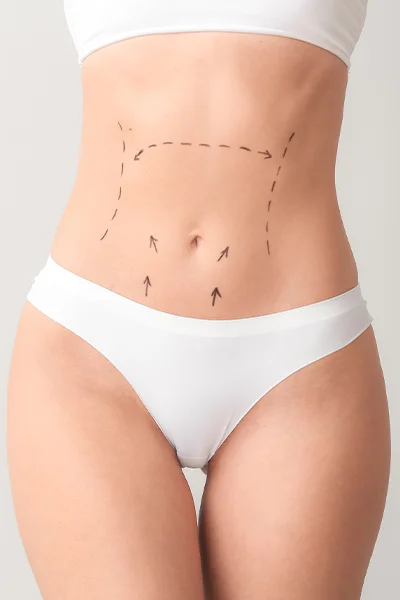
What types of scarring defects might you encounter?
Hypertrophic scar, keloid scar, contracture scar, atrophic scar: you can read more about these in the scar treatment menu. A scarring defect is not merely an aesthetic problem; it can also cause functional impairments, making the patient’s daily life difficult.
For these problems, modern physiotherapy treatment methods are available at the Budapest Musculoskeletal Private Outpatient Clinic. In addition to well-known scar massage and scar treatment creams, we employ numerous other therapies to ensure our patients’ speedy recovery: FDM, use of scar treatment tools: Penczel stick, dermaroller, fascia release tools, cupping, TAPE, vibrating fascia release tools, maderotherapy, gua sha treatment, fascia knife treatment, brush massage, flossing, soft laser therapy.
Our goal is the rapid recovery of our patients, alleviation of their symptoms, and acquisition of self-therapy skills, enabling them to perform independent scar treatments at home.
Lymphedema
During interventions, not only our skin but also the lymphatic vessels within it are damaged. These vessels are responsible for transporting lymphatic fluid found between tissues. If we have fewer lymphatic vessels in a given region congenitally, and then further reduce their number through surgical incisions, lymphedema can develop. When swelling persists even after the early post-plastic surgery period, it needs to be treated with lymphatic massage (compression bandaging, lymphatic exercises); these are known as postsurgical secondary lymphedemas. Early recognition of this is crucial, as chronic lymphedema can lead to numerous complications, which we can effectively treat with complex decongestive therapy. You can read more about this in the lymphedema treatment menu.
The more surgical incisions made on our skin, the more lymphatic vessels are severed, thereby reducing lymphatic drainage. In a small percentage of cases, severe lymphedema can develop after complex upper/lower body lift body contouring surgery, and we must be aware of this risk.

Soft tissue tension
After the intervention, the patient may feel tension in areas distant from the surgical site and experience restricted movement in nearby joints. This is due to the adhesion of the connective tissue sheaths surrounding the muscles, known as fasciae. Therefore, it is extremely important to release not only the surgical scars but also the surrounding fasciae with manual therapies, various fascia release tools, and learning full-body SMR rolling.
After muscle transection / in cases of muscle involvement, trigger points can develop in the muscles, which we release with manual trigger point therapy.
Postural disorders
The correction of postural disorders is carried out with a special, individualized physiotherapy program, aiming to eliminate developed muscle imbalances.
Following breast augmentation, the implanted prostheses place a greater burden on our thoracic spine and supporting muscles, which often leads to back pain.
An apron belly is very often associated with the condition of separated abdominal muscles (rectus diastasis). Therefore, one of the most important goals of complex rehabilitation after plastic surgeries is to strengthen the weakened transverse abdominal muscle.
Physiotherapy is always capable of effectively reducing musculoskeletal complaints that arise after plastic surgeries.
Most common plastic surgeries
- Apron belly reconstruction
- Breast augmentation
- Upper body lift
- Lower body lift
- Neck lift
Apron belly reconstruction – panniculectomy
In cases of apron belly, sagging skin and fat tissue accumulate in the abdominal region following significant weight loss or pregnancy. In most cases, this phenomenon is associated with the condition of separated abdominal muscles (rectus diastasis).
Unfortunately, we are not only dealing with an aesthetic problem; the sagging soft tissue mass places a significant burden on the lumbar spine, causing constant lower back pain. Furthermore, it can hinder everyday activities and sports.
During abdominoplasty, the “apron” is removed, the navel is repositioned, and if necessary, the rectus abdominis muscles are joined with sutures.
The scar runs along the bikini line, between the hip bones, meaning lymphatic vessels are severed over a large area. In many cases, a history of C-section is also present, which also involves severing lymphatic vessels. These plastic surgeries can cause complaints even years later! Lymphedema does not always develop, but if you experience persistent swelling of the lower limbs or abdominal wall, do not wait; seek out a specialist experienced in therapy, a lymph therapist.
Since we are dealing with a large scar, significant adhesions and soft tissue tension can develop, so scar treatment must be started as soon as possible.
The complex rehabilitation of separated abdominal muscles involves a series of exercises with specific tasks. The focus is on strengthening the transverse abdominal muscle and pelvic floor muscles, learning correct breathing techniques, and practicing corrections. You can read more about this in the postpartum rehabilitation menu.
Breast Augmentation
Among plastic surgical interventions, this is the most common plastic surgery procedure in Hungary. Surgical descriptions mention minimal complication possibilities, but like other surgeries, scarring defects, musculoskeletal complaints, soft tissue tension, and even lymphedema can develop here.
Within six months following surgery, the so-called post-breast surgery pain syndrome (PBSPS) develops in 50% of cases.
During the intervention, not only the skin and the lymphatic vessels running within it, but also nerve fibers can be damaged. Depending on whether the implant is placed above or below the muscle, muscle involvement may also occur, and the connective tissue sheath (fascia) surrounding the muscle is also affected. The scar created by the surgical incision causes adhesions in the connective tissue. In such cases, a feeling of tension may be felt around the scar, but it is important to be aware that fascial tensions can also cause complaints in areas distant from the affected region: abnormal sensations (as if ants are crawling on the affected area, needle pricks, numbness), soft tissue tension. The implanted prosthesis changes the course of the muscles, and during surgery, the pectoral muscle is retracted for easier implant placement. Consequently, trigger points can develop in the muscle belly, which can cause pain radiating to the chest and arm area. Pain may also occur in the armpit, sternum, and neck areas, and the patient may also experience headaches, lower back pain, and breast insensitivity. Many people do not even consider that these complaints are caused by the previously implanted prosthesis and the scarring it caused.
The importance of physiotherapy and scar treatment in complex rehabilitation
Due to the increased mass of the breasts, back pain is common and can be treated with specialized posture-correcting physiotherapy.
In addition to musculoskeletal complaints, asymmetrically positioned breasts due to adhered fasciae can also cause aesthetic problems. In such cases, it is very important to learn scar treatment and soft tissue release techniques, and to regularly practice self-therapies at home.

Body lift surgeries – body contour correction surgeries
The shape and physique of our body change over time, following significant weight loss or pregnancy. In certain areas, we find excess tissue that needs to be removed, while in other areas, we face tissue defects that can be corrected with fillers. Combined interventions aimed at shaping the body and improving its contour are collectively referred to as body lift surgeries.
Various body lift surgeries are known:
- Upper body lift: correction of upper arms, armpits, breasts, back
- Mid body lift: correction of abdomen, waist
- Lower body lift: correction of abdomen, waist, buttocks, thighs
- Total body lift: combination of upper and lower body lift
Combined surgeries inherently carry the surgical risks of all interventions! They require thorough examination and great care!
Face and neck lifts
Scars developing in these areas can cause not only aesthetic problems but also functional complaints. Mouth opening and head movements may be hindered, and in cases of potential muscle involvement, headaches may recur. Our patients receive effective solutions with scar treatment and fascia release techniques.

Book an appointment by phone

Online Appointment Booking