Spine Medicine
– Lower Back Pain and Spinal Complaints

How Can the BMM Spine Medicine Center Help?
Spine medicine is a specialized field that deals with the structure and functional disorders of the spine (e.g., lower back pain, back pain), as well as the diseases arising from these conditions. The BMM Spine Medicine Center provides high-quality care in diagnosing and treating various disorders of the spinal cord, vertebrae, intervertebral discs, and the soft tissues surrounding the spine. Our expert physicians and therapists apply the most modern diagnostic and therapeutic methods to help our patients regain pain-free movement as quickly as possible.
Dr. Gábor Czigléczki PhD
Neurosurgeon, spine specialist
Online appointment booking for Budafoki út clinic:
Please select the service that suits you
The follow-up fee is valid for 3 months after the initial examination for the same complaint.
- 1. Select the requested service from the drop-down menu!
- 2. Use the calendar to choose a suitable appointment time!
- 3. Register by entering your details, or log in with your previous registration!
- 4. If you wish to book on behalf of another person (e.g., your child), please indicate this in the designated field!
- 5. Briefly describe your complaints!
- 6. Select the type of consultation: initial examination, follow-up examination, or prescription.
- 7. Click the button to complete the appointment booking. Thank you for choosing BMM!
If you are unable to attend your scheduled appointment, please notify us of your cancellation at least 24 hours in advance. This allows other patients the opportunity to receive timely medical care. Thank you for your cooperation and understanding!
Cancellation: +36 1 44 33 433
If you cannot find an available appointment for your selected week, please call our call center at +36 1 44 33 433 for further assistance! Our staff will be happy to help you schedule an appointment with your chosen physician or another specialist according to your complaint.
What Are the Most Common Spinal Diseases?
The spine is one of the most important components of the human body, responsible not only for movement but also housing the central part of the nervous system. Unfortunately, our spine is prone to numerous diseases, in the development of which sedentary, inactive lifestyles play an increasingly significant role.
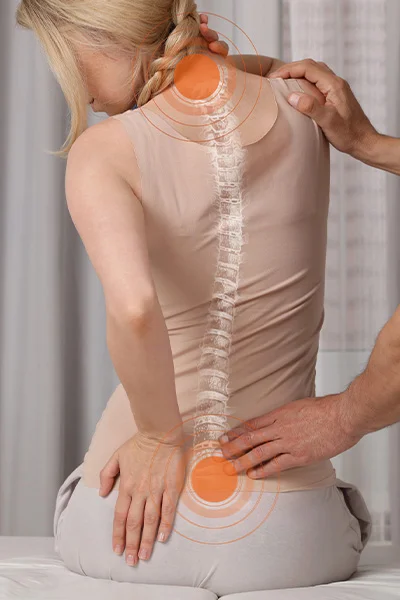
Most Common Spinal Diseases:
- Sciatica
Inflammation or irritation of the sciatic nerve, often accompanied by lower back pain and radiating pain, numbness in the leg. - Nerve Compression
In this case, one or more nerves in the spine come under pressure, which can cause pain, numbness, or even weakness in the affected area. - Bechterew's Disease
A chronic inflammatory disease that primarily affects the spine, causing stiffness and pain for the patient. - Neuralgia
Inflammation of the spinal nerves, which can cause severe, burning pain along the spine. - Flat Back – Scheuermann's Disease
An adolescent disease involving excessive flattening of the upper spine (thoracic and cervical sections). In severe cases, it leads to loss of the spine's natural curvature.
- Spinal Stenosis
Due to narrowing of the bony cavity (spinal canal) running through the spinal column, the nerves running within it come under pressure. This condition can be accompanied by severe pain and restricted movement.
- Disc Herniation, also known as herniated disc (discus hernia)
A chronic inflammatory disease that primarily affects the spine, causing stiffness and pain for the patient.
- Lumbago
Sudden, severe lower back pain, often resulting from spinal overload or an incorrect movement. - Degenerative Joint Disease (Osteoarthritis)
Particularly common among older age groups and involves cartilage wear. It typically causes pain and stiffness. During this disease, spinal mobility decreases and performing daily activities becomes difficult.
- Osteoporosis
A decrease in bone mass occurs. This condition weakens the bones and increases the risk of fractures.
- Scoliosis
Lateral curvature of the spine, resulting in postural problems. It is a common problem, especially occurring during adolescence.
- Discopathy
Refers to disease or damage to the intervertebral discs in the spine.
- Spondylosis
A degenerative disease of the spinal column, involving wear and deterioration of the joints and vertebrae, which can lead to pain and stiffness.
- Sciatic Nerve Inflammation
Occurs when the sciatic nerve (one of the body's longest and thickest nerves) suffers irritation or pressure. Main symptoms include lower back pain, numbness, and weakness in the legs. This problem often develops as a result of disc herniation or spinal stenosis.
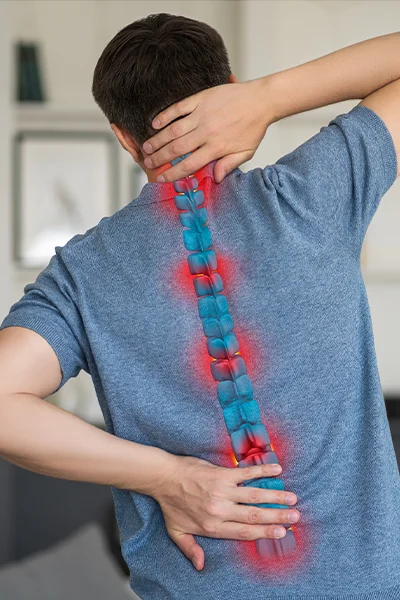
Herniated Disc and Disc Herniation – The Primary Cause of Lower Back Pain?
To better understand herniated disc, it is important to know that the spinal column is composed of vertebrae, with the flexible connection between them provided by intervertebral discs.
Intervertebral discs consist of two parts:
- an outer circular fibrous ring, and
- an inner gelatinous nucleus.
The intervertebral discs are the "shock absorbers" of our spine, ensuring the mobility and flexibility of the spinal column.
In the case of a herniated disc, the outer fibrous ring of the intervertebral disc ruptures and the gelatinous nucleus protrudes through it, creating what is called a bulge. Due to the bulge, the nerve roots exiting the spinal cord may come under pressure, become compressed and inflamed, or even be damaged. Nerve fiber damage can cause long-term mobility restrictions or even paralysis.
The main symptom of a herniated disc is sharp pain, but this condition can also be accompanied by numbness.
Behind lower back pain, which has become almost an epidemic today, there is very often a herniated disc. Timely recognition and treatment of spinal disorders is important to avoid later surgery. – Without proper treatment and attention, a herniated disc can rupture, causing extremely severe pain, restricted movement, and further nerve damage. Herniated discs can generally be treated excellently with conservative methods, but there are advanced conditions where only herniated disc surgery can provide a solution. – The BMM Spine Medicine Center team provides professional assistance even in the case of surgery.
Neck pain
Cervical disc herniation is a disease of the intervertebral discs between the vertebrae of the cervical spine. In this condition, the inner, softer part of the disc ruptures through the outer, stronger ring, as mentioned above. This rupture exerts pressure on the nerves of the cervical spine and the spinal cord, which can cause pain, numbness, weakness, or sensory disturbances in the arms and other parts of the upper body.
Cervical disc herniation is a common condition, especially among those who perform monotonous, neck-straining activities for long periods, such as desk work.
Symptoms of cervical disc herniation include:
- pain in the neck, shoulders, and arms,
- numbness or tingling felt in the arms or fingers,
- and occasionally muscle weakness.
These symptoms may worsen with certain head movements.
Establishing an accurate diagnosis typically requires a physical examination, anamnesis (patient history), and imaging procedures such as X-ray, MRI, or CT.
Treatment may include conservative methods:
- physiotherapy,
- pain relief medication,
- or in more severe cases, surgical intervention
The goal is to reduce neck pain, restore motor function, and prevent further nerve damage.
Lumbago and Sciatica Behind Lower Back Pain – Why Are More and More People Affected?
Due to the modern sedentary lifestyle and increasing physical inactivity, more and more people suffer from complaints caused by lower back pain. These are most commonly caused by lumbago and sciatica, which not only cause discomfort and pain but can also have a serious negative impact on daily quality of life.
- The main symptom of lumbago is sharply occurring lower back pain. The most common triggers of the problem are incorrect posture, a wrong movement, or lifting too much weight incorrectly. Lower back pain can start suddenly and can be acute or chronic, limiting movement.
- Sciatica, also known as sciatic nerve inflammation, is a condition involving irritation or pressure on the sciatic nerve. It typically causes pain, numbness, burning sensation, or weakness from the lower back through the legs, often all the way to the toes. The sciatic nerve is one of the largest and longest nerves in the human body, originating from the lower part of the spine and running through the legs to the toes. Sciatica often develops as a result of spinal disc herniation, muscle inflammation, or other spinal disorders. The severity of pain caused by sciatica can vary, from mild discomfort to unbearable pain.
In summary, lumbago and sciatica are common causes of lower back pain, in the prevention and treatment of which conscious lifestyle and appropriate medical care play a key role. If you experience similar symptoms, be sure to consult a specialist to determine the correct diagnosis and treatment plan.
How Is Diagnostics Performed at the BMM Spine Medicine Center for Lower Back Pain and Other Spinal Complaints?
The BMM Spine Medicine Center provides outstanding assistance in the effective diagnosis and professional treatment of lower back pain and other spinal complaints. A thorough diagnostic process is essential for establishing an accurate diagnosis and developing the most appropriate treatment plan.
BMM Spine Medicine Protocol – BMM SpineUpdate

- The first step is to recognize that lower back pain and spinal complaints do not heal on their own, so it is advisable to schedule a medical examination as soon as possible.
Request an appointment with BMM by phone or online so our expert team can help you regain a pain-free life as soon as possible. - Upon arrival at the BMM Spine Medicine Center specialist, the examination begins. First, a detailed patient interview takes place, where the nature of the pain, its duration, and any injuries or previous illnesses are discussed. This helps the physician understand the background and connections of the complaints. This is followed by a physical examination, during which the physician checks spinal mobility, muscle tone, and the exact location of the pain. This helps identify the source of the pain.
- Imaging studies, such as X-ray, CT (computed tomography), or MRI (magnetic resonance imaging), are often necessary to establish an accurate diagnosis. These procedures provide a detailed picture of the spine's condition. The physician may request an electromyography (EMG) examination, which maps nerve-muscle function.
- The results of the diagnostic process are evaluated during a follow-up consultation with the physician. Based on the information, the spine medicine specialist develops an individualized treatment plan, which may include medication, physiotherapy, manual therapy, or even surgical intervention.
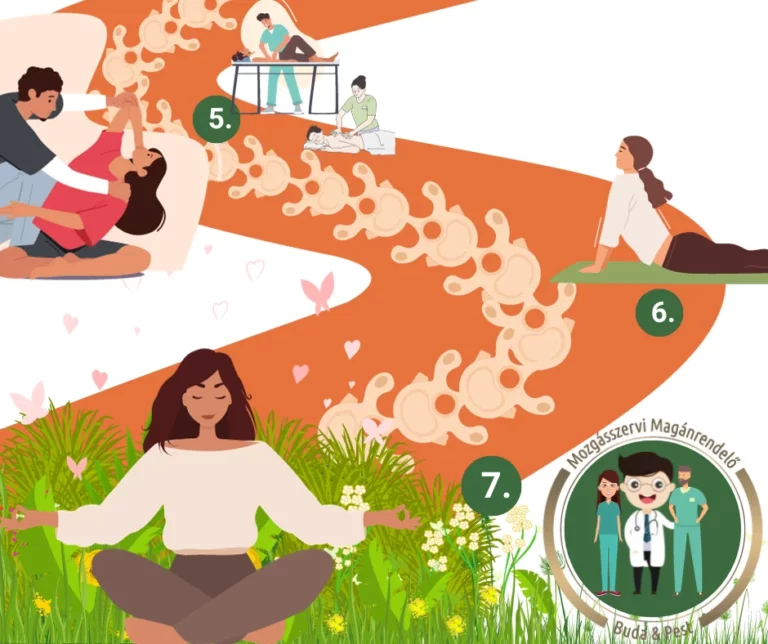
- The physiotherapy treatment series takes a longer time. It is important for the patient to follow the instructions of the physiotherapist and treating physician, as this is how the elimination of lower back pain and spinal pain can be achieved.
- If the condition improves with conservative therapy, the patient can move to the lifestyle change phase. In this stage, it is very important that the applied exercises, proper nutrition, and balanced lifestyle become part of everyday life. In addition, regular specialist consultations at specified intervals (depending on the problem, every six months to one year) should also be kept in mind to maintain long-term recovered health.
- By following all of these, spinal health can be regained and maintained, thereby ensuring a balanced life for ourselves.

Most Common Complaints Treated by Spine Medicine Center Specialists
- lower back pain
- lower back pain
- scoliosis
- nerve compression
- back pain
- neck pain
- stiff neck - neck stiffness
- osteoporosis
- spinal pain
- spinal stenosis
- back pain
- lumbar spine pain
- gluteal muscle pain
- poor posture
- sacrum pain
- shoulder blade pain
- morning lower back pain
- neck pain
Our Spine Medicine Specialists
Dr. Gábor Czigléczki PhD
Neurosurgeon, spine specialist
Dr. Dóra Mihola
Rheumatologist specialist
Dr. Gréta Sterba
Rheumatologist specialist

Dr. Flórián Szeles
Chief rheumatologist
Dr. Éva Bordán
Chief rheumatologist
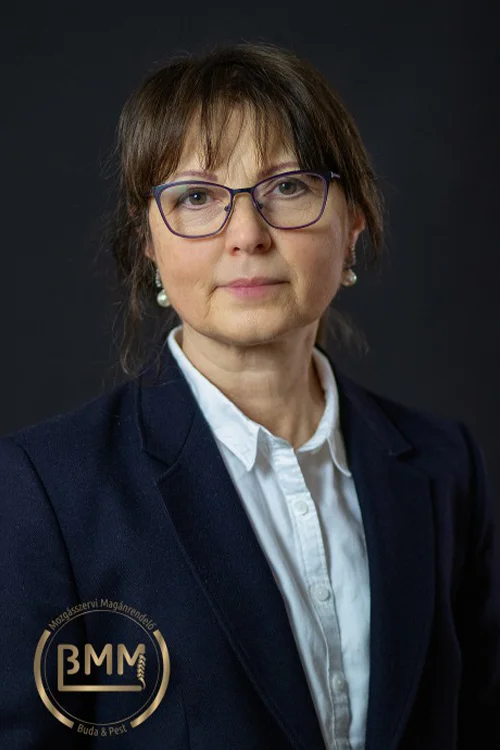
Dr. Katalin Bán
Rheumatologist specialist
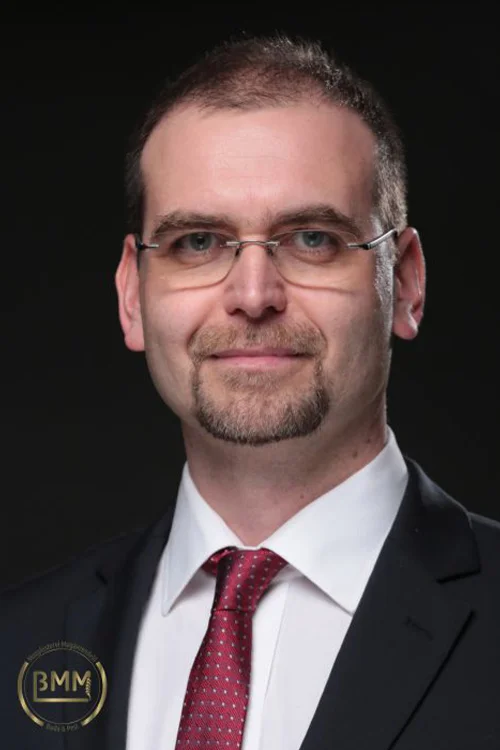
Dr. Bence Balázs Moravcsik
Orthopedic-Traumatologist
Spine Medicine in Kecskemét Too!
Our spine medicine specialists are available not only at 3 locations in Budapest, but also at our Kecskemét clinic, where Dr. Gabriella Makkos, rheumatologist and spine medicine specialist, and Dr. Bence Balázs Moravcsik, orthopedist, assist patients.
In addition to medical examinations, MR diagnostics are also available at our clinic. Comprehensive therapy is provided by our spine medicine specialists and qualified therapists.

Book an appointment by phone

Online Appointment Booking