Manual Therapy Treatments
What is Manual Therapy?
Manual therapy is a specialized diagnostic and therapeutic procedure that focuses on the manual treatment of musculoskeletal pain, disorders, and their consequences.
The treatment is preceded by a thorough analysis of the patient’s medical history, examining every detail, and a comprehensive examination. Its purpose is to identify and treat functional disorders, based on precise anatomical knowledge and considering biomechanical rules.
Manual therapy is a collective term for techniques and procedures aimed at remedying reversible problems arising in the spine, limbs, and muscular system. The treatment is generally not painful, and often, extensive or frequent sessions are not required for complete recovery. However, manual therapy can have an immediate effect if the appropriate technique is chosen.
When do we apply manual therapy?
Incorrect or insufficient movement leads to poor posture and restricted joint mobility. In such cases, some muscles become overstretched, while others shorten and become spastic, eventually leading to pain. The treatment addresses the musculoskeletal disorder causing the pain.
It can be successfully used in spine medicine, for nerve pain radiating from the spine, numbness in the limbs, and in the treatment of lower back and neck pain. It also plays a crucial role in restoring the range of motion of any injured joint.
It also plays a significant role in rehabilitation therapy after sports injuries, especially in relieving restricted joint mobility following muscle-tendon and joint injuries.
Manual therapy can be applied for:
- Treatment of joint cartilage degeneration
- Treatment of chronic, painful, and restricted joints
- Rehabilitation after trauma or surgery
- Headaches of musculoskeletal origin
- Treatment of problems resulting from overuse (golfer’s elbow, tennis elbow, anterior knee pain)
- Neck, back, and lower back pain
- Lumbago, small joint pain
- Disc disorders
- Pain caused by scoliosis
- Limb numbness
- Relief of tendon inflammation and muscle pain
- Large joint pain: shoulder, hip, knee, ankle
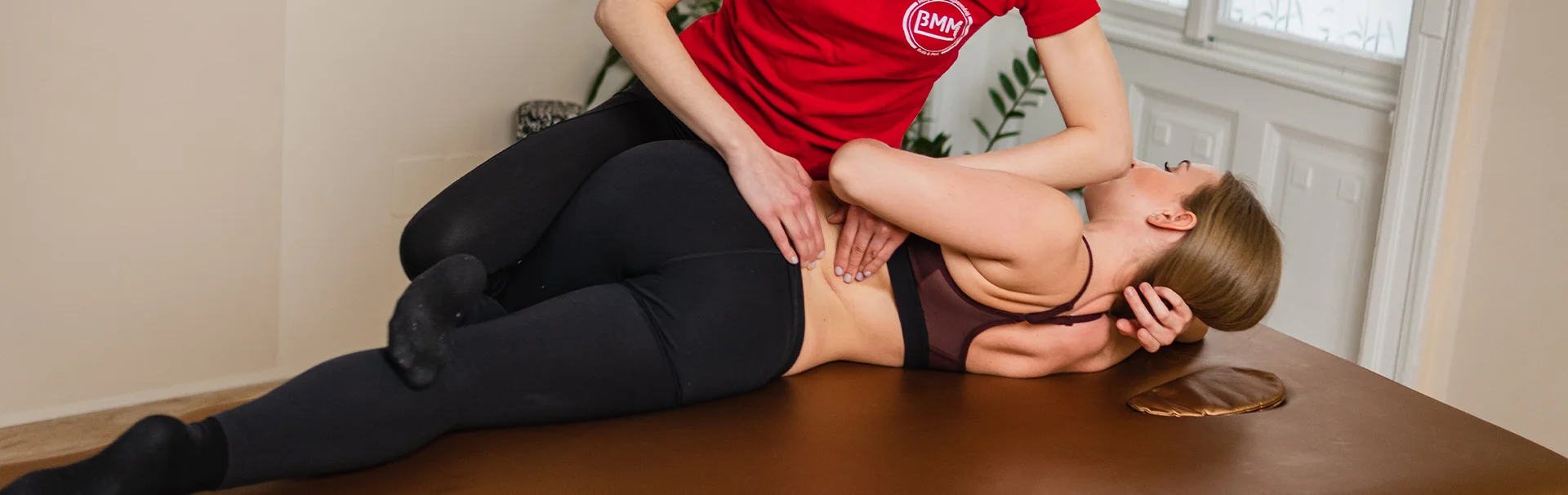
Manual Therapy During Pregnancy
The treatment is an accepted and recommended alternative therapy during pregnancy. Officially, manual therapy is also recommended from the completed 12th week of pregnancy, only in cases of non-high-risk pregnancies. Due to joint laxity caused by hormonal changes, problems around the sacrum, hip, pelvis, and lower back are the most common. Furthermore, pre-existing neck and back pain often worsen during pregnancy due to changes in body statics. This method can be extremely effective in alleviating symptoms.
How is manual therapy performed?
Manual therapy always begins with a physical assessment and a thorough analysis of the medical history, which is necessary for establishing a functional diagnosis and selecting appropriate treatment methods.
The physical assessment examinations consist of two parts: a subjective examination and a thorough physical examination, including special tests and imaging studies such as X-ray, CT, and MRI. During treatment, the therapist often re-tests the pain-causing structure.
During manual therapy, the therapist uses unique mobilizing techniques to release stiff, restricted muscles and joints, thereby improving function and reducing pain. A crucial aspect of manual therapy methods is the coordinated cooperation between the therapist and the patient.
Physiotherapy, medical massage, and fascia (muscle sheath) and trigger point therapy are supplementary methods to manual therapy, which help to relax, stabilize, and strengthen the affected muscles and joints, thus further increasing the effectiveness of the treatment.
The goal of manual therapy is to restore healthy tissue conditions and initiate the body’s self-healing processes.
What manual therapy methods do we use in our clinic?
Manual therapy methods can also be grouped by type, based on the methodological concept behind them. Accordingly, we can distinguish between Barvichenko, Dorn, Maitland, and Mulligan manual therapy, among others.

Maitland Manual Therapy
The basis of Maitland manual therapy is the examination and treatment of neuro-musculoskeletal system dysfunctions and movement disorders. The concept is a patient-centered approach, which, after a thorough subjective examination, is followed by a precise and detailed physical musculoskeletal examination aimed at identifying the origin of the problem (pain) and the cause of its development.
Differentiation and re-testing are part of the examination, which, along with special tests, helps to find the structure causing the problem.
The essence of the method is continuous communication with the patient, re-testing, and reacting to the condition that develops as a result of the treatment.
During treatment, the intensity, nature, and extent of the pain determine the strength and repetition count of the applied technique. The goal of the method, in addition to reducing pain, is to optimize the function of the muscle, nerve, and joint systems, in order to initiate functional rehabilitation as quickly as possible.

Barvichenko Manual Therapy
The method is based on the experiences of Karel Lewit, which Russian physician A. Anatoly Barvichenko adopted, and essentially runs under his name in Hungary.
Its important elements are the following:
The method uses very precise definitions for categorizing joints, classifying their location, type, and direction of movement.
Another fundamental principle is that joint problems are viewed through the entire locomotor system, not as isolated issues. This holistic approach can be excellently applied in cases of more serious conditions, such as cartilage degeneration and various inflammatory diseases.
The third important difference is that the functional block, which prevents proper movement, is also examined in the context of the entire locomotor system. According to the method, the block can be eliminated by resolving the faulty reflexes of the joint capsule. During Barvichenko manual therapy, after releasing the joint blocks, the therapist precisely adjusts the joint movement, thus avoiding excessive movement, which can be injury-prone.
The therapist uses not only their hands but also their own body weight during the treatment to provide adequate resistance or to stabilize the affected area.
What is the difference between manual therapy and chiropractic?
The roots of manual therapy extend back to ancient healing methods, relying on the knowledge of modern medicine. The methods and tools of manual therapy are also built upon the scientific knowledge of chiropractic and osteopathy.
Manual therapy is not chiropractic. Manual therapy should only be performed by a qualified physician or physiotherapist with a diploma. Unfortunately, there are no mandatory qualifications for chiropractic, which is why many people perform treatments without adequate knowledge.
Our physiotherapists
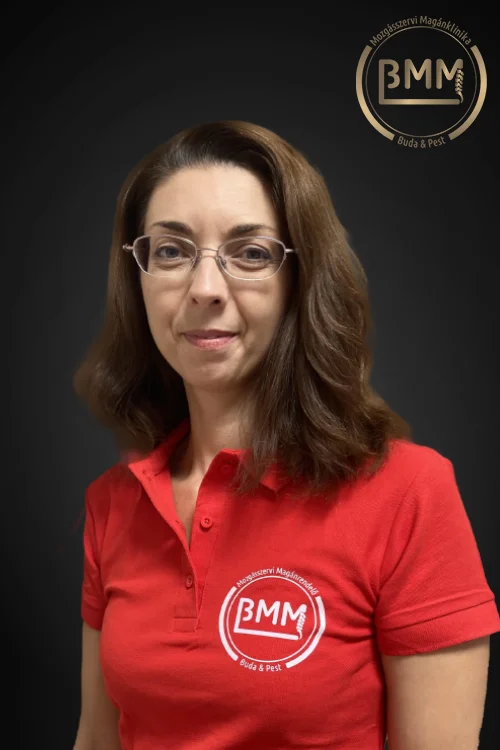
Tímea Szentpétery
Physiotherapist
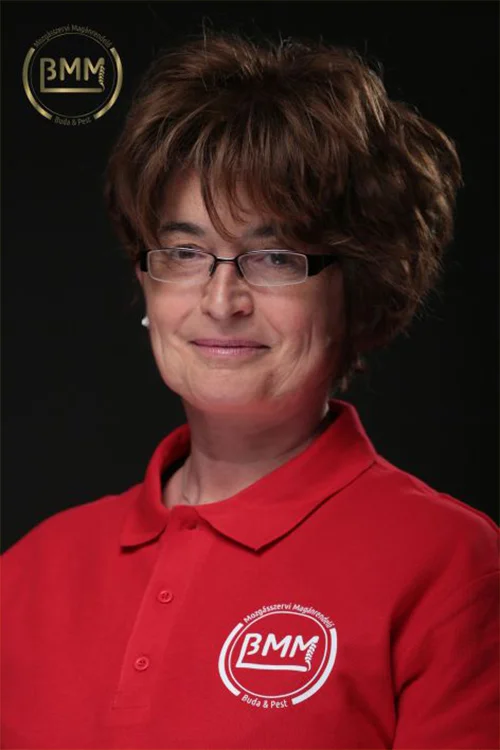
Csilla Szabóné Bora
Physiotherapist
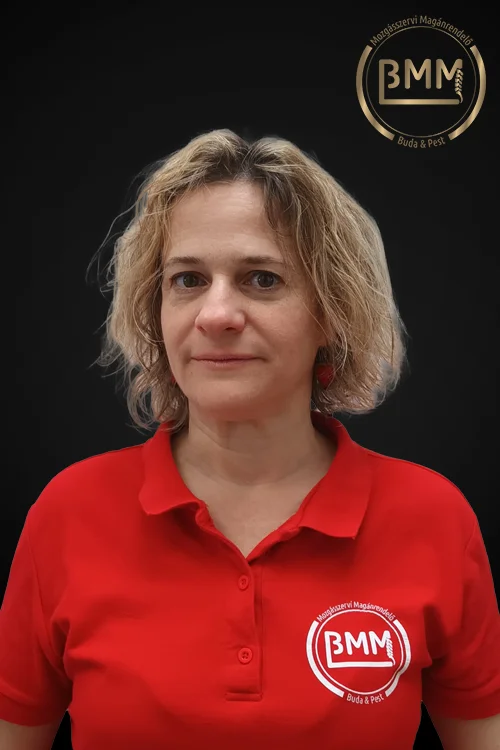
Lívia Dénes
Physiotherapist
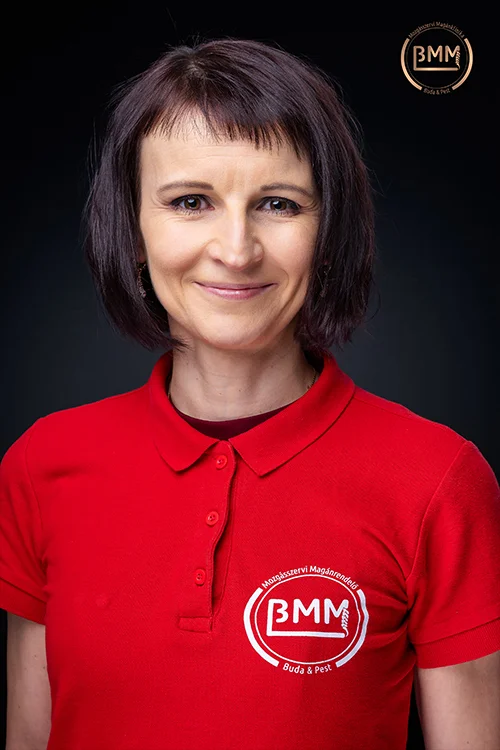
Rita Major
Physiotherapist

Book an appointment by phone

Online Appointment Booking