Application of Dynamic Tape® taping therapy
Benefits of the Dynamic Tape® taping technique
Dynamic Tape® is a tape made from innovative material applied using biomechanical principles, which exerts its unique effect specifically through the application of biomechanical taping methods and the special physical properties of the material.
Dynamic Tape® is a medical device that can be used in clinical settings in accordance with applicable European Union regulations.
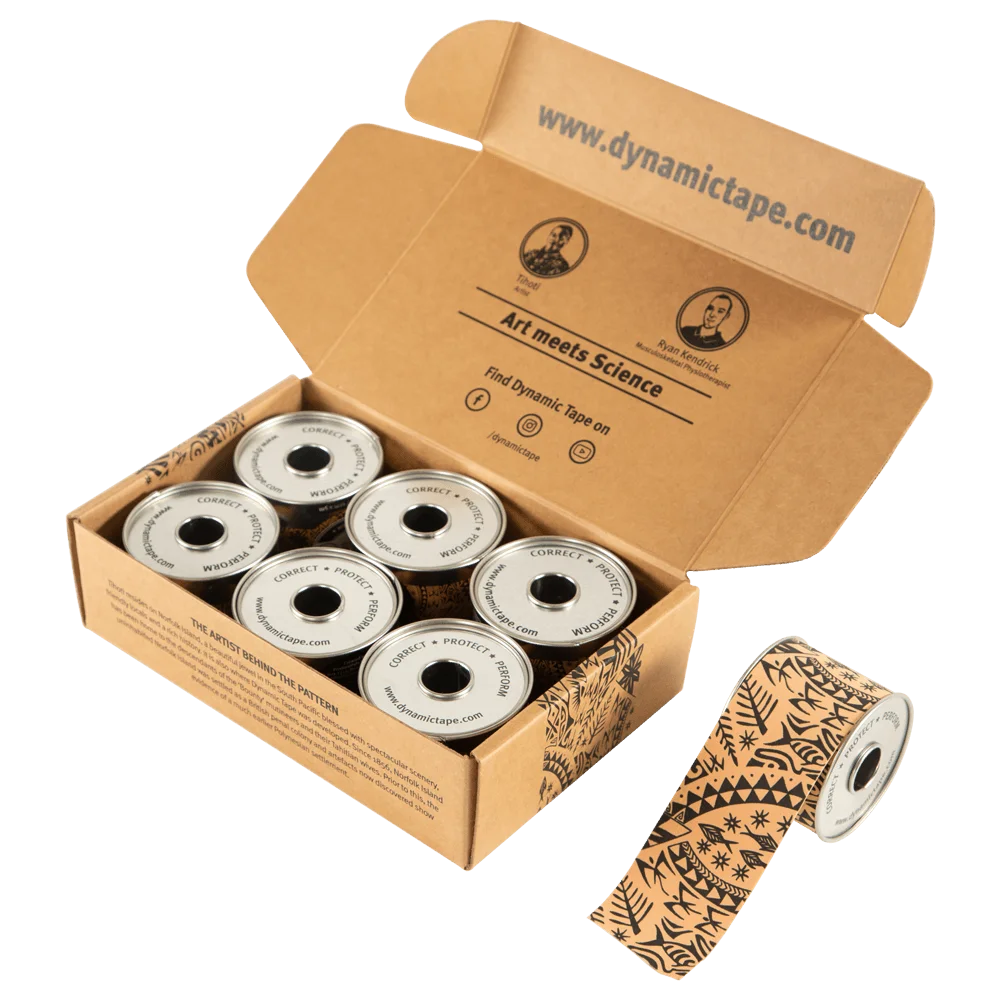
Dynamic Tape® taping technique
The Biomechanical Taping® method is a proprietary methodology aimed at modifying, reducing, or partially absorbing the mechanical forces that injured soft tissue structures would normally have to withstand. During therapy, the powerful elastic energy of Dynamic Tape® is capable of managing the forces causing pain and other complaints, thereby enabling targeted and effective influence on the mechanical factors triggering symptoms.
By applying Biomechanical Taping® methods, it becomes possible to influence various movement patterns, joint positions and axes, modify muscle pull direction, length and force production capacity, and improve the dynamic and static stability of joints without significantly restricting the necessary range of joint motion.
Thanks to the particularly strong tensile force of Dynamic Tape®, in neurological conditions—such as stroke or peripheral nerve injury—it can be effectively applied to correct and inhibit pathological movement patterns, and in some cases may represent a more flexible, functional therapeutic alternative to rigid orthoses.
Furthermore, during the application of Dynamic Tape®—similar to other taping techniques—changes in pain perception, support of lymphatic circulation, and improvement in joint proprioception may be observed through tactile stimuli from contact with the skin; however, these effects play a secondary role compared to biomechanical load management.
Why choose the Dynamic Tape® taping technique?
Dynamic Tape® differs significantly from traditional kinesiotape in terms of its physical properties and application technique, having been specifically developed for therapeutic purposes based on biomechanical principles.
Its material, depending on type and strength, is a synthetic nylon-lycra blend, or in some variants a recycled PET-based fiber, which allows the tape to be stretched in all directions and provides powerful tensile force.
Kinesiotape is cotton-based, primarily capable of stretching longitudinally, has minimal tensile force, and is typically applied with the affected structure in a stretched position. In contrast, during Dynamic Tape® application, the tape is applied taking into account the function of the injured soft tissues, often in a shortened position, bridging one or more joints, which creates the possibility of biomechanically influencing complex movement patterns—such as a throwing motion.
Dynamic Tape® exerts its effect by modifying the forces acting on the body. Since the appearance of pain and other symptoms is closely related to the mechanical loading of injured structures, the primary goal of therapy is not merely pain reduction, but targeted treatment of the forces causing pain. As a result, in addition to improved functional capacity, reduction of pain and other associated complaints can also be expected.
Dynamic Tape® and Biomechanical Taping® provide powerful external mechanical support, contribute to improving functional performance and joint stability, support the correction of unfavorable movement patterns, reduce mechanical loading of injured tissues, facilitate favorable influence on functional axis deviations, and assist in the more efficient functioning of weakened or overstretched muscles.
When should you choose a different treatment?
The application of Dynamic Tape® is contraindicated on sensitive, thin, damaged, or sunburned skin, as well as in cases of peripheral neuropathy associated with diabetes or significant arterial or venous circulatory disorders.
To avoid skin irritation, it is recommended that hair be removed from the treated area at least 24 hours prior to application. Under appropriate conditions, Dynamic Tape® can be worn for several days or even weeks; however, immediate removal is indicated in case of skin irritation. Warm, humid environments and swimming may reduce wearing time, which can be increased to some extent by using adhesive spray.
Dynamic Tape® can be widely applied as a complementary therapeutic tool, particularly in cases where the goal is mechanical unloading of injured tissues, influencing pathological movement patterns, or supporting joint stability.

Typical examples of application may include:
- functional unloading of lower and upper extremity joints under load-bearing conditions,
- acute or chronic ankle instability, or rehabilitation following ankle sprain,
- knee joint instability, functional support following cruciate ligament injury or surgery,
- support for foot drop in cases of peroneal nerve/muscle dysfunction, as an alternative to rigid orthoses,
- as part of load management in degenerative tendon disorders and overuse syndromes,
- support for correction of pathological movement patterns in neurological involvement (e.g., stroke, peripheral nerve injury).
The application of Dynamic Tape® is always based on individual physical assessment and therapeutic goal determination, and does not replace the active rehabilitation process, but can be an effective complementary tool.

Book an appointment by phone

Online Appointment Booking