Shoulder Joint and Shoulder Joint Inflammation


How is the shoulder joint built?
The shoulder joint is one of our most mobile joints and has a complex structure. It needs to be both strong and flexible. As a result, it can easily become injured and sore.
The shoulder joint is made up of three main bones:
- Lapocka
- Humeral
- Collarbone
The cooperation of these bones allows the arm to move widely. And the joint capsules, tendons and ligaments strengthen and stabilise the joint. The so-called rotator cuff plays a major role in this.
The muscles of the rotator cuff are essential for arm movements.
The rotator cuff consists of four main muscles that work together to stabilise and move the shoulder:
- Subscapularis – Located at the front of the scapula and rotates the humerus inwards
- Supraspinatus – Located at the top of the shoulder blade and helps to raise the arm
- Infraspinatus – Located at the back of the scapula and rotates the humerus outwards
- Teres minor – Located at the bottom of the shoulder blade and also rotates the humerus outwards
In addition to strength and stability, it is also important to have the right “oiliness”. The inner surface of the shoulder joint case is filled with a fluid that ensures lubrication and smooth movement of the joint surfaces.
This joint fluid is also called bursa, which reduces friction between muscles, tendons and bones. The bursa is particularly important in the shoulder joint, where there is an increased risk of friction due to a lot of movement and strain
Dr. Balázs Gloviczki PhD
Orthopedic-traumatologist, Senior Specialist, Adjunct Professor
Online appointment booking for Budafoki út clinic:
Please choose the service that suits you
The fee for a follow-up consultation is 35,000 Ft, within 3 months after the initial examination, for the same complaint.
- 1. Select the service you want from the drop-down box.
- 2. Use the calendar to choose a date that suits you!
- 3. Enter your details to register or login with your previous registration.
- 4. If you would like to book on behalf of someone else (e.g. your child), please let us know at the place indicated.
- 5. Briefly describe your complaints!
- 6. Choose the type of consultation: initial examination, control examination or prescription.
- 7. Click on the button to book your appointment. Thank you for choosing BMM!
If you are not able to come to the appointment you have already booked, please let us know at least 24 hours in advance. This gives other patients the opportunity to get the medical care they need in time. Thank you for your cooperation and understanding!
Cancellation: +36 1 44 33 433
If you can’t find an appointment for the week of your choice , please call our call-centre on+36 1 44 33 433 for further assistance. Our staff will be happy to help you make an appointment with the doctor of your choice or another specialist according to your complaint.
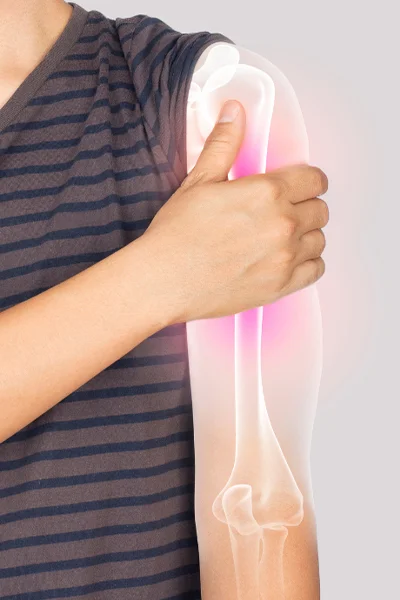
What are the causes and symptoms of shoulder inflammation?
Shoulder joint inflammation is a general term for inflammation in or around the shoulder joint. Inflammation can be the body’s response to injury, damage or disease. It usually affects adults between the ages of 30 and 45. Of course, conditions of inflammation can also occur in younger and older people.
It is very important to recognise signs of inflammation early and to treat them medically. Shoulder joint inflammation can be very insidious. The initial painful symptoms may subside over time, giving the appearance of healing, and then after a longer or shorter period of time they may flare up again with more pain and reduced mobility than at the beginning. The treatment and recovery time for advanced inflammation can be much longer than for a problem detected early.
Inflammation can be triggered by several different causes
- Repetitive overhead movements
- Improper restraint caused by sedentary work
- Overuse of the shoulder e.g. excessive exercise
- Muscles tensed due to stress
- Autoimmune disease
- Traumatic injury
Most common symptoms of shoulder joint inflammation
Like the causes, the symptoms can be varied. It depends on the severity of the disease, lifestyle characteristics and individual sensitivity.Symptoms may occur together, but they may also occur separately and to varying degrees.
- Pain (especially during exercise and at night)
- Duzzanat
- Stiffness
- Restricted shoulder movement
- Weakness and tenderness of the shoelaces
Shoulder pain, shoulder joint inflammation can be a sign of serious illness
- Rheumatoid arthritis
Inflammation develops inside the joint, causing pain and swelling. The condition, known as autoimmune disease, means that the body’s own immune system attacks the tissues in the joints. This not only causes pain and swelling, but in the long term can lead to deformation and damage to the joint. - Bursitis
The bursitis is an inflammation of the bursal nodes in the shoulder, causing severe pain. The bursitis is a small fluid-filled sac that reduces friction between the bones and tendons. Inflammation is usually the result of repetitive movements, injuries or other joint disorders. - Tendinitis (tendonitis)
Inflammation of the tendons in the shoulder, often as a result of overuse or repetitive motion. The inflammation can cause long-term scarring and weakening of the tendons. - Rotator cuff inflammation
Inflammation of the tendons of the muscles that move the shoulder joint, resulting in pain and limited movement. Rotator cuff inflammation often develops as a result of repetitive shoulder movements such as throwing or lifting. - Shoulder pain
Pain in the upper, outer part of the shoulder. Shoulder pain may be aggravated by lifting or overhead movements. This is often due to irritation of shoulder joint structures such as the rotator cuff or the lumbar spine. - Calcification
It develops from the accumulation of calcium crystals in the shoulder joint tendons. It often causes pain and limited mobility. The cause is not always known, but is most often related to damage or inflammation of the rotator cuff. Calcium deposits can compress tendons or lymph nodes, causing further irritation and inflammation.
The physical examination performed by a shoulder specialist is essential to determine the problem. To make the most accurate diagnosis, your doctor may also request imaging procedures. These diagnostic scans provide detailed images of the internal structures of a particular body part. This makes it possible to see the internal components of the shoulder joint and the extent of any lesions. Ultrasound examination, X-ray examination and MRI scan are the most useful tools for identifying the disease and determining the optimal treatment.

Dr. Bálint Major
Shoulder Specialist
Chief Orthopedic Traumatologist
Online appointment booking for Bokor Street:
Please choose the service that suits you
The fee for a follow-up consultation is 35,000 Ft, within 3 months after the initial examination, for the same complaint.
- 1. Select the service you want from the drop-down box.
- 2. Use the calendar to choose a date that suits you!
- 3. Enter your details to register or login with your previous registration.
- 4. If you would like to book on behalf of someone else (e.g. your child), please let us know at the place indicated.
- 5. Briefly describe your complaints!
- 6. Choose the type of consultation: initial examination, control examination or prescription.
- 7. Click on the button to book your appointment. Thank you for choosing BMM!
If you are not able to come to the appointment you have already booked, please let us know at least 24 hours in advance. This gives other patients the opportunity to get the medical care they need in time. Thank you for your cooperation and understanding!
Cancellation: +36 1 44 33 433
If you can’t find an appointment for the week of your choice , please call our call-centre on+36 1 44 33 433 for further assistance. Our staff will be happy to help you make an appointment with the doctor of your choice or another specialist according to your complaint.

How can inflammation of the shoulder joint be treated?
Treatment of shoulder joint inflammation depends on the cause and the severity of the problem. The specialist rheumatologist can help with milder complaints, but in the case of advanced inflammation and reduced mobility, it is worth consulting a specialist in shoulder surgery.

Conservative solutions
- Use of painkilling medicines
- Injection treatment
- Anti-inflammatory creams, patches
- Physiotherapy
- Shockwave Therapy
During treatment, it is important to rest and reduce stress. Reducing the load on the shoulder helps the healing process and reduces the risk of further damage. As the recovery progresses, targeted exercises and stretches led by a doctor or physiotherapist can also improve shoulder mobility and increase the return of strength.
In some cases, the doctor may also recommend alternative treatment methods, such as acupuncture, manual therapy or heat and cold therapy. The effectiveness of such alternative methods varies from individual to individual, but for many patients they can bring significant relief from symptoms.
Physiotherapy
The options listed may result in different improvements for each individual, but they will not work for everyone. In contrast, physiotherapy is a comprehensive and, for the vast majority of patients, effective treatment that significantly reduces symptoms. Even in conditions of inflammation, it is important to perform the right form of exercise, which can bring long-term improvements in the patient’s condition.
In addition to physiotherapy sessions in the doctor’s surgery, it is also important to have independent therapy at home, which can make a big contribution to regaining a healthy shoulder joint. Consistent and long-term practice of exercises designed by a physiotherapist can make a significant difference to the quality of life of people with shoulder joint problems.
Surgery
The ineffectiveness of conservative methods and the nature of the problem may justify surgical intervention. If surgery is required, arthroscopic surgery is used to correct minor problems.
In this case, the doctor may remove irritated or damaged tissue, repair damaged ligaments or tendons, or even remove calcium deposits. For advanced problems, such as severely damaged or deformed joint surfaces, a shoulder replacement may be considered.
It is important that shoulder joint inflammation is recognised early and treated appropriately. If treatment is not given, symptoms can worsen and complications such as frozen shoulder can develop.
BMM’s excellent shoulder specialists, with decades of experience, can help you make an accurate diagnosis and determine a personalised, effective treatment plan.
Most common complaints treated by our shoulder specialists:
Our shoulder specialist physicians
Dr. Bálint Major
Specialist in orthopedics and traumatology
Dr. Balázs Gloviczki PhD
Chief Orthopedic-Traumatologist, Shoulder Specialist
Dr. György Kocsis PhD
Orthopedic-Traumatologist, Chief Hand Surgeon, University Assistant Professor, Wrist, Elbow, and Shoulder Surgeon, Upper Extremity Specialist

Dr. Ferenc Tompai
Chief Orthopedic and Trauma Surgeon