Robotic Surgery
The Development of Robotic Surgery
The development of robotic surgery was driven by several important interacting factors. As in every field, technological innovation is increasingly evident in medicine, primarily represented by robotics. The emergence of orthopedic robots was particularly influenced by the fact that the number of knee replacement and hip replacement procedures is continuously increasing, and in parallel, the demand for more durable and higher quality prostheses has also grown.
For younger patients, a more durable and robust prosthesis implantation technique must be applied that serves their needs in the long term. In older age groups, joint wear occurs earlier, mainly due to a sedentary lifestyle or excessive physical activity, genetic predisposition, or obesity.
Joint wear can be considered a natural physiological process, yet joint deterioration can occur in many other cases as well. Sometimes various underlying conditions cause the wear, such as hip dislocation, underdeveloped hip, or even traumatic damage. Due to metabolic diseases, alcoholism, or taking large amounts of steroids, the bone supporting the cartilage can also die, which also necessitates knee replacement, for example.
There are numerous different indications for joint replacement, which are not limited exclusively to age.

Dr. Gergely Holnapy, PhD
Chief Orthopedic-Traumatology Physician, University Adjunct, Robotic Surgeon
Online Appointment Booking for Budafoki Road Clinic:
Please select the service that suits you
The follow-up fee is valid for 3 months after the initial examination for the same complaint.
- 1. Select the requested service from the drop-down menu!
- 2. Use the calendar to choose a suitable appointment time!
- 3. Register by entering your details, or log in with your previous registration!
- 4. If you wish to book on behalf of another person (e.g., your child), please indicate this in the designated field!
- 5. Briefly describe your complaints!
- 6. Select the type of consultation: initial examination, follow-up examination, or prescription.
- 7. Click the button to complete the appointment booking. Thank you for choosing BMM!
If you are unable to attend your scheduled appointment, please notify us of your cancellation at least 24 hours in advance. This allows other patients the opportunity to receive timely medical care. Thank you for your cooperation and understanding!
Cancellation: +36 1 44 33 433
If you cannot find an available appointment for your selected week, please call our call center at +36 1 44 33 433 for further assistance! Our staff will be happy to help you schedule an appointment with your chosen physician or another specialist according to your complaint.
The Advancement of Robotics in Healthcare
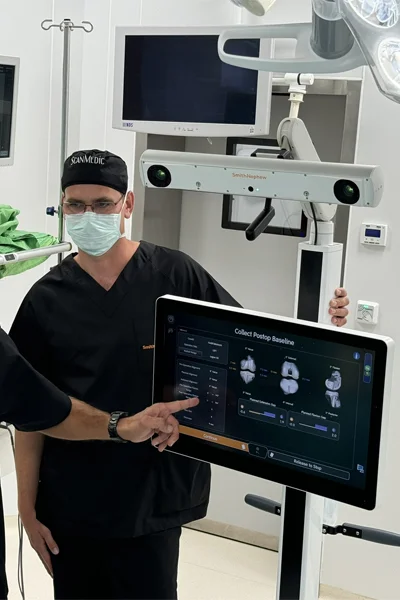
- Computer navigation: The emergence of robotic surgery began with so-called computer navigation. This cannot yet be called a robot; rather, it is a special device that provides advice, numerically supports measurements, and helps the surgeon with basic visualizations to implant the prosthesis more accurately.
- First-generation robots: Following the navigation device, robotics evolved further, and in Hungary, the first-generation robot appeared in the early 2000s. This already thinks, calculates, and provides advice to the surgeon for more accurate prosthesis implantation after performing much deeper analysis.
- Second-generation robot: Second-generation orthopedic robots such as CORI are currently the most advanced technologies. This type includes several innovations that its contemporaries do not, for example, CORI is the first semi-autonomous robot, one that has some degree of independence but remains under the surgeon's control. It analyzes data collected by artificial intelligence (AI) and assists the surgeon's work with personalized solution proposals.
The development of surgical techniques and implants has made prosthesis surgeries safer and more efficient, which increases their number and success rate. Newer and higher quality implants provide longer lifespan and better functional results, which increases patients' willingness to undergo surgery.


Dr. Zoltán Bejek PhD
Orthopedic Associate Professor, Robotic Surgeon
Online Appointment Booking for Budafoki Road Clinic:
Please select the service that suits you
The fee for follow-up examinations within 3 months after the initial examination, for the same complaint.
- 1. Select the requested service from the drop-down menu!
- 2. Use the calendar to choose a suitable appointment time!
- 3. Register by entering your details, or log in with your previous registration!
- 4. If you wish to book on behalf of another person (e.g., your child), please indicate this in the designated field!
- 5. Briefly describe your complaints!
- 6. Select the type of consultation: initial examination, follow-up examination, or prescription.
- 7. Click the button to complete the appointment booking. Thank you for choosing BMM!
If you are unable to attend your scheduled appointment, please notify us of your cancellation at least 24 hours in advance. This allows other patients the opportunity to receive timely medical care. Thank you for your cooperation and understanding!
Cancellation: +36 1 44 33 433
If you cannot find an available appointment for your selected week, please call our call center at +36 1 44 33 433 for further assistance! Our staff will be happy to help you schedule an appointment with your chosen physician or another specialist according to your complaint.
About the New Generation CORI Robotic Surgical Technology in Hungarian Private Healthcare
At the Budapest Musculoskeletal Private Clinic, an orthopedic medical team specialized in robot-assisted surgery was established under the leadership of Dr. Zoltán Bejek PhD, Chief Physician, Associate Professor. Our surgeons perform knee replacement and computer navigation-supported hip replacement surgeries with the assistance of the CORI robot equipped with artificial intelligence.
Dr. Zoltán Bejek PhD, Chief Physician, has been conducting research since 2002 on minimally invasive techniques for knee joint replacement and computer navigation surgical treatments, making him a worthy leader of the department with his many years of experience and expertise.

Why the CORI Robot?
The CORI robot designed by Smith & Nephew is an orthopedic robotic surgical system that is primarily used for knee replacement with the help of artificial intelligence. The purpose of using the CORI robot is to enable surgeons to increase surgical precision and make the operation safer for the patient.
The CORI robotic surgical system operates in a semi-autonomous manner—that is, it has some degree of independence—providing surgeons with a perfect virtual model that simulates the parameters of precise implant placement and the outcome of the surgery. The robot also performs professional cartilage and bone removal. This is accomplished using a milling handpiece that follows the surgeon's instructions with tenth-of-a-millimeter precision.
Result: Through robotic assistance, surgeons can perform more precise cuts and fittings, which can bring better results for patients. The goal is that after the recovery period, the patient will be completely pain-free and nothing will limit their movement in daily life.
What Makes the Robot Unique?
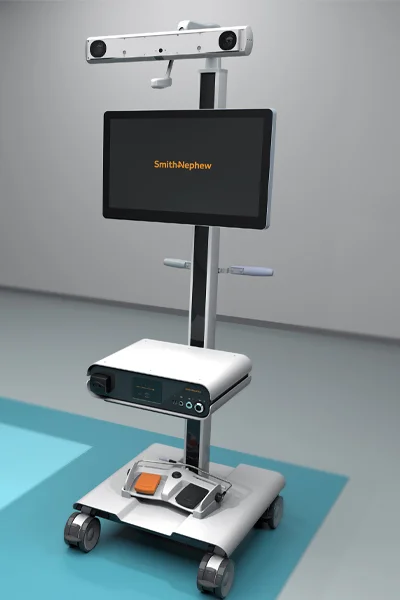
The CORI robot is a handheld digital instrument that offers the advantages of robotic technology without requiring a large robotic arm-based system. This reduces the equipment's space requirements and costs.
The technology allows the CORI system to adapt to different surgical techniques and implants, enabling surgeons to tailor the surgery to individual patient needs. The system's intelligent software analyzes data collected during surgery and provides real-time feedback to the surgeon.
Advantages of the Robot:
- It supports minimally invasive exposure, thereby contributing to minimizing tissue damage, helping to accelerate patient recovery.
- The robot enables more accurate implant placement, thus reducing the chance of complications and the need for revision surgeries.
- With the CORI robot, there is no need to perform MRI or CT imaging examinations before surgery (X-ray is sufficient). During the planning phase, the robot generates a perfect 3D model in real time from the scanned cartilage and bone surfaces. One of the visualization forms on the CORI tablet looks exactly like a CT scan, which is visible in real time.
- During knee replacement surgeries, minor to major problems can occur in approximately twenty percent of patients—even a 2-3 millimeter deviation can cause persistent complaints. Robotics significantly increases precision, reducing the deviation to 0.5 millimeters, which improves this rate.
- Robotic surgical procedures place less burden on patients, and based on statistical data, patients leave the hospital sooner after surgery.
- Safe solution even in case of metal allergy: the CORI robot enables the implantation of hypoallergenic Oxinium prostheses.
- Another advantage of the technology is that patients with special anatomy can also be treated more effectively with it. Thus, robotics and artificial intelligence now form the foundation of technological innovations.
- The technological advancement of the CORI robot is also well illustrated by the fact that it can also be used for revision prosthesis surgeries. In these cases, the above-mentioned advantages also apply.
Considering the summary of the positives of robotic surgery, it is not surprising that robotics and artificial intelligence now form the foundation of technological innovations.

How Does CORI Robotic Surgical Technology Work?
CORI surgical technology is an innovative system that provides orthopedic surgeons with accurate and real-time data during surgery. Thanks to this, the patient only needs an X-ray before surgery for the doctor to get a detailed picture of the area to be operated on. In the operating room, thanks to CORI, surgeons receive a real 3D image of the joint, which enables them to perform precision interventions. They can minimize surgical errors, thereby reducing patients' recovery time.
Imaging by CORI During Prosthesis Implantation
- Using the special software of the CORI robotic surgical system, it creates a digital map of the patient's anatomical structures.
- During surgery, the CORI system's sensors continuously collect data about the patient's body. This data updates the digital map in real time, which the surgeon can follow. With the system's help, the surgeon can more accurately determine the location and direction of the surgical intervention. This is particularly important in knee replacement, where tenth-of-a-millimeter precision is needed to achieve the optimal final result.
- The system provides continuous feedback to the surgeon about the position of surgical instruments and the progress of the intervention.
- During surgery, the surgeon can check and fine-tune the intervention at any time based on the information and visual display provided by artificial intelligence.
- Thanks to CORI's highly advanced imaging system, the orthopedic surgeon receives a 3D image of the knee joint and the bone surface to be created, as well as the optimal prosthesis placement. The bone surface is created based on the 3D visualization model. It should be imagined as a 3D printer working in reverse. With the robot's help, the surgeon creates the optimal bone surfaces like a precise sculptor.
- During hip replacement, CORI technology shows the surgeon in real time at what angle and depth the prosthesis should be placed. Additionally, with auxiliary programs, it can simulate the prosthesis's behavior and performance in the given position during different types of movement. It's as if the doctor is moving on a digital map, where every step can be precisely planned and checked.
The CORI software and artificial intelligence learn and develop the robot based on several hundred thousand surgeries already performed. Currently, there are 1,300 CORI robots in service worldwide, which also continuously collect new data, thereby teaching the system to provide the best possible advice to the doctor.
CORI surgical technology not only makes surgeons' work easier but also provides safety for patients and ensures more optimal recovery. This revolutionary system is one of the most promising innovations in modern surgery, already offering numerous advantages in private healthcare.
What Happens During Robot-Assisted Knee Surgery?
When using CORI robotic surgical technology, the surgery proceeds in several phases, where the robot and surgeon work closely together to ensure the best result.
- At the beginning of surgery, the patient is positioned appropriately depending on the type of surgery, then the surgical team begins setting up the CORI robot and checking the instruments.
- After sterilizing the patient and environment, the surgeon makes a minimal incision in the affected area through which instruments can be introduced.
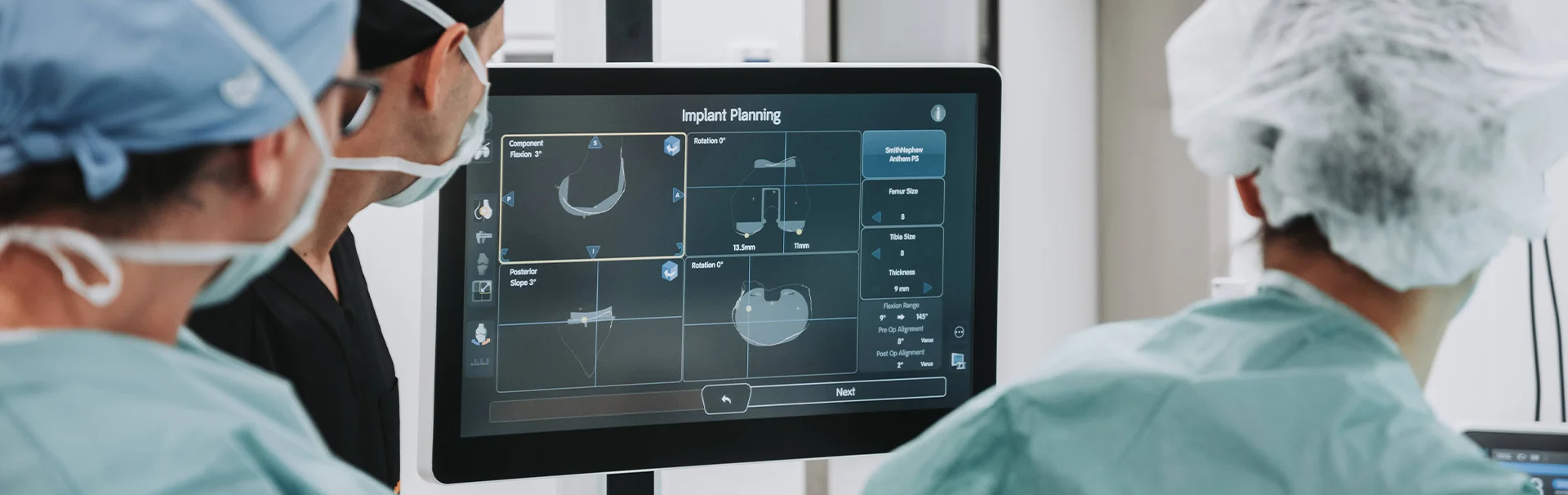
- The CORI robot collects and analyzes real-time data for the surgeon, helping with precise positioning and navigation of instruments. During surgery, precise mapping of the joint and prosthesis planning occur in real time, which forms the basis for the orthopedic surgeon's and robot's thinking. During the digital "scanning," CORI generates a perfect 3D model of the patient's knee during surgery. Subsequently, it plans the steps of the surgical intervention, the type and position of the prosthesis according to the patient's individual anatomy.
- The surgeon performs the surgery according to the plans using the robot handpiece equipped with a bone milling head. The robot enables extremely precise movements that reduce the chance of damage to surrounding tissues.
- CORI provides continuous feedback to the surgeon during surgery and ensures that the bone surface is checked. During prosthesis trials, it re-measures movement-related parameters and balances, thereby assisting in the final fixation of the prosthesis.
- Subsequently, the surgeon removes the reference rods from the patient and ensures that everything is in order.
- After surgery, the patient remains under observation for another 2-3 days after waking up. During the hospital period, the physiotherapist begins the patient's rehabilitation process according to the specialist's instructions. First, prohibited movements are introduced, and the rehabilitation process begins with careful and professional movements. It is important that the physiotherapy started in the hospital continues at the patient's home.
These steps ensure that the surgery is accurate and efficient, minimizing the risk of complications and promoting faster recovery.

Advantages of Robotic Surgery
Through the advantages offered by the CORI robot, BMM orthopedic surgeons aim to improve the efficiency and effectiveness of orthopedic surgeries and contribute to patients' faster and less painful recovery.
Due to the complex anatomical structure of the knee joint and various individual characteristics, knee replacement surgeries require extremely precise and accurate interventions. A critical element of successful knee replacement surgery is the precise placement of the prosthesis, which directly affects post-operative functional results and the prosthesis's lifespan. Robotic systems such as the CORI robot significantly increase surgical precision.
The Main Positives of Robot-Performed Surgery for Patients:
- The robot can work with tenth-of-a-millimeter precision. The human eye/brain cannot distinguish these nuanced values, which is why its support is so significant. With its help, the surgeon can perform the operation more precisely, so even X or O leg deformities cannot stand in the way of optimal execution. With the device's help, the replacement of patients suffering from significant joint deformities has become safer and easier.
- Thanks to more precise surgical procedures, complications can be minimized.
- Possible limb length discrepancies can be reduced.
- The post-operative rehabilitation period is accelerated since there is no bone marrow injury and surrounding tissues also remain more protected.
- Thanks to more precise fitting, more optimal movement functions can be achieved.
The CORI robot's advancement and ability to continuously learn make it so unique. With its use, not only does the work of orthopedic surgeons become easier, but patients can also experience numerous positives.
Since the entire process is led by the surgeon, patients choosing robot-assisted surgery are in helping human hands throughout. The data collected by the robot and the precision achievable with its use only enhance the surgeon's capabilities and patients' chances for a life filled with pain-free movement.
Our Specialists Performing Robot-Assisted Surgery:
Dr. Zoltán Bejek PhD
Orthopedic Associate Professor, Robotic Surgeon,
Head of BMM Robotic Surgery Center, International Instructor

Dr. Szabolcs Gáspár
Chief Orthopedic-Traumatology Physician, Robotic Surgeon
International Instructor

Dr. Péter Molnár
Orthopedic-Traumatologist, Chief Operating Surgeon, Robotic Surgeon
Dr. Gergely Holnapy, PhD
Chief Orthopedic-Traumatology Physician, University Adjunct, Robotic Surgeon

Dr. Péter Doszkocs
Orthopedic-Traumatologist Chief Physician, Hip and Knee Surgeon, Lower Limb Specialist, Robotic Surgeon

Dr. Dániel Kincses
Orthopedic-Traumatologist Specialist, Robotic Surgeon

Dr. Maysam Moghaddam Amin
Orthopedic-Traumatologist Specialist, Robotic Surgeon

Dr. Sándor Csernus
Surgeon, Orthopedic and Traumatologist Chief Physician

Book an appointment by phone

Online appointment booking