Speech Therapy in Budapest
Adult speech therapy sessions
What does speech therapy deal with?
The original meaning of the word speech therapy is speech education, but today it has developed into an extensive special education discipline that deals with the recognition and correction of speech disorders. Its main areas are the research, prevention, diagnostics, and correction of speech disorders.
The goal of a speech therapist is to help and treat patients struggling with speech and writing skill disorders. Such problems can arise in both childhood and adulthood for various reasons. A comprehensive speech therapy includes a thorough physical assessment, based on which a completely individual and personalized therapy is implemented. The speech therapist’s tasks also include recognizing and screening abnormalities, investigating the root causes, correcting the problem, providing counseling, care, and follow-up care.

Speech Therapy for Adults
In adulthood, the need for speech therapy usually arises in two cases. Many people live with a speech impediment or articulation deviation that does not fundamentally affect their quality of life, so they have not previously invested energy in correcting it. However, it sometimes happens that a life situation brings this deficiency to the forefront. In such cases, the speech therapist helps correct the existing errors.
In other cases, the help of a speech therapist is needed due to a more serious problem. In adulthood, speech ability can be impaired as a result of trauma, injury, or organic disease. This can include a stroke, a severe brain surgery or brain injury, a cancerous disease, or even a laryngeal problem. In these cases, complex therapy is required to restore speech ability. The field of speech therapy is crucial in the therapy leading to recovery.
Adult speech therapy sessions last 60 minutes.
Forensic speech therapy expert opinion
Mikonya Hajnalka, the speech therapist specialist at the Budapest Musculoskeletal Private Clinic, has a forensic speech therapy expert appointment. This allows them to issue official expert opinions for court proceedings and guardianship cases. Unfortunately, after a stroke or other brain injury, the area of the brain responsible for speech comprehension is often damaged. Occasionally – in the patient’s own interest – the need for a forensic speech therapy expert opinion arises, in order to officially clarify the patient’s perception and comprehension abilities. In such cases, please contact the speech therapists at the Budapest Musculoskeletal Private Clinic with confidence!
Post-stroke rehabilitation
Cerebrovascular accident, also known as stroke, can cause enormous damage to the brain, which greatly affects the lives of the patient and their family and immediate environment. In all cases, personalized and complex rehabilitation is needed for the patient to get back on their feet and be able to cope with their future life. This may require the combined help of several specialists – a specialist doctor, physiotherapist, speech therapist, neuropsychologist, and occupational therapist all participate in the healing process. In our private outpatient clinic, we work with excellent stroke specialist neurologists, experienced physiotherapists, a neuropsychologist, and an occupational therapist to help patients who have suffered a stroke.
Unfortunately, it often happens that patients who have had a stroke lose their speech and writing skills, or these skills become unintelligible. This represents a serious emotional trauma for the patient and can cause daily difficulties for their family and environment. Speech therapy helps solve this problem by developing and “re-teaching” the brain its lost or damaged functions with professional and careful therapy.
Dear Patients!
Appointment booking for speech therapy sessions is only possible by phone!
Aphasia
Aphasia can be described in Hungarian as a language disorder that arises as a result of some brain injury (e.g., stroke, accidental injury, tumor, meningitis). In such a case, the resulting abnormality can affect not only speech and speech comprehension, but also reading and writing skills. Different areas can be damaged to varying degrees, depending on the area and extent of the brain injury.
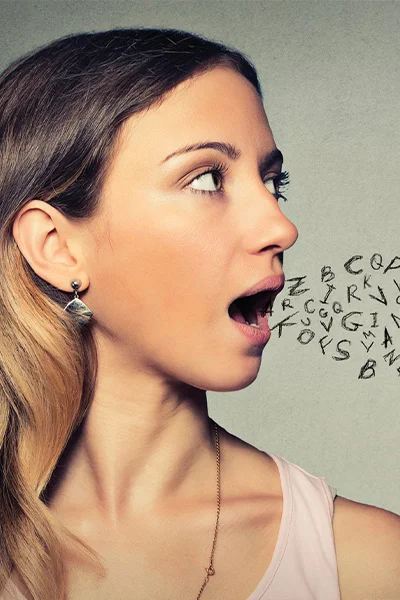
Speech therapy distinguishes 5 types of aphasia:
- Total aphasia – the most severe language disorder, which can lead to complete inability of spontaneous speech; the patient can utter, read, or understand at most one or two words.
- Mixed aphasia – spontaneous speech is severely impaired, but the patient can utter and read a few words, sentence fragments, or perhaps shorter sentences. Their speech is usually less or moderately intelligible, with many distortions.
- Motor aphasia – spontaneous speech is impaired, but the content of the speech is relatively well understood. They are capable of complex sentences with help, but many distortions and word errors occur. Speech comprehension is generally less impaired, but reading and writing skills are problematic.
- Sensory aphasia – garrulousness, but the content of the speech is not at all, or barely, intelligible. Speech comprehension, writing, and reading skills may be impaired to varying degrees.
- Amnesic aphasia – word-finding is specifically impaired; speech comprehension, reading, and writing skills are only mildly impaired.
In cases of aphasia, the restoration of original speech ability is unfortunately very rare, but it can be significantly improved with appropriate speech therapy.
Post-stroke rehabilitation
Dysarthria is a speech disorder that arises as a result of damage to the central or peripheral nervous system and affects the areas of speech. It can cause problems with articulation, phonation, the breathing process, and the speed and regularity of speech. As a result, speech becomes difficult to understand, but other language skills (speech comprehension, reading, writing skills) are not impaired. The problem is caused by the difficulty in the motor execution of speech. Depending on the injury, it can be an accompanying symptom of aphasia in several cases.
During the diagnosis of dysarthria, a complex voice and speech motor examination is performed, which allows it to be distinguished from other conditions causing similar symptoms. Speech therapy for dysarthria is symptom-specific and personalized, aiming to develop the most natural speech possible.
Help is available!
Our speech therapist
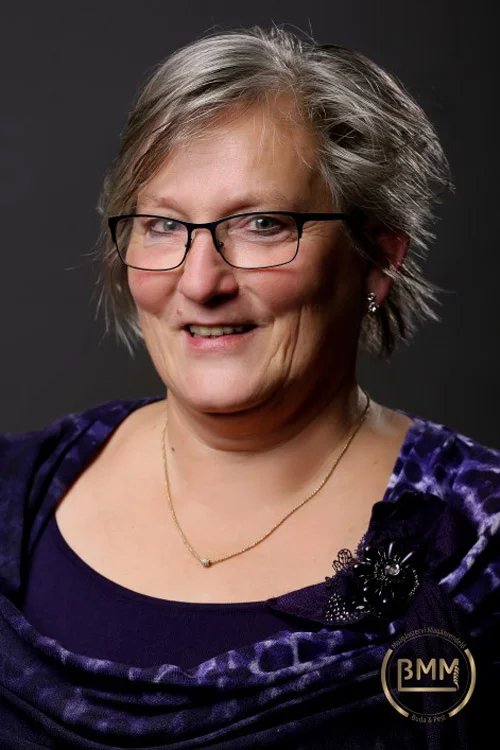
Hajnalka Mikonya
Speech Therapist
Our highly experienced and exceptionally skilled speech therapists are available at two locations within the Budapest Musculoskeletal Private Clinic’s speech therapy specialist outpatient clinic!
Appointment booking: +36-1-44-33-433

Book an appointment by phone