Pediatric Orthopedic Examination
Prevention, safety, and expert care
Why is regular pediatric orthopedic examination important?
Early screening of the developing musculoskeletal system
During childhood, the musculoskeletal system undergoes intensive development. In this sensitive period, minor abnormalities – if detected in time – can be effectively corrected, preventing later painful or persistent problems. The goal of a pediatric orthopedic examination is to identify subtle deviations that are not always visible to the naked eye, yet can have a long-term impact on posture, movement, and bone structure.
Dr. Nikolett Gáti
Orthopedic – Traumatology Specialist
Online appointment booking for Budafoki út clinic:
Please select the service that suits you
For pediatric orthopedic examinations, please register the appointment with the child’s name and details.
The follow-up fee is valid for 3 months after the initial examination for the same complaint.
- 1. Select the requested service from the drop-down menu!
- 2. Use the calendar to choose a suitable appointment time!
- 3. Register by entering your details, or log in with your previous registration!
- 4. If you wish to book on behalf of another person (e.g., your child), please indicate this in the designated field!
- 5. Briefly describe your complaints!
- 6. Select the type of consultation: initial examination, follow-up examination, or prescription.
- 7. Click the button to complete the appointment booking. Thank you for choosing BMM!
If you are unable to attend your scheduled appointment, please notify us of your cancellation at least 24 hours in advance. This allows other patients the opportunity to receive timely medical care. Thank you for your cooperation and understanding!
Cancellation: +36 1 44 33 433
If you cannot find an available appointment for your selected week, please call our call center at +36 1 44 33 433 for further assistance! Our staff will be happy to help you schedule an appointment with your chosen physician or another specialist according to your complaint.
When should you consult a pediatric orthopedist?
As a parent, it is often difficult to decide when an expert examination is needed. Generally, it is recommended to consult a pediatric orthopedist if the child’s gait, posture, or movement deviates from the usual, or if they report complaints such as pain in the leg, knee, or hip.
It is advisable to consult a specialist not only in case of complaints: from an orthopedic perspective, examinations are highly recommended in infancy (e.g., hip screening), preschool age (posture, signs of flat foot), and before starting school, when physical exertion significantly increases.
For children involved in sports, regular check-ups can be particularly important, as the developing body is more susceptible to injury if an underlying abnormality is present.
What problems can a pediatric orthopedic screening prevent?
The purpose of pediatric orthopedic screening is to detect abnormalities that could lead to long-term musculoskeletal problems, even before symptoms appear.
Most commonly preventable:
- flat foot and other arch deformities,
- poor posture, scoliosis,
- hip or knee joint developmental disorders.
Early detection allows for effective conservative treatment to begin even with mild abnormalities – thus often preventing future pain, restricted movement, or surgery.

Dr. Ákos Morvai
Chief Pediatric and Neuro-Orthopedic Physician
Online appointment booking for Budafoki út clinic:
Please select the service that suits you
For pediatric orthopedic examinations, please register the appointment with the child’s name and details.
The follow-up fee is valid for 3 months after the initial examination for the same complaint.
- 1. Select the requested service from the drop-down menu!
- 2. Use the calendar to choose a suitable appointment time!
- 3. Register by entering your details, or log in with your previous registration!
- 4. If you wish to book on behalf of another person (e.g., your child), please indicate this in the designated field!
- 5. Briefly describe your complaints!
- 6. Select the type of consultation: initial examination, follow-up examination, or prescription.
- 7. Click the button to complete the appointment booking. Thank you for choosing BMM!
If you are unable to attend your scheduled appointment, please notify us of your cancellation at least 24 hours in advance. This allows other patients the opportunity to receive timely medical care. Thank you for your cooperation and understanding!
Cancellation: +36 1 44 33 433
If you cannot find an available appointment for your selected week, please call our call center at +36 1 44 33 433 for further assistance! Our staff will be happy to help you schedule an appointment with your chosen physician or another specialist according to your complaint.
How is a pediatric orthopedic examination conducted at BMM?
Examination steps in a friendly environment
At the Budapest Private Orthopedic Clinic, pediatric orthopedic examinations take place in a calm, safe atmosphere. The goal is for the child to feel comfortable while the specialist obtains a detailed picture of their musculoskeletal condition.
Main steps of the examination:
- Detailed anamnesis taking, discussion of parental observations.
- Observation of the child’s posture, gait, and movement patterns.
- Manual examination – checking the condition of joints, muscles, and bones.
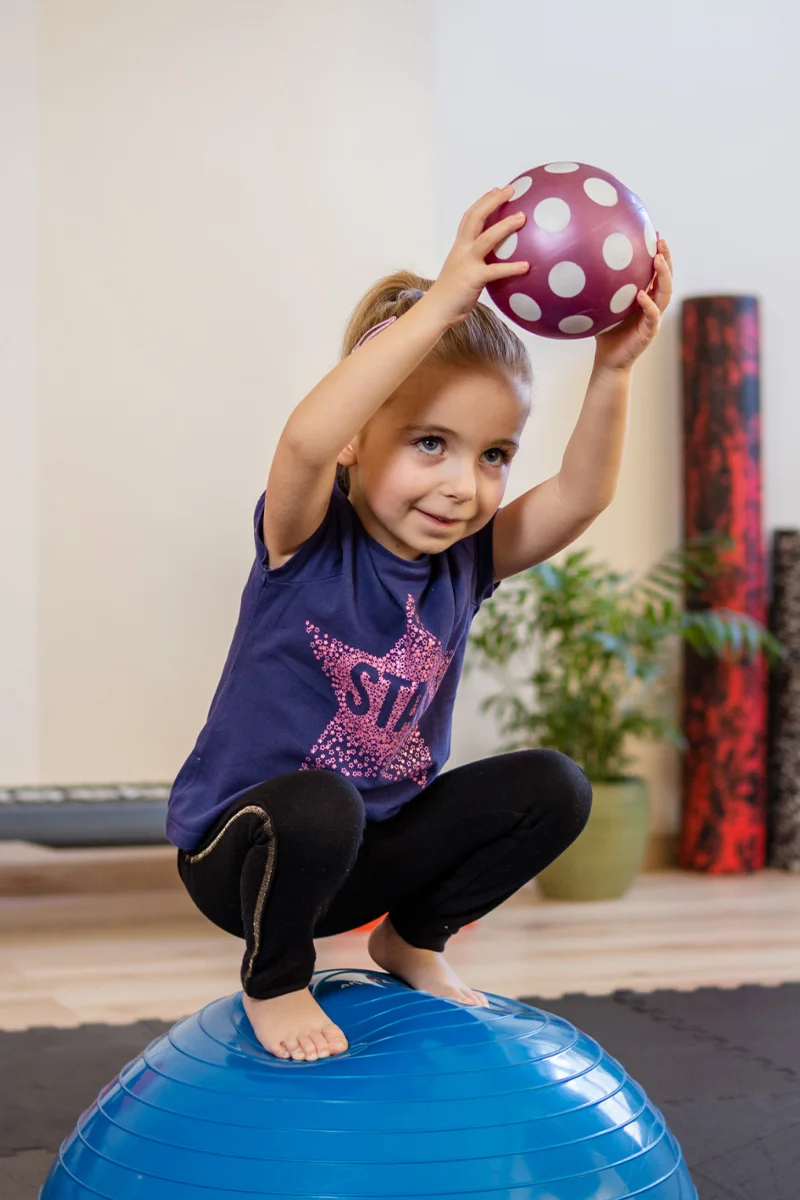
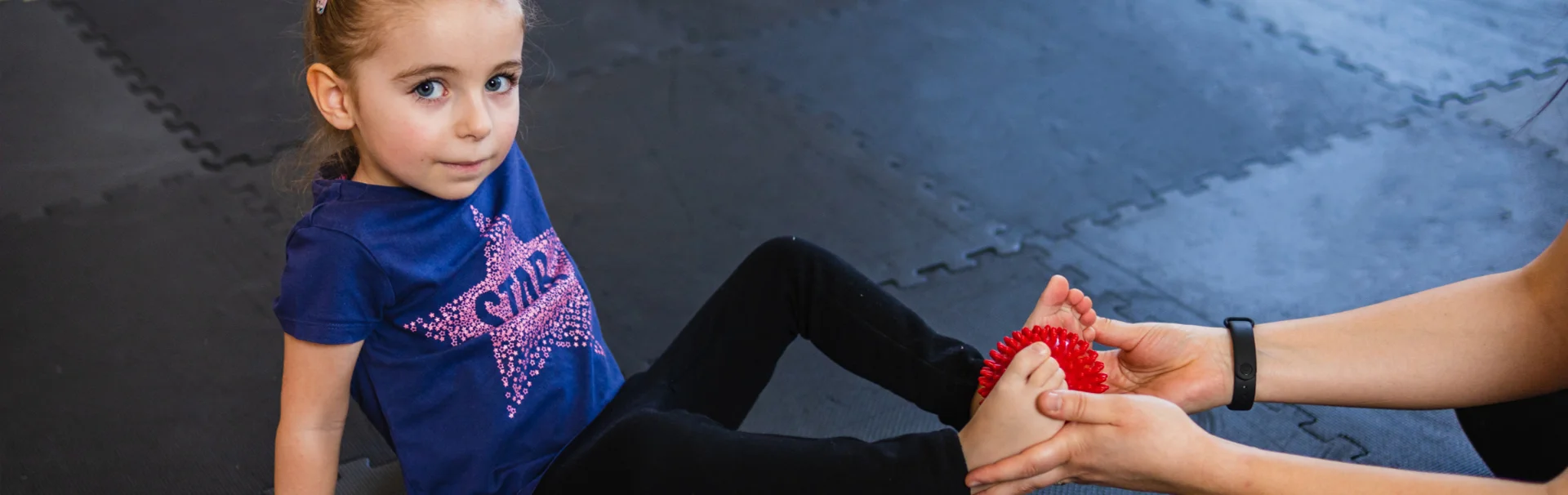
The examination is conducted in a playful, patient manner, adapted to the age group. The parent can be present throughout, so the child can feel safe.
At what age is pediatric musculoskeletal screening recommended?
Musculoskeletal screening can play an important role at several ages, even in the absence of symptoms. However, it is particularly recommended during school age, as postural deviations, limb axis problems, and complaints arising from increased load can be clearly identified then.
Dr. Péter Doszkocs performs pediatric orthopedic examinations from the age of 6 – at this age, the most common abnormalities, such as flat foot, poor posture, or gait disorders, can be reliably identified. For children involved in sports, an annual check-up may be recommended due to increased strain. The timing of the screening is always determined by the child’s individual development and movement patterns.
Instrumental and manual diagnostics
– modern background during the examination
At the Budapest Private Orthopedic Clinic, the pediatric orthopedic examination is based on specialist observation and manual examination. Posture, gait pattern, and limb alignment are assessed during a clinical examination.
If necessary, additional diagnostic tools are available:
- posture and gait check as part of orthopedic screening,
- ultrasound examination (e.g., hip screening in infants, performed by another doctor),
- radiological background (X-ray) available within the clinic.
The examination is always tailored to the child’s age, condition, and complaints, and only the necessary diagnostic tools are used with the least possible burden.
Common problems treated by pediatric orthopedics
Flat foot, poor posture, scoliosis
Among the most common orthopedic abnormalities are flat foot, poor posture, and scoliosis. These conditions can develop even in early childhood, but initially often do not cause pain – which is why screening is important.
- Poor posture: forward-sloping shoulders due to weak back muscles.
- Scoliosis (scoliosis): a sideways curvature of the spine, which can worsen without treatment and lead to kyphosis.
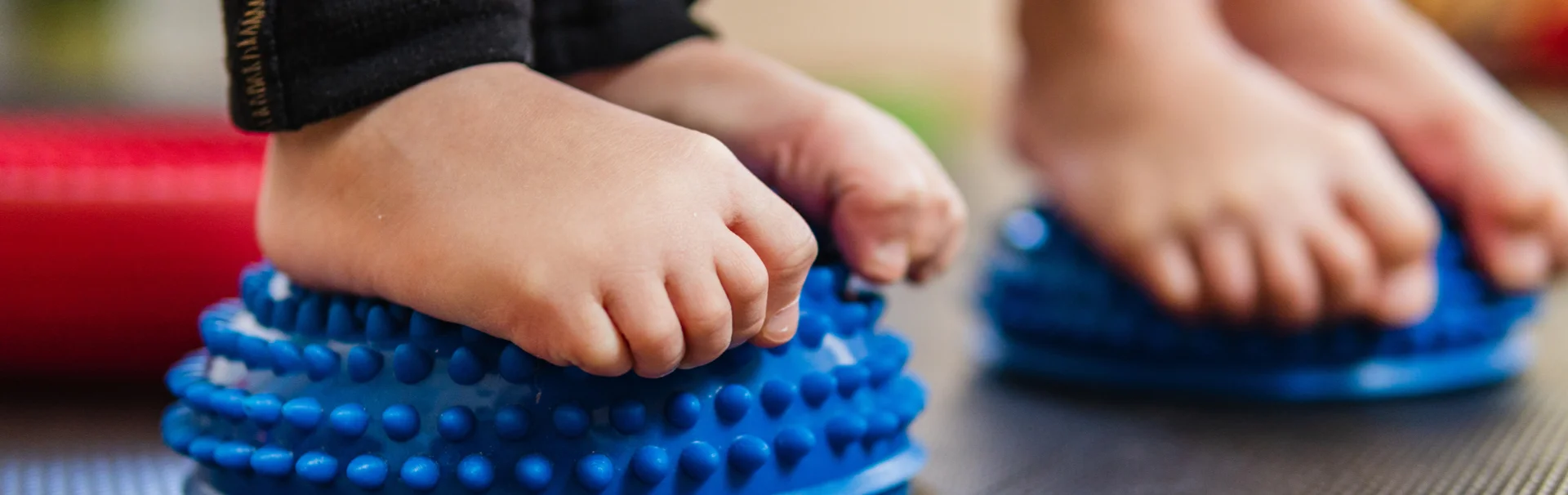
- Flat foot: a collapse of the foot’s arch, which can lead to knee and lower back pain over time.
With early detection and appropriate treatment, these can be well corrected.
Gait disorders, hip problems, foot pain
Deviations in gait can be observed in early childhood, but often only become noticeable later, during school age. The same applies to mild pains, which often have an orthopedic cause.
- Gait disorders: for example, inwardly turned feet, toe walking, waddling gait
- Hip problems: developmental abnormalities, asymmetries, pain occurring with load
- Foot pain: can result from overuse, flat foot, or axial deviations
These deviations, if treated in time, can be well managed, and secondary complaints can be prevented.
Sports-related musculoskeletal complaints in childhood
Sports activities are beneficial but can also place increased strain on the developing musculoskeletal system. Pediatric orthopedics often encounters complaints arising from overuse or repetitive movements.
Common problems:
- pain around the knee (e.g., Osgood-Schlatter disease),
- tightness around the Achilles tendon,
- heel pain (Sever’s disease),
- overuse joint complaints.
Screening and targeted orthopedic examination can help identify if modification of movement, physiotherapy, or the use of special equipment is needed.
Pediatric orthopedic examination from age 6
– expert support at the right moment
What happens after the first examination?
Following the examination, the pediatric orthopedic specialist provides detailed feedback to the parents about the child’s musculoskeletal condition. If necessary, recommendations are made for further steps:
- date for follow-up examination,
- recommendation for physiotherapy or other movement therapy,
- use of devices (e.g., insoles) or lifestyle advice.
If no abnormalities are found, a routine check-up a few years later may suffice.
Why is it worth booking an appointment now?
Early detection of musculoskeletal problems, even in early school age, can help prevent later complaints. The aim of the examination is to initiate targeted treatment in time, even for minor deviations – for example, in the form of physiotherapy or lifestyle counseling.
Our Pediatric Orthopedic Specialists
Dr. Nikolett Gáti
Orthopedic – Traumatology Specialist
Dr. Ákos Morvai
Chief Pediatric and Neuro-Orthopedic Physician

Dr. Zsolt Jórász
Pediatric Surgeon,
Pediatric Traumatologist
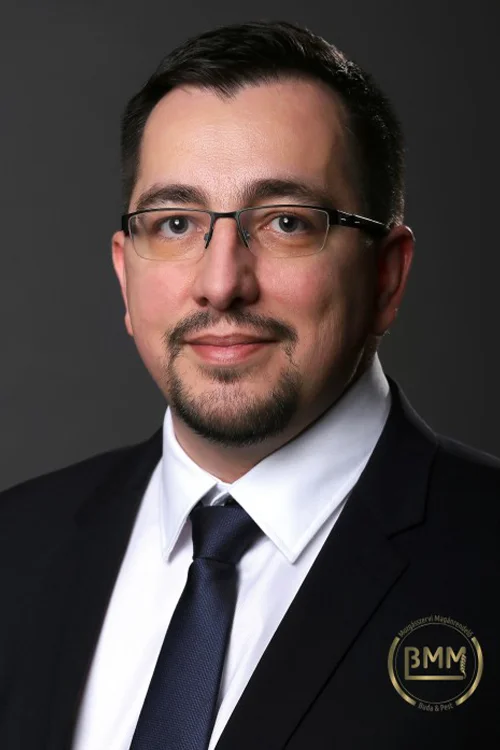
Dr. Gyula Domos
Pediatric Orthopedic Specialist

Book an appointment by phone

Online Appointment Booking