Dongalab


It is understandable for a parent to be concerned about their child’s health. Fortunately, many lesions are now easily, if not easily, cured. This includes clubfoot, a common developmental disorder affecting the foot. It can be caused both by a hereditary genetic disorder and by an abnormal positioning of the limb in utero.
A clubfoot is easily diagnosed immediately after birth. It is important to start treatment when the baby is a few days old to ensure a full recovery. At the Pediatric Orthopedics Specialist Outpatient Clinic of the Budapest Musculoskeletal Private Outpatient Clinic, our doctors with outstanding expertise and decades of experience use the most modern therapies to help little ones recover.

What is a bumblefoot?
Bipedalism is a common developmental disorder that can be caused by hereditary factors and environmental influences (abnormal positioning in the womb). In dongal feet, the positioning of the feet is abnormal. The longitudinal axis of the heel is offset from the body’s midline and the feet are almost completely turned towards each other, and in severe cases, they are turned even higher. The toes are mostly bent. The appearance is somewhat reminiscent of barrel bells, hence the name of the disease.
Occurrence of bumblefoot
Infant boys are twice as likely to have bunions as girls. Literature suggests that the prevalence of the disease in our continent is about 1-2 thousandths of the population. Worldwide, about 200,000 newborns are born with bunions every year.
The congenital form of clubfoot is characterised by familial accumulation. For example, if one parent has congenital clubfoot, the risk of the child developing the disease is 2%. And if a sibling has bunions in addition to the parent, the risk rises to 25%. In about half of cases , bunions affect both limbs, and in the other half of cases, they affect only the right or only the left leg.
Causes of bunion formation
The causes of the disease are still not fully understood. Genetic factors and abnormal intrauterine support may also contribute to the development of bumblefoot. The disease is likely to be inherited by several genes. Problems with cell division during foetal development and muscle innervation may also be involved.
In some cases, there may be another underlying disorder affecting several organ systems, so it is important to investigate any other abnormalities affecting any organ system.
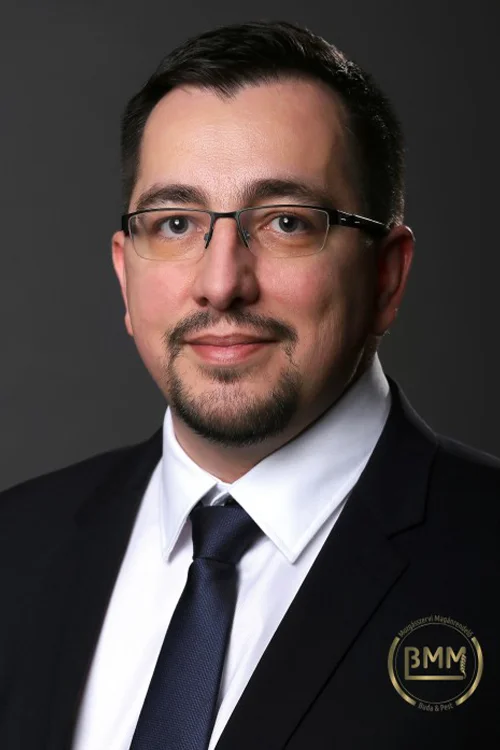
Dr. Gyula Domos
Pediatric orthopedics specialist, assistant professor
How can bumblefoot be diagnosed?
Bipedalism is an easily diagnosable condition; immediately after birth, you will notice that the foot turns inwards towards the midline of the body and the range of motion of the joints is narrowed. The metatarsal bones are twisted and the foot is smaller than average and also turns inwards. The heel is high in the case of a bunions, while the heel ball itself is almost impalpable, typically made up of fatty tissue. In larger children with clubfoot, it is noticeable that they cannot walk with a full foot, but instead walk with the outside edge of the foot on the ground.
In the pediatric orthopedics specialist outpatient clinic, a diagnosis of clubfoot can be made on the basis of symptoms and the physical examination. The family anamnesis can also be revealing, since if there is a family history of clubfoot, the risk of recurrence is increased. During the examination, the orthopedics specialist determines the degree of muscle shortening, the narrowing of joint range of motion, and assesses the mobility and muscle strength of the foot.
An imaging scan is not necessary to diagnose bunion. However, the doctor may order an X-ray to establish a surgical plan or to determine the outcome of conservative therapy.
The bunion is sometimes detected by doctors during an ultrasound examination while the baby is still in the womb. Treatment can only be started after the birth.
Can bunion be cured?
In most cases , bunions can be treated well. For a full or near full recovery, it is important to start treatment as early as possible, when the child is only a few days old. Therapy started in the newborn period results in a significantly better improvement than a course of treatment started when the child is older, with up to 100% improvement. The later the therapy is started, the less chance there is of achieving good walking function – but again, better late than never. Regular medical check-ups are needed for a full recovery.
In general, forms of clubfoot resulting from abnormal intrauterine support respond better and faster to treatment than types with a genetic background. In general, improvement is slower and harder to achieve in children with bunions associated with other conditions.
With proper treatment, most children born with clubfoot will be able to walk normally. However, the affected leg may show slight abnormalities – for example, it may be slightly smaller than the intact leg.

Tímea Szentpétery
Physiotherapist
Treatment of the bumblefoot
Treatment of bunions can be started as early as a few days of age, and it is recommended to start as soon as possible. Physiotherapy and the use of casts to correct the position of the foot may be sufficient to correct bunions caused by a postural abnormality.
The Ponseti method is used worldwide to treat bunions . It involves the gradual approximation of deformities and abnormalities of the foot to the ideal position by means of weekly alternating plaster casts. In general, a significant proportion of the deformities can be corrected with 5 changes of plaster. As part of the Ponseti method, the Achilles tendon is usually transected under local anaesthetic after the cast, followed by a few weeks of plaster casts and then special splinting until the child is about 3-4 years old. Children who have been treated with a bunion usually have a few months’ delay in motor development, but they can catch up quickly and play sport in time . It is recommended that a consultation with a physiotherapist is conducted every quarter to six months until the child is 3-4 years old. When the child starts to walk, corrective orthopedic shoes may be required. This will help prevent the outer sole of the foot from becoming ulcerated from overuse.
Surgical solution
A bunion due to genetic abnormalities can often only be corrected by surgery. The intervention can release the movement of the Achilles tendon and the so-called hock joints. In the case of a clubfoot, the aim of the operation is always to treat the shortening and deformity of the affected limb and to bring the anatomical position of the foot closer to its optimum. In the case of severe deformities, it is recommended to operate on the clubfoot up to the age of about six months. If the deformity is less severe, the condition can be maintained in equilibrium for longer with conservative therapy.
With clubfoot, the leg muscles are underdeveloped and the muscle balance is disturbed, so physiotherapy is always an integral part of the treatment. It is also necessary after an intervention, as are plaster casts. Moving and strengthening the muscles is definitely recommended with physiotherapy and physiotherapy treatments.
Does your child have a musculoskeletal complaint? Do you want to take him/her for a developmental assessment? Make an appointment at the Budapest Musculoskeletal Private Outpatient Clinic for children’s orthopedics, where our dedicated orthopaedic specialists pay special attention to early detection of diseases and the most effective, personalised treatment.
To register, call +36 (1) 44-33-433 now!