Treatment of cartilage degeneration with hypACT™ serum therapy
Only at BMM in Hungary! Serum therapy is currently the best known injection treatment for knee joint cartilage degeneration.
Are your knee joints aching? Natural pain relief for knee joint cartilage degeneration!
What is serum?
Serum is the liquid component of blood, the transport and nourishing medium for cells. It is a protein-rich, precisely regulated solution that provides a constant, optimal environment for blood cells and the inner walls of blood vessels to function. Stem cells cannot multiply if there is less than 10% serum protein in their environment. Approximately 2.5 liters of serum circulate in our bloodstream, constantly exchanging with interstitial fluid, lymphatic circulation, and even absorbed nutrients and inhaled moisture.
Blood serum is the carrier substance of our body, ensuring healthy cell function.
How does serum work?
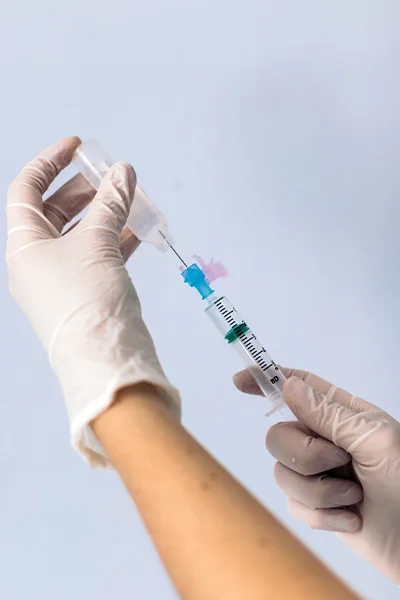
In case of injury, blood reacts immediately, and the clotting process begins. This not only seals the hole in the vessel wall, but activated platelets and white blood cells also produce and release growth factors into the serum. It is this injury-activated serum that stimulates dormant stem cells to multiply and initiates healing. Serum therapy utilizes this natural mechanism by taking blood from the patient and then reintroducing the activated serum to the area where it is needed due to slowed regeneration processes. Extensive scientific results confirm that serum therapy is currently the most effective injection treatment known for knee joint osteoarthritis.
Serum therapy is the use of activated blood for healing.
Who can it be used for? Is it effective for all types of cartilage degeneration?
The decision for application primarily rests with the treating physician, based on professional recommendations and clinical studies. Serum therapy is not a miracle cure, and it cannot be expected to work equally for everyone. In the early phase of the disease, cartilage fissures and the atrophy of the supporting bone are predominant. At this stage, we expect serum therapy to have a regenerative effect, slowing down the progression of the disease.
In later phases, decades later, when the patient’s goal is to delay prosthesis implantation, the aim of serum therapy is to reduce joint inflammation and alleviate pain. Although serum injection is a minimally invasive intervention, it also carries risks.
Serum therapy can have a regenerative effect in the early phase and an anti-inflammatory and pain-relieving effect in later phases.
Treatment of cartilage degeneration with serum derivatives
For decades, experiments have been conducted with serum derivatives that stimulate the regeneration of damaged joints. Many types of blood serum variants have shown positive results, the most well-known being platelet-rich plasma (PRP). Clinical studies have clearly demonstrated that all variants of serum therapy have a beneficial effect on knee joint function. American researchers have found that injections should be repeated at least twice, but preferably three times, and that the effect begins to appear after 2 months; this much time is needed for the serum to activate joint regeneration.
Improvement is primarily seen in pain reduction, which lasts for at least 12 months, and the treatment can be repeated if necessary. Comparative studies have shown that serum therapy achieves better results than hyaluronic acid injection, whose effect was weaker and improvement was only felt for 6 months.
Serum therapy is currently the best known injection treatment for knee joint cartilage degeneration.
How is hyperacute serum different and better?
In our scientific research, we sought to determine which of the many known serum derivatives is most capable of activating the healing of tissues affected by osteoarthritis. In the case of bone marrow stem cells – which are responsible for rebuilding decaying bone and cartilage – we found that all serum variants were slightly effective, but when the cells suffered further damage, only hyperacute serum was able to promote cell proliferation. Similar results were observed in cartilage cells, bone cells, and even human bone marrow tissue, results that have been confirmed by several foreign laboratories.
Since osteoarthritis is a disease that develops over several decades from a series of minor damages, it is important to perform the treatment with a serum that can optimally nourish stem cells even in this condition.
The serum not only replenishes lubricant in the joint but also nourishes the cartilage and activates the regeneration of bone marrow stem cells.
How do we produce hyperacute serum?
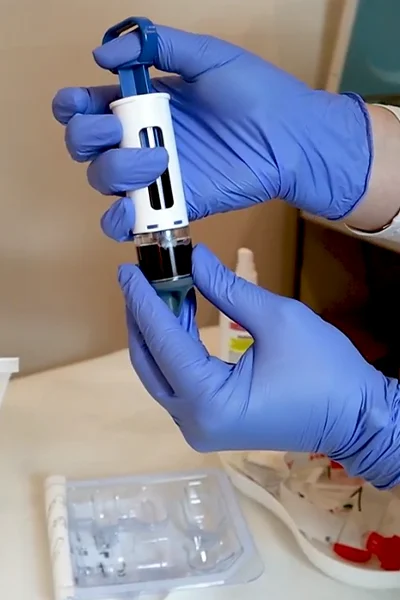
Using a patented device developed by Orthosera GmbH, blood is drawn in a closed system under aseptic conditions. From the sample taken from the patient, after physical separation, hyperacute serum is obtained, which contains concentrated growth factors.
From 18 ml of blood, 4 ml of serum can be obtained, which contains significantly fewer cellular elements compared to whole blood.
Hyperacute serum nourishes cells better and contains fewer inflammatory agents than PRP.
PRICE OF HYPERACUTE SERUM THERAPY: 90,000 Ft
Our specialists in serum therapy

Prof. Dr. Zsombor Lacza PhD
Chief Orthopedic-Traumatologist
FREQUENTLY ASKED QUESTIONS
20 minutes including blood draw and injection, 30-40 minutes including examination.
Yes, you can.
A break of 3-4 weeks is recommended.
You can perform light household tasks, up to your pain threshold.
We recommend a gentle lifestyle; sports and strenuous work are not advised. However, unloading is not necessary.
It is not recommended, as it is advisable to allow the cartilage to heal.
You can perform light physical work, sedentary work, and household chores.
Absolutely not.
You do not need to take sick leave; you can work immediately after the treatment.
Yes, to a swimming pool, but a thermal bath is not recommended.

Book an appointment by phone

Online Appointment Booking