Post-operative physiotherapy
Post-operative physiotherapy after hip prosthesis surgery
In the period preceding the surgery, it is extremely important to alleviate existing movement restrictions and strengthen the muscles. During this phase, the patient learns venous exercise techniques and becomes familiar with the correct use of assistive devices. This will make it much easier to overcome the difficulties following the surgery.
In the early post-operative period, pain relief and reduction of swelling are important. The operated limb is always elevated and bandaged up to the thigh. Icing the operated limb several times a day is necessary.
With the help of a physiotherapist, the patient learns the so-called forbidden movements. Failure to adhere to these movements can lead to prosthesis dislocation (i.e., the femoral head detaches from the acetabulum). Forbidden movements include: straight leg raises, internal and external rotation of the operated limb, sliding it beyond the midline, and hip flexion beyond 90 degrees.
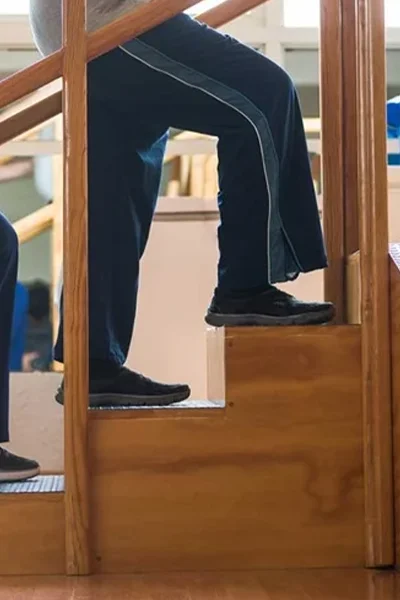
Initiating physiotherapy
Gentle mobilization and strengthening physiotherapy begins, taking into account the avoidance of forbidden movements. With the help of a physiotherapist, the patient stands up and practices correct walking. The weight-bearing capacity of the operated limb is always determined by the operating specialist, depending on both the type of prosthesis and the surgical technique.
Between 2 and 6 weeks post-surgery, physiotherapy expands with more complex exercises. The gradual discontinuation of assistive devices begins according to specialist instructions. Depending on the patient’s condition, stationary cycling can be started, initially without resistance for approximately 10-15 minutes.
Between 6 and 12 weeks post-surgery, functional training exercises can be initiated, which no longer focus solely on strengthening the muscles around the operated hip, as well as backstroke and freestyle swimming.
The exercise program is tailored to the patient’s condition and weight-bearing capacity. The goal of rehabilitation is: strengthening the hip and core muscles, alleviating movement restrictions, and developing a proper gait pattern.
Post-operative physiotherapy can be supplemented with various additional treatments: TAPE therapy, flossing, soft tissue manual therapies, and lymphedema therapy if necessary. The duration of rehabilitation is 6-12 months, depending on individual characteristics.
Post-operative physiotherapy after knee prosthesis surgery
In the period preceding the surgery, it is extremely important to alleviate any existing movement restrictions and to specifically strengthen the muscles stabilizing the knee joint. It is advisable to teach the use of various assistive devices. This way, the patient can approach post-operative rehabilitation much more easily.
Following surgery, the operated limb can be loaded according to specialist instructions, which depends on the type of prosthesis. With the help of the physiotherapist, correct walking is practiced. The duration of the non-weight-bearing or partial weight-bearing period is always determined by the operating surgeon.
During this period, gentle, gradual mobilization of the joint begins. This can be done with a passive knee motion machine or with active physiotherapy exercises. Achieving full extension as soon as possible is important. Flexion is forced up to the pain threshold.
In the initial post-operative period, the knee joint is swollen, which can be managed with icing, bandaging, and elevation.
Initially, physiotherapy exercises focus on the muscles surrounding the hip and knee joints, then – as the limb becomes capable of full weight-bearing – we transition to more complex functional training exercises, where core muscles are also trained. When designing the rehabilitation program, we consider the patient’s age and weight-bearing capacity.
After the non-weight-bearing period, assistive devices can be gradually discontinued (approximately between 6 and 12 weeks post-surgery). As long as the overall gait is not adequate – i.e., limping is observed – it is advisable to use the assistive device until it resolves. The duration of walks should be increased daily, always depending on individual weight-bearing capacity.
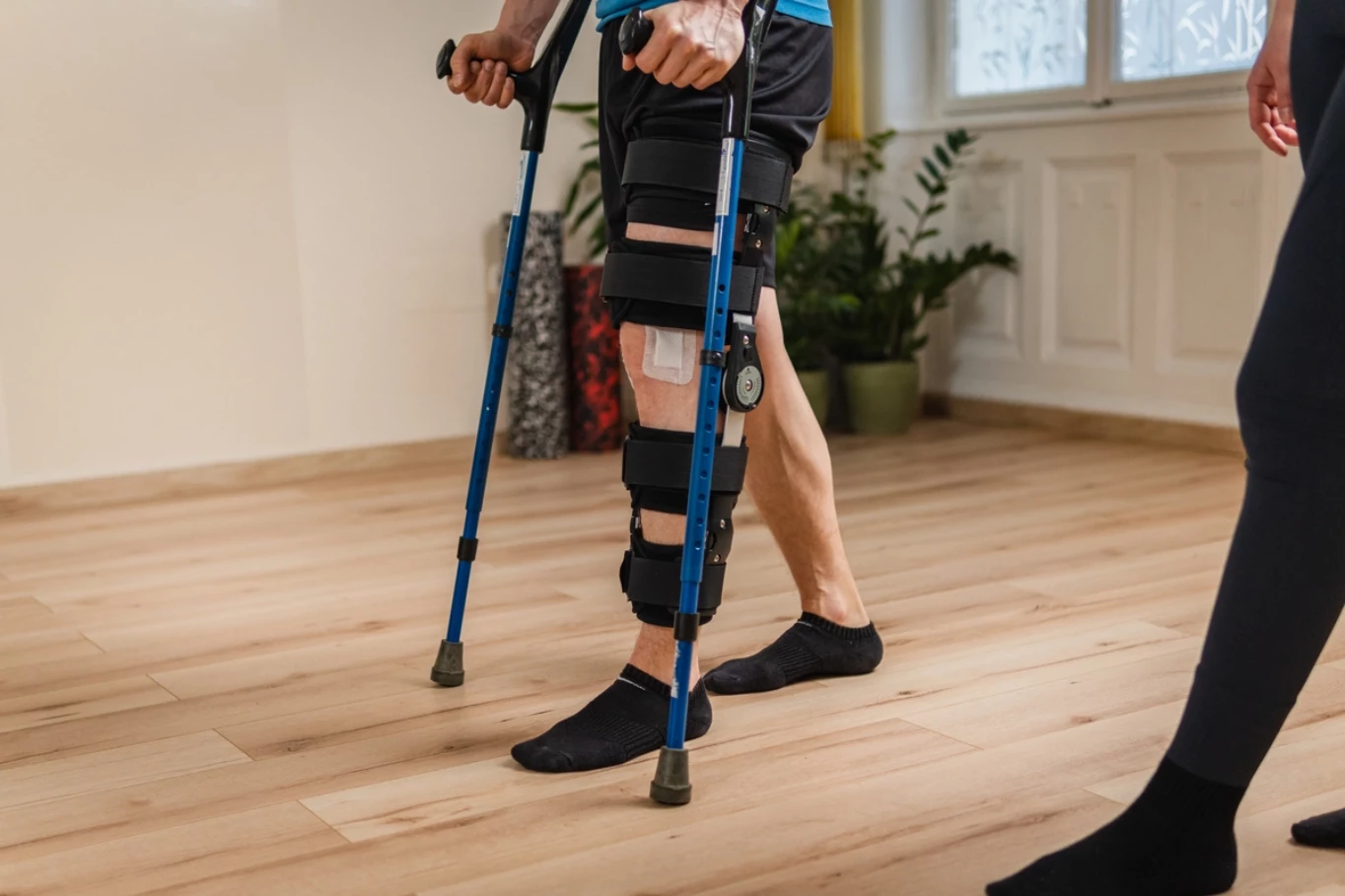
The importance of movement and physiotherapy
In addition to targeted physiotherapy exercises, using a stationary bicycle accelerates muscle conditioning, and swimming (freestyle/backstroke) is also an excellent opportunity for strengthening, once the wound has healed and the patient is able to walk independently without assistive devices.
The effectiveness of rehabilitation is influenced by many factors: pre-operative knee joint movement restriction, muscle condition, the course of the early post-operative period (whether wound infection occurred), the patient’s motivation, regular practice, the therapist’s work, and individual characteristics.
Post-operative physiotherapy can be accelerated with various supplementary therapies: TAPE, flossing, manual therapies. The duration of rehabilitation can range from 3 to 12 months, influenced by individual characteristics.
Rita Major
Physiotherapist
Rehabilitation following anterior cruciate ligament – ACL rupture
Immediately following the injury, our goal is to reduce pain and swelling. If surgery is performed, it is extremely important to regain full range of motion as soon as possible and to establish a correct gait pattern. We gradually strengthen the muscles stabilizing the knee joint. Considering these aspects will make post-operative physiotherapy and rehabilitation much more effective.
The rehabilitation protocol varies depending on the surgical technique. The weight-bearing capacity of the operated limb, the range of motion – within which knee joint movement can occur – and any forbidden movements are always determined by the operating specialist.
In the early period, our goal is to reduce pain and swelling as soon as possible: with icing, elevation, and bandaging. Considering the weight-bearing capacity of the operated limb, walking practice with an assistive device begins. Following specialist instructions, we gradually increase the joint’s range of motion, strive to achieve full extension as soon as possible, and strengthen the stabilizing muscles.
After discontinuing assistive devices
Once the operated limb can bear full weight and restrictions are lifted, assistive devices can be discontinued (4-6 weeks post-surgery), and we can gradually transition to more complex physiotherapy exercises, functional training exercises, and incorporate various unstable tools (Dynair cushion, FIT BALL, BOSU, Multi Roll).
When compiling the therapeutic program, we always consider the patient’s condition and individual weight-bearing capacity. Stationary cycling is beneficial, as is swimming (freestyle/backstroke). Well-structured rehabilitation is extremely important, as it significantly reduces the risk of re-injury. Its duration is a minimum of 6 months, but it can be longer, depending on individual characteristics.
The effectiveness of rehabilitation is influenced by several factors: pre-operative knee joint movement restriction, muscle condition, the course of the early post-operative period (whether wound infection occurred), the patient’s motivation, regular practice, the therapist’s work, and individual characteristics.
Rehabilitation following Mosaicplasty surgery
During Denks surgery, the bony attachment of the patellar tendon, along with a bone block, is repositioned to the correct place and fixed with screws. This prevents patellar dislocation by altering the abnormal course of the quadriceps muscle. In the early post-operative period, our goal is to alleviate pain and reduce swelling. It is necessary to elevate, ice several times a day, and bandage the operated limb. Walking practice begins with complete non-weight-bearing of the operated limb, using an assistive device. The use of crutches is essential for at least 6 weeks post-surgery. Guided physiotherapy begins with the help of a physiotherapist. Our goal is the targeted strengthening and stretching of the muscles around the hip and knee joint. Approximately by the 6th week, full knee joint range of motion should be achieved, which can be influenced by individual characteristics. If necessary, weaker muscles can be stimulated with a selective electrostimulation device.
From the 6th week, we transition to increasingly difficult, more complex exercises, and tools providing unstable surfaces (Dynair, BOSU, Multi Roll), and proprioceptive training begins. Approximately by the 8th week, the operated limb becomes capable of full weight-bearing; this can be influenced by individual characteristics. Stationary cycling can be started, initially without resistance, for short durations.
From the 12th week, gym-based strengthening exercises based on rehabilitation principles can be started.
Slow jogging and running can be initiated between 4 and 6 months, considering the patient’s current condition.
Post-operative physiotherapy can be supplemented with various therapies: TAPE, flossing, soft tissue manual therapies.
The rehabilitation exercises are always tailored to the patient’s current condition and complaints.
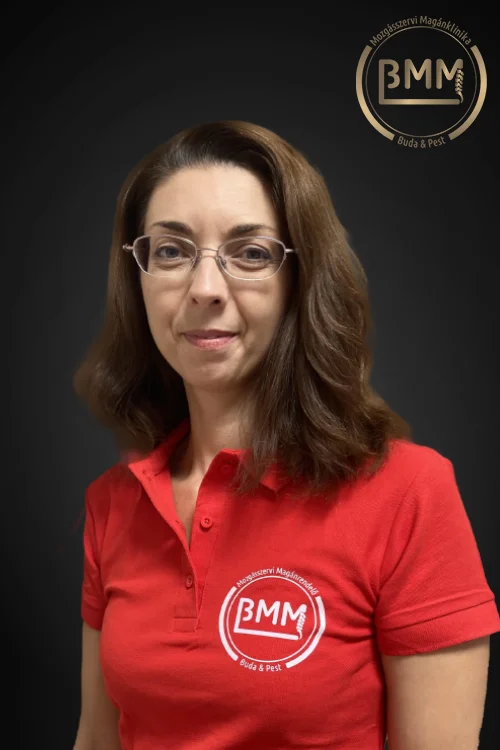
Tímea Szentpétery
Physiotherapist
Post-operative physiotherapy and rehabilitation after MPFL reconstruction surgery
The medial patellofemoral ligament (MPFL) is an important stabilizer of the patella. In its absence, patellar instability can be observed in the extended position of the knee joint. If patellar instability cannot be reduced by strengthening the medial part of the quadriceps muscle, and there is no anatomical obstacle, ligament reconstruction is performed.
In the period preceding the surgery, it is extremely important to alleviate existing movement restrictions and perform targeted muscle strengthening: medial quadriceps, gluteal muscles.
In the early post-operative period, our goal is to alleviate pain and reduce swelling. It is necessary to bandage, ice, and elevate the operated limb. Circulation-enhancing venous exercises are taught. It is important to ‘activate’ the medial fibers of the quadriceps muscle through so-called innervation exercises, which essentially means tensing the muscle without creating movement. The patient’s knee joint is secured by a brace, which allows flexion up to 90 degrees and extension up to 0 degrees; this can be removed around the 6th week. Active and passive physiotherapy is performed within this brace. Correct walking practice with an assistive device begins, with the operated limb capable of full weight-bearing.
From the 2nd week, scar tissue mobilization can begin. We strive for gradual restoration of range of motion. We increasingly progress towards more complex exercises during physiotherapy, incorporating tools that provide unstable surfaces for faster recovery (Dynair cushion, BOSU, Multi Roll).
Approximately between 6 and 12 weeks, stationary cycling and freestyle swimming can be started. From the 12th week, jogging can be initiated. Return to sports should always be discussed with the operating specialist.
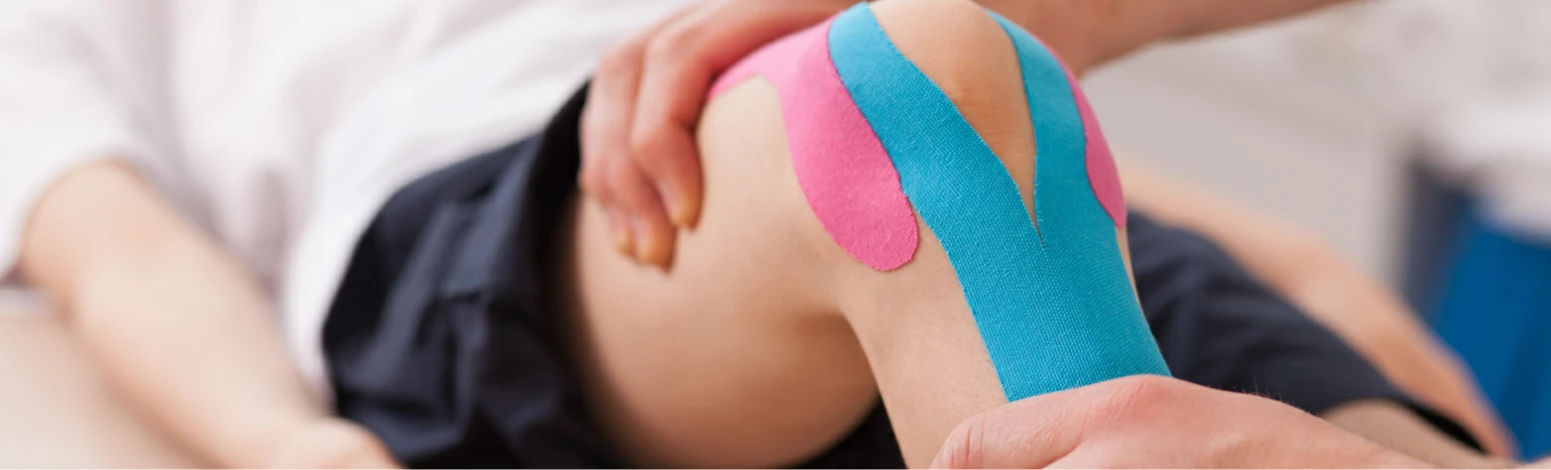
During rehabilitation, the application of kinesio TAPE is particularly beneficial for patellar stabilization. In addition, various other therapies can be employed: flossing, soft tissue manual therapy treatments.

Sándor Dorottya Lilla
Physiotherapist
Rehabilitation following Denks surgery
During Denks surgery, the bony attachment of the patellar tendon, along with a bone block, is repositioned to the correct place and fixed with screws. This prevents patellar dislocation by altering the abnormal course of the quadriceps muscle.
In the period preceding the surgery, our goal is to achieve full range of motion, targeted muscle strengthening, teaching the use of assistive devices, and explaining the elements of rehabilitation.
In the early post-operative period, our goal is to alleviate pain and reduce swelling. It is necessary to elevate, bandage, and ice the operated limb. The patient begins practicing the correct use of assistive devices the day after surgery, with partial weight-bearing on the operated limb. Full weight-bearing becomes permissible between 3 and 6 weeks.
In the 3rd week, physiotherapist-led physiotherapy begins, aiming for targeted strengthening and stretching of the muscles around the hip and knee joint. More complex and challenging exercises are gradually introduced, always tailored to the patient’s current condition.
6 – 12. Between weeks, freestyle swimming can be started. 12. From week, gym-based strengthening exercises based on rehabilitation principles can be started. Swimming and return to sports can only begin with the specialist’s permission.
In the long term, lunges, deep squats, and climbing should be avoided. Post-operative physiotherapy can be supplemented with various therapies: TAPE, flossing, soft tissue treatments.
Physiotherapy and sport for complete recovery
From the 2nd week, scar tissue mobilization can begin. We strive for gradual restoration of range of motion. We increasingly progress towards more complex exercises during physiotherapy, incorporating tools that provide unstable surfaces for faster recovery (Dynair cushion, BOSU, Multi Roll).
Approximately between 6 and 12 weeks, stationary cycling and freestyle swimming can be started. From the 12th week, jogging can be initiated. Return to sports should always be discussed with the operating specialist.
During rehabilitation, the application of kinesio TAPE is particularly beneficial for patellar stabilization. In addition, various other therapies can be employed: flossing, soft tissue manual therapy treatments.

Book an appointment by phone

Online Appointment Booking