What is frozen shoulder?


Frozen shoulder syndrome, also known as adhesive capsulitis or periarthritis humeroscapularis, is a chronic condition characterized by chronic inflammation of the shoulder and surrounding soft tissues. When the connective tissues surrounding the joint experience inflammation, they thicken and become stiff and bound, preventing the joint from moving freely.
As the patient is unable to move their arm, the joint becomes more and more bound and stiff, the soft tissues begin to scar and a “frozen shoulder” develops.
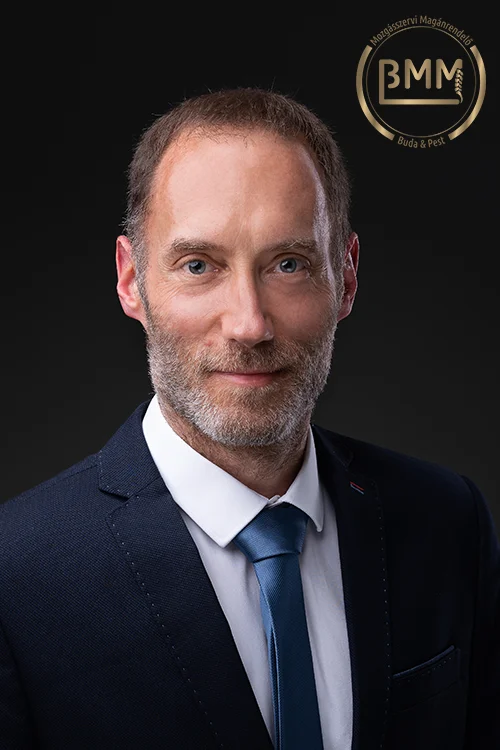
Dr. Bálint Major
Orthopedic-Traumatologist
What could be the cause?
Some of these cases are triggered by previous injury, illness, surgery or prolonged immobilisation, which may have resulted in a restriction of movement and the patient’s inability to move their arm properly and/or regularly. Other triggers may include joint cooling from air conditioning, overuse, etc. In other cases, however, there is no specific trigger and the symptoms occur spontaneously without any cause. Frozen shoulder syndrome most commonly affects women aged 40-50.
What are the symptoms?
The most common symptom is pain in the front and outside of the shoulder, and reduced range of motion. The symptoms are most intense in the morning, when you can move your arm again after a long period of immobility. The pain often occurs at rest and is exacerbated by movement. Movement of the shoulder joint is restricted, and the patient is unable to rotate outwards (kyrotation) and then to lift to the side (abduction). Another characteristic of frozen shoulder syndrome is that not only active but also passive movements are restricted, which means that the practitioner cannot move the joint in these directions with full range of motion.
What is the course of the disease?
The course of frozen shoulder syndrome can be divided into 3 main stages:
- The first is the freezing phase: this lasts from 3 to 6 months from the first symptoms, with intense pain and a slow, gradual stiffening of the shoulder joint. Every movement becomes more painful, which means that the patient has less and less use of the limb and the shoulder joint’s range of movement is reduced.
- This is followed by the frozen phase: observed in months 3-12 after the onset of symptoms. During this period, the pain decreases but the range of motion still does not improve.
- Finally, there is a thawing phase: the pain is gone and movements gradually return. This period can last up to a year.
Overall, the recovery time for frozen shoulder syndrome is 1.5-2 years, but the reduced range of motion may persist after recovery, but to a lesser extent.

What are the treatments for frozen shoulder?
As the recovery time is very long, it is important that the disease is diagnosed early so that the pain is relieved and the patient regains mobility of the affected joint as soon as possible.
In addition to aphysical examination by an orthopaedic specialist, imaging (X-ray, MRI) may be needed to make a diagnosis .
Frozen shoulder syndrome is usually treated conservatively, i.e. it does not require surgical treatment. Anti-inflammatory and analgesic drugs, occasionally injections, various physiotherapy tools such as ultrasound, safe laser, etc. can be used. In addition, movement therapy under the guidance of a specialist, a physiotherapist, is essential, since the frozen part of the body can often only be reintroduced to physiological movements by manual therapy.
In the frozen phase, when the pain is reduced, the frozen joint can be treated surgically to speed up the return of movement, after which the pain is significantly reduced. The intervention is performed by shoulder arthroscopy, where, with a minimum of penetration, 2-3 incisions of about 1 cm are made using an arthroscope to release the connective tissue that has built up in the joint capsule and surrounding ligaments. Post-operative physiotherapy is also essential to restore movement and speed up recovery.
To prevent the symptoms from recurring, it is advisable to continue to use the movement therapy you have learned with the help of a specialist on a regular basis and to follow the recommendations made by experts for a longer period of time (e.g. ideal working conditions, avoiding air conditioning, avoiding overwork, etc.).
Most common complaints treated by our shoulder specialists:
Our Shoulder Surgeons
Dr. Bálint Major
Orthopedic-Traumatologist

Dr. Ferenc Tompai
Chief Orthopedic and Trauma Surgeon
We believe that free, pain-free and enjoyable exercise is for everyone! Need immediate help?
At BMM, we provide you with the most qualified orthopedic specialists, physiotherapists and state-of-the-art therapeutic treatment options. In Budapest – with 3 locations – we are waiting for you every day of the week in a pleasant environment.
To register, please call +36 1 44 33 433
BMM – Outstanding expertise, a demanding environment and targeted therapy in one place!