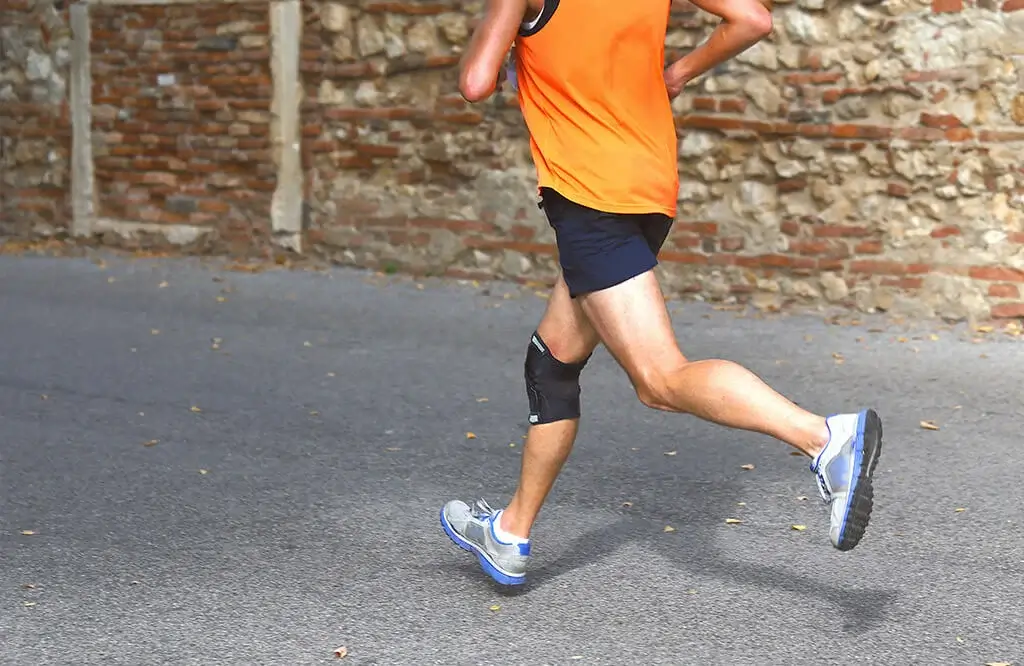
Cruciate ligament rupture
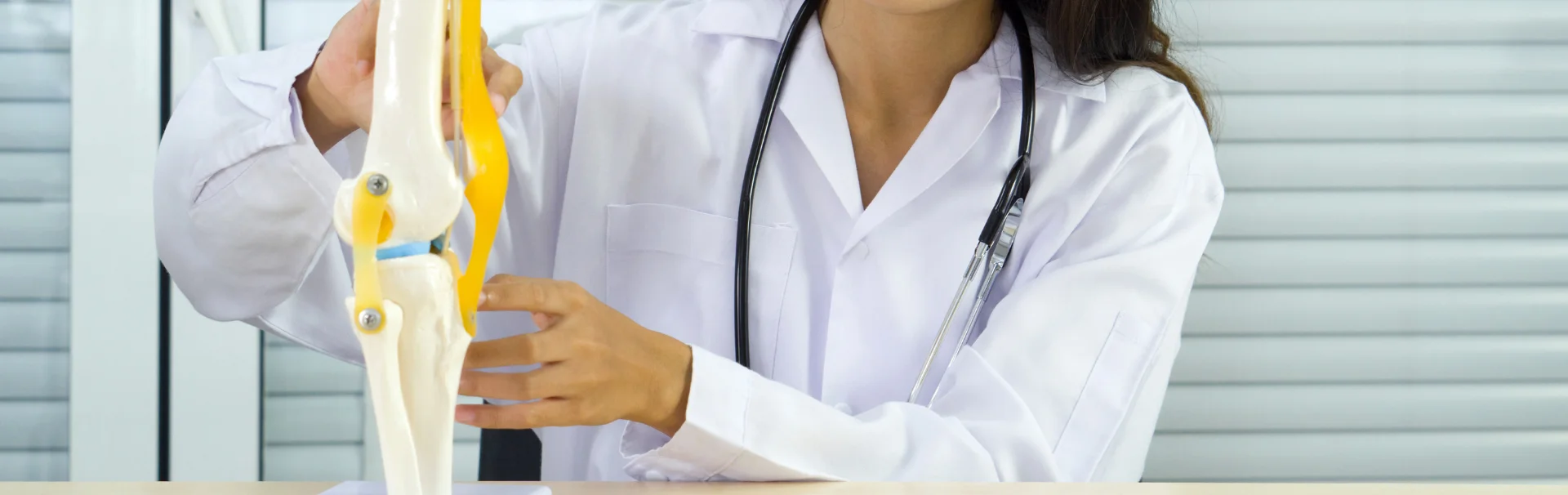
Cruciate ligament rupture
Author: Dr. Szabolcs Gáspár | June 21, 2022


What are the typical symptoms of a cruciate ligament rupture? What causes this type of injury, what types are there, and in what cases is an intervention necessary?
In this article, you can find reliable medical information about cruciate ligament ruptures. The specialists at our private clinic are ready to treat patients with cruciate ligament ruptures using the most advanced therapeutic methods.
What is a cruciate ligament rupture?
The cruciate ligament rupture is a very common injury that typically occurs in people between the ages of 15 and 45. The knee is an extremely complex joint, and its stability is maintained by the anterior cruciate ligament and the posterior cruciate ligament. These ligaments are very strong, fibrous tissues that connect the tibia and femur in an X-shape. They most often experience a rupture during sports activities, particularly during sudden movements. Cruciate ligament ruptures are more common in women than in men.
What are the different types of cruciate ligament ruptures?
We distinguish between anterior cruciate ligament ruptures and posterior cruciate ligament ruptures. Anterior cruciate ligament ruptures are more common and are generally more severe, while posterior cruciate ligament ruptures are typically less severe.
The cruciate ligament rupture can be complete or partial. In the case of a partial rupture, the knee can still be moved and bear weight to some extent, but it is painful and unstable. Symptoms may also include swelling. In the case of a complete cruciate ligament rupture, a popping or snapping sensation is felt in the knee at the moment of injury, and sudden, severe pain occurs. The patient is often unable to stand on the leg, and the knee is frequently unable to bear weight.
Can a cruciate ligament rupture be prevented?
If someone has sensitive or weak knee joints, it is recommended to avoid sports that place increased stress on the knees (soccer, basketball, skiing, tennis, handball). Those who participate in these sports can do a lot to prevent cruciate ligament ruptures by specifically strengthening the muscles around the knee through regular physiotherapy, so that these muscles can support the stabilizing function of the knee ligaments as effectively as possible. Targeted muscle strengthening is also recommended for older adults and recreational athletes.
What causes a cruciate ligament rupture?
The anterior cruciate ligament typically experiences a rupture as a result of twisting movements, lateral displacement of the knee joint, or hyperextension or overextension of the joint. In about three-quarters of cases, the injury occurs during sports activities. It most commonly occurs during activities involving sudden stops and changes of direction. Examples include soccer, basketball, skiing, tennis, and handball.
Could there be any harmful complications?
If the anterior cruciate ligament tears, the knee joint becomes unstable. Without proper treatment, this can damage the cartilage surface and lead to joint degeneration. Osteoarthritis, in turn, can cause progressively worsening pain and difficulty moving. That is why it is extremely important that if you notice symptoms of a cruciate ligament rupture, you should see an orthopedics specialist as soon as possible !
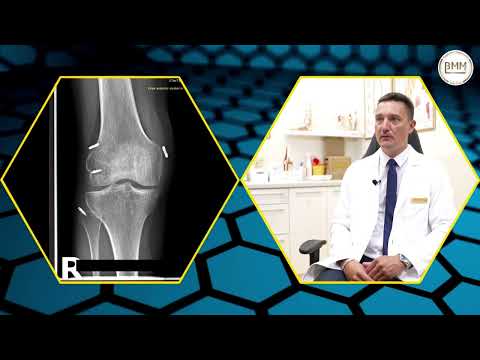
How is a cruciate ligament rupture diagnosed at the Budapest Private Outpatient Clinic for Orthopedics?
The specialists at the Budapest Private Orthopedic Outpatient Clinic are instructors and chief physicians at national institutions who welcome their patients with extensive experience, quick and accurate diagnoses, and personalized treatment plans. Our friendly, high-quality clinics are located at several locations throughout Budapest, in Buda, Pest, and Óbuda. To get started, please call +36 1 44 33 433 to schedule an appointment with one of our orthopedic specialists. We can offer appointments for today, tomorrow, or even this weekend.
During the medical examination, our orthopedic specialist will first ask you about the circumstances surrounding the injury and the symptoms you have experienced. The specialist will then perform a physical examination to assess the knee’s range of motion and any loss of function. There are also special tests to confirm an anterior cruciate ligament (ACL) rupture. During the so-called Lachman test, for example, the doctor examines the forward displacement of the tibia, which is greater than normal in cases of an ACL rupture.
Imaging tests may also be necessary to make a diagnosis. Our doctor will review the images you bring in and may order additional tests as needed. In the case of a cruciate ligament rupture, an ultrasound examination or an MRI scan may be considered, as these methods allow for the examination of soft tissues, including the condition of the ligaments. An MRI (magnetic resonance imaging) scan provides detailed, high-resolution images of the condition of your joints and ligaments. Our doctor will then recommend a personalized treatment plan for you.
The doctor decides whether an intervention is necessary after considering several factors. These factors include the patient’s age, lifestyle, body type, and physical activity level. For example, if the patient plays sports or performs physical work that puts strain on the knee, surgical treatment of the ligament rupture is the recommended course of action. Surgery is also generally recommended if the ligament rupture occurs in a degree of more than 50%.
Surgical Treatment of a Cruciate Ligament Rupture
In the case of a complete rupture of the anterior cruciate ligament, there is no chance that the ligament will heal on its own. Therefore, surgery is the only solution in such cases. If surgery is not performed, the resulting instability of the knee can lead to early joint degeneration (osteoarthritis). The cruciate ligament rupture is typically treated surgically using a procedure called ligament reconstruction. During the intervention, the damaged ligament is replaced with a tendon taken from the thigh.
The Surgical Procedure
During the procedure, the surgeon makes a small incision above the tibia in the knee joint and removes two pieces of the flexor tendon through this incision. The surgeon then thoroughly examines the knee joint using a special endoscope and treats any other injuries found. Next, the surgeon drills holes in the tibia and femur and constructs an anterior cruciate ligament from the flexor tendons, which is secured with screws and absorbable sutures.
The Special Surgical Procedure for Cruciate Ligament Ruptures
We also offer a specialized surgical technique in which we reattach the cruciate ligament to its original attachment site. In addition, we use a specialized fixation technique that securely anchors the implanted ligament. The advantage of this is that the patient does not need to wear an external brace or keep weight off the leg after surgery. This speeds up the rehabilitation process.
After surgery
Following surgery for a cruciate ligament rupture, rehabilitation aids in full recovery. Starting rehabilitation too early, overexertion, or placing a load on the joint that deviates from the optimal level can lead to joint damage. For this reason, it is important that the rehabilitation process be monitored by a specialist and a physical therapist. The physical therapist helps patients recover through personalized exercises. The goal is to restore pain-free movement and the joint’s original range of motion, as well as to prepare the joint for physical activity. About two months after surgery, most patients can already ride a bike, and about half a year after surgery, they are able to participate in all the sports they did before their injury.