The “W” Sitting Position in Children – What Pediatric Orthopedics Says from a Scientific Perspective
The “W” Sitting Position in Children – What Pediatric Orthopedics Says from a Scientific Perspective
Author: Dr. Ákos Morvai | January 14, 2026


Many parents have heard the warning: “Don’t let your child sit in a W-sitting position.” This concern most often relates to damage to the hips, knees, or posture. But what does pediatric orthopedics have to say about this, and what does scientific research show?
In this article, we’ll take a detailed look at the W-seat.
What is a W-seat?
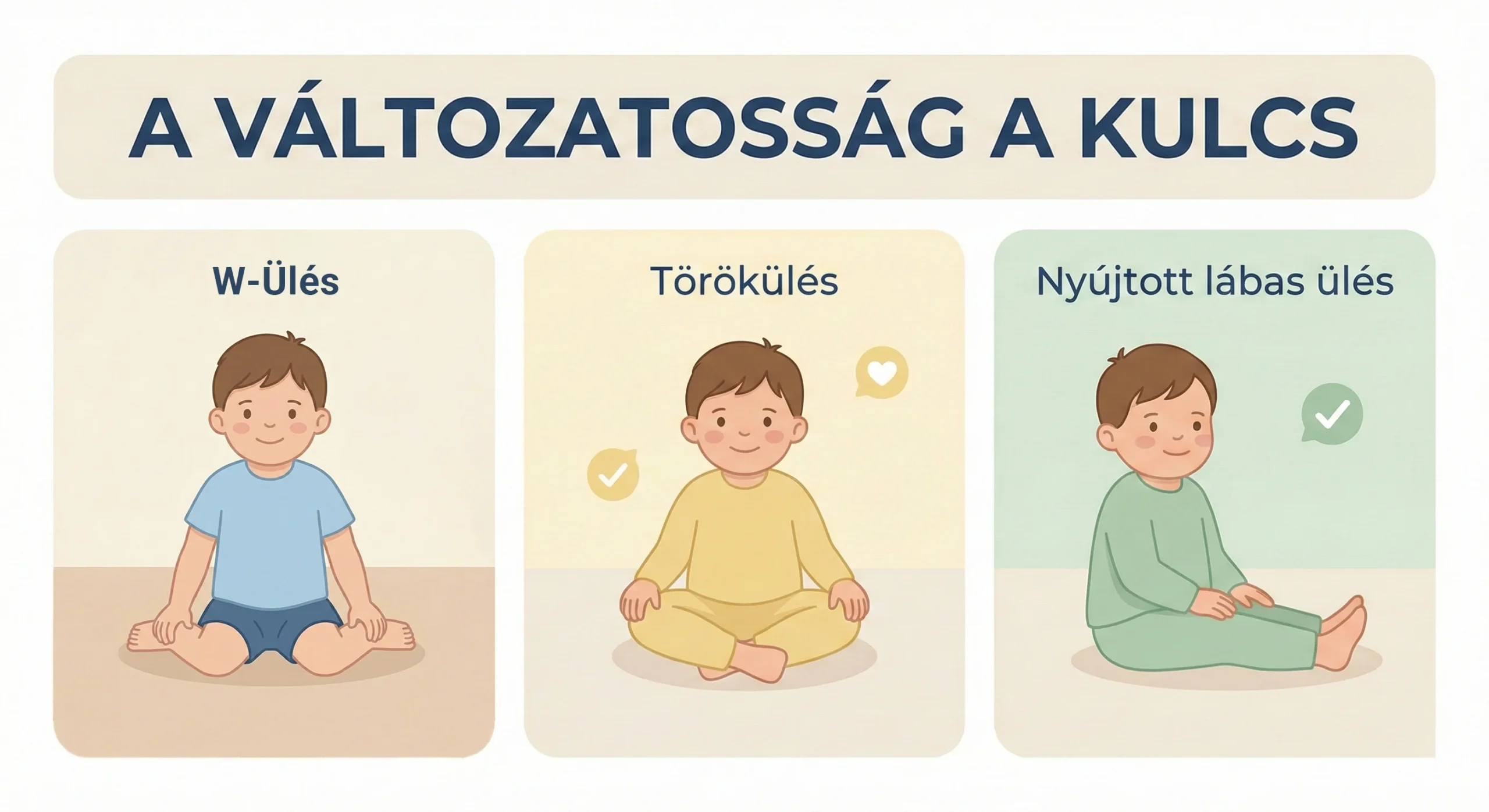
The W-sitting position is a characteristic sitting posture in which the child sits on their bottom with their knees bent, their feet pointing outward, and, when viewed from above, their legs form the shape of the letter W. This sitting position is most common between the ages of 2 and 6, and most children adopt it instinctively while playing. According to pediatric orthopedics, the W-sitting position does not in itself pose a health risk, but it is worth paying attention to how often it occurs and whether the child alternates between different body positions.
Why are parents worried?
Concerns about the W-sit generally relate to the possibility of hip dysplasia, poor posture, or muscle weakness. It is often claimed that the W-sit position damages the hips, weakens the core muscles, or causes musculoskeletal problems in the long term. It is worth emphasizing, however, that these claims have long circulated among parents and educators without scientific evidence .

Dr. Ákos Morvai
Chief Pediatric and Neuro-Orthopedic Physician
Online appointment booking for Budafoki út clinic:
Please choose the service that suits you
For pediatric orthopedic examinations, please register the appointment with the child’s name and details.
The control fee is valid for 3 months after the initial examination, for the same complaint.
- 1. Select the service you want from the drop-down box.
- 2. Use the calendar to choose a date that suits you!
- 3. Enter your details to register or login with your previous registration.
- 4. If you would like to book on behalf of someone else (e.g. your child), please let us know at the place indicated.
- 5. Briefly describe your complaints!
- 6. Choose the type of consultation: initial examination, control examination or prescription.
- 7. Click on the button to book your appointment. Thank you for choosing BMM!
If you are not able to come to the appointment you have already booked, please let us know at least 24 hours in advance. This gives other patients the opportunity to get the medical care they need in time. Thank you for your cooperation and understanding!
Resignation: +36 1 44 33 433
If you can’t find an appointment for the week of your choice , please call our call-centre on+36 1 44 33 433 for further assistance. Our staff will be happy to help you make an appointment with the doctor of your choice or another specialist according to your complaint.
What does science say about the W-sit?
The latest research has produced a systematic literature review on the W-sit. The researchers reviewed thousands of scientific articles, specifically looking for evidence of the long-term harmful effects of the W-sit. The result was surprising: they found only seven studies that specifically addressed the W-sitting position, and based on these , experts in pediatric orthopedics say there is no evidence that the W-sitting position is harmful in and of itself.
Research has shown that there is no causal relationship between the W-sit and hip dysplasia, musculoskeletal problems, or muscle weakness. A separate study examined whether the W-sit position could cause hip dysplasia or worsen an existing condition, and found no association. Another study examined muscle function in various sitting positions and found that muscle activation was largely the same regardless of how the child was sitting.
What does pediatric orthopedics recommend?
However, this does not mean that children can sit in any position for long periods of time. Pediatric orthopedics emphasizes that movement and changing body positions are the most important factors. It is best for children to constantly alternate their forms of movement while playing: climbing, squatting, running, and sitting follow one another. In this context , the W-sit is perfectly normal as a temporary position during play and can be one element of natural movement patterns.
In certain cases, however, it is advisable to consult a specialist. A pediatric orthopedics examination is recommended if:
- The child sits almost exclusively in the W position and does not change body position,
- There is a known abnormality in neurology, muscle tone problem, or an orthopedics condition.
In such cases, pediatric orthopedics specialists can provide personalized advice on developing proper movement and sitting patterns.
What You Should Know About the W-Sit According to Pediatric Orthopedics
The W-sitting position in children has not been proven to be harmful in and of itself, and according to the current position of pediatric orthopedics, it is not necessary to prohibit it. The most important things are regular physical activity, frequently changing body positions, and monitoring the child’s development. If any musculoskeletal or orthopedic issues arise, pediatric orthopedics specialists can provide the necessary guidance to ensure the child develops safely and healthily.