
The importance of revision surgery - Treating pain after a femoral neck fracture and hip fracture
author Dr. Bence Balázs Moravcsik | 2024 .04.11.


The revision surgery
The concept of revision surgery is relatively less common. It is perhaps less talked about than it should be, but it is of much greater importance than most people realise.
Revision surgery is actually a surgical intervention performed by doctors after a previous operation. The aim is to correct problems or complications that have occurred in the previously operated area, usually related to wear or loosening of the knee and hip prosthesis components.
Revision surgery is usually more complex and requires more careful preparation than the original intervention. The surgeon also has to take into account the scarring caused by the previous operation and the possible complications that may occur during the operation. The decision to perform such an operation is always made taking into account the patient's condition, the potential benefits and the risks.
In which cases is revision surgery necessary?
Revision interventions may be necessary in individual cases. They are usually performed when the original surgery did not produce the expected results or when symptoms have returned after a long period of pain-free surgery. The most common reasons behind revision surgery are:
- Healing problems: if the post-operative recovery process is inadequate or complications occur, such as infection or scarring.
- In the case of prosthesis implantation: in the case of large joint prostheses, partial or complete replacement of the implant may be necessary after 15-20 years. In hip prostheses, the insert in the socket most often wears out and needs to be replaced, or the stem implanted in the femur becomes loose.
People who have joint prostheses (shoulder, knee or hip prosthesis) should have an annual check-up to check for any joint degeneration or dislocation of the implant in time. - Anatomical changes: if there are anatomical changes in the affected area after the original surgery that require further intervention.
- Pain or loss of function: if the patient continues to experience pain or functional limitation, for example after a hip prosthesis implantation.
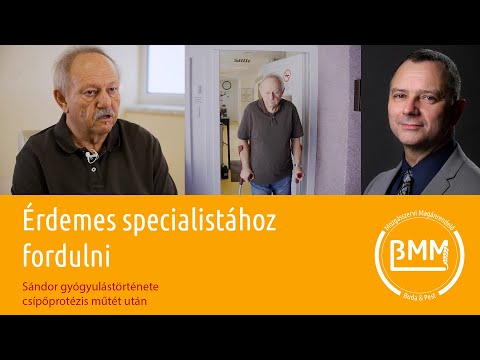
Femoral neck fracture, pain after hip fracture - warning signs and solutions
Femoral neck fractures and hip fractures are usually followed by some form of surgery. Often screws are inserted into the patient's hip joint.
Unfortunately, in such cases, there is often a poor recovery or some complication. The problem may also be indicated by pain and reduced mobility around the hip. In this case, it is advisable to consult an orthopedics specialist, even for a second opinion.
After a femoral neck fracture, the first reconstructive surgery may not have the expected result and the patient's condition may deteriorate further. In this case, too, timely action is the key to a speedy recovery rather than procrastination.
Repeated interventions may be needed to ensure full recovery from a femoral neck fracture. This type of revision surgery may even require a hip prosthesis.
Watch for the little signs
These warning signs are a clear warning of the problem and the time to see an orthopedics specialist. Unfortunately, however, it is not always so obvious.
Mild pain or discomfort can also be a warning sign. Patients with hip prostheses may experience displacement or other abnormalities, but may not experience serious symptoms.
It is therefore worth visiting an orthopedics specialist from time to time, who will be able to determine whether the implanted prosthesis is in good condition after proper diagnostic imaging.
You should not delay a check-up, as a small problem can be easily fixed with a short intervention. On the other hand, a delayed lesion that has become severe can only be corrected with hours of strenuous intervention and prolonged rehabilitation.
It is worth putting fears aside and listening to the specialist's advice.

Safe in expert hands - Double specialist surgery
For major operations performed by BMM (e.g. knee and hip replacement surgery, revision surgery), two specialist orthopaedic surgeons work together. Like the specialist who performs the operation, the surgical assistant is an orthopedic surgeon with experience of thousands of operations. The close-knit team of two surgeons means extra safety for the patient. Thanks to the double specialist surgery, the operation time is shortened and the chances of complications are reduced.
The two best-known surgical teams at BMM are Dr Szabolcs Gáspár-Dr Péter Molnár and Dr Zoltán Bejek-Dr Gergely Holnapy.
Dr. Szabolcs Gáspár mainly deals with hip and knee joint problems, prosthesis surgery and patients with musculoskeletal accidents. Previously a contract soldier and university lecturer, he regularly attends national and international conferences to exchange knowledge and experience. Dr. Szabolcs Gáspár gained special professional experience on missions in Iraq and Afghanistan, where he worked as a trauma surgeon.
Thanks to his knowledge and vast professional experience, he is a sure hand at his job. He is a specialist in hip and knee joint arthroplasty, operating on both primary and revision surgeries on a daily basis
"I often find that patients come to the clinic with a complete medical history, they have had several successful tests, but they don't understand what's wrong with them. But here there is time for all that. Patients who understand what their problem is will recover faster and easier."
Dr Péter Molnár also specialises in hip and knee joint problems and their prosthetics.
He believes that if the doctor does his work humanely, honestly and conscientiously, the patient will feel that he means well and will trust him and his knowledge.
"The important thing is to explain to the patient what is wrong. We have to give them the part of our knowledge that is related to their illness, so that they can understand it. The first step on the road to recovery is to find a common voice."
Dr. Zoltán Bejek specializes in total joint arthroplasty, revision surgery, arthroscopic surgery, ligamentoplasty and foot surgery.
"I have been working with disabled athletes since 1998, which is a very specific and challenging field.Since 2000, I have been accompanying our athletes to the Paralympic Games as the team doctor of the Hungarian Paralympic Team and treating their musculoskeletal complaints."
Dr. Gergely Holnapy also specializes in adult hip and knee replacement, but he also deals with problems in children related to orthopedics.
"In my opinion, professionalism is only one of the factors that can lead to improvements in patients. But at least as important is the context in which we approach patients, the level of explanation, care and empathy."