
Rheumatoid Arthritis
Rheumatoid Arthritis
Author Dr. Dóra Mihola | October 20, 2018


Nowadays, an increasing number of young people are affected by musculoskeletal problems. One of these is rheumatoid arthritis, a rather insidious yet increasingly prevalent disease, which is one of the most common and significantly important groups among autoimmune joint diseases.
Rheumatoid Arthritis
Our private clinic’s rheumatology specialist, Dr. Flórián Szeles, writes about this issue as an expert in the field.
Autoimmune disease, as the name suggests, indicates a dysfunction of our immune system. Specifically, in such cases our immune system shows heightened activity and produces abnormal antibodies against our own body cells, which causes inflammation. Rheumatoid arthritis is one of the most common types of autoimmune diseases, which, unlike many rheumatic-degenerative conditions, typically does not occur in old age. It often appears even in adolescence, generally affecting young adults and middle-aged individuals (30-40 years). Interestingly, statistics show that 3 to 5 times more women are affected by this disease than men.
What symptoms does it present?
- Most often, the process begins in the small joints of the hands or feet. Initially, a peculiar stiffness is felt, especially in the morning hours, as if the fingers need to be “warmed up” because they move with difficulty.
- Subsequently, or even simultaneously, the main symptom may appear: pain. The continuous inflammation of the affected area causes severe pain, which can eventually lead to actual mobility limitations. For example, in cases of foot joint involvement, difficulty walking occurs quite early.
- The inflammation may cause fever, which is also difficult to alleviate.
- Fatigue, depression, weakness, and sleep disturbances may also occur, which laypeople often do not associate with their other complaints.
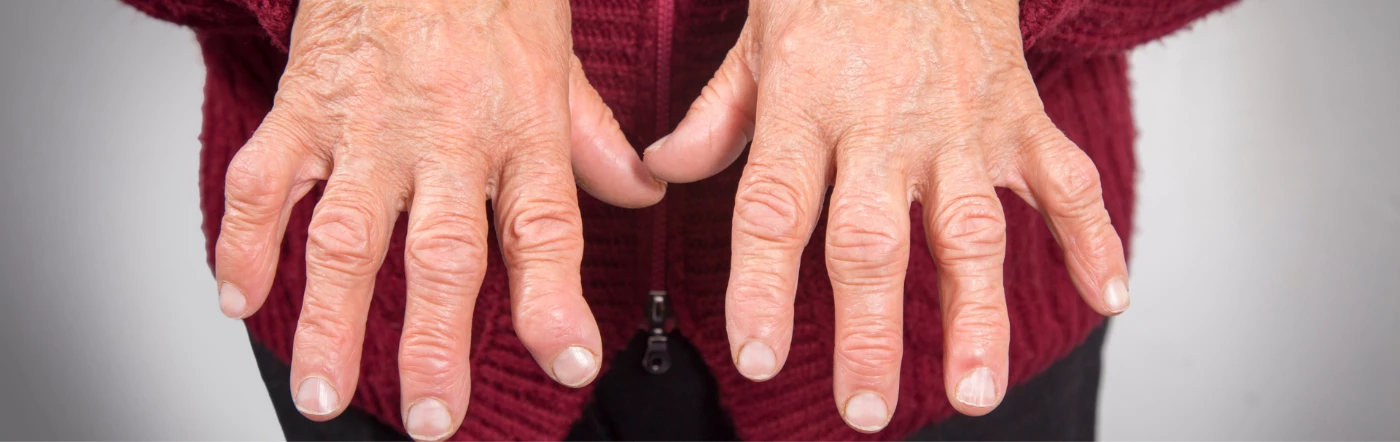
- Persistent joint inflammation eventually causes visible deformation in the affected body part, such as the back of the hand or wrist.
- Without therapy, the disease progressively worsens and more severe complications may develop: the inflammation can spread to internal organs, the liver, kidneys, heart, and blood vessels. However, the inflammation is reversible—with appropriate and professional treatment.
What happens in the joints?
The synovial membrane of the joints becomes inflamed, producing a larger amount of fluid, which is why we see our joints swollen. In cases of prolonged inflammation, the inflammation of the synovial membrane spreads to the articular cartilage, capsule, and later to the bone, leading to joint deformity.
Early diagnostics are extremely important (so that the patient reaches an appropriate specialist as soon as possible) and targeted, pharmacological therapy should begin in a timely manner!
What is the triggering cause?
Medical science has not yet identified a specific triggering cause; however, genetic predisposition and certain environmental factors and lifestyle influences have been proven to affect the development of the disease. Rheumatoid arthritis is therefore hereditary. Smoking, high stress levels, frequent viral infections, and depression are all risk factors.
What is the solution?
The first step is to establish a correct diagnosis: for this purpose, if experiencing painful and stiff joint problems, consult a rheumatology specialist with immunology expertise. Through physical examination, laboratory tests, and typically X-ray examinations, the disease can be well defined and appropriate therapy can be established. With the use of steroid and non-steroid medications, physiotherapy, specialized joint physiotherapy, and anti-inflammatory compresses, excellent results can be achieved. However, it is important to emphasize that treatment must not stop at addressing the acute problem! Autoimmune diseases require lifelong pharmacological treatment to be “kept under control”.
The key is regular and proper treatment, with which anyone can live a FULL LIFE even with rheumatoid arthritis!