BMM - SOS Rheumatology Outpatient Clinic


Log in at
On Saturdays and Sundays between 8:00 and 18:00, we welcome patients over 18 years of age who need emergency care.
Emergency surcharge: + 8 000 HUF if you request an appointment on the weekend on the day of the order.
We ask our patients to book an appointment by phone!
Patients who wish to recover can also come to BMM with acute musculoskeletal complaints!
Our on-call rheumatology service helps with urgent joint pain from 8:00 to 18:00 on weekends.

Dr. Bence Balázs Moravcsik
Orthopaedic-traumatologist specialist
Weekend emergency care
We will confirm your appointment within 24 hours or you can consult a specialist within 1 hour. Pain relief infusions are available on Saturdays and Sundays.
How does the rheumatology on-call service help?
The BMM SOS rheumatology clinic helps to sudden future, high degree musculoskeletal pains such as leg, knee, back, spine and neck pain, but also gout attacks and sciatica. The service aims to provide our patients with also at the weekend, we can help without long waiting times.
Help for knee pain too!
Sudden worsening of pain that occurs without warning or chronic pain?
- Arthritis
- Knee ligament injuries
- Cartilage ring injury
- Joint wear
- Pain due to dust separation
- Kneecap pain
You are also welcome on weekends!
When should you consult a rheumatologist immediately?
Rheumatological problems can occur regardless of age and gender, and are not only affecting the elderly. The more rare but serious symptoms, which are already present at a young age inflammatory rheumatological diseases effective treatment is available today, so early detection is important to avoid more serious problems and possibly surgery.
Our taste buds do wear out over time, but it matters how quickly and to what extent!
The most common symptom of rheumatological diseases is pain and limited mobility, which can have a major impact on quality of life.
In addition, the frequently reported age-related joint pain may be caused not only by wear and tear of the joints, but also by an immunological disease that can be well treated and the patient can be pain-free within days. You don't have to live in pain, the BMM rheumatologists, after a thorough examination and accurate diagnosis a personalised treatment plan are put together.
For acute pain, already weekend rheumatology on-call we are also waiting for our patients who want to heal!
What symptoms should you consult a specialist rheumatologist for?
- Inflammatory joint and muscle pain
- Regional diseases of the neck, back and shoulder (inflammation, wear and tear)
- Regional diseases of the waist and hips (lumbar spine, inflammation, abrasion)
- Regional diseases of the hand, elbow, wrist (inflammation, abrasion)
- Regional diseases of the foot, knee, ankle (inflammation, wear and tear)
- Local soft tissue diseases (soft tissue rheumatism)
- Osteoporosis (osteoporosis)

What types of rheumatological diseases are treated in the on-call service?
Rheumatology deals with a wide range of musculoskeletal disorders. The most common rheumatic complaints and diseases are:
- wear and tear on joints,
- arthritis,
- inflammation of the nerves,
- tennis elbows,
- osteoporosis (bone loss),
- back pain,
- knee pain,
- hip pain,
- shoulder pain,
- pain in your hands, elbows, feet or heels,
- back pain,
- back pain,
- neck pain,
- various joint pains,
- disc herniation (herniated disc),
- lumbago
- rheumatoid arthritis,
- gout,
- sponyloarthritis,
- Sjörgen syndrome,
- Psoriatic arthritis,
- Scleroderma.
In the rheumatology department, we mainly treat acute pain, which can be treated with medication, injections or infusions.
How are rheumatological complaints diagnosed?
During the on-call rheumatology examination, the specialist will first ask the patient about their complaints (where exactly the pain is, how long and how often it has been occurring, whether the part of the body has been affected by trauma, and whether there are any accompanying symptoms), previous illnesses, medications taken and family history.
This general physical examination follows: examines the affected part of the body, checks the range of movement, muscle strength, reflexes, touch localise the place of pain. Depending on the complaint, he will check the condition of the spine and gait, and any abnormalities in posture.
The rheumatologist makes the diagnosis by laboratory tests or further, imaging studies (ultrasound, X-rays, MRI, CT scan) and bone density measurements. Of these, an X-ray examination is immediately available in the rheumatology department.

How does emergency rheumatology care work?
The rheumatology outpatient clinic a thorough medical examination after the BMM specialists accurate diagnosis are set up, which helps to proper treatment in the selection of. In each case, the specialist will carefully and clearly inform the patient about the treatment process, the options and what to do to ensure that not only symptomatic treatment is given, but also exploring the causes, the underlying problem should also disappear. Then treatment can begin, which may be by medication, injection or infusion.
Solutions for acute joint pain and bone pain in the emergency department
Medication
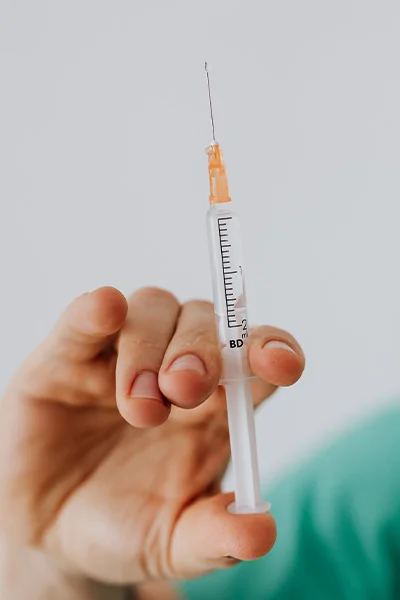
One of the most common ways of treatment is the use of medicines.
Since it is not the same whether it is wear and tear, nerve-related, muscle pain or exertion, so it is important that the rheumatologist chooses the right medication.
For acute complaints, the first and the most important is pain relief, for which non-steroidal anti-inflammatory drugs are recommended, but various muscle relaxants can also help if the problem is caused by a muscle contraction.
Injection treatment
Injection treatment may usually be needed if oral medicines have not proved sufficient, or a serious problem is behind it. Such can be time-based, causing severe pain sciatica, or muscle pain in the lower back, lumbago.
It is important to note that injection alone is an effective pain reliever, but for long-term improvement essential for physiotherapy therapy.
Infusion treatment
In the case of severe rheumatological complaints, the most effective drug treatment in the emergency department is the administration of an infusion, which is usually can relieve even the greatest pain. There are both steroidal and non-steroidal types.
An infusion containing a steroid is extremely strong analgesic, anti-inflammatory and muscle relaxant effects which means it can eliminate pain very quickly and very quickly. Infusion treatment in the rheumatology department takes about 1 hour.
Gout attack: immediate help at the rheumatology clinic
The gout arthritis that is typically pain in seizures accompanied by swelling, redness and joint tenderness. Cause of the body high uric acid levels. Even if uric acid levels do not always appear elevated in laboratory tests, lowering them can relieve gout symptoms in the long term.
The disease first affects the joints, most commonly of the big toe, but it is also common in the knees and ankles.
A gout attack is almost always sudden and starts mainly at night.
The intense pain typically lasts for 5-10 days and then goes away on its own.
In addition, the affected joint or joints swell, red and become sensitive to pressure.
Non-steroidal anti-inflammatory drugs can be used to treat milder gout attacks, but only to a limited extent: above a certain dose, they can no longer provide additional pain relief.
In severe cases, steroid preparations may be used to quickly eliminates pain and other symptoms. However, the underlying cause of the symptoms must be treated in the long term!
Management of acute lumbago and sciatica in emergency care
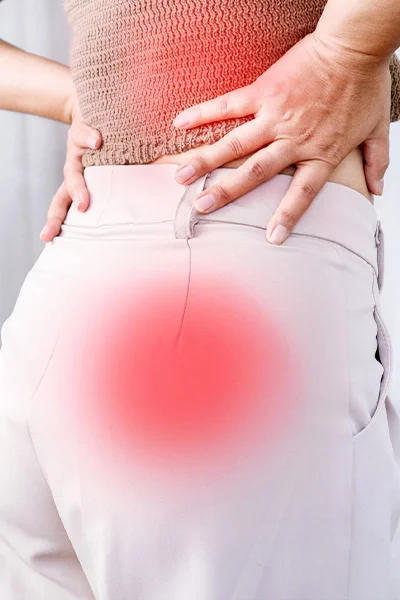
The lumbago in the lower back, around the sacrum, shooting pain, which involves a strong reflexive tensing of the thick back muscle running along the lumbar spine. It is one of the most common musculoskeletal complaints, affecting one in three people in their lifetime. Often confused with sciatica, which is not muscle pain, but nerve pain that radiates to the legs.
The treatment of acute lumbago is aimed at relieving muscle tension and restoring mobility. For severe lower back pain that restricts movement, the specialist may recommend steroid pain and anti-inflammatory injections. In addition to medication, movement therapy plays a major role in recovery: personalised individual physiotherapy, manual therapy, medical massage and physiotherapy treatments can also help.
Sciatica, also known as Seat leggings usually comes on suddenly with sharp pain in the lower back.
The complaint is triggered by inflammation of the so-called sciatic nerve. It can be caused by a variety of conditions, so it's always worth investigating the cause. Typical symptoms are severe pain radiating down the legs.
In the case of sciatica, the first treatment for acute pain is symptomatic. Spinal decompression, oral non-steroidal analgesics, possibly topical steroidal anti-inflammatory injections or medical collagen injection therapy are recommended. During symptomatic treatment, diagnostic tests recommended by a rheumatologist or orthopaedic specialist should be performed. The results of these tests will allow an accurate diagnosis to be made and the initiation of outpatient therapy.
Treatment of disc herniation by a rheumatologist
A herniated disc, also known as a herniated disc disc herniation a degenerative abrasive lesion in a specific part of the spinal column. It can cause sharp pain and even numbness or reduced mobility.
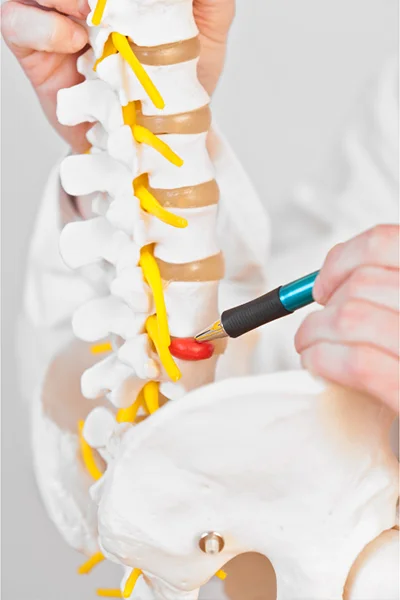
The vertebral column is made up of vertebrae, between which the intervertebral discs provide the flexible connection. The intervertebral discs are made up of two parts: an outer circular fibrous ring and an inner gelatinous nucleus. The discs are the “shock absorbers” of our spine, they ensure the mobility and flexibility of the spinal column.
In a herniated disc, the outer fibrous ring of the disc ruptures and the gelatinous core protrudes on it. This is called disc prolapse. Because of the prolapse, nerve roots exiting the spinal cord can become pressurised, pinched and inflamed, and even damaged. Damage to the nerve fibres can lead to long-term mobility problems, including paralysis.
Treatment of herniated discs in the the extent and location of the hernia, and the quality of the symptoms caused. In each case, a specialist will decide on the appropriate therapy after a thorough examination.
In most cases, herniated discs can be treated well with conservative therapy. Acute analgesia and anti-inflammation is usually achieved with medication, which may be topical injections, oral or even patches; steroids or non-steroidal preparations. In the acute phase spinal decompression is essential, but long-term strict bed rest is not recommended.
Nerve mobilisation is recommended to release the pressurised nerve. Long-term conservative therapy is required once the acute pain has subsided.
Of which main element of physiotherapy, which needs to be tailored to the individual. With McKenzie's spinal exercises, manual therapy, herniated discs can be treated very well, even complete freedom from symptoms can be achieved. In addition to physiotherapy, complementary physiotherapy treatments are also recommended.
In severe cases, a ruptured hernia of the spinal cord may require surgery.
Options for rheumatological treatment
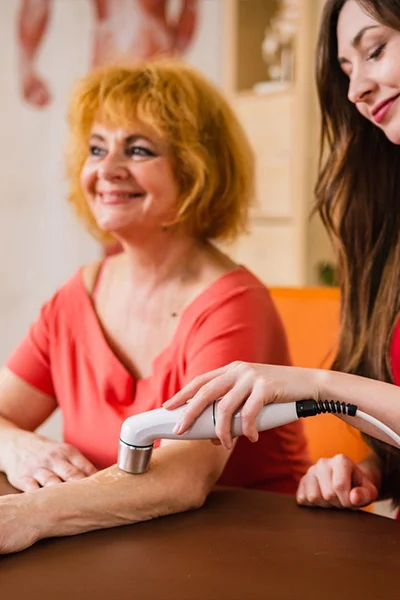
Rheumatological treatment can take many forms:
- abrasive arthritis (hip, knee, shoulder joint inflammation)
- medication,
- ordering physiotherapy
- physiotherapy treatment,
- joint or local injection treatment,
- referral to another specialist clinic. Most often: neurological, orthopaedic, neurosurgical consultations.
At follow-up appointments, the rheumatologist will analyse the new test results, assess the effectiveness of the previous treatment proposal, treat recurrent or persistent complaints, review the effectiveness of medication, monitor for side effects, and may use different treatments to improve mobility and quality of life.
BMM provides the best specialist for your complaints!
In order to do this in 100%, the assessment of the problem starts on the phone, by a specialist.
You are only welcome to attend our care in person if BMM can provide you with the best possible doctor and care for your complaint. Otherwise, for example, in the case of broken bones, our specialist will refer you to the appropriate care facility.