Shoulder replacement surgery
What should you know about the structure of the shoulder joint? When is a shoulder replacement justified? What can be expected before, during and after prosthesis surgery? How long does it take to regain freedom of movement without pain?
With the help of BMM's shoulder specialist, we have gathered the most important facts.


The healthy shoulder joint
The shoulder joint is one of the most flexible and complex joints in the human body, allowing for a wide range of arm movement.
The shoulder joint is made up of 3 main bones:
- Humeral
The head of the humerus fits into the glenoid cavity of the scapula, which is a flat plate-shaped depression. This joint forms the main point of movement of the shoulder. - Keychain
The clavicle connects the skeleton of the thorax to the upper limb. This important connecting role is performed by the acromion, or scapular process. In the literature, this area is called the acromioclavicular joint. - Lapocka
The movement of the shoulder blade complements the movement of the arm.
Important for the structure of the shoulder rotator cuff its role in. This sheath of 4 muscle interconnections stabilises the arm and is responsible for the correct movement of the limb. The articular capsule, with its associated cartilage, tendons and ligaments, is an integral part of the shoulder joint.
The large range of motion of the shoulder joint is provided by the anatomical design of the shoulder joint. This mobility is often at the expense of stability, making the shoulder joint more prone to injury.
About the shoulder replacement
The technological advances of the 21st century have also brought significant advances in the field of medicine. The most modern surgical techniques available and high quality implants allow the painless restoration of the patient's shoulder function.
Today, shoulder replacement surgery is a safe and successful routine procedure.
Shoulder replacement surgery can be a painless and permanent solution to wear and tear, inflammation and injuries.
During surgery, the orthopaedic surgeon removes damaged or worn parts of the joint and replaces them with a prosthesis made of plastic or metal. The implanted prosthesis mimics the movement and functionality of the natural joint, allowing the patient to regain normal shoulder range of motion and strength after rehabilitation.
After a successful procedure, patients often feel that their quality of life improves significantly, as daily activities that were previously painful can be carried out again with ease. It is important to note, however, that as with any surgical procedure, there are potential risks associated with shoulder replacement, and a thorough medical consultation is required prior to the procedure. And after surgery, regular physiotherapy and proper aftercare are essential to achieve a lasting and successful result.
Types of shoulder prostheses
There are different types of shoulder prostheses. Their use depends on whether they are total, partial or superficial prostheses.
There are 2 main groups of prostheses can be distinguished. The choice of the type and type of prosthesis depends on the existing problem and the physical condition of the patient (e.g. the type of bone stock).
In each case, the doctor will choose the prosthesis that best suits the individual's problem, in order to ensure the patient's recovery is as quick and complete as possible.
Anatomical prosthesis
It is designed to reduce pain and improve shoulder mobility in patients who have damaged the shoulder joint due to severe arthritis or fracture.
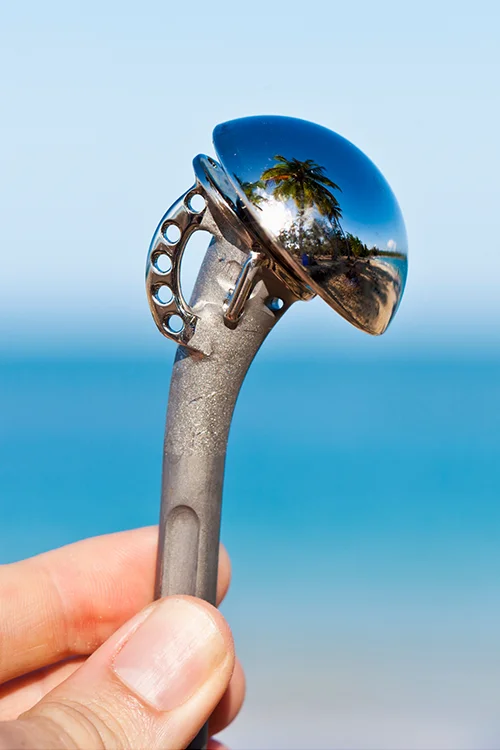
It consists of two main components: a metal ball replacing the head of the humerus and a plastic (usually polyethylene) component replacing the blade socket. It is designed to mimic the natural anatomy and movement of the shoulder joint.

Reverse or inverse prosthesis
A special shoulder prosthesis used primarily in cases where a conventional implant (anatomical shoulder prosthesis) would not be effective. It is often used in cases of severe rotator cuff tears or previous failed shoulder operations.
This type of prosthesis gives an inverted pattern of the natural anatomy of the shoulder joint. On the humerus is the depression that mimics the vamp, while on the scapula is the metal ball that replaces the head of the humerus.
During the prosthesis surgery, the orthopaedic surgeon precisely inserts and fixes the components of the prosthesis to fit the patient's anatomy and ensure shoulder stability. After the surgery, the patient is recommended to start with physiotherapy, which helps to quickly restore the strength and mobility of the shoulder.
Regular medical monitoring of the prosthesis is important for long-term successful results.
Advanced diagnostic method
At BMM, we place a high priority on making the most accurate diagnosis possible. Therefore, before the intervention, a so-called Artro-MR (arthrographic magnetic resonance imaging) scan.
The procedure involves injecting contrast material directly into the shoulder joint. The contrast agent helps to visualise the internal structures of the joint, including cartilage, joint capsule, ligaments and meniscus.
This type of procedure is much more detailed than a conventional MR scan.
When is a shoulder replacement necessary?
The shoulder replacement surgery long-standing, ongoing shoulder pain will be discussed during. In this case, the a strong stinging, aching sensation that makes it difficult to rest at night.
Another characteristic symptom is reduced shoulder range of motion, which limits the patient's ability to carry out everyday activities. To relieve the symptoms, the doctor usually suggests conservative treatments first. If conservative therapy is ineffective, it is worth opting for surgery.
Most common lesions that warrant prosthesis
- Joint wear
Cartilage wear can occur naturally in joints over the years, with the cartilage in the shoulder joint thinning or wearing away completely. The reduced cartilage causes the bones of the joint to rub directly against each other, causing pain and inflammation. Shoulder joint wear (osteoarthritis) often develops in older age or as a result of injuries, rheumatoid arthritis or excessive strain. - Bone fracture
Serious fractures in the shoulder area, especially when the humeral head is involved, often justify the implantation of a prosthesis. In this case, the injury is so severe that the bone does not heal properly or the broken bone fragments cannot fuse properly. In this case, implantation of a prosthesis may be the best option to restore normal shoulder function. - Death of the head of the humerus
In a condition called avascular necrosis, the head of the humerus loses its blood supply, leading to bone cell death. This can be caused by traumatic injury, long-term use of certain medications or other health problems. Bone death causes pain and stiffness. If the disease is advanced, implantation of a prosthesis may be the optimal treatment option.
Before shoulder replacement surgery - preparing for surgery
A preparation for shoulder replacement surgery starts at the time of the orthopaedic examination when the need for an implant is raised.
- The thorough physical examination After diagnostic imaging procedures (CT, MR, UH, X-ray) and the results obtained evaluation of findings happens.
- This is followed by a comprehensive geo-survey.
- It takes place in a for anaesthesia in the presence of existing findings (laboratory tests, ECG, chest X-ray).
- If necessary, the pre-operative preparation physiotherapy is recommended to facilitate successful intervention and rehabilitation.
The procedure for shoulder replacement surgery
- During shoulder replacement surgery, the the doctor makes a longitudinal incision from the front of the anterior muscle. It moves the muscles and gives access to the shoulder joint.
- Using diagnostic imaging scans and a prosthesis design program, the a patient-specific prosthesis is implanted. To do this, the doctor will shape the humeral head and the articular socket according to the type of prosthesis chosen.
- The prosthesis is placed in the appropriate part of the joint using a cemented or cementless procedure.
- During prosthetic surgery, it may be necessary to reconstruct or replace the upper shoulder capsule (graft procedure). This is usually done when the rotator cuff cannot be sutured for some reason.
- After that, the doctor infiltrate the joint area with pain and haemostatic injections and closes the wound.
The surgery is performed under general anaesthesia and anaesthesia. It takes about 2-2.5 hours. At BMM, shoulder prosthesis implantations are performed in a dual assisted setting, just like a knee or hip replacement. The central element of double assisted surgery is that the surgeon is assisted by a fellow shoulder surgeon. This makes the surgical procedure safer and shorter. This contributes greatly to a faster and more optimal recovery after surgery.

What to expect after shoulder replacement surgery?
During the prosthesis surgery, the patient usually spends 2 days in hospital. Rehabilitation starts the day after surgery with the help of a physiotherapist. This is done through guided, active movements.
A physiotherapy continues after you leave hospital. Appropriate movement is essential for optimal recovery, but it is important that it is done according to instructions.
Stitch removal takes place 7-10 days after surgery.
Wearing an arm brace for the first 6 weeks after surgery is recommended. After 6 weeks, you will have a check-up with a specialist, where the brace will be removed.
If the position of the shoulder prosthesis has not changed since implantation and there are no other complications, the shoulder joint and arm can gradually be returned to normal use. From the time of surgery After 4 months, patients can start to exercise with caution, for example, to swim. After the 6th month, the patient is considered fully recovered.
The success of a shoulder replacement depends not only on the expertise of the doctor but also on the patient. It is important to follow the doctor's instructions exactly to achieve a full recovery.
Possible complications of shoulder replacement surgery
By thorough investigation and planning, the chances of complications are minimised. However, it should not be overlooked that shoulder replacement surgery, like all surgical procedures, can rarely have unintended consequences:
- Company name
- Risk of infection
- Shoulder joint stiffness
- Thrombosis
- Bleeding
The most common complaints treated by our gynaecologists:
Our patients' opinions
Our specialist in shoulder replacement

Dr. Bálint Major
Senior Specialist Orthopaedic-traumatologist
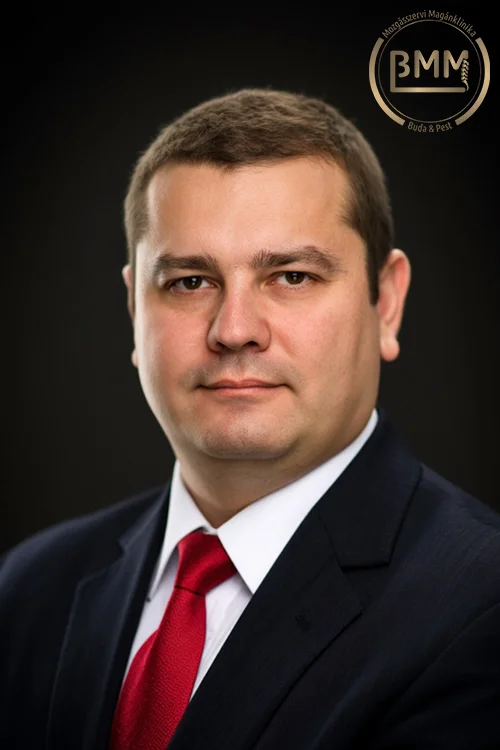
Dr. Balázs Gloviczki PhD
Orthopaedic-traumatologist, shoulder specialist
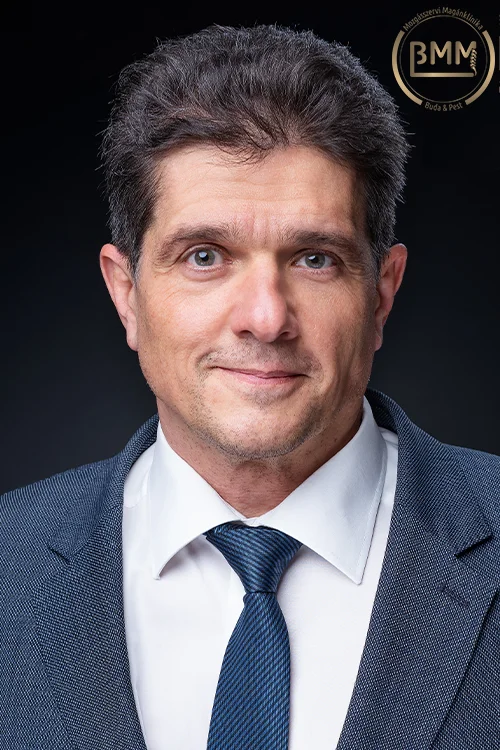
Dr. György Kocsis PhD
Orthopaedic traumatologist, hand surgeon, assistant professor, wrist, elbow and shoulder surgeon, upper limb specialist
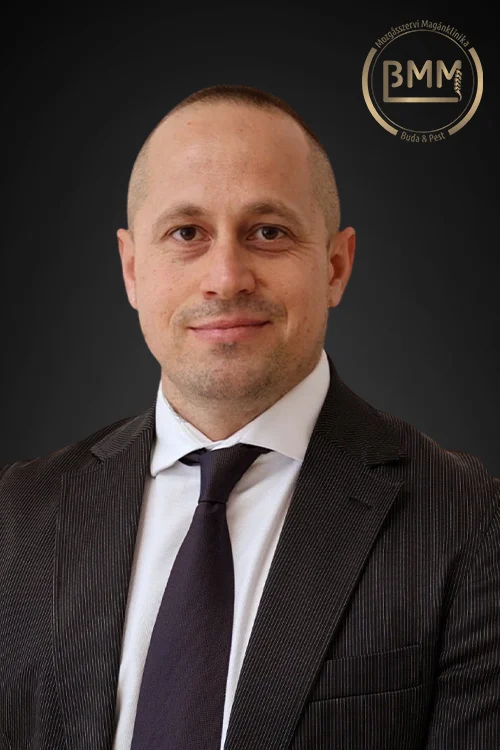
Dr. János Bartha
Orthopaedic-traumatologist, robotic surgeon

Dr. Ferenc Tompai
Orthopaedic and trauma surgeon general
WHY IS BMM THE SAFEST OPTION?
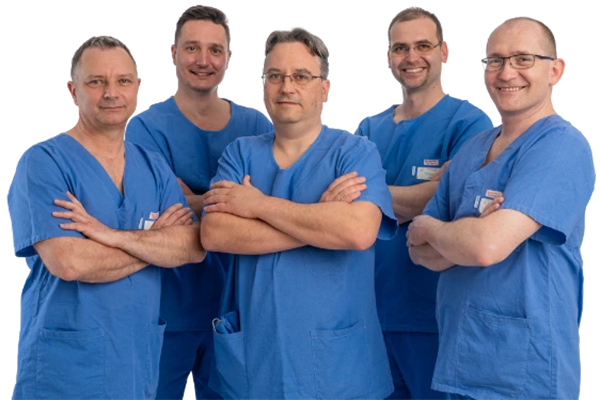
A close-knit team of surgeons
Our hip replacement orthopaedic surgeons have worked together for decades, knowing each other's every move.
Experience of thousands of operations
Our orthopaedic surgeons have performed thousands of successful hip replacements, there is no case they have not encountered.
Modern technology
Our surgeons use hip joint endoprosthesis implantation without muscle transection to greatly reduce post-operative pain and speed rehabilitation.

CALL US NOW

Online booking