Knee replacement surgery
At BMM, we have compiled the most important things to know about knee replacement surgery with the help of our knee replacement specialists. How is knee replacement implantation done? When is knee replacement surgery needed? How to prepare for the intervention? What to expect after knee replacement surgery? We provide useful information and answers to the most frequently asked questions to help you make an informed decision about knee replacement surgery.


About knee replacement
A knee replacement implantation is the second most common major joint replacement surgery.
As medicine and technology continue to evolve more and more innovative solutions in the field of knee replacement surgery have been born in recent decades. These innovations allow for faster healing and near-perfect knee function and movement, with a much longer life span than before. It can now be said that, thanks to modern technology knee replacement surgery can be a truly permanent solution to advanced knee joint wear for patients suffering from.
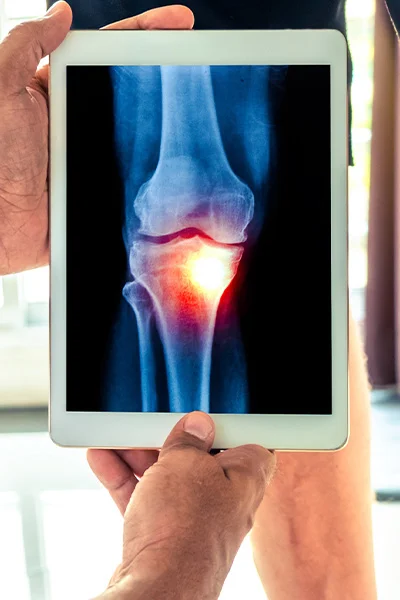
When do I need a knee replacement?
Knee joint replacement implantation as a solution, advanced knee osteoarthritis, or other cartilage damage in the knee joint. The intervention is recommended in cases where the cartilage surface covering the knee joint disappears, and bone to bone during the movement. This specifically causes the patient a great deal of pain and difficulty in moving and walking.
A healthy knee joint?
The knee joint is the largest and most complex joint in the human body. The bony components are the femur, tibia, patella and head of the fibula. The articular head of the joint is located at the distal end of the femur and the articular condyle at the proximal end of the tibia. Their fit is not perfect in healthy knees, so a complex system of ligaments and two crescent-shaped annular cartilages (meniscus) help to stabilise the knee. In the knee joint, the bones are covered by articular cartilage (hyaline cartilage), which ensures trouble-free joint movement and flexibility.
The most common causes of knee cartilage lesions
Osteoarthritis of the knee is associated with chronic knee pain, which can be caused by several factors. Most often, the so-called. primary cartilage destruction in the knee joint, or arthrosis is causing the problem. In this case, the cartilage covering the knee joint wears away with age without any prior external indication or injury. Cartilage deterioration is a natural part of ageing, but there are factors that can accelerate the process and methods that can slow it down.
A knee arthritis, the different knee injuries, the wrong load, or the abnormal position of the knee joint axes (X-vertebra or O-vertebra) can also lead to wear or damage to the cartilage of the knee joint.
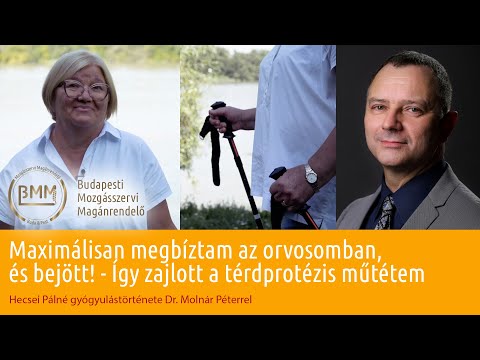
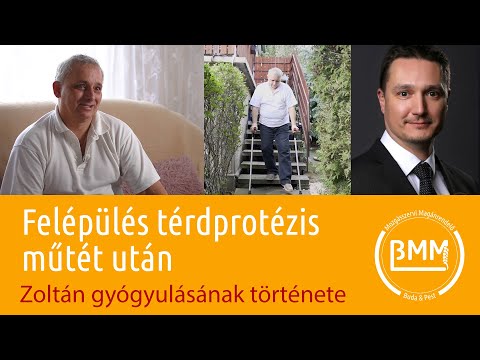
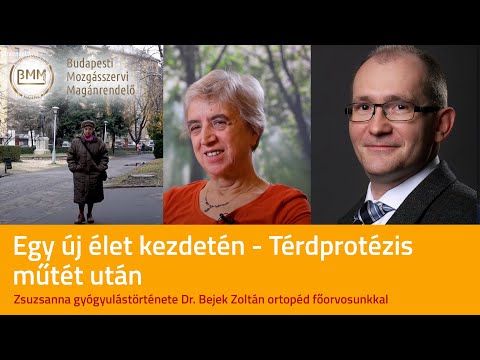
Our patients' recovery stories - click for videos




Treatment of chronic knee pain
Chronic knee pain is usually caused by cartilage wear in the knee joint, which can be treated very well with conservative - i.e. non-surgical - methods in the early stages. Examples of such treatments include physiotherapy, joint cartilage building therapy, injection therapy and various physiotherapy treatments. If necessary, special serum therapy or Lipogems stem cell therapy can also be used.
In advanced knee osteoarthritis when conservative treatments are not effective, knee replacement offers a long-term solution. Nowadays, modern and heavy-duty, high-quality prosthetic systems are implanted, using minimally invasive surgical techniques.
Thanks to highly advanced technology, artificial intelligence-guided orthopaedic robotic surgical prosthesis implantation is now available, which can bring a new level of comfort and quality of life to patients.
Dr. Péter Molnár
Orthopaedic traumatologist, chief operating surgeon, robotic surgeon
Online appointment booking for Pesti út:
Please choose the service that suits you
Online appointment booking for Bokor Street:
Please choose the service that suits you
The control fee is valid for up to 3 months after the initial examination, depending on the level of the examination site, for the same complaint.
- 1. Select the service you need from the drop-down box!
- 2. Use the calendar to choose a date that suits you!
- 3. Enter your details to register or login with your previous registration!
- 4. If you would like to make a reservation on behalf of someone else (e.g. your child), please let us know at the location provided.
- 5. Briefly describe your complaints!
- 6. Select the type of consultation: initial examination, control examination or prescription.
- 7. Click on the button to book your appointment. Thank you for choosing BMM!
If you are unable to make the appointment you have already booked, please, at least 24 hours before notify us of your intention to withdraw. This gives other patients the opportunity to get the medical care they need in time. Thank you for your cooperation and understanding!
Resignation: +36 1 44 33 433
If for the week of your choice cannot find an available appointment, for further assistance, please call our call-center at +36 1 44 33 433-phone number! Our staff will be happy to help you make an appointment with the doctor of your choice or another specialist according to your complaint.
Robot-assisted knee replacement surgery - AI in orthopaedic robotic surgery
A robot-assisted knee replacement surgery is revolutionary technology that allows doctors to achieve more precise results than ever before. The robotic technology maps the condition of the knee joint in real time, with an accuracy of tenths of a millimetre, and then assists the surgeon in the precise placement of the prosthesis. This reduces the risks of surgery, minimises unnecessary tissue damage and optimises healing.
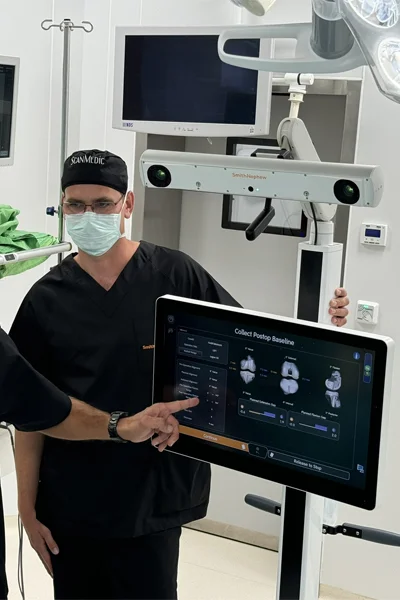
The main advantages of the robot-assisted procedure compared to traditional surgery are:
- More accurate prosthesis fit, which reduces the chance of implant loosening and increases the lifetime of the implant.
- Can also be safely performed for severe X or O foot deformities knee replacement surgery with optimal results.
- For robotic surgery lower potential limb length discrepancies, compared to traditional types of surgery.
- For the operation no prior MRI or CT scan required, since the CORI robot makes a 3D model of the knee during surgery. This saves time and money for patients, while making the results of the procedure even more accurate and personalised.
Patients who are looking for faster recovery, longer-term results and a more natural feel choose robotic-assisted knee replacement surgery.

What is minimally invasive surgical technique?
The increasingly common nowadays minimally invasive prosthesis implantation technique is basically a soft tissue-sparing surgical procedure. It involves opening up the knee joint from the smallest possible incision and the orthopaedic surgeons perform the operation without cutting the muscles, by displacing them. This allows for a faster recovery and less pain.
The procedure for knee replacement surgery
During knee replacement surgery, the surgeon orthopaedic surgeon specialist makes a longitudinal incision in the skin above the knee joint. Then, after opening the joint capsule, the muscle is slightly separated by a fibre on the inside of the stretching muscle. This is called midvastus dissection in medical terms.
After preliminary sizing, the femur and tibia are cut to shape using templates, removing diseased cartilage and a small part of the bone.
Metallic prosthetic implants are fixed to the tibia and then to the femur, and a plastic insert is placed in the metal component of the tibia to ensure proper mobility. Pain and haemostatic injections are then infiltrated into the knee joint and surrounding area and the knee joint is closed in layers.
The prosthetic implant on the femur is shaped like the end of the original femur, and the prosthetic part fixed in the tibia is shaped like the end of the tibia. Thus, not only externally, but also functionally, the knee prosthesis functions in the same way as the previous knee joint, but without the inflammation and pain caused by cartilage loss.
Types of knee replacements
There are two types of prosthesis systems: the cementitious, i.e. fixed with glue, as well as the knee prosthesis without cement, i.e. without adhesive.
More commonly used in the world is the adhesive knee replacement, which can be loaded sooner after surgery. However, in young patients with a good bone and muscle structure, the use of a knee replacement without adhesive is becoming more common, which significantly improves the success rate of any subsequent revision surgery.
The type of prosthesis is determined by the operating orthopaedic surgeon during the pre-operative planning phase, we choose the one that is best suited to the knee's ligamentous system.
Used by BMM knee replacement specialists prosthetic implants are certified as excellent in the International Prosthetic Register.
Personalised knee replacement
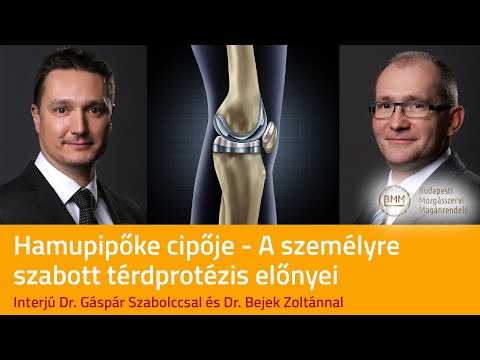
In recent decades, there have been huge technological advances in the field of knee joint replacement. The result of this innovation is a a new, modern and high-tech procedure that allows personalised knee replacement - using minimally invasive surgical procedures, of course, for the fastest possible rehabilitation. With a personalised knee replacement, the surgery can also be performed more quickly and accurately, and patient satisfaction is increased. The knee specialist orthopaedic traumatologists at the Budapest Musculoskeletal Private Clinic now perform individual, personalised knee replacement surgery in a private hospital setting.
Two renowned and experienced orthopaedic traumatologists, Dr. Szabolcs Gáspár and Dr. Zoltán Bejek, give detailed information about the personalised knee prosthesis in the video below.
Dr. Gergely Holnapy PhD
Orthopaedic traumatologist, assistant professor, robotic surgeon
Online appointment booking for Budafoki út:
Please choose the service that suits you
The control fee is valid for 3 months after the initial examination, for the same complaint.
- 1. Select the service you need from the drop-down box!
- 2. Use the calendar to choose a date that suits you!
- 3. Enter your details to register or login with your previous registration!
- 4. If you would like to make a reservation on behalf of someone else (e.g. your child), please let us know at the location provided.
- 5. Briefly describe your complaints!
- 6. Select the type of consultation: initial examination, control examination or prescription.
- 7. Click on the button to book your appointment. Thank you for choosing BMM!
If you are unable to make the appointment you have already booked, please, at least 24 hours before notify us of your intention to withdraw. This gives other patients the opportunity to get the medical care they need in time. Thank you for your cooperation and understanding!
Resignation: +36 1 44 33 433
If for the week of your choice cannot find an available appointment, for further assistance, please call our call-center at +36 1 44 33 433-phone number! Our staff will be happy to help you make an appointment with the doctor of your choice or another specialist according to your complaint.
Preparing for surgery
Preparing for surgery on the an orthopaedic specialist examination begins, when the need for a knee replacement arises. A thorough examination includes taking a medical history, examining the movement of the knee joints, and diagnostic imaging findings (X-ray, CT, MRI). These can be used as a basis for the diagnosis and treatment plan. If the condition of the knee joint warrants it, surgical knee replacement may be considered.
There are several factors to consider before knee surgery. One of the most important is the importance of body weight, which has a significant impact on the survival of the prosthesis after surgery. If necessary is recommended before the operation physiotherapy start.
The doctor is responsible for full information about the surgery and other options. The decision to have knee replacement surgery should be made by the patient on the basis of the information provided. The surgical decision is significantly influenced by the previously used but ineffective conservative treatment, the persistent chronic pain, the pain at night which interferes with rest, and the significant limitation of mobility.
What to expect after knee replacement surgery?
After knee replacement surgery, the patient can still you can get up that day, you can stand up next to the bed. The day after the operation, you can go for a short walk and leave the ward. This is when exercise begins, first with a special exercise machine, then with active exercise and gait training with a physiotherapist. You usually need to stay in hospital for 3 nights after knee replacement, sometimes this can be reduced to 2 nights. During the operation, we infiltrate the tissues with local anaesthetic injections when the wound is closed and continuous analgesia is used to achieve comfortable post-operative hours.
The success of the knee replacement surgery in 50% depends on the doctor and the prosthesis implanted, and in 50% on the patient. The key to successful recovery is rehabilitation. A key part of this is the physiotherapy, which can be started before the operation (pre-operative physiotherapy) and can be started almost immediately after the operation, with careful, professional movements. Post-operative physiotherapy is a major contribution to the regeneration of muscles and ligaments and to regaining pain-free mobility. In addition to physiotherapy, it is recommended to start cycling over time and to continue regularly.
Our knee replacement specialists:
Dr. Gergely Holnapy PhD
Orthopaedic traumatologist, assistant professor, robotic surgeon
Dr. Péter Molnár
Orthopaedic traumatologist, chief operating surgeon, robotic surgeon
Dr. Zoltán Bejek PhD
Associate Professor of Orthopaedics, Robotic Surgeon
Dr. Szabolcs Gáspár
Orthopaedic traumatologist, head of department, robotic surgeon
Dr. János Bartha
Orthopaedic-traumatologist, robotic surgeon

Dr. Péter Doszkocs
Orthopaedic traumatologist, hip and knee surgeon, lower limb specialist, robotic surgeon
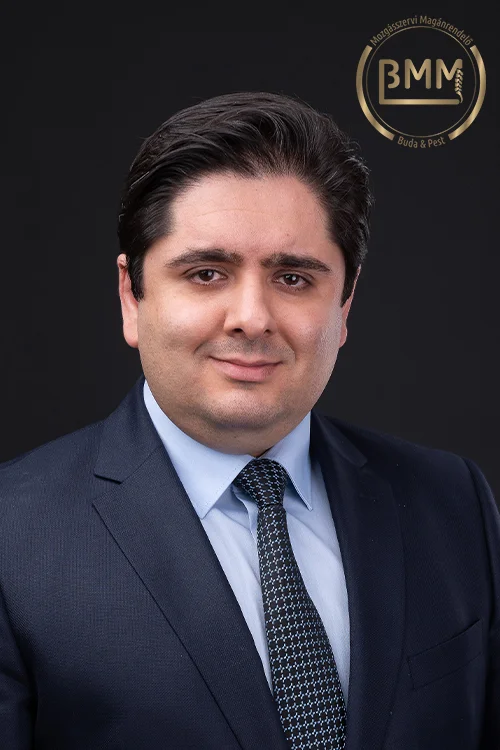
Dr Maysam Moghaddam Amin
Orthopaedic-traumatologist specialist, robotic surgeon
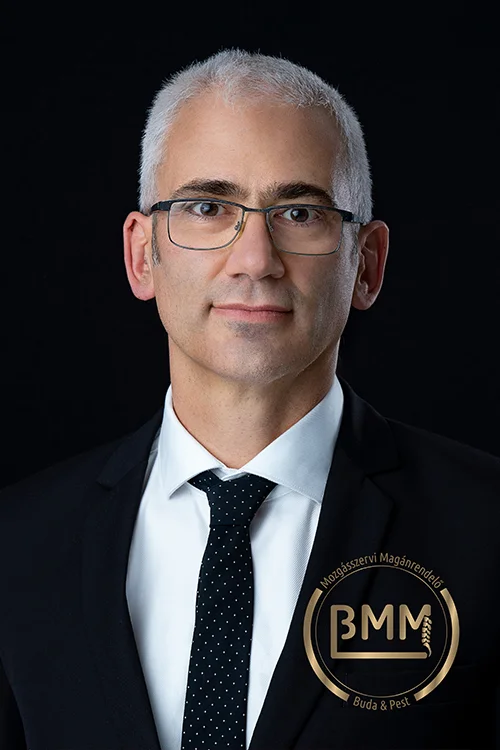
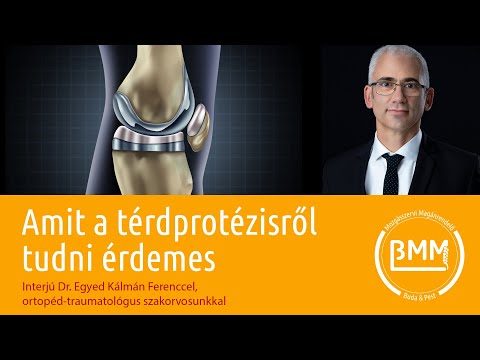
Dr. Kálmán Ferenc Egyed
Orthopedic-traumatologist general practitioner

Dr. Ferenc Tompai
Orthopaedic and trauma surgeon general
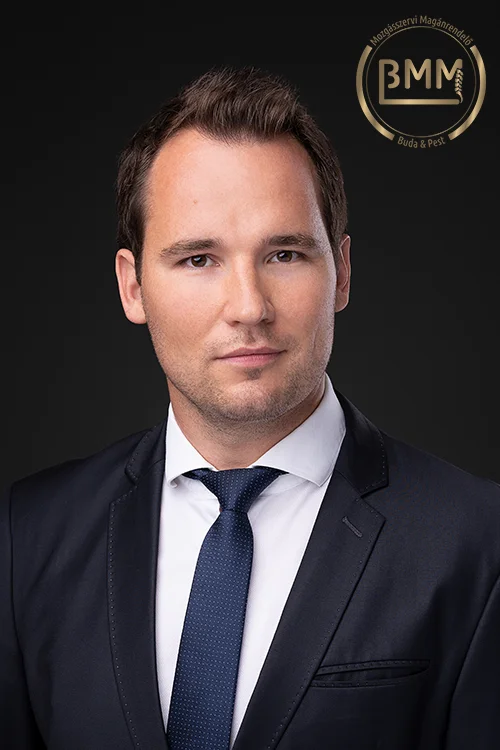
Dr. Dániel Kincses
Orthopaedic-traumatologist specialist, robotic surgeon
WHY IS BMM THE SAFEST OPTION?
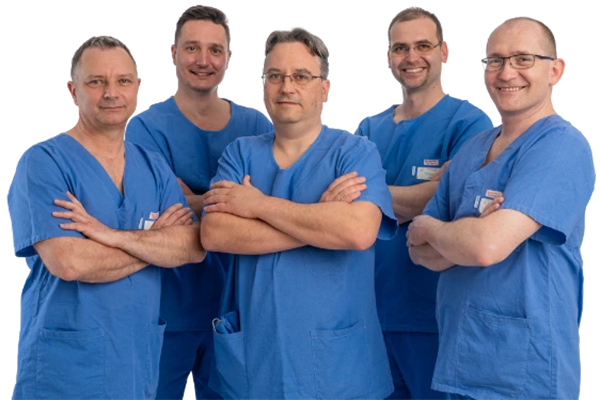
A close-knit team of surgeons
Our knee replacement orthopaedic surgeons have worked together for decades, knowing each other's every move.
Experience of thousands of operations
Our orthopaedic surgeons have performed thousands of successful knee replacements, there is no case they have not encountered.
Modern technology
Our surgeons use minimally invasive prosthetic implantation to greatly reduce post-operative pain and speed rehabilitation.

Double specialist surgeries for the best results

Complete patient journey from check-in to recovery

Priority service for people waiting for surgery

Mrs Pál Hecsei
Patient of Dr. Péter Molnár
“I trusted the chief doctor to the utmost, and so did my family. We decided that I would rather go to a private hospital where I wouldn't have to wait, because I actually had the surgery within 1 month of the decision. I had full trust in the doctor, I knew that everything would be fine, I would recover quickly and that is what happened.”
Zsuzsanna Debreczeni
Patient of Dr. Zoltán Bejek
„Eight months after the knee operation I was out in America. I went to a lighthouse and thought about whether or not to go up there, and then I did it. I counted 115 steps, but I went up and down without any problems. So I sent the doctor a postcard saying I was thinking of him with love.”

János Markó
Patient of Dr. Gergely Holnapy
“I was working as a courier when the pain started, then unfortunately, my condition got so bad that I couldn't walk, so I had to leave that job. However, thanks to the successful operation, I returned. Within 3 months of the operation I was back to being a courier without pain.”
Tibor Remzső
Patient of Dr. Szabolcs Gáspár
“I could ride a bike before and now I can again. I could swim and I can again. I'm much more confident than before. These knees are strong. When I think about how I can support myself with my two knees, I now know that the two knee prostheses are stronger than my old knees used to be.”
If you have any questions about knee joint pain or knee replacement surgery, please contact our specialists.
Please call +36 (1) 44-33-433 to make an appointment for a consultation or examination.

CALL US NOW

Online booking