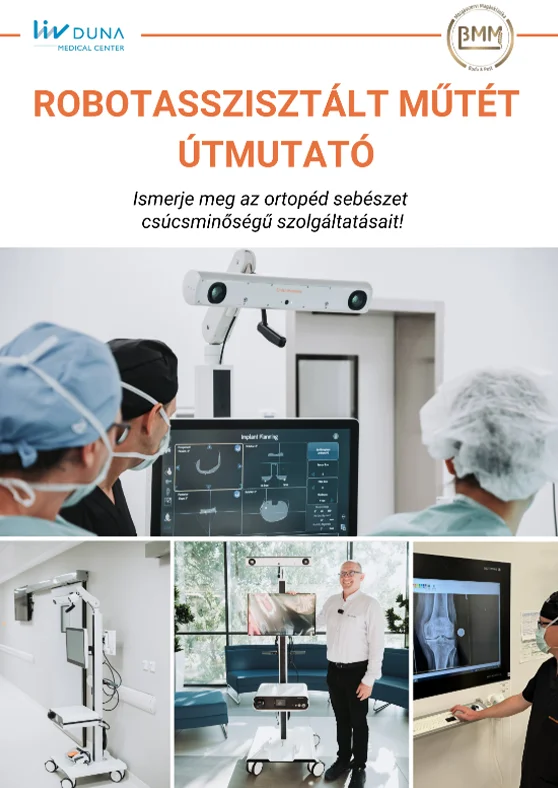
Robot-assisted knee replacement
A comparison of the three most innovative orthopaedic robots OMNIBotics, ROSA® and CORI


In recent years the robotic-assisted knee replacement technology a major game changer in the field of orthopaedic surgery. Robots developed for knee replacement implants are not only Accuracy, but the surgery security and the speed of recovery which benefits both surgeons and patients. Three recognised systems - OMNIBotics, ROSA® and CORI - lead the market in this field. Below we look at how technological solutions these systems offer, and what with benefits can involve a variety of robot-assisted surgical procedures your choice.


The emergence of robotic surgery
The rise of robotics in orthopaedic surgery has been driven by the need for precision, better surgical outcomes and increasing patient expectations. Knee replacement implantations in particular accurate implant placement is important, because the complex biomechanics of the knee mean that each patient has different anatomical characteristics.
A traditional techniques limitations, such as the inaccuracy of manual bone cutting, the limitations of the human senses and the radiation exposure of preliminary imaging, have highlighted the the need for technological improvements.
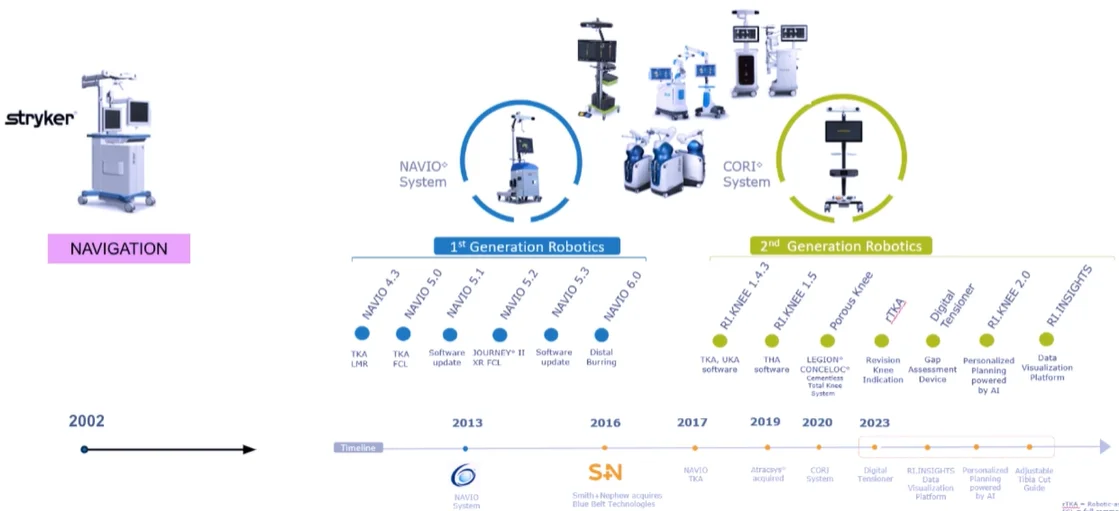
Robotic systems such as OMNIBotics, ROSA® Knee and CORI can adapt to the patient's individual anatomical characteristics in real time, and place implants more accurately. In particular CORI system outstanding, because it creates a 3D model during surgery without prior imaging, reducing radiation exposure and speeding up surgical preparation. As a result, robotic-assisted knee replacement surgery has brought significant advances in more accurate implant placement, shorter recovery times and longer implant life, giving patients a more natural sense of movement.

Dr. Zoltán Bejek PhD
Associate Professor of Orthopaedics, Robotic Surgeon
Online appointment booking for Budafoki út:
Please choose the service that suits you
Control fee for 3 months after the initial examination for the same complaint.
- 1. Select the service you need from the drop-down box!
- 2. Use the calendar to choose a date that suits you!
- 3. Enter your details to register or login with your previous registration!
- 4. If you would like to make a reservation on behalf of someone else (e.g. your child), please let us know at the location provided.
- 5. Briefly describe your complaints!
- 6. Select the type of consultation: initial examination, control examination or prescription.
- 7. Click on the button to book your appointment. Thank you for choosing BMM!
If you are unable to make the appointment you have already booked, please, at least 24 hours before notify us of your intention to withdraw. This gives other patients the opportunity to get the medical care they need in time. Thank you for your cooperation and understanding!
Resignation: +36 1 44 33 433
If for the week of your choice cannot find an available appointment, for further assistance, please call our call-center at +36 1 44 33 433-phone number! Our staff will be happy to help you make an appointment with the doctor of your choice or another specialist according to your complaint.
Overview of the three orthopaedic robots currently available in Hungary
From OMNIBotics, ROSA® Knee and CORI systems all use different technological approaches to robotic-assisted knee replacement surgery, which are largely affect the accuracy of operations and patients' recovery times, but what they have in common is that they all aim to improving patients' quality of life.
Main technology and navigation imaging:
From OMNIBotics system's core technology is the BalanceBot™ ligament tension gauge and OMNIBot™ cutting template, which optimise knee stability in real time. In the field of navigational imaging, OMNIBotics uses a completely imaging-free technology, creating an accurate 3D model based on the data collected during surgery, eliminating the need for a prior CT or MRI scan.
A ROSA® Knee system features real-time 3D imaging and personalised implant alignment, allowing the surgeon to take into account the patient's unique anatomy. In terms of navigational imaging, with ROSA® the surgeon can choose between imaging-free or imaging-based planning, which requires a CT or MRI scan.
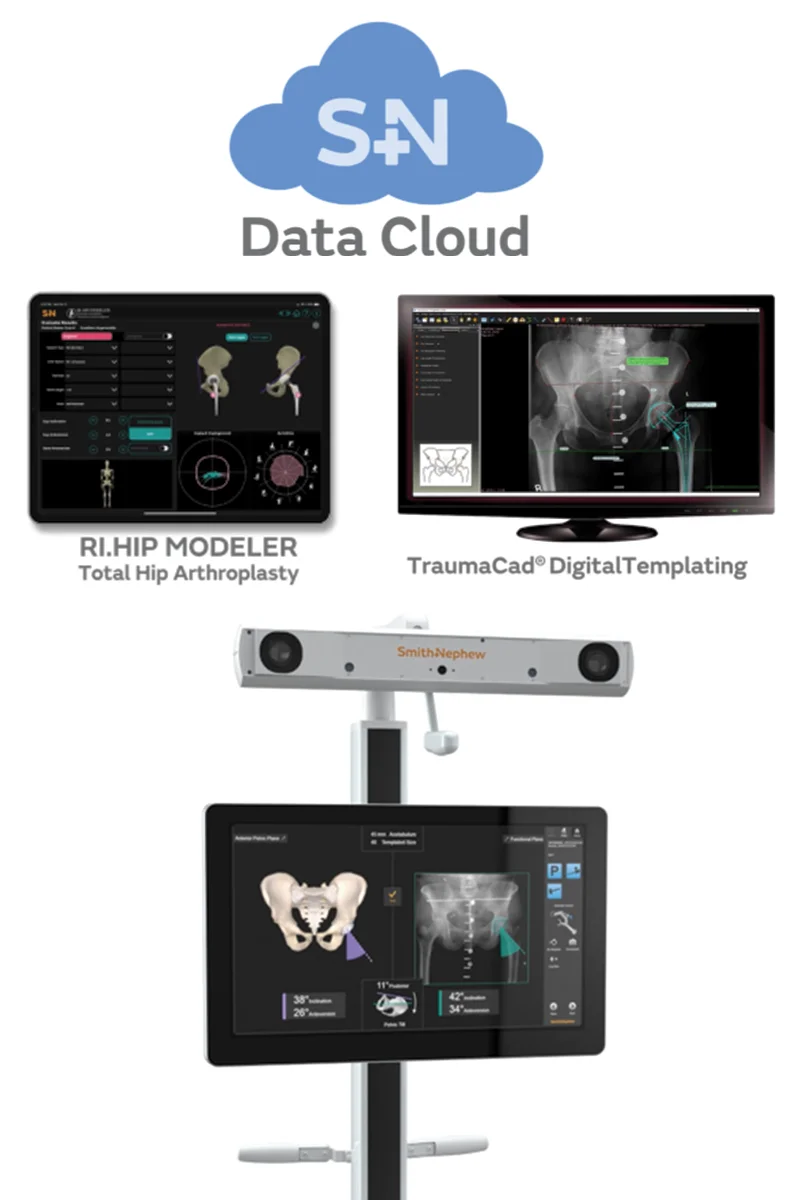
A CORI the robot uses navigation imaging, i.e. it is also completely imaging-free, which means that no prior CT scan or MRI for testing. This not only reduces radiation exposure, but also makes surgical preparation faster and more efficient.
The artificial intelligence built into CORI is another important gives you an advantage, as it analyses real-time data during surgery and provides feedback to the surgeon. This allows the surgeon to constantly monitor the position of the implant and the tension of the ligaments, so that the result is as accurate as possible. AI support also helps to optimise implant placement for the best fit of the patient's joint, which can increase the stability of the knee prosthesis in the long term and a natural sense of movement.
Surgical guidance and precision:
From OMNIBotics system provides full surgical control with BalanceBot™ and OMNIBot™ devices that allow real-time ligament tension measurement and precise bone cutting. This approach helps to optimise implant fit, but the use of traditional fixed templates can slightly limit the surgeon's freedom of movement during surgery.
A ROSA® Knee system's strength is its real-time 3D imaging and instant feedback, which greatly assists the surgeon in accurate implant placement. However, due to the complexity of the system, surgeons need more training and preliminary imaging can sometimes be time-consuming. In addition, the fixed robotic arm is less flexible, which can limit fine movements.
A CORI system stands out with its ergonomic, hand-controlled device that gives the surgeon great freedom of movement. The manual precision milling allows for more delicate movements, allowing the surgeon to better adapt to the patient's anatomical features. Artificial intelligence-assisted technology provides half-millimetre accuracy, so the CORI system offers superior precision and a more natural implant fit. While manual control has the advantage of finer control, it can also require greater surgeon experience to achieve accurate results.
All three systems offer different benefits, but CORI stands out with its support for artificial intelligence and fast, imaging-free navigation, which improves accuracy and surgical outcomes.
Detailed comparison based on technological solutions
This table will help you to get an overview of the most important features of the systems, which can help you to see the characteristics of each robot.
Choosing the right robotic assisted knee replacement system
Both the surgeon's experience and the patient's needs are important when choosing the right system. OMNIBotics is strong in ligament balancing, while ROSA® focuses on specific anatomical features thanks to 3D imaging. A CORI a minimalist and efficient system design, and imaging-free technology can provide a practical solution for both surgeons and patients, especially in situations where the fast and precise intervention a key aspect.
The comparison shows that the CORI system is technologically superior because of the following innovative features:

- Artificial intelligence-based support - CORI's ability to analyse data in real time during surgery increases the accuracy of the surgeon's decision-making, thereby increasing implant stability and natural sensation of movement.
- Intelligent mapping technology without imaging - because it produces a 3D model without the need for prior imaging, it speeds up the surgical process, making the procedure more practical and cost-effective.
- Manual precision milling - the ergonomically designed handpiece ensures that bone resections are precise, which is particularly beneficial for the surgeon as it allows him or her to control the process more easily.
These unique features flexibility, Accuracy and shorter recovery time which can be particularly attractive to patients. Whilst all three systems are advanced, the CORI system's features are at the cutting edge of innovation, especially with its artificial intelligence and no-pre-imaging approach, making it the optimal choice in many cases.
A Budapest Musculoskeletal Private Clinic a long and thorough research was the clear decision to opt for the CORI robot from Smith+Nephew, so Dr. Zoltán Bejek under the leadership of the BMM Orthopaedic Traumatologist and Associate Professor at the Orthopaedic Clinic of Semmelweis University, has established the CORI Department of Robotic Surgery.
Summary
Overall, all three systems are cutting edge robot technologies, and the degree of innovation in each system specific functions is manifested in. All three systems represent significant advances in orthopaedic surgery, increasing the precision of surgery and patient satisfaction. However, the most prominent technology in orthopaedics today is the CORI robot, powered by artificial intelligence, which continuously learns and analyses surgery by surgery along with more than 1,300 similar CORI robot peers around the world. However, CORI technology is the first semi-autonomous orthopaedic robot in the world, which means that this type already performs autonomous tasks under the supervision of a surgeon, offering the most innovative solution.
If you are interested in a robotic assisted knee replacement, please contact our experts for a consultation.
Why choose the CORI robot?
The success of knee replacement surgery is measured not only in terms of precision, but also in the long-term impact on the patient's quality of life. The CORI system represents the pinnacle of innovation, with three unique features: real-time artificial intelligence-based support, imaging-free intelligent mapping technology, and ergonomically designed manual precision milling. These tools allow the surgeon to make accurate and informed decisions at every moment of the operation - this is the power of technology, the logos.
The excellence of the CORI system is not only measured in technical parameters. Leading experts such as Dr. Zoltán Bejek, Chief Physician at the Budapest Musculoskeletal Private Clinic, have clearly chosen the CORI robot because it provides a reliable, efficient and safe solution. This professional credibility and experience is the basis of the ethos that guarantees that the patient is in the best hands.
It is also a safe solution in case of metal allergy: the CORI robot allows the implantation of hypoallergenic, Oxinium prostheses.
However, choosing a CORI robot is not just a technological decision - it is a chance for the patient to heal faster, reduce pain and regain more natural movement. Think of the moment when you can move again without pain and regain your active life. This is a patient's dream that CORI can make a reality - this is pathos, which addresses those concerned on an emotional level.
Choose the CORI system and experience the cutting edge of modern medicine - a guarantee of accurate, fast and long-lasting results.