Prosthesis revision


What is revision surgery?
A previously implanted joint replacements (Shoulder, hip, knee) surgical treatment exchange is called a revision. Revision surgeries are short procedures for problems that are starting. In more severe cases, however, they are larger and more complicated than traditional implant placement.
The need for a revision is always decided by the treating doctor, based on the patient's condition.

Why is it necessary to have an annual check-up after the implantation of a prosthesis?
A mandatory annual check-up after prosthesis implantation must attend an examination. To complete even if the patient is completely asymptomatic!
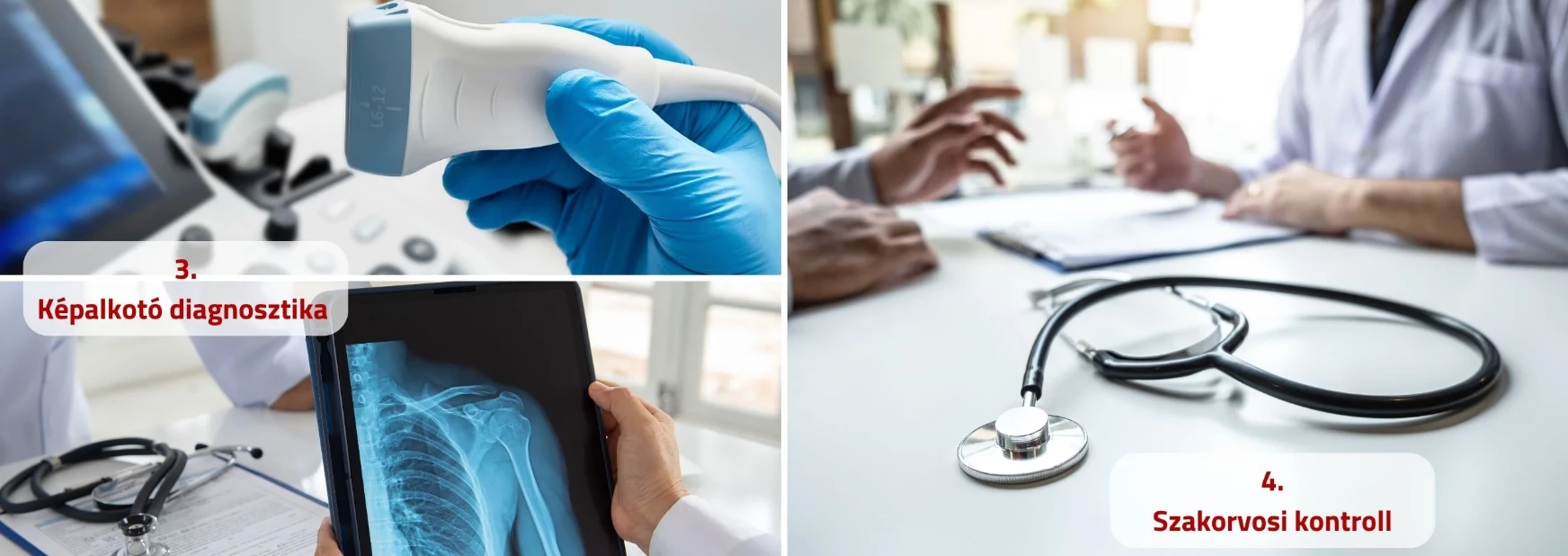
Control is not about treating a problem, but preventing it. A a physical examination X-rays diagnostics is also done. Annual X-rays are very important because they can detect problems that may not be symptomatic, but if left untreated can lead to serious complications such as osteolysis.
From osteolysis abnormal breakdown of the bone around the implant. In this case, revision surgery is lengthy and bone grafting may be necessary.
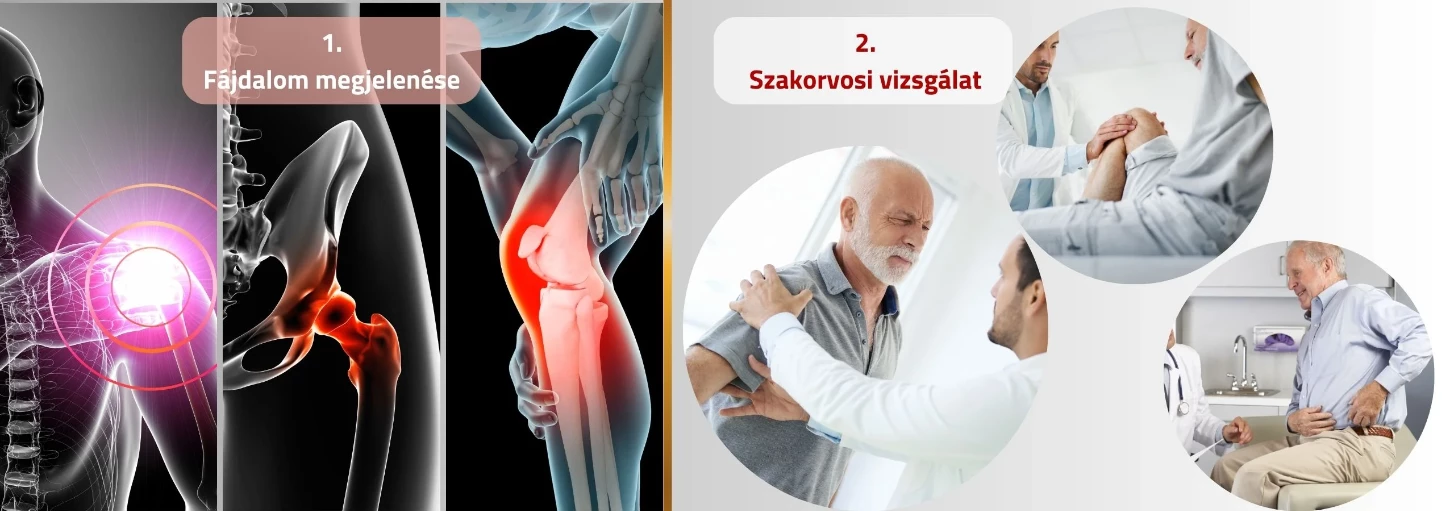




When should the audit be carried out?
During the primary prosthesis implantation, the patient is with a doctor you decide whether you want to replace your worn/damaged joint with an implant. It can then take up to months to make a decision.
In contrast to the already no time to think about replacing an existing implant. If the doctor considers a revision to be justified and necessary, it should be carried out immediately. Delaying surgery can worsen problems and lead to serious complications, which can have long-term negative consequences for the patient's health.
An annual check-up can detect incipient problems even in the absence of complaints:
- Prosthesis loosening
- Planted wear, breakage of prosthetic components
- Inflammation caused by infection in the tissues around the prosthesis
- Weakened bone tissue due to bone fracture, a so-called periprosthetic fracture
- Ficam

What complaints warn you of the need for an audit?
In many cases there are no clear signs, complaints. The onset of prosthetic wear often has no warning signs, and the presence of low virulence pathogens often goes unnoticed.
Without regular medical check-ups, years can go by without warning signs. But this is very dangerous because conditions can develop that can lead to serious infection or bone tissue damage.
Of course there are also cases where there are clear signs warning the need for a revision:
- Prosthesis around the joint Pain
- In the limb radiating pain
- Motion constriction
- Ficam
What can the patient expect during revision surgery?
Whether a relatively short and simple revision surgery or a larger and more complex one is needed depends on the type and severity of the problem.
- In milder cases partial replacement of the prosthesis may be sufficient - e.g. only the prosthetic head is replaced.
- For more serious problems but you should expect a more strenuous operation, with more blood loss and a longer recovery time. If necessary, bone grafting and other internal fixation (e.g. screws, plates) may be used.
In revision surgery, a cementless prosthesis is most often implanted.

Procedure of the operation
- The joint is explored using a minimally invasive procedure.
- The surgeon removes (partially or completely) the previous prosthesis. - For cemented prostheses, this is a slightly longer process.
- The ends of the bones, including the socket in the case of shoulder and hip replacements, are cleaned and prepared.
- The doctor inserts the new prosthesis.
- Especially in the case of hip and shoulder revisions, a component with a longer stem than the original prosthetic stem may be implanted.
- If necessary, the implant is also secured with screws.
- The surgeon checks the fit of the new elements.
- The surgical site is then infiltrated and the wound is closed with staples or sutures.
Recovery time and life after the revision
The extent of the recovery time depends on the type of revision surgery.
- For milder revision surgery you can expect a recovery similar to or slightly faster than the first implantation.
- More serious revision longer rehabilitation time compared to primary prosthesis surgery. One reason is that the surgery itself is longer and often involves more blood loss.
In both cases the importance of the doctor and the physiotherapist follow instructions to the letter to avoid complications and optimise rehabilitation.
The expected recovery time is 3-6 months. After that, the patient can return to a pain-free and full life.

What are the complications of revision surgery?
As with any surgery, there can be unforeseen consequences with prosthetic revision. Repeated operations on a joint may lead to a higher risk of complications than the primary operation.
- Blood clot
- Wound infection
- Vérömleny
- Ficam
- Nerve damage
- Fracture of surrounding bones
- Fracture of prosthesis
It is worth being aware of the possible risk factors, but it is also important to bear in mind that postponing or refusing surgery can have more serious consequences than possible complications.
Our specialist doctors:

Dr. Zoltán Bejek PhD
Associate Professor of Orthopaedics, Robotic Surgeon

Dr. Szabolcs Gáspár
Orthopaedic traumatologist, head of department, robotic surgeon

Dr. Gergely Holnapy PhD
Orthopaedic traumatologist, assistant professor, robotic surgeon

Dr. Péter Molnár
Orthopaedic traumatologist, chief operating surgeon, robotic surgeon

Dr. Péter Doszkocs
Orthopaedic traumatologist, hip and knee surgeon, lower limb specialist, robotic surgeon

Dr Maysam Moghaddam Amin
Orthopaedic-traumatologist specialist, robotic surgeon

Dr. Kálmán Ferenc Egyed
Orthopedic-traumatologist general practitioner

Dr. Balázs Török
Assistant Professor of Orthopaedic Traumatology