Cartilage replacement in the knee
A solution to stay youthful and active


When do you need cartilage replacement in the knee?
Knee cartilage - how does it develop, who is affected?
Knee osteoarthritis is a condition in which the smooth, flexible cartilage covering the bone ends of the knee joint is damaged or thinned. This can happen not only in older age, but also in younger, active people, especially if there has been a knee injury or if the joint is under increased stress.
Cartilage tissue does not have its own blood supply, so its regenerative capacity is minimal. If the cartilage defect is a circumscribed, well-defined lesion, such as a cartilage detachment or a cartilage hernia with a clear edge, the possibility of cartilage replacement procedures. It is important to stress, however, that these interventions are not recommended for advanced, diffuse cartilage damage, as the it is a process that involves the whole joint. Cartilage replacement in the knee is particularly suitable for young or middle-aged patients with an active lifestyle who are not yet eligible for knee replacement.
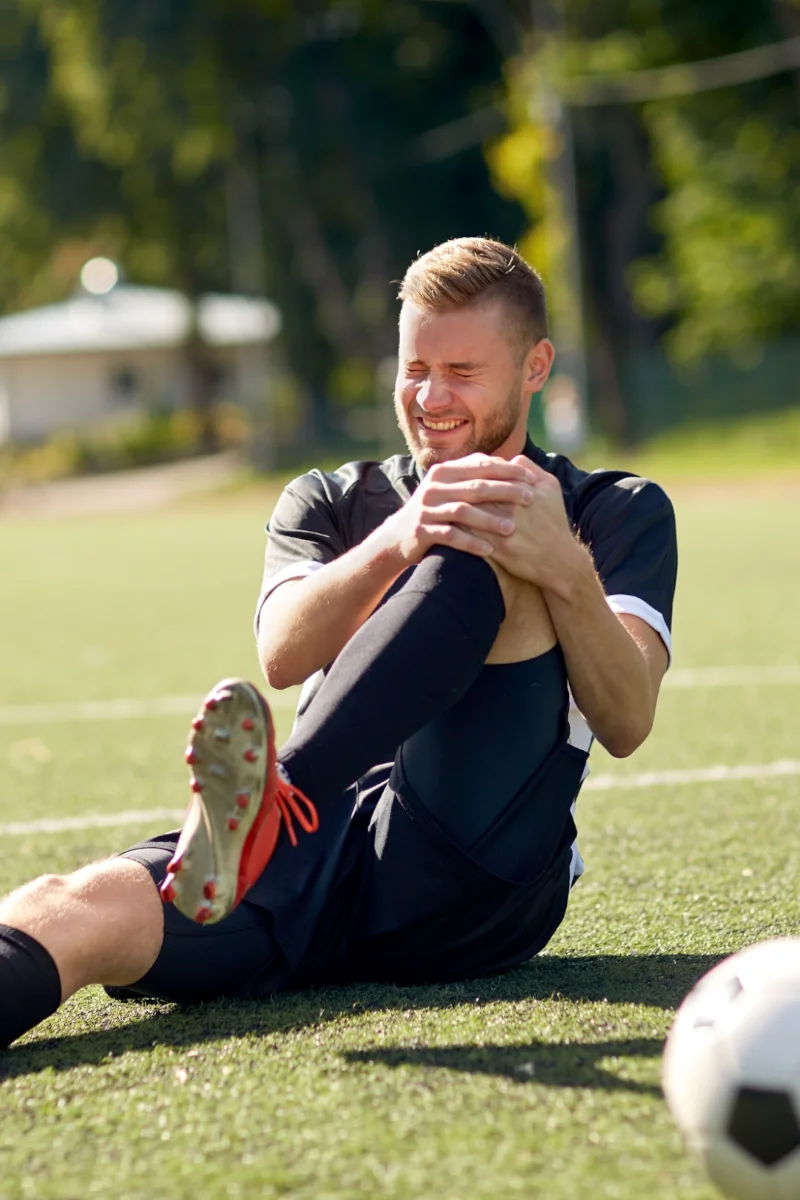
Cartilage herniation during exercise - common causes and consequences
During sports, the knee is particularly exposed to collisions, twisting movements or sudden changes of direction. In such situations, it is common to cartilage surface damage associated with meniscus or ligament damage. In many cases, cartilage damage does not cause immediate symptoms, but in the longer term it can lead to increasing pain, swelling, reduced range of motion of the joint or loose cartilage fragments that can cause the joint to „jam”.
For younger athletes, it is particularly important to maintain the condition of the cartilage surface, as a neglected injury can lead to cartilage deficiency in the long term. In lucky cases, damaged, detached cartilage is suitable for reattachment (e.g. with titanium miniscrews or mini nails made of absorbable material). Reattachment, also known as cartilage fixation, should be performed as quickly as possible. If the detached cartilage is too thin, too small, or has a ragged structure, refixation is no longer possible. Then the so-called mosaicplasty - cartilage grafting using your own cartilage - or other cartilage replacement procedure can help restore the smooth surface of the joint and allow you to return to sport.
Treatment of knee cartilage injuries: conservative options and surgical solutions
The treatment of a knee cartilage injury always depends on the severity of the lesion, its location and the patient's lifestyle. For milder complaints, conservative therapy may be sufficient: physiotherapy, cartilage-building supplements, injections (e.g. hialuronic acid, PRP). These aim to reduce pain and stabilise the cartilage.
If the cartilage is more extensive or the symptoms do not improve, surgery may be considered. In this case, the damaged cartilage surface is replaced in a targeted way, typically using mosaic plastic techniques or other modern cartilage replacement procedures. The exact treatment plan should always be decided on an individual basis, based on a specialist examination.

Dr. Péter Doszkocs
Orthopaedic traumatologist, hip and knee surgeon, lower limb specialist, robotic surgeon
Online booking:
Budafoki Road surgery: Thursday
Bokor street surgery: Week of the other days
Please choose the service that suits you
The control fee is valid for 3 months after the initial examination, for the same complaint.
- 1. Select the service you need from the drop-down box!
- 2. Use the calendar to choose a date that suits you!
- 3. Enter your details to register or login with your previous registration!
- 4. If you would like to make a reservation on behalf of someone else (e.g. your child), please let us know at the location provided.
- 5. Briefly describe your complaints!
- 6. Select the type of consultation: initial examination, control examination or prescription.
- 7. Click on the button to book your appointment. Thank you for choosing BMM!
If you are unable to make the appointment you have already booked, please, at least 24 hours before notify us of your intention to withdraw. This gives other patients the opportunity to get the medical care they need in time. Thank you for your cooperation and understanding!
Resignation: +36 1 44 33 433
If for the week of your choice cannot find an available appointment, for further assistance, please call our call-center at +36 1 44 33 433-phone number! Our staff will be happy to help you make an appointment with the doctor of your choice or another specialist according to your complaint.
The role of cartilage replacement surgery
The aim of cartilage replacement is to repair the damaged cartilage surface of the knee joint, thereby eliminating pain, improving range of motion and preventing further wear and tear on the joint.
What is mosaicplasty surgery?
The surgery (mosaicplasty) is a modern cartilage replacement procedure that used to treat small, well-defined cartilage pockets.
The essence of the method:
- Together with healthy cartilage and bone, small cylinders (grafts) are taken from the less stressed part of the knee
- These are transplanted into the damaged area to create a new, smooth cartilage surface
- The cylinders fit together like a mosaic, hence the name of the process
This type of surgery can help avoid the need for prosthesis implantation, especially in younger patients.
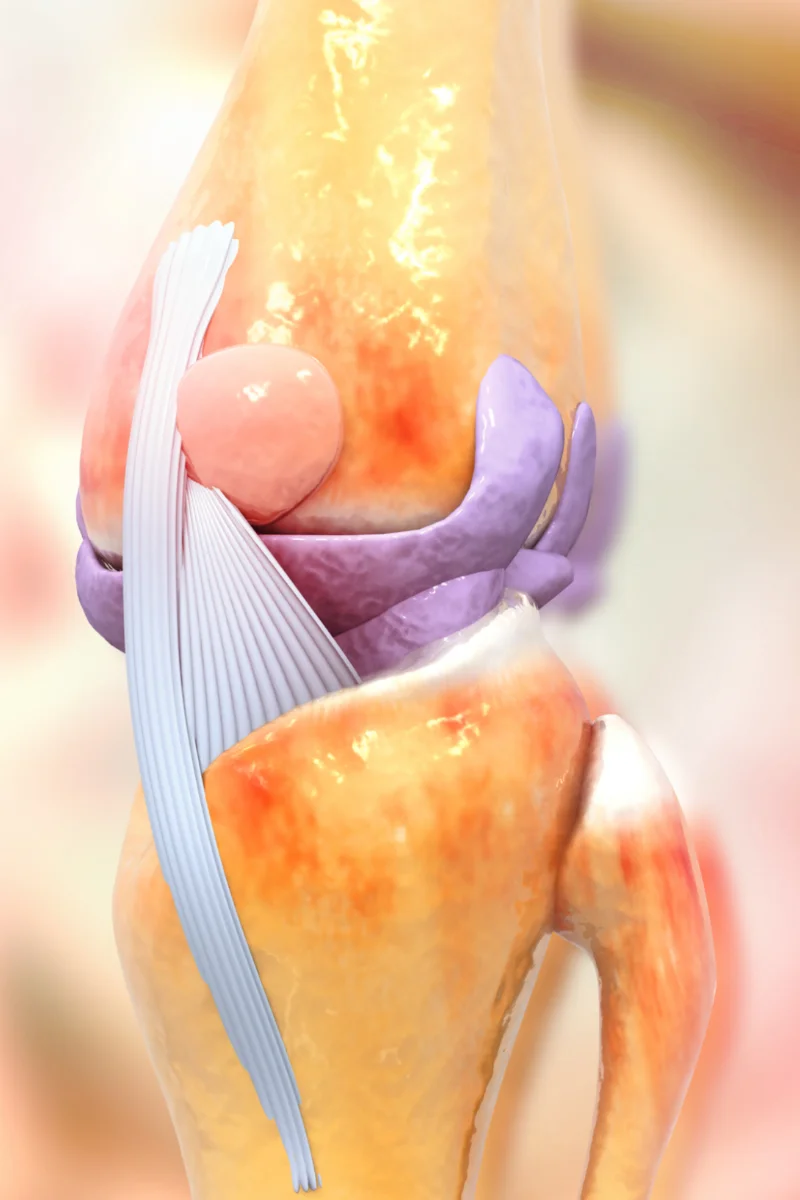
How is cartilage replacement surgery done step by step?
The surgical procedure consists of the following steps:
- Preparatory studies (MR, X-rays, clinical trial)
- Intervention under anaesthesia or spinal anaesthesia
- With little exploration or with arthroscope graft removal from the area of the patella trough
- Bone drills of appropriate size are made in the cartilage area the graft is then implanted using the press-fit technique, so that no separate fixation is required.
- Closure of the joint capsule, then the wound layers, sterile dressing
- Rehabilitation starts immediately after surgery under the guidance of physiotherapists
- Rehabilitation takes 6-12 weeks
The type and length of surgery always depends on the extent of the lesion.
What cartilage replacement options are available today?
Other procedures are available in addition to mosaicplasty, depending on the size of the damaged area and the condition of the surrounding tissue.
Possible solutions:
- Microfracturing/refracturing technique - the cortex at the base of the damaged cartilage surface is opened, allowing stem cells from deeper layers of bone to reach the surface, thus triggering cartilage formation in this area
- Cell-based processes - laboratory propagation and transplantation of cartilage cells
- Allograft implantation - replacement with cartilage from a donor
- Combined techniques - e.g. preparing a dust-covered area and then covering it with a special material
The right method is always chosen by the orthopaedic specialist based on the patient's condition.
Knee cartilage surgery for young people - aim for a full return to mobility
Cartilage replacement often becomes necessary in young patients with active lives, where the goal is not just to eliminate pain but to restore full mobility.
Purpose of the intervention: rehabilitation of athletes and active people
Mosaicplasty surgery is mainly performed in cases where:
- The patient is active in sport or physical work
- Small (a few cm2), well localised cartilage on the femoral articular surface
- The aim is to preserve the joint in the long term and delay the implantation of a prosthesis
The intervention gives the opportunity to regain full mobility, even for sports activities.
How long is the recovery after cartilage replacement?
Recovery is a gradual, step-by-step process:
- In the first weeks, unloading, use of assistive devices
- From weeks 4-6, gradual exercise, physiotherapy
- Full load typically after 2-3 months
- It can take up to 6 months for the tissues to set in
The exact time of recovery often depends on individual factors.
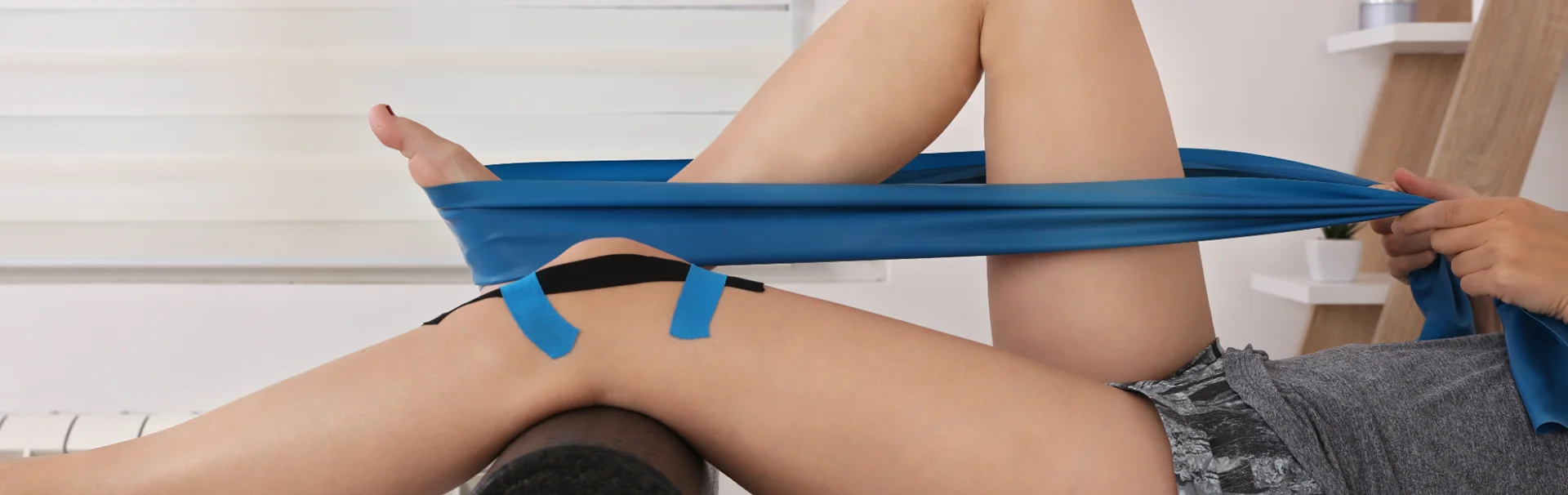
When can the patient return to sport?
Return to sport not only from physical healing, but muscle strength, balance and coordination of movements also depends on the recovery of.
General guidelines:
- Lighter sports activities: after 3-4 months
- Running, ball games: after 6 months or later
- Full return possible after medical check-up and functional tests
It is important that the rehabilitation the principle of gradual implementation.
Why choose Dr. Péter Doszkocs for cartilage hernia?
The treatment of a herniated disc in the knee joint requires specialised expertise and experience. Dr. Péter Doszkocs as a specialist orthopaedic traumatologist, he specialises in the treatment of knee injuries sustained during sport, especially in the younger, active age group.
What his patients appreciate about him:
- High level of professional experience in cartilage resurfacing surgery
- A personalised treatment plan for each patient
- Excellent communication - explains the problem and the solution clearly
- Focus on a safe return to sport
- Modern, accurate diagnostic background for BMM private clinic
Dr. Peter Doszkocs' goal is for every patient to regain pain-free movement as quickly, safely and with lasting results as possible.
Dr. Péter Doszkocs
Orthopaedic traumatologist, hip and knee surgeon, lower limb specialist, robotic surgeon
How to apply for a cartilage replacement consultation?
Cartilage replacement is not an option for everyone, so the first step is always a personal consultation with a specialist to assess your joint condition and treatment options.
How to apply:
- Booking Order Dr. Péter Doszkocs online or by phone
- Review of history - you should bring previous MR/CT scans, findings
- Detailed analysis, discuss diagnosis and personalised treatment plan
- Deciding on treatment - whether it is a conservative solution or cartilage replacement surgery
BMM offers a modern environment, minimal waiting time and personal attention.