Hip replacement surgery without muscle transection from anterior dissection


⚠️ Attention:
From 1 March 2026, our prices will be on average, depending on the type of surgery
increase by 5-10%.
In January and February, we will still provide the operations at the current prices.
The number of surgical places is limited!
How to speed up recovery after hip replacement? How to get back on your feet quickly after surgery? In addition to the quality of the prosthesis, which is best suited to the patient, the surgical technique also makes a big difference. The specialists at the Budapest Musculoskeletal Private Clinic use the most modern and effective minimally invasive surgical technique available today, the so-called muscle-less hip replacement implantation. This is a special technique that spares the soft tissues, making post-operative rehabilitation significantly faster and less painful. What should you know about the different hip joint explorations and which is the best method? Can modern hip replacement surgery without muscle transection be performed on everyone? Read our article to find out!


Types of hip joint exploration
When implanting a hip replacement, it is important that the surgical technique used is the safest and most effective for you. There are two main exploration techniques for hip replacement surgery. These can be categorised according to the muscles through which and the muscles next to which the hip joint is accessed during surgery. The type of exploration is not only important during the operation but also influences the rehabilitation after the operation. It determines the severity of pain after the operation, the stability of the joint and when the patient can start rehabilitation, how quickly and how successful it will be.


Hip replacement surgery from lateral and posterior approach
Lateral and posterior exploration hip replacement surgery involves the doctor detaching the muscle surrounding the hip joint, or part of it, from the thigh muscle and accessing the joint from the side or back during the operation. This method can be used safely for initial prosthesis implantation and hip replacement.
Posterior dissection is where the surgeon disconnects the short, outwardly rotating muscles of the joint, and by inserting the posterior capsule, opens up the joint and implants the hip replacement. He then restores the separated muscles and the posterior capsule. During this exploration, the joint is easily accessible.
With minimal lateral exposure, there is less muscle separation, so there is less muscle damage and less pain after surgery.
However, it is important to know that these surgical techniques involve cutting through muscles, so there is a higher chance of complications during surgery and slower recovery.
Hip replacement surgery from anterior dissection
Hip replacement surgery performed from an anterior approach is a modern surgical solution. It requires great experience and precision. It involves the surgeon approaching the hip joint from the anterior part of the hip joint, between the muscle belly muscles. With this hip replacement surgery technique, there is no need to disconnect the muscles, so patients experience minimal pain after surgery and their rehabilitation is quick.
Hip replacement revision if the primary prosthesis becomes loose or a part of it wears out and causes a complaint. Because of the risk of this, it is necessary to check the prostheses regularly, every 1-2 years, by X-ray examination. Today's modern prosthesis systems are implanted in a multi-component system, so sometimes it is sufficient to replace only a single component to prevent complete loosening.

Dr. Kálmán Ferenc Egyed
Orthopedic-traumatologist general practitioner
Online appointment booking for Bokor Street:
Please choose the service that suits you
Control fee: 38 000 HUF, for 3 months after the initial examination, for the same complaint.
- 1. Select the service you need from the drop-down box!
- 2. Use the calendar to choose a date that suits you!
- 3. Enter your details to register or login with your previous registration!
- 4. If you would like to make a reservation on behalf of someone else (e.g. your child), please let us know at the location provided.
- 5. Briefly describe your complaints!
- 6. Select the type of consultation: initial examination, control examination or prescription.
- 7. Click on the button to book your appointment. Thank you for choosing BMM!
If you are unable to make the appointment you have already booked, please, at least 24 hours before notify us of your intention to withdraw. This gives other patients the opportunity to get the medical care they need in time. Thank you for your cooperation and understanding!
Resignation: +36 1 44 33 433
If for the week of your choice cannot find an available appointment, for further assistance, please call our call-center at +36 1 44 33 433-phone number! Our staff will be happy to help you make an appointment with the doctor of your choice or another specialist according to your complaint.
How is hip replacement surgery performed from an anterior approach?
Hip replacement surgery without muscle transection can be performed with anaesthesia and sedation in the spine or under general anaesthesia. After thoroughly disinfecting the surgical site and covering the area around the operation, the surgeon makes an incision about 5-8 cm long in the skin. No muscles need to be cut during the procedure, as they are gently pulled out of the way by the surgeon using special instruments to gain access to the joint.
During hip replacement surgery, the surgeon removes the patient's femoral head from the femur, then de-dusts the pelvic floor and applies a series of ball-peen burrs. Then a hemispherical metal vase is implanted, into which a hardened plastic insert or a plastic vase with bone cement (bone glue) is glued. He then implants the metal stem of the prosthesis into the femoral marrow cavity. This can be done with bone cement or without glue. The surgeon inserts a metal or ceramic ball head onto the stem, which moves around in the plastic part of the socket to replace the original function of the hip joint. The newly formed joint will restore the pleasure and freedom of movement after the rehabilitation period.
Does hip replacement surgery without muscle transection reduce the chance of surgical complications?
Yes, absolutely. If the hip replacement surgery is done by anterior dissection without muscle transection, it is enough to make a small incision in the skin and no muscle transection is needed. The risk of infection is therefore significantly lower.
This type of hip replacement surgery does not require the use of tubes (drains) to drain the mucus or blood from the surgical wound, as they are not needed. Instead, a special cocktail of anti-hemorrhagic and analgesic medication is applied to the tissues around the prosthesis at the end of the operation. This minimises post-operative bleeding and the risk of infection is significantly reduced. Hip replacement surgery without muscle transection results in a more stable joint and less chance of dislocation of the prosthesis than traditional surgical solutions. On average, you need to stay in hospital for 3 days after the operation.
Rehabilitation after hip replacement implantation
After hip replacement surgery without muscle transection, the patient can sit up on the day of surgery, and may even be able to stand up at the hospital bedside. Our patients are surprised to find that there is no significant pain immediately after the operation, thanks to modern surgical techniques and an anaesthetic injection into the wound before the operation is over.
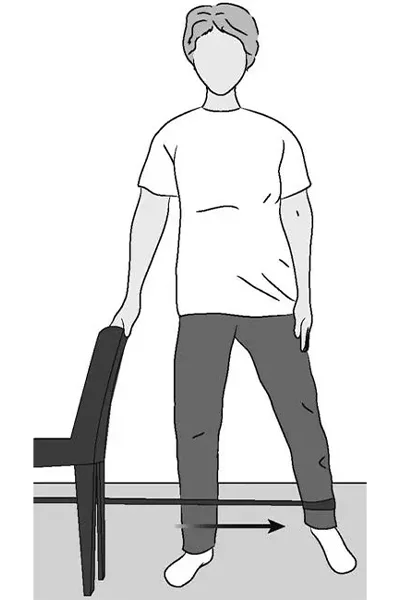
Rehabilitation starts the day after the operation, when the patient is visited by a physiotherapist who helps them to stand up and teaches them how to move using a walker or elbow crutches. Rehabilitation continues in the patient's home, focusing on physiotherapy to speed up the recovery process, help restore optimal range of motion and strengthen the muscles. Exercises prescribed by the physiotherapist must be performed daily. It is important to meet regularly with the physiotherapist, who will always teach the patient new exercises according to the degree of improvement. The rehabilitation period usually lasts between 3 and 6 months.
When can I drive and play sports after hip replacement surgery?
It's understandable to want to get back behind the wheel as soon as possible after surgery. After hip replacement surgery without a muscle transection, there is little to stop you doing so. If you have an automatic gearbox and the left hip joint has been operated on, you can drive as soon as 3-4 days after the operation. If you have a mechanical gearbox and the right leg has been operated on, it is always advisable to wait 1-2 weeks after the operation and discuss with your physiotherapist how to drive safely.
After hip replacement surgery, you should discuss with your specialist when and what sports you can do. Usually, 1.5 months after hip replacement surgery, the leg can be weight-bearing and walking is easy. The load can be gradually increased and sports such as yoga, swimming and indoor cycling are highly recommended. A few months after surgery, people who have previously led an active life can start dancing and jogging again.
Is your hip pain making everyday life difficult? Want to move easily again? Come to the Budapest Musculoskeletal Private Clinic, where our highly knowledgeable, experienced doctors provide personalised solutions to help patients recover.
Make an appointment now by calling +36 1 44 33 433
Hip replacement surgery with anterior dissection performed by our specialists:
Dr. Kálmán Ferenc Egyed
Orthopedic-traumatologist general practitioner
WHY IS BMM THE SAFEST OPTION?
A close-knit team of surgeons
Our hip replacement orthopaedic surgeons have worked together for decades, knowing each other's every move.
Experience of thousands of operations
Our orthopaedic surgeons have performed thousands of successful hip replacements, there is no case they have not encountered.
Modern technology
Our surgeons use hip joint endoprosthesis implantation without muscle transection to greatly reduce post-operative pain and speed rehabilitation.

Double specialist surgeries for the best results

Complete patient journey from check-in to recovery

Priority service for people waiting for surgery
| Hip replacement without muscle transection | Traditional hip replacement implantation | |
|---|---|---|
| Time spent in hospital | 1-3 days | 3-10 days |
| Rehabilitation time | 3-4 weeks | 6-12 weeks |
| Start an office job | 14 days | 21-28 days |
| You can start a physical job | 8 weeks | 12 weeks |
| Driving a car | 6 weeks | 12 weeks |
| Restrictions after surgery | twisting and crossing of the lower limb, low sitting, squatting are forbidden in the first 6 weeks! | twisting and crossing of the lower limbs, sitting low, squatting is forbidden in the first 10-12 weeks! |
| Operating time | 50-70 minutes | 50-70 minutes |
| Blood loss | smaller | average |
| Magnitude of pain | smaller | average |
| Early joint stability (first 6 weeks) | better | average |
| Prosthetic dislocation frequency | 0.1-1 % | 2-4 % |
| Size of surgical scar | depends on the patient's build and musculature | greater than with the technique without muscle transection, depending on the patient's build and musculature |
| Possibility of aesthetic (bikini) surgical incision | is | none |
If you have any questions about hip joint pain or hip replacement surgery, please feel free to contact one of our specialists.
Please call +36 (1) 44-33-433 to make an appointment for a consultation or examination.
Do you want to use external funding for our surgeries?
Contact a credit expert!