Arthroscopic treatment of tennis elbow
A quick and effective solution



What is tennis elbow and why is it formed?
A tennis elbow (lateral epicondylitis) is a painful condition that mainly due to inflammation and micro-injuries on the outside of the elbow. Although the name suggests that it is mainly known among tennis players, the actual problem - whether tennis elbow inflammation or general elbow pain - can be experienced by anyone who performs repetitive hand and wrist movements. Many people ask „what should I do if my elbow hurts?”, as tennis elbow symptoms - from mild initial pain to chronic elbow problems - can have a significant impact on daily life over time.
Causes of tennis elbow
The most common cause is overuse of the tendons on the outside of the elbow. Repetitive movements can cause small tears in the tendon, which can lead not only to tennis elbow pain, but also to severe tennis elbow symptoms and inflammation. The formation is facilitated:
- Sustained or repetitive strain - such as playing sports, typing, painting or working with tools.
- Incorrect movements and poor ergonomics - if the wrist and forearm are constantly in the wrong position.
- Inadequate recovery - after microtrauma, the tendon does not regenerate properly, which can lead to long-term elbow problems and chronic elbow pain.
The most common symptoms and complaints
The tennis elbow symptoms develop gradually, and may initially only cause mild discomfort. The most common complaints are:
- Pain on the outside of the elbow that increases with movement of the wrist and forearm.
- Weakening grip strength, which makes everyday activities such as holding objects or opening doors more difficult.
- Tenderness and tenderness in the lateral part of the elbow.
- Radiating pain towards the forearm, especially during repetitive movements. Initially, the pain is only felt on exertion, but without proper treatment, the pain can elbow complaints can become permanent and problems can get worse.
Initially, the pain only occurs on exertion, but without treatment it can become permanent. In severe cases, tennis elbow treatment may require surgery, one of the most modern and effective forms of which is arthroscopic surgery, a minimally invasive procedure that helps speed recovery.
Dr. György Kocsis PhD
Orthopaedic traumatologist, hand surgeon, assistant professor, wrist, elbow and shoulder surgeon, upper limb specialist
Online appointment booking for Bokor Street:
Please choose the service that suits you
The control fee is valid for 3 months after the initial examination, for the same complaint.
- 1. Select the service you need from the drop-down box!
- 2. Use the calendar to choose a date that suits you!
- 3. Enter your details to register or login with your previous registration!
- 4. If you would like to make a reservation on behalf of someone else (e.g. your child), please let us know at the location provided.
- 5. Briefly describe your complaints!
- 6. Select the type of consultation: initial examination, control examination or prescription.
- 7. Click on the button to book your appointment. Thank you for choosing BMM!
If you are unable to make the appointment you have already booked, please, at least 24 hours before notify us of your intention to withdraw. This gives other patients the opportunity to get the medical care they need in time. Thank you for your cooperation and understanding!
Resignation: +36 1 44 33 433
If for the week of your choice cannot find an available appointment, for further assistance, please call our call-center at +36 1 44 33 433-phone number! Our staff will be happy to help you make an appointment with the doctor of your choice or another specialist according to your complaint.
Traditional treatment options and their limitations
A tennis elbow treatment usually starts with conservative therapies to reduce pain and inflammation. Drug therapy, physiotherapy, shock wave therapy or even the use of a kinesiology patch and elbow brace are all can relieve initial elbow pain and the symptoms of tennis elbow. However, if the symptoms persist for a long time or the elbow problems become more severe, conservative treatments become less effective and surgical intervention may be needed, such as arthroscopic surgery to use.
Conservative treatments: when can they help?
Symptoms and treatment of tennis elbow depends to a large extent on the progression of the disease. The first step is always to rest and reduce excessive strain, which can be complemented by various conservative therapies:
- Anti-inflammatory medicines and creams - these temporarily relieve the tennis elbow inflammation.
- Physiotherapy and physiotherapy - targeted exercises can improve tendon flexibility and reduce strain.
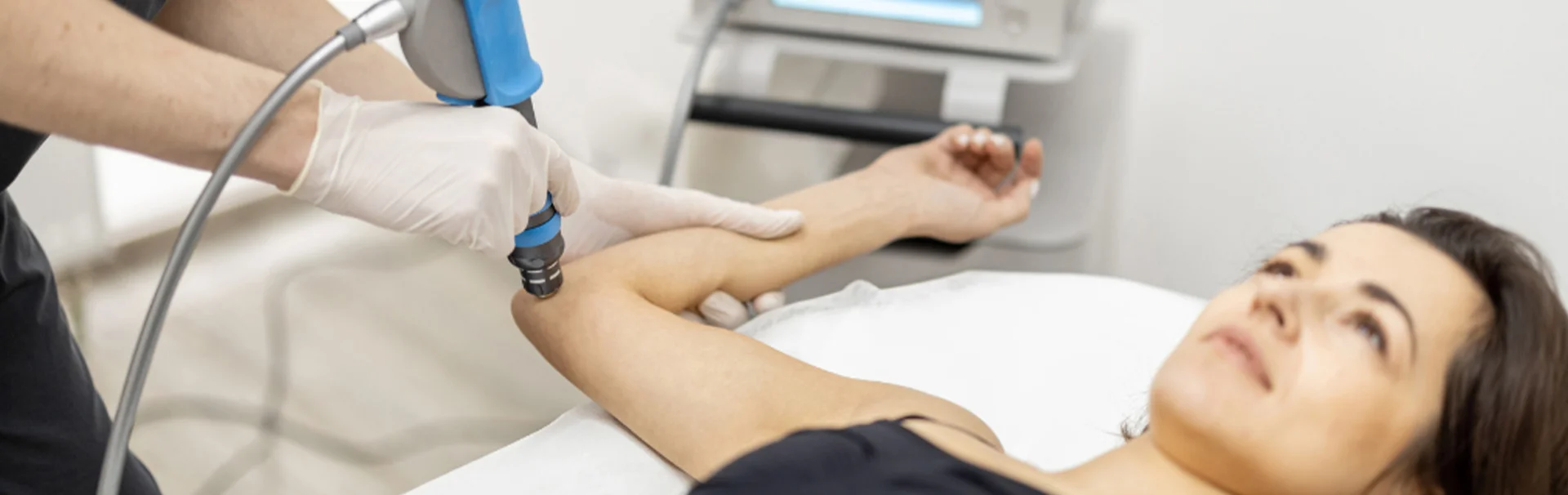
- Shockwave therapy - stimulates blood circulation and promotes healing processes.
- Kinesiology patch and elbow brace - stabilize the affected area and relieve elbow pain.
These methods are effective in many cases, but if the symptoms persist for a long time or the pain gets worse, the elbow arthroscopy may be the best option.
Why might surgical intervention be necessary?
Although conservative treatments can help, in many cases they do not solve the underlying cause, and the patient can suffer from pain for months, even years. Surgery is necessary if:
- Despite conservative treatments, the symptoms persist for more than 6-12 months.
- Pain has a significant impact on everyday life and work.
- The patient's grip strength is weakened and movement of the forearm becomes limited.
Arthroscopic treatment of tennis elbow - An innovative and gentle solution
If conservative therapies do not work, the arthroscopic treatment of tennis elbow may be the best alternative. This innovative surgical procedure eliminates the cause of the pain with minimal intervention, while maintaining the stability and mobility of the elbow joint. The arthroscopic technique allows for precise targeting, resulting in faster healing.
What is arthroscopy and how does it work?
A elbow arthroscopy a special surgical procedure that uses a tiny camera and delicate surgical instruments to remove or treat problematic tissue. The procedure is carried out through small incisions, making it much more less tissue trauma, pain and the risk of infection.
The procedure for arthroscopic elbow surgery
The intervention usually consists of the following steps:
- Use of anaesthesia or induction anaesthesia depending on the patient's condition and the doctor's decision.
- Making small incisions, through which the camera and surgical instruments are introduced.
- Mapping the joint structures the arthroscope, which allows accurate diagnosis and targeted intervention.
- Treatment of damaged tendons and inflamed tissues, during which the doctor removes the factors causing the pain.
- Closing the incisions and starting post-operative rehabilitation.
The benefits of arthroscopic tennis elbow treatment
The arthroscopic technique has many advantages over traditional, open surgical procedures:
- Faster recovery, as smaller incisions put less strain on the body.
- Reduced pain and inflammation, as the minimally invasive method causes less damage to surrounding tissue.
- Shorter hospital stay, in most cases, the patient can go home the same day.
- More aesthetic scar formation, as the incisions are small, there is hardly any visible trace on the skin.
Rehabilitation and recovery after arthroscopic surgery
Following successful surgery proper rehabilitation is of paramount importance, which ensures full restoration of elbow joint functionality and pain-free movement.
Dr. György Kocsis PhD
Orthopaedic traumatologist, hand surgeon, assistant professor, wrist, elbow and shoulder surgeon, upper limb specialist
The role of physiotherapy and movement therapy
After surgery, the doctor will draw up an individualised rehabilitation plan, which may include:
- Passive and active stretching exercises to restore range of motion.
- Strengthening exercises to stabilise the muscles of the forearm and wrist.
- Gradually increased load, which helps muscles and tendons to regenerate.
A tennis elbow rehabilitation The aim is to allow the patient to gradually return to their previous activity level while minimising the risk of relapse.
How long will it take to return to a normal lifestyle?
The total recovery time may vary from person to person, but the arthroscopic tennis elbow surgery usually after:
- The pain will subside within a few weeks, and everyday movements can be done again.
- In about 6-8 weeks most patients can return to lighter physical activities.
- after 3 months athletes and people doing physical work can continue their usual activities.
The exact recovery time depends on the patient's condition and consistent adherence to the rehabilitation programme. However, patients treated with arthroscopy can significantly regain elbow mobility in a shorter time, than traditional surgical techniques.
Tennis elbow treatment with a unique technique
- Specialist Dr György Kocsis
A Budapest Musculoskeletal Private Clinic using state-of-the-art procedures, including arthroscopy, to help patients tennis elbow treatment. Dr. György Kocsis, a renowned specialist in hand and elbow surgery, unique arthroscopic technique carry out interventions that not only symptoms of tennis elbow and the elbow pain mitigate, but also elbow problems address the cause of.
Unique arthroscopic procedure at the Budapest Musculoskeletal Private Clinic
Dr György Kocsis is one of the first specialists in Hungary to specialise in the arthroscopic treatment of tennis elbow. The method he uses:
- It is done using a minimally invasive technique, so there is less pain and faster recovery.
- A precisely targeted intervention that treats only the affected tendon area without damaging the surrounding tissue.
- It provides a shorter rehabilitation period, so patients can return to their daily activities sooner.
After the operation, the patient can start physiotherapy immediately after the operation and within a few weeks noticeable improvements can be seen.
Frequently asked question: what should I do if my elbow hurts?
If elbow pain occurs intermittently or regularly, the most important step is early diagnosis. With the use of appropriate conservative therapies - or in more severe cases arthroscopic treatment of the elbow - avoid long-term elbow problems. The experience of Dr György Kocsis and the modern equipment of the Budapest Musculoskeletal Private Clinic guarantee that tennis elbow treatment is carried out in the most gentle and effective way possible. If you have been suffering from elbow pain for a long time and would like to find a permanent solution, log in for a consultation so we can help you make a personalised treatment plan to help you make a full recovery!