Anterior cruciate ligament replacement


⚠️ Attention:
From 1 March 2026, our prices will be on average, depending on the type of surgery
increase by 5-10%.
In January and February, we will still provide the operations at the current prices.
The number of surgical places is limited!
- Have you just started exploring treatment options for your cruciate ligament tear? Did your GP refer you here? You're in the right place! We can help you get a full explanation of anatomical anterior cruciate ligament replacement.


Dr. Péter Doszkocs
Orthopaedic traumatologist, hip and knee surgeon, lower limb specialist, robotic surgeon
Online booking:
Budafoki Road surgery: Thursday
Bokor street surgery: Week of the other days
Please choose the service that suits you
The control fee is valid for 3 months after the initial examination, for the same complaint.
- 1. Select the service you need from the drop-down box!
- 2. Use the calendar to choose a date that suits you!
- 3. Enter your details to register or login with your previous registration!
- 4. If you would like to make a reservation on behalf of someone else (e.g. your child), please let us know at the location provided.
- 5. Briefly describe your complaints!
- 6. Select the type of consultation: initial examination, control examination or prescription.
- 7. Click on the button to book your appointment. Thank you for choosing BMM!
If you are unable to make the appointment you have already booked, please, at least 24 hours before notify us of your intention to withdraw. This gives other patients the opportunity to get the medical care they need in time. Thank you for your cooperation and understanding!
Resignation: +36 1 44 33 433
If for the week of your choice cannot find an available appointment, for further assistance, please call our call-center at +36 1 44 33 433-phone number! Our staff will be happy to help you make an appointment with the doctor of your choice or another specialist according to your complaint.
History of anterior cruciate ligament replacement
The anterior cruciate ligament is one of the four main ligaments of the knee. Its role is to prevent abnormal forward movement of the leg relative to the femur.
If the ligament is torn, it cannot heal spontaneously, but its function can be restored by replacing the ligament. The development of non-invasive examination techniques has greatly improved the planning of surgery and the importance of high-resolution, detailed MR scans is undisputed:
- In the recognition of co-injuries
- In the diagnosis of possible fractures not visible on conventional radiographs - without displacement
- Accurate identification of the cartilage coating of the taste surface
The development of surgical techniques and precise postoperative functional studies have shown that, in addition to the choice of the graft (a new anterior cruciate ligament made of tendon), the anatomical origin and attachment point of the graft is very important. Since the nineties, anterior cruciate ligament replacement has been performed in increasing numbers worldwide. Initially, the patellar tendon bone block (BTB) graft, and nowadays the so-called hamstring tendon graft, has become the leading surgical procedure.
In addition to the choice of graft, the major difference between the operations is the fixation techniques. The great advantage of the transfixion femoral fixation technique is that it is close to the femoral orifice, which reduces the movement of the new cruciate ligament in the orifice, thus reducing the risk of postoperative graft failure due to orifice widening. Aiming through the anterior-inferior (anteromedial) portal allows the femoral hole to be placed at the anatomical origin. Basic research has shown that the forces acting on grafts placed at the anatomical origin are similar to those acting on the original cruciate ligament.
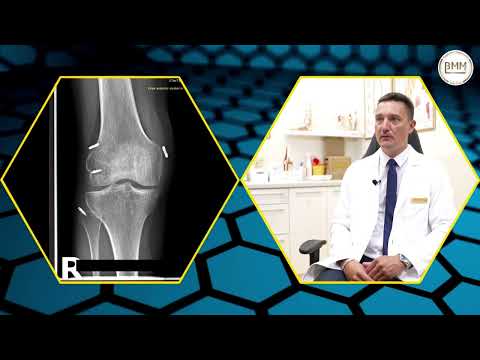
Anatomy of the anterior cruciate ligament
The anterior cruciate ligament, which is on average 38 mm long, originates from the medial surface of the tibia, runs posteriorly and laterally, and attaches to the lateral surface of the femur, the inner surface of the bone near the joint (condyle). It is composed of two anteromedial (anterior-inferior) and posterolateral (posterolateral) bundles that wrap around each other. The antero-inferior bundle provides stability in flexion above 60 degrees, while the postero-lateral bundle provides stretching and rotational stability. It is supplied with blood by the arteria genicularis (artery between the knees) and is innervated by the tibial nerve (tibial nerve). When it ruptures, a significant joint haematoma develops due to the good blood supply.

The most common causes of injuries
Anterior cruciate ligament tear:
- Strong outward rotation, flexion and lateral outward movement of the knee
- Strong inward rotation, extension and lateral displacement of the knee
- Overextension or overflexion of the knee
About 70% of anterior cruciate ligament tears occur during sports activities:
- Most commonly, patients suffer anterior cruciate ligament tears while skiing, playing basketball, handball and football.
- The age group most often affected is 15-45 years. The annual incidence rate in this age group is 1:1750, which is a very common injury.
- 70% of anterior cruciate ligament tears occur through non-contact movement, the remaining 30% occur during direct contact sports.
- Women suffer anterior cruciate ligament tears more often than men.
The procedure for anterior cruciate ligament surgery
The operation involves making a small longitudinal or oblique incision in the skin above the tibia - on the inner side - and removing two pieces of tendon 20-25 cm long.
Small incisions are then made above the knee joint, through which a tube camera is inserted into the knee joint, as well as tools to work inside the knee.
We will examine the knee joint in detail, treating any co-injuries that may occur.
Holes are then drilled in the tibia and femur at the anatomical origin and attachment sites, into which the new anterior cruciate ligament, formed from the flexor tendon, is pulled into place and secured with absorbable pins and screws.
After washing the knee joint, a tube is left behind to drain the blood that has accumulated in the knee after the operation. This is removed the first day after surgery.
Eligibility for surgery
During the test, the doctor treating you will:
- Interviews and records the history of the illness.
- Examine the movement of both knee joints.
- View the RTG, CT or MR scans you have taken. If necessary, you can request additional imaging tests.
- He draws your attention to the importance of physiotherapy, which is essential for a full recovery after surgery.
It is up to the doctor to give you all the information you need, and you make the decision about the operation on the basis of the information you receive. It can have a significant influence on your decision to have surgery:
- Previously used but ineffective conservative treatment
- Constant, chronic pain and
- A sense of instability.
BMM anterior cruciate ligament replacement doctors
Dr. Szabolcs Gáspár
Orthopaedic traumatologist, head of department, robotic surgeon
Dr. Szabolcs Gáspár
Orthopaedic Traumatologist, Head of Department, BMM
He mainly deals with hip and knee problems, prosthetic surgery and patients who have suffered musculoskeletal accidents. He is also a professional soldier and university lecturer and regularly attends national and international conferences to exchange knowledge and experience. His love for the medical profession goes back to his childhood.
"I wanted to be a trauma surgeon when I was in kindergarten, my grandmother told me.. I gave it up for a while during medical school because it seemed like the hardest part at the time, and I wanted to be an orthopaedic surgeon instead. In the end I ended up doing both, and I don't regret it. These two branches of the medical profession fit together very well. I love surgery, and if you can do what you love, there's nothing better."
For him, education is an important part of a medical career. "I love to teach, I see the future in training the next generation so that there will always be someone to heal.. We need to show medical students how to provide good, professional and interesting care." And Dr. Szabolcs Gáspár puts this into practice with the following principles:
"The patient is always right, they should be questioned to tell you exactly what hurts and what their complaints are. This helps us to make the diagnosis.”He also believes it is very important to explain to the patient exactly what the disease is, why it might have developed and how it will be treated. „I often find that patients come to the clinic with a complete picture of their condition, they have had several successful tests, but they don't understand what is wrong with them. But here there is time for all that. Patients who understand what their problem is will recover faster and easier."
Dr. Zoltán Bejek PhD
Associate Professor of Orthopaedics, Robotic Surgeon
Dr. Zoltán Bejek PhD
I grew up in a really close-knit family where the most important thing I learned was the power of love and respect for each other. While my mother taught me the value of self-sacrificing love, my mechanical engineer father taught me to love mechanics. From an early age I was interested in how things worked. I decided I wanted to be a doctor when I was in primary school, so I made a conscious decision to do so from an early age.
My family spent 3 years in a completely different part of the world, Cuba. Here I learned how different people can be, and that there are places in the world where sticking together is an important way of surviving. I started my medical studies at the university here and finished them in Budapest.
My love of mechanics has led me to a course where mechanics/biomechanics plays an important role. For me, this was orthopaedics. From the age of four, I did research at the University Orthopaedic Clinic, where I have been working since 1997.
From the beginning, I worked in departments where the main profile was endoprosthetics, so I gradually learned the skills and now I am the head of the endoprosthetics department of our institute. I also worked in the spine and foot surgery departments.
My profiles on large joint replacement, revision and arthroscopic surgery, ligamentoplasty and foot surgery.
Dr. Péter Molnár
Orthopaedic traumatologist, chief operating surgeon, robotic surgeon
Dr. Péter Molnár
He is at home in both trauma surgery requiring immediate assistance and in the longer-term, predictable orthopaedic field.
He has an early connection with orthopaedics, having first become acquainted with the field as a patient during his university years. Later, he developed even closer ties. „The human skeletal system, orthopaedics, is based on physics and statics, which I loved.” - explains Dr. Péter Molnár - „When I was young, I even thought about becoming an engineer, but probably following my father's example, I decided to follow a medical career. When I experienced the hospital atmosphere in practice, I liked it even more. When I was in high school, I worked in the summer as a surgical boy at the hospital where my father practiced. It was then that I became certain that I wanted to go into some kind of practice, surgery..”
At the beginning of his career he also worked with children at the Miskolc Hospital. His fascination with paediatrics remained later. „The little ones are always very grateful and kind. Many of them don't even talk yet, but they smile when I examine them. They give me a real boost.”
He believes that if a doctor does his job humanely, honestly and conscientiously, the patient will feel that he means well and will trust him and his knowledge. „The important thing is to explain to the patient what is wrong. We need to give him the part of our knowledge that is related to his illness, in a way that he can understand. The first step on the road to recovery is to find a common voice.”
When his busy on-call and on-call schedule allows, he enjoys swimming and cycling, providing a break from the daily routine. However, as Dr. Péter Molnár puts it, „for many doctors, being a doctor is a hobby. It's a profession that can only be done for love. This practice is a good, pleasant place, I feel comfortable here, that's why I come here to see them. I hope the patients feel at least as comfortable here..”
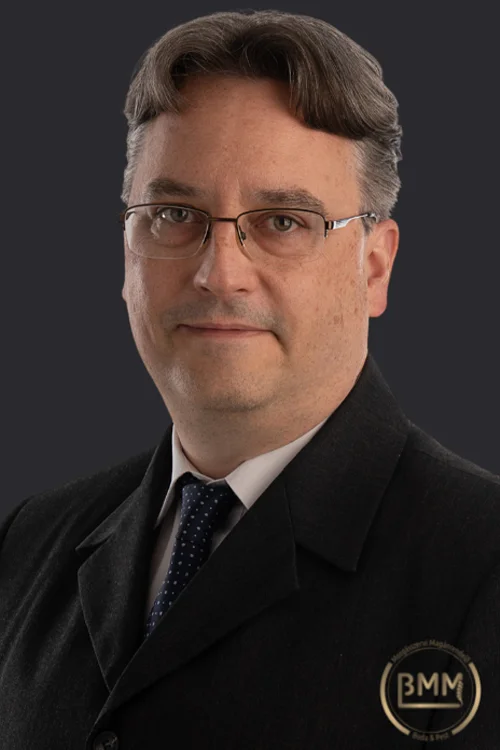
Dr. Gergely Holnapy PhD
Orthopaedic traumatologist, assistant professor, robotic surgeon
Dr. Gergely Holnapy PhD
„I try to approach patients with maximum knowledge and maximum courtesy.”
Although he also does adult orthopaedics, the practice here is mainly for children. According to her, many children are brought in for examination when parents are unsure about some developmental change. They want to confirm from an orthopaedic professional's perspective whether this is normal or abnormal growth or change. Fortunately, these changes are more often in their normal direction than abnormal.
Dr. Gergely Holnapy was already oriented towards the manual professions during his university studies, and as a fourth-year student he wrote a rector's proposal on a treatment method used in paediatric orthopaedics. From there it was a straight road to the present day, full of conferences and fellowships in this country, in Europe and abroad. „I was at Semmelweis University when the doors opened to travel more easily, not only for tourism but also for professional reasons. If you want to go in a certain direction, to get more information, you need to experience other treatment approaches, other therapies, so that you can develop your own method. That's why the experience gained abroad and at home was extremely important.”
Outside of work, he loves cycling for sport and skiing in winter. „Exercise is part of my life, although in this hectic world it is not easy to find time to relax. However, in the rush of everyday life, taking care of a patient becomes even more precious.” - says Dr Gergely Holnapy.
Dr. Péter Doszkocs
Orthopaedic traumatologist, hip and knee surgeon, lower limb specialist, robotic surgeon
Dr. Péter Doszkocs
My motto: diligence, precision, patient-centredness!
Following family traditions, Dr. Péter Doszkocs developed his manual skills at a technical secondary school in Szeged, and then obtained his medical degree from the University of Szeged in 2004. For him, a combination of orthopaedics and traumatology is an ideal profession, which he pursues as a vocation and a passion.
12 years of experience in Germany in the care of accident victims, with a special focus on hip and knee replacements. He qualified as a specialist in Karlsruhe, worked for five years with robotic surgery and navigation techniques, and then became head of the orthopaedic department at the Freudenstadt Clinic as a senior physician.
Her work focuses on detailed diagnostics and treatment planning with the patient to ensure that the patient has a clear understanding of their condition and the proposed intervention. He performs hip replacement implants from a minimally invasive „trouser pocket approach”, preserving the integrity of the gluteus maximus. He strives for the utmost precision using modern computer-aided design and robotically guided surgery.
Its services include total and partial knee replacement implantation, axis correction, cartilage grafting, cruciate ligament reconstruction, arthroscopic procedures and joint-protective injections (e.g. hyaluronic acid), all aimed at rapid rehabilitation and long-term quality of life improvement.
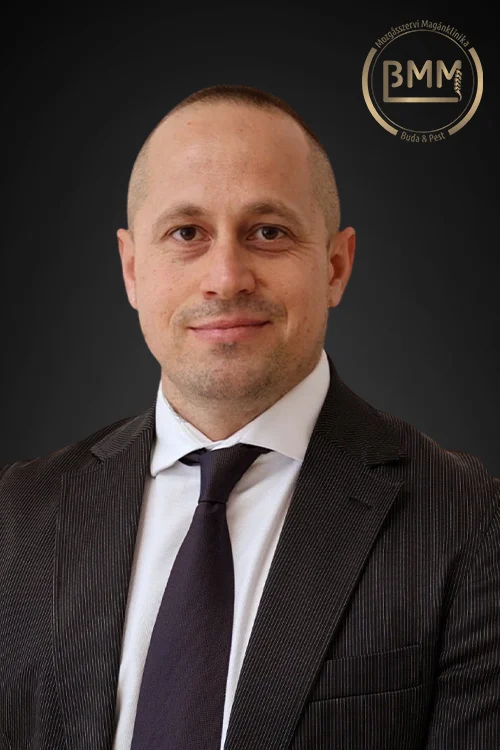
Dr. János Bartha
Orthopaedic-traumatologist, robotic surgeon
Dr. János Bartha
A doctor should treat his patients as he would treat himself as a patient or his beloved parents and children. This includes everything from humanity to precise treatment.
My belief is that healing is not only about the body, but also about is about understanding the whole of man. In my work, I strive to ensure that for each patient the precise diagnosis and personalised treatment to achieve real, functional healing - together.
Since childhood, my curious nature has driven me forward: even as a child I questioned fairy tales when I didn't understand something. The „why?” and „how?” questions have always been on my mind, and this strong inner urge - coupled with my perseverance - has constantly deepened my thirst for knowledge. When I was sixteen, I decided, to this interest, the my creativity and inner strength I use to cure the sick.
My medical studies at the Medical University of Târgu Mures where I felt from an early age that the orthopaedics and traumatology is my path. This specialisation combines continuous creative thinking, good manual dexterity, precision, spatial vision and quick, decisive decision-making - all this in a dynamic and challenging environment in which I have always found myself.
I worked in Germany for 13 years, where high professional standards, I have performed interventions in both orthopaedics and traumatology. in 2018 I qualified as a medical specialist and then In 2019, I was appointed Chief Medical Officer. Of which 11 year in the same hospital Retrieved from, 6 years as a general practitioner.
Full description of the surgery with preparation and rehabilitation
Your health is our priority and we want your surgery to go well. A few important points to be aware of, which will contribute to a successful surgery and reduce possible complications:
Step 1
Be healthy before surgery!
Blood glucose
You will need to have a blood sugar test at the planning stage. If you are already diagnosed with diabetes, please check your blood glucose regularly in the weeks before surgery. Well-controlled blood sugar significantly reduces the risk of wound infection. We will also measure your blood glucose levels before surgery and if they are higher than 6.7 mmol/l, we may have to postpone the operation.
Smoking
If you smoke, please do not smoke in the month before your operation. Smoking impairs microcirculation, which can lead to wound healing problems, so it is important for your own safety that you do not smoke at this time. You will not be able to smoke for at least 24 hours after the operation.
Overweight
Being overweight is bad for your health. Hip replacement surgery is only performed below a BMI (body mass index) of 35. If your BMI is higher than this, we can offer you help to lose weight.
Catering
It is very important to eat right: eat plenty of fresh, colourful vegetables and fruit, and get enough protein (meat, eggs, fish). Reduce unnecessary sugar and carbohydrate intake (e.g. white flour foods, pasta, sugary snacks, soft drinks). A balanced diet also contributes to wound healing and regeneration. Please also pay attention to your fluid intake (drink plenty of water if possible).
The skin
It is very important that your skin is intact before surgery. Wounds, scratches and cuts increase the risk of wound infection. A wound in the surgical area will delay surgery.
Oral and dental hygiene
It is important to have your teeth checked by a dentist before surgery. A bad tooth can lead to complications as a cavity, so treating this before surgery is essential.
Plan your surgery: what to do before and after
Be prepared, plan your surgery period!
Think about who will be your “Helper” during this period, who could be a close friend or family member. Your Helper will be the person who:
- Accompany you for pre-operative tests
- On the day of surgery, you will be admitted to hospital
- Take home on the day of issue
- Helps you at home
- Replaces the medicines you need
- Support, encouragement and support during the weeks of recovery
The presence of a Facilitator will greatly assist your successful preparation before surgery and your rehabilitation after surgery. With your help, you can join the ranks of the recovered, pain-free.
Step 2
Getting started -
The last visit to the surgery
Once you and your doctor have decided on the surgery, you can start preparing for it.
- Obtaining the imaging studies/x-rays needed for preoperative planning. These are used by the surgeon to plan the operation.
- Laboratory tests, blood tests: these are done at the hospital where the operation is performed as part of the investigation.
- Specialist findings: during the pre-operative assessment, the anaesthetist will determine what previous or current specialist tests are required.
- If possible, the Facilitator should accompany you to your last office visit.
Step 3
Pre-operative hospital tests
Before the operation, you will have a compulsory check-up at the operating hospital, which usually takes a full morning.
- You will be given detailed information on what to do before the operation.
- Laboratory tests
- Bacteriological screening (nasal and throat swabs)
- Anaesthetic examination
- A dental check-up is also carried out
- You will be prescribed the anticoagulant and painkillers you need, and will be given detailed information on how to use them.
Please also ensure that you pay your share of the surgery costs.
Step 4
The day of the operation
You arrive at the hospital on the morning of the day of your operation. Do not eat anything that day! You may drink as instructed by the anaesthetist.
On arrival, you will take your bed in the ward. The nurses will help you settle in and unpack. Please take a shower before the operation.
You will be seen in the ward by your surgeon before the operation. He or she will explain the procedure once again, draw the laterality with the mark on your skin, and discuss the post-operative care with you.
Nurses take blood pressure, and diabetics check their blood sugar levels.
Before the operation, a bran tube is inserted into a vein in your forearm, through which you will receive fluid and antibiotics.
You can sleep during the operation. Please let your anaesthetist know if you wish to do so.
The surgical team performs the hip replacement surgery.
After surgery, you will be returned to the ward where your blood pressure, pulse and oxygen saturation will be monitored.
If you are well, you can drink fluids after surgery and then be given solid food as directed by the nurses.
The surgeon who performs the operation will visit you in the ward and tell you how the operation went.
You will be checked by nurses several times during the day. They will help you with your meals.
If you are very well, you can get up with help, you can take a few steps with an assistive device.
Step 5
Going inside, going home
You will spend 1 night in hospital after the operation.
The next day after surgery, you will have a medical visit in the morning to have your wound checked. The wound will be covered with a waterproof dressing, so you will be able to shower and your dressing will not get wet.
With the help of a physiotherapist, you will be woken up, be able to walk with the protection of 2 elbow crutches, taught how to use the elbow crutches safely, and how to get on and off the bed.
Your operated limb is placed on a passive knee machine (CPM), which automatically exercises the affected knee.
In the event of post-operative pain, nurses will give you a painkiller infusion or tablets. This is not necessary in most cases, as the wound and the surgical site are treated and infiltrated with painkillers and anti-bleeding injections to close the operation.
A be able to move, eat, drink and wash independently by the time you go home. Your return journey will be agreed with you in advance.
In a normal car, you can travel home sitting in the right front seat. When getting in and out of the car, your Helper should assist you in sitting down and standing up, and turning your legs in and out at the same time.
Step 6
Home
A few tips for home
- Exercise at home, get as much exercise as possible. You can put weight on your operated side with the use of an assistive device.
- Be sure to follow the instructions given to you by your doctor and physiotherapist regarding movement, gymnastics and knee flexion.
DO NOT FELEDJE! Regular practice of the physiotherapy exercises you have learned is one of the keys to a safe recovery. Exercise helps blood circulation, which is good for your hips and wound healing.
Frequently asked questions
If you play sport regularly, are young and have a feeling of instability, an anterior cruciate ligament replacement is strongly recommended. Failure to do so will accelerate the wear and tear of the cartilage in the knee joint and may lead to premature osteoarthritis.
If you do not play sports, do not do heavy physical work and do not feel unstable or have a stable gait, you should consider and discuss with your surgeon whether an anterior cruciate ligament replacement is necessary.
Depending on your body mass index (BMI = body weight in kg/height in metres squared), your surgeon may recommend weight loss before surgery.
Patients with a BMI of over 35 can expect a longer recovery time and a significantly increased risk of complications (infection, wound healing, dyspnoea, difficulty walking, thrombosis, blood loss, pulmonary embolism).
As with any surgery, anterior cruciate ligament replacement can have unwanted complications. They range from about 0.5 to 1.5% all over the world, including in our country. These include blood loss, thrombosis, embolism, wound healing, infections, temporary or permanent muscle paralysis, temporary or permanent loss of sensation.
The surgeon and the whole surgical team do their best to avoid these.
Please be our partner in fully complying with all our requests and instructions to you to minimise the risk of complications.
After an anterior cruciate ligament replacement, patients usually stay in hospital for 1 night. During this time, they learn how to safely use assistive devices to get around, get on and off the bed, clean themselves and learn the basics of post-operative physiotherapy.
With an anatomical anterior cruciate ligament replacement, full anterior stability is achieved. Thanks to careful physiotherapy and the instructions followed, you will be able to play all the sports you did before for 6-8 months after the operation.
Wound pain may occur after surgery. To reduce this, the surgeon will infiltrate the wound, surrounding muscles, muscle fascia and subcutaneous tissue with painkillers and haemostatic injections to close the operation.
Wound pain is different for each patient. Some do not experience it at all, others experience it more intensely. In this case, the nurses will give you painkillers or an infusion.
The affected knee joint should be iced daily. Physiotherapy may be painful at first, so it is advisable to take painkillers before the exercise.
In an anatomical anterior cruciate ligament replacement, the hole in the femur is placed at the original attachment point. This is achieved by using the small hole made on the inside of the knee for aiming and by using a special aiming device to determine the position of the hole. Biomechanically, the anterior cruciate ligament placed on the anatomical point is most similar to the anterior cruciate ligament.
The wound on the inner side of the leg is about 5 cm long. In addition, 2 x 3 wounds of 0.5-1 cm are made around the knee. The scars reach their final state 1 year after the operation.
Anterior cruciate ligament replacement surgery is usually performed under spinal anaesthesia.
If you have a spinal anaesthetic, you can “sleep” during the operation if you want to, so you don't hear the sounds of the operation - but this is not deep sleep.
In some cases, or if the anaesthetist is unable to perform the anaesthesia, the patient is anaesthetised and it is necessary to come to the surgery on an empty stomach.
For the first 3-4 days after the operation, the patient can walk with the help of two elbow crutches. After 3-4 days, the patient can be gradually taken off the aids.
For the first 4 weeks, patients are allowed to bend their knees between 0-90 degrees.
After 6 weeks, a follow-up test is recommended.
In addition to regular physiotherapy, we allow cycling very soon (within weeks) and straight-line running after 10 weeks.
After 12 weeks, the patient is invited for a follow-up examination. Until then, we recommend intensive guided physiotherapy 2-3 times a week, by which time full muscle strength and range of motion will have returned.
For 6 to 8 months, we do not recommend sports or forms of exercise that involve sudden changes in direction.
Yes, pre-operative physiotherapy is absolutely recommended. This contributes greatly to the success of the operation and makes post-operative exercise easier. Good musculature and full range of motion of the knee are essential for successful surgery.
A waterproof dressing is applied on the 1st day after the operation. The next day, with the help of a physiotherapist, you will get up and learn to move around independently. You will shower in the bath in the way you have learned. The bandage is waterproof, so you can get wet and ensure that the wound heals without any problems.
The patient usually spends the day of the operation in bed, and the next morning they get up with the help of a physiotherapist and learn to move independently with the help of an assistive device. He or she can then get up and walk around at any time.
In exceptional cases, if your vital signs are good and you feel physically well, you can get up the same day with the help of a physiotherapist.
After the 4th week after the operation, when you can comfortably move your knee between 0-90 degrees, driving is allowed.
In the case of left knee surgery, if the patient has an automatic transmission car, they can drive after the suture removal (days 8-10).
The time it takes to return to work depends to a large extent on your job and working conditions. A person who works sitting in an office can go back to work after the 3rd week, if they have access to work.
If your work requires prolonged standing, high physical activity is not recommended until 3 months after surgery.
No, it is not necessary to take antibiotics.
After the six-monthly check-up, if your surgeon has found everything to be in order and has cleared you for full exercise, you will not need to have further check-ups.
If you have any questions about anterior cruciate ligament replacement surgery, feel free to contact us!