Ultrasound therapy
Ultrasound therapy, also known as therapeutic ultrasound or focused ultrasound, is a non-invasive treatment method used to relieve pain, improve circulation and promote tissue healing.
Ultrasound warms, relaxes and makes muscles and tendons more flexible. It is recommended before physiotherapy treatment, as it significantly reduces the tension in the soft tissues, thus reducing pain during exercise.
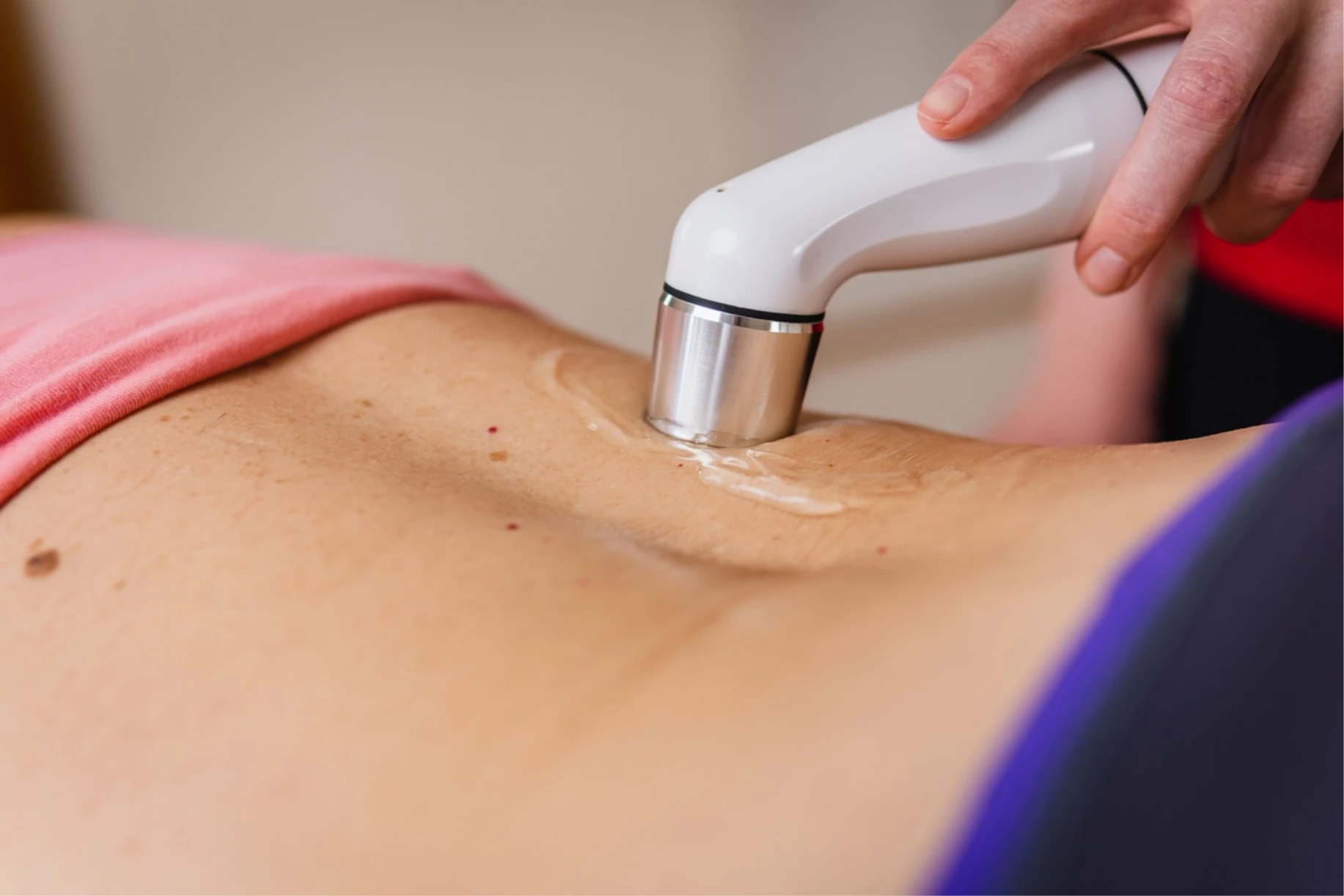
How ultrasound works
Inside the ultrasound machines is a small crystal. When an electric charge is applied to this crystal, it vibrates rapidly, piezoelectric waves (electrical charge that accumulates in some solid materials). These waves are emitted from the ultrasonic transducer as ultrasound waves are leaving. During the treatment, the ultrasound wave penetrates damaged tissue, where it increases blood flow and cavitation. The process where energy causes microscopic gas bubbles around tissues to rapidly expand and contract is called cavitation. Literature suggests that the expansion and contraction of bubbles helps speed up cellular processes and heal damaged tissue faster.
Using ultrasound
Ultrasound therapy uses a transducer (transducer), which is a transducer head similar to a microphone that can generate sound waves. The therapist applies a small amount of gel to the area to be treated, then the transducer, which is attached to the ultrasound machine, is placed on the gel and moved in small circles by the practitioner. The therapist adjusts the device to deliver a sound wave of the required depth and intensity. The ultrasound treatment does not cause any discomfort or pain. The ultrasound wave loosens the cell membranes, so that different we can deliver drugs, active substances to the tissues, their absorption will be more efficient.
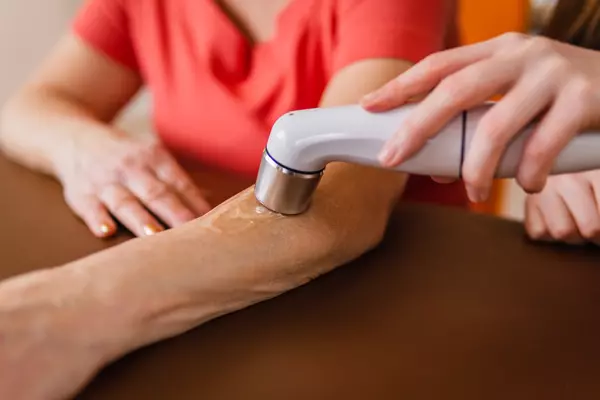
When is ultrasound therapy recommended?
In general, ultrasound therapy can be used for any soft tissue injury: it has analgesic, anti-inflammatory and. Specialists can use ultrasound to treat musculoskeletal disorders such as bursitis (inflammation of fluid-filled sacs along the joints), tendonitis, muscle strains and tears, frozen shoulder, muscle sprains and ligament injuries, or joint contractures. A common complementary therapeutic method for low back pain, neck pain, rotator cuff tear, knee meniscus tear or ankle sprain. Excellent in combination with shockwave therapy, massage gun therapy, fascia release manual therapy, it significantly reduces the after-effects of treatment.
When is ultrasound therapy not recommended?
There are several situations where ultrasound therapy is not recommended or should be considered. The use of ultrasound is not recommended Pregnancy around the uterus, and malignant tumours and around cancerous lesions. Prohibited for use in damaged or infected skin for skin rashes or eczema. If the patient pacemaker it is not recommended to use this type of treatment on the chest area of the body, as in these cases it may affect the functioning of the pacemaker. A for therapists have to be careful, they are so vascular diseases in cases such as deep vein thrombosis, embolism, severe atherosclerosis and certain ischaemic diseases. In this case, cells may die because the blood supply cannot keep up with the increased metabolic demands of the tissues affected by the treatment. Its use is prohibited after spinal operations such as laminectomy and in special situations where an anaesthetic has been used in the area to be treated. Its use should be considered for patients who regularly taking blood thinners.
Daganatos kórelőzmény esetén csak onkológus javaslatával végezhető.

Call us

Online booking