Movement development in childhood
No two children are the same, so it's not a big problem if your child or baby doesn't start turning, crawling or climbing at the „big book” time. There is no need to despair over a delay of 1-2 weeks or even 1-2 months, there can be very big differences and variations between healthy children.

Tímea Szentpétery
Physiotherapist
Development of movement
Key stages in the development of movement (for information)
- 0 - 2 months of age: Likes to lie on his tummy and back, limbs bent, hands in fists, head turned both ways on his tummy and back, head raised from about 6 weeks of age on his tummy. Mainly reflex movements.
- 3 months of age: Can raise head to vertical position when standing on forearm, raises head when sitting, holds object in hand, looks at it, lifts it to mouth.
- 4 - 5 months of age: Can hold himself in a flat stance, hands open, turns from back to side symmetrically in both directions, plays with his feet
- 6 - 7 months of age: Turns from back to belly and from belly to back in both directions.
- 8 - 9 months of age: alternating hand and foot, crawling regularly, standing on all fours - here „rocking”.
- 10 - 11 months of age: Regularly crawls, sits down, kneels up, and may stand up by holding on.
- 12 - 18 months of age: Stands up, walks sideways past furniture, takes two steps independently, walks independently.
Motor development in children
There are many factors that influence children's motor development, but not limited to, for example, environment, family background, physical endowments and neurological maturity. It is important to take into account the corrected age of premature babies in terms of the stages of motor development.
In the first nine months, your baby will have to learn to overcome gravity, explore his or her body and adapt to a new, different environment and diet. These are initially more reflexive movements, which later become more controlled, voluntary movements.
Sometimes children fall behind in development, it's worth helping a little with this. Our aim is not to rush, but to for the correct development of movement to create the necessary conditions and to perform the movements correctly and accurately.
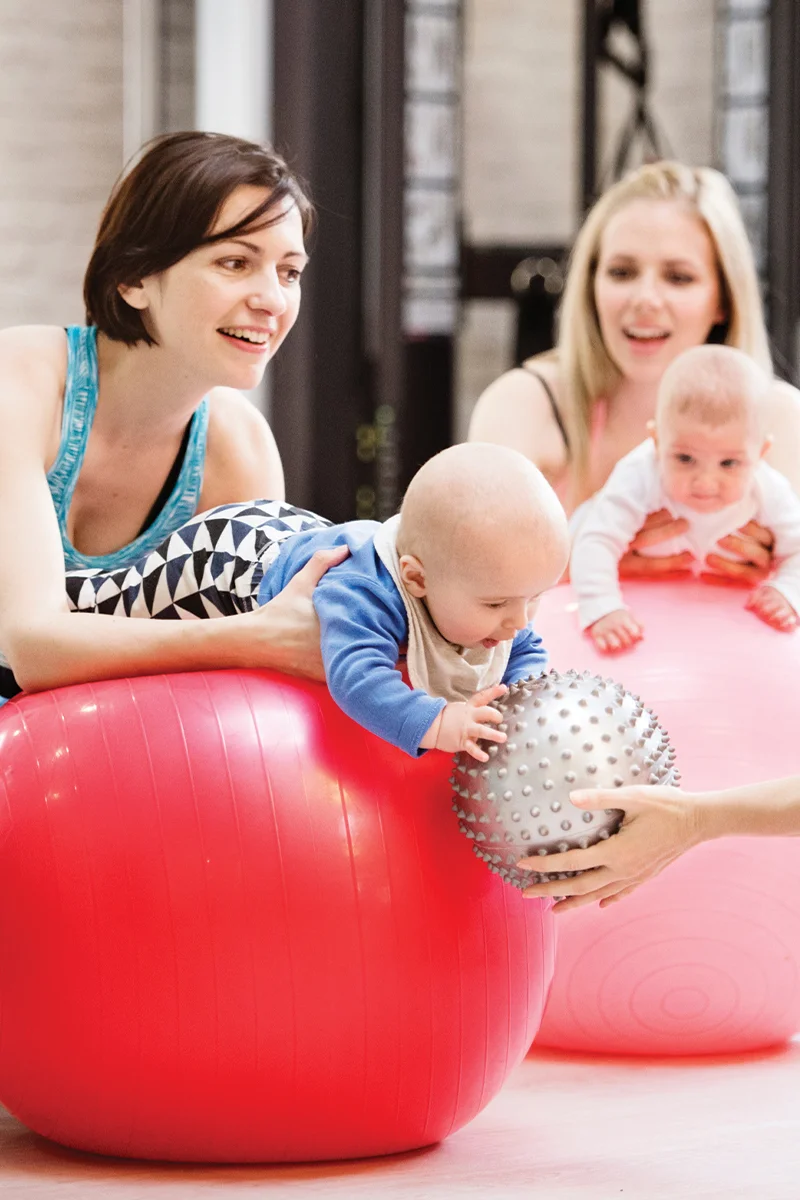
Recovery from movement development disorder
Of course, young children's development is not just about developing movement. During this period, there is a lot of development of the intellect and cognitive functions, nervous system, communication, as well as the social behaviour. However, these skills are also developed through movement, which is why it is very important that movement is developed in the right way.
For babies and young children who are stunted in their motor development, it is important to find the cause and as soon as possible restore. Movement development problems are most often caused by a dysfunction of the muscle tone control and motor centre of the brain. Each kinesitherapy method can work on different causes in a more focused way, but globally we can work on almost all areas at once. Whether it is massage, specific passive re-education, active exercises, manual techniques, sensory therapy, all with the same goal of restoring, regulating, developing, healing, correcting and stimulating, thereby establishing correct muscle tone and function, achieving full range of motion in the joints and developing the nervous system.
László Anita
Physiotherapist
When and in which cases is movement development recommended?
- If the movement phases start with difficulty or in a strange way, they are delayed.
- He starts to do large movements and stairs in the wrong order.
- It keeps itself very tight and can only relax during sleep. Or the opposite, the baby's muscles are flabby.
- There's a preferred side, you just look in that direction, turn your head.
- He has difficulty keeping his head on his stomach, he cannot turn it from side to side and put it on the ground.
- He doesn't reach for objects or with only one arm.
- It turns with difficulty or not at all, or only in one direction.
- In the forearm position, he tucks his arms under himself, often flying.
- He holds his hands in a tight fist in a palm rest.
- Asymmetric crawling or climbing.
- He can't sit steadily, tipping over a lot.
- Always stands up with only one leg, putting more weight on one side of the lower limb.
- He stumbles a lot, falls a lot.
- His walking, running, movements are clumsy, timid.
- Assisting the motor development of healthy infants and young children who are developing more slowly than average in large movements.
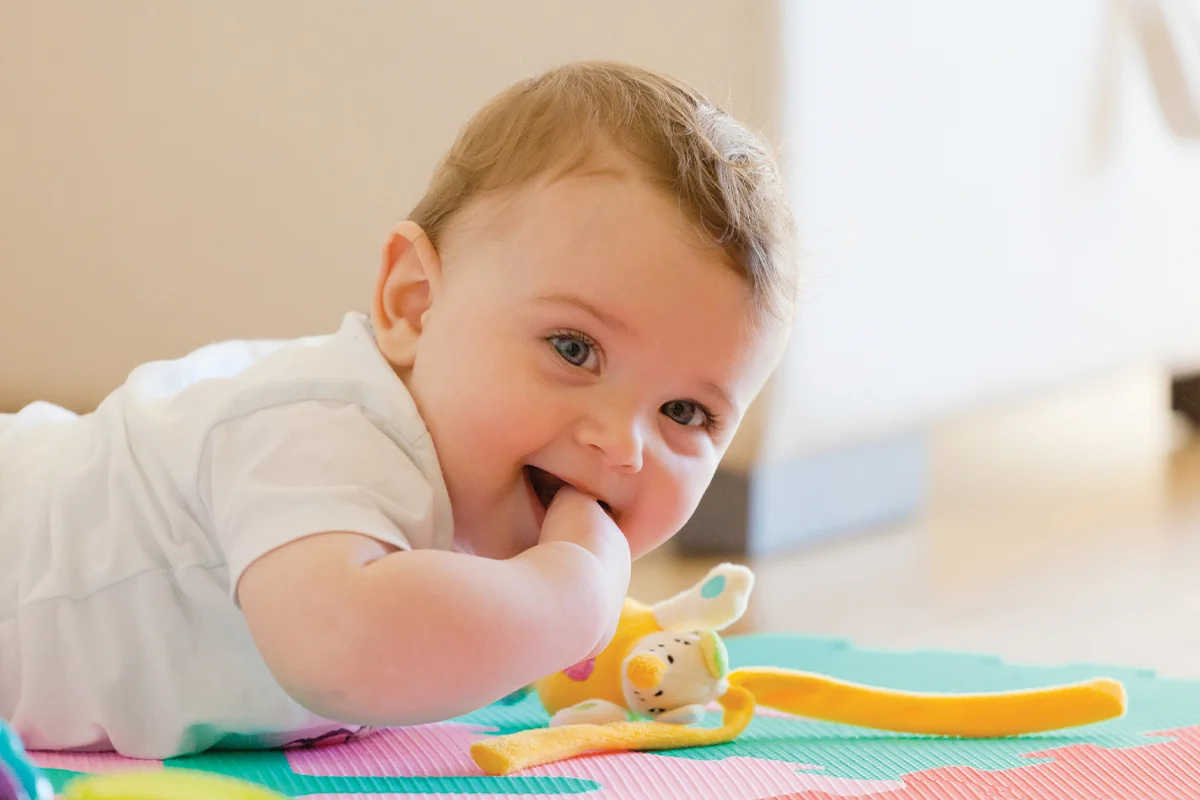
Starting physiotherapy
The infant and toddler gymnastics it is worth starting as early as possible, even from newborn age, to achieve better results. It is important to address the minimal differences and to improve the quality of the different movement patterns and the child's development in other areas, such as motor coordination, spatial orientation, correct static and dynamic posture, equal weight distribution, appropriate foot loading and cognitive functions. As parents, we often fail to notice minor or major differences in our children, so it is often a good idea to consult a specialist if you are unsure.

Call us

Online booking