Taping technique
What is kinezio tape?
Patented in the 1970s by Dr Kenso Kase, a Japanese doctor-chiropractor, Flexible made of fabric with a wavy acrylic adhesive layer on the back cotton tape. The kinesio patch free of chemical active substances. With the right application technique, helps the body's self-healing processes mechanically, without side effects. Because of its elasticity and thickness, it is similar to our skin and moves with it, so daily activity can be carried out without restriction. It is breathable and water-permeable (you can bathe in it).
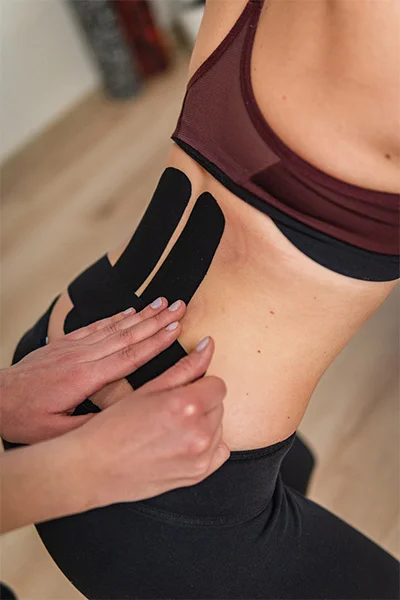
What is the taping technique and how does it work?
The mechanism of action of kinesio tape is essentially determined by the physical properties of the patch and the technique of application and adhesion. Due to its elasticity, it can be stretched up to 150-170% in length. It „lifts” the taped skin surface, causing decompression (pressure release) on the skin and underlying connective tissue. It opens the capillaries - arteries, veins - thus increasing blood circulation. The increase in blood circulation promotes healing. So locally, it is also effective in the treatment of oedemas by helping micro and lymphatic circulation (e.g. acute injuries).
In addition, the nociceptors (pain receptors) located in the connective tissue respond well to these decompression forces: the decrease in pressure reduces the stimulation of the pain receptors, so local pain relief available at.
It has an impact on the joint-muscle-tendon-nerve system relationship. Stabilises the joints by stimulating the proprioceptors (position-sensing receptors) around the joints, the and the muscles are properly distributed in tone, thereby increasing the efficiency of their work. It reduces the strain on damaged tissues.
Use of taping technique
Qualified therapist patient's complaints, functional examination/testing, targeting (what we are mainly trying to do: relieve pain; mobilise or stabilise; treat a muscle, joint or fascia) decide how to apply the kineziotape, based on the technique you use. To achieve the right effect it is important that only a professional fits it. It is important to note, however, that „tape-laying” is not used as a stand-alone therapy but as a complement to movement therapy.
- Exists muscle technology: which, in addition to reducing pain, aims to relax the muscles and normalise their tone.
- The tape technology: soothes pain, relieves pressure and stabilises.
- The corrective technique: A joint (e.g. positioning the kneecap) or a soft tissue can be corrected.
- The lyrotechnics: increases the flow of lymph fluid to reduce oedema and inflammation (bruising, haematoma/bruising).
- Fascia technique: Effective relaxation of painful muscle bunches, muscle blisters (fasciae)
For what kind of problem do we use the taping technique?
The kinezio tape its uses, indications:
- Pain, inflammation and oedema reduction
- Muscle contractions, muscle strain, sports injury, sprain
- Partial muscle and ligament rupture
- Helping joints to function
- Spine/disc problems
- Tennis elbow
- Knee pain, arthritis
- Achilles tendon injury, inflammation
- Spur , heel pain
- Tendonitis Management
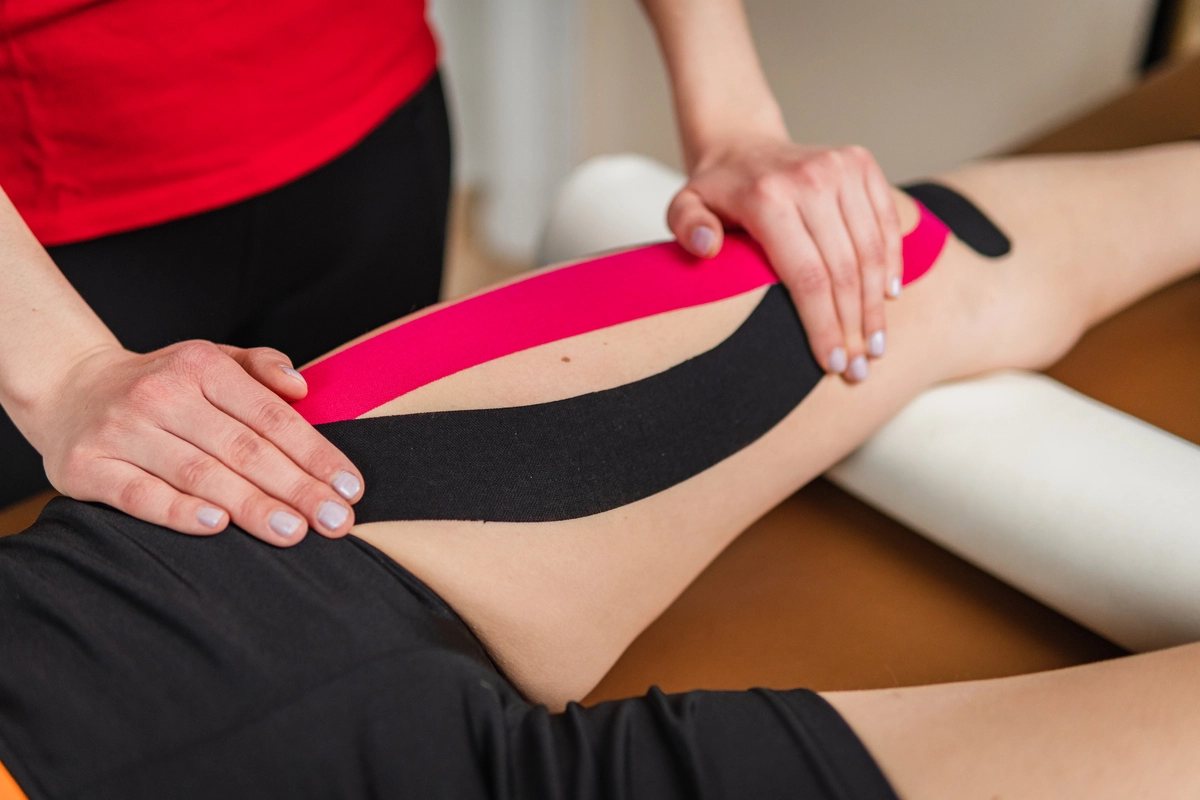
Contraindications to the application of kinezio tape:
- For unhealed or open wounds/scars
- Burn injuries
- Psoriasis, eczema, rashes, ”suspicious” moles
- Parchment-like dry skin
- In the first trimester of pregnancy around the sacrum
- For malignant tumours
- Acrylic allergy
If you experience itching or hives after application, you may be allergic to the acrylic adhesive on the kinezio patch, in which case it should be removed from the skin
Our physiotherapists

Dorottya Lilla Sándor
Physiotherapist

Major Rita
Physiotherapist

Tímea Szentpétery
Physiotherapist

Krisztina Tatai
Physiotherapist

Call us

Online booking