Post-surgery physiotherapy
Physical therapy after hip replacement surgery
The surgery previous period it is of paramount importance to relieve existing restrictions of movement and strengthen the muscles. At this stage, the patient learns the exercises of intravenous gymnastics and the correct use of the assistive devices. This will make it much easier to cope with the difficulties after surgery.
In the early post-operative period, it is important to reduce pain and swelling. The operated limb is always padded and wrapped up to the thigh. It is necessary to ice the operated limb several times a day.
Physiotherapist help the patient learn about the so-called forbidden moves. If these movements are not followed, the prosthesis may dislocate (i.e. the head of the femur is removed from the joint socket). Prohibited movements: extended leg raising, rotation of the operated limb in and out, sliding beyond the midline and hip flexion beyond 90 degrees.
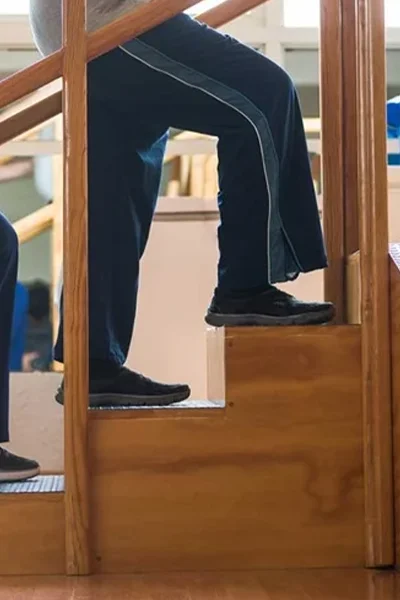
Starting physiotherapy
Gentle, strengthening physiotherapy begins, taking into account the avoidance of forbidden movements. With the help of a physiotherapist, the patient gets on his/her feet, practising correct gait. The weight bearing capacity of the operated limb is always determined by the surgeon, depending on the type of prosthesis and the surgical technique.
Between the 2nd and 6th week after surgery, more complex exercises are added to the physiotherapy. Gradually, the removal of the assistive device is started according to the doctor's instructions. Depending on the patient's condition, indoor cycling may be started, initially without resistance for about 10 to 15 minutes.
Between 6 - 12 weeks after the operation, functional training exercises can be started, which no longer focus only on strengthening the muscles around the operated hip, and swimming backstroke and speed swimming.
The composition of the exercise sequence is determined by the patient's condition and workload. The aim of the rehabilitation is to strengthen the muscles around the hips and the trunk muscles, to relieve the restrictions of movement and to develop a correct gait pattern.
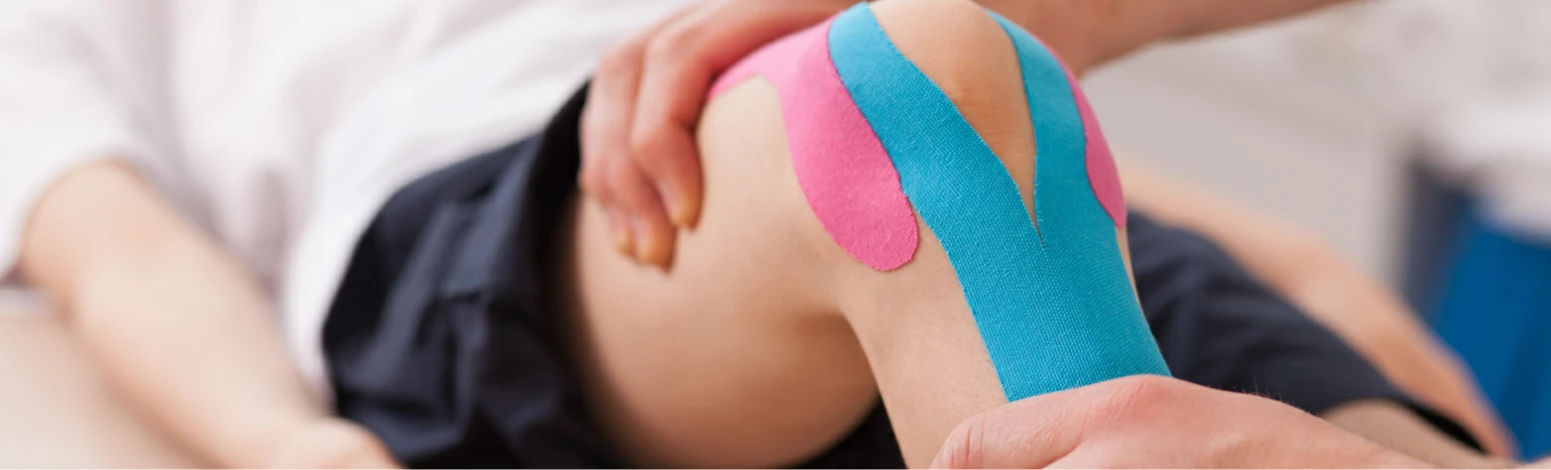
Post-operative physiotherapy can be complemented by a number of additional treatments: TAPE treatment, flossing, soft tissue manual therapies, lymphedema therapy if necessary. Rehabilitation lasts 6 to 12 months, depending on the individual.
Physical therapy after knee replacement surgery
The surgery it is of paramount importance to relieve any existing restrictions of movement and to strengthen the muscles stabilising the knee joint. Training in the use of various aids is recommended. This will make it much easier for the patient to start post-operative rehabilitation.
After the operation, the operated limb can be loaded according to the specialist's instructions, depending on the type of prosthesis. With the help of a physiotherapist practising the correct way of walking. The duration of the period of unloading or partial unloading is always determined by the operating doctor.
During this period, a gentle, gradual movement of the joint begins. This can be done with a passive knee machine or active physiotherapy exercises. Achieving full stretching as soon as possible is important. The bending is rotated to the point of pain.
In the initial period after surgery, the knee joint is swollen, which can be controlled by icing, bracing and shelving.
The physiotherapy exercises initially focus on the muscles surrounding the hip and knee joints, and then, as the full body weight is applied to the limb, we move on to more complex functional training exercises, where we also train the core muscles. The rehabilitation training is tailored to the patient's age and weight-bearing capacity.
After the period of weight-bearing, the aids can be gradually phased out (approximately between 6 and 12 weeks after surgery). As long as the overall gait pattern is not satisfactory - i.e. a limp is observed - it is advisable to use the aid until it is no longer needed. A increase the duration of walks every day, it always depends on the individual workload.
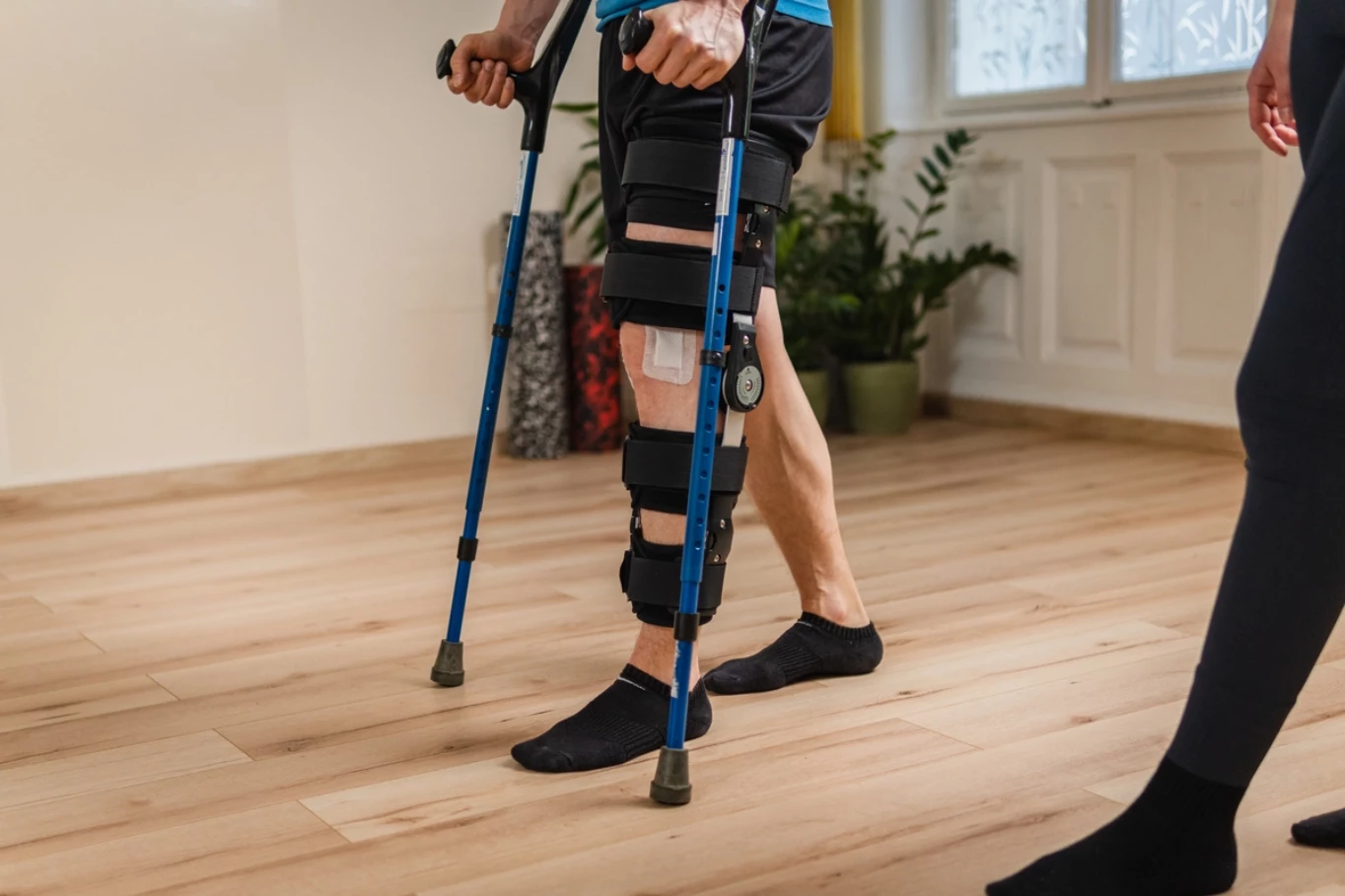
The importance of exercise and physiotherapy
In addition to targeted physiotherapy exercises indoor cycling accelerates muscle conditioning, and swimming (fast/backstroke) is also a great way to strengthen once the wound has healed and the patient is able to walk unaided.
The effectiveness of rehabilitation is influenced by many factors: the pre-operative knee joint motion restriction, the condition of the muscles, the early post-operative period (whether there was a wound infection), the patient motivation, regular practice, therapist's work, individual talents.
Post-operative physiotherapy can be accelerated by a number of complementary therapies: TAPE, flossing, manual therapies. Rehabilitation can last between 3 and 12 months, depending on individual circumstances.
Major Rita
Physiotherapist
Anterior cruciate ligament of the knee - rehabilitation after LCA tear
Immediately after the injury, our aim is to reduce pain and swelling. If surgery is required, it is of paramount importance to regain full range of motion as soon as possible and to develop the correct gait pattern. Gradually strengthen the muscles that stabilise the knee joint. By taking these aspects into account, post-operative physiotherapy and rehabilitation will be much more effective.
The rehabilitation protocol varies depending on the surgical technique. The weight-bearing capacity of the operated limb and the range of motion - in which the knee joint can move - and any prohibited movements are always determined by the operating specialist.
In the early stages, our aim is to reduce pain and swelling as soon as possible: by icing, shelving, woodcutting. Taking into account the weight-bearing capacity of the operated limb, we start with walking with assistive devices. Following medical instructions, we gradually increase the range of motion of the joint, strive to achieve full extension as soon as possible, and strengthen the stabilising muscles.
After leaving an assistive device
Once the operated limb is able to bear the full weight of the body, the prohibitions are lifted, auxiliaries can be omitted (4-6 weeks after surgery), we can gradually move on to more complex physiotherapy exercises, for functional training exercises, we can use various unstable equipment (dynair cushion, FIT BALL, BOSU, Multi Roll).
When setting up the therapy programme, we always take into account the patient's condition and individual capacity. The benefits of indoor cycling, swimming (fast / backstroke). A well-constructed rehabilitation is extremely important as it significantly reduces the risk of re-injury. The duration is min. 6 months, but this can be longer, depending on individual circumstances.
The effectiveness of rehabilitation is influenced by several factors: the pre-operative knee joint motion restriction, the condition of the muscles, the course of the early post-operative period (whether there was a wound infection), the patient motivation, regular exercise, the work of the therapist, individual abilities.
Mosaic plastic surgery post-operative rehabilitation
In the early post-operative period, our aim is to relieve pain and reduce swelling. The operated limb needs to be upholstered, iced several times a day, and dressed with a bandage. Once the operated limb is completely unloaded, the patient can start to walk with the aid of an assistive device. The use of crutches is essential for at least 6 weeks after the operation. Guided physiotherapy starts with the help of a physiotherapist. Our aim is to strengthen and stretch the muscles around the hips and knee joint. Full knee joint range of motion should be achieved by about the 6th week, which may be influenced by individual ability. If necessary, a selective stimulation current device can be used to stimulate the weaker muscles.
From week 6 we move to the increasingly difficult, complex exercises, devices with unstable surfaces (dynair, BOSU, multiroll), proprioceptive training begins. By about the 8th week, the operated limb is able to bear the full weight of the body, which may be influenced by individual circumstances. Start of indoor cycling, initially without resistance, for short periods.
From week 12, you can start gym strengthening based on rehabilitation exercises.
Slow jogging and running can be started between 4 and 6 months, taking into account the patient's current condition.
Post-operative physiotherapy can be complemented by a number of therapies: TAPE, flossing, soft tissue manual therapies.
The rehabilitation exercises are always tailored to the patient's current condition and complaints.
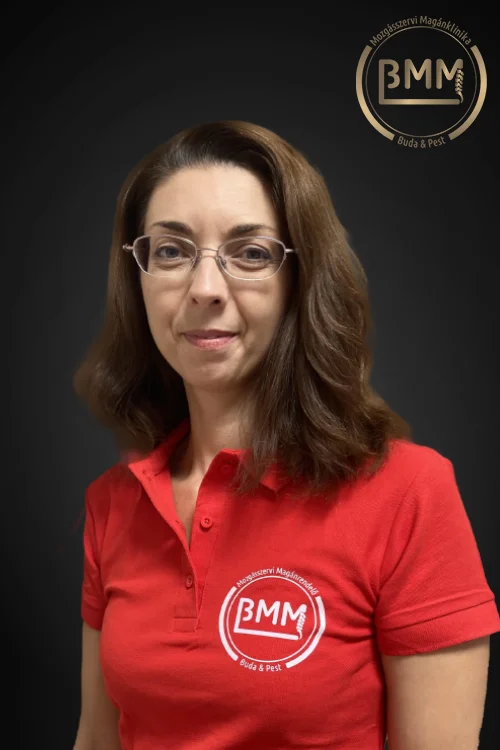
Tímea Szentpétery
Physiotherapist
Physical therapy and rehabilitation after MPFL ligament reconstruction surgery
The patellofemoral ligament (MPFL) is an important stabilizer of the kneecap. In its absence, instability of the patella is observed in the extended position of the knee joint. If the instability of the patella cannot be reduced by strengthening the inner quadriceps (thigh extensor muscle) and there is no anatomical obstruction, the ligament is replaced.
The in the pre-operative period, it is of paramount importance to relieve existing restrictions in movement, targeted muscle strengthening: inner quadriceps, gluteal muscles.
Our aim in the early post-operative period is to relieve pain and reduce swelling. It is necessary to scaling, icing, shelving of the operated limb. You will be trained in venous gymnastics to increase circulation. It is important to „activate” the inner fibre of the quadriceps muscle by the so-called innervatios exercise. This is actually tensing the muscle without creating movement. The patient's knee joint is fixed with a brace that allows 90 degrees of flexion and 0 degrees of extension, which can be abandoned from about the 6th week. This is where the active and passive physiotherapy. The start of the practising correct walking with an assistive device, the operated limb can bear the full weight of the body.
From week 2, you can start surgical scar release. We are working to gradually restore the range of movement. We are making progress towards in physiotherapy towards more complex exercises, we use devices to ensure unstable surfaces to speed up recovery (dynair cushion, BOSU, multi roll).
Between about weeks 6 - 12 start indoor cycling, speed swimming. can start from week 12 onwards jogging. Always consult the operating specialist before returning to sport. During rehabilitation, it is particularly useful to application of kinezio TAPE, to stabilise the kneecap. In addition, several other therapies can be used: flossing, soft tissue manual therapy treatments.

Dorottya Lilla Sándor
Physiotherapist
Denks- post-operative rehabilitation
During the Denks operation, the bony attachment of the patellar tendon is relocated with the bone blocks to the appropriate place, where it is fixed with a screw. This prevents dislocation of the kneecap by changing the abnormal running of the hamstring muscle.
In the pre-operative period our goal is to achieve full range of motion, targeted muscle strengthening, teaching the use of assistive devices, and introducing rehabilitation elements.
The in the early post-operative period, we aim to relieve pain and reduce swelling. It is necessary to shelve, wood and ice the operated limb. The day after the operation, the patient starts to practise the correct use of the assistive device, the operated limb can be partially loaded. Full weight bearing becomes permissible between weeks 3 and 6.
In week 3, the physiotherapeutic gymnastics led by a physiotherapist will begin, aimed at strengthening and stretching the muscles around the hip and knee joints. Gradually, more complex and difficult exercises are introduced, always adapted to the patient's current condition.
Between weeks 6 - 12, you can start speed swimming. From week 12, gym strengthening based on rehabilitation exercises can be started. Swimming and return to sport can only be started with the permission of a specialist.
Avoid climbing, deep squats and climbing for long distances. Post-operative physiotherapy can be complemented by a number of therapies: TAPE, flossing, soft tissue treatments.
Physiotherapy and sport for a full recovery
From week 2, you can start surgical scar release. We are working to gradually restore the range of movement. We are making progress towards in physiotherapy towards more complex exercises, we use devices to ensure unstable surfaces to speed up recovery (dynair cushion, BOSU, multi roll).
Between about weeks 6 - 12 start indoor cycling, speed swimming. can start from week 12 onwards jogging. Always consult the operating specialist before returning to sport. During rehabilitation, it is particularly useful to kinezio TAPE application, to stabilise the kneecap. In addition, several other therapies can be used: flossing, soft tissue manual therapy treatments.

Call us

Online booking