Complex treatment of lymphoedema
Symptoms and treatment of lymphoedema
Lymphedema occurs when there is an abnormal build-up of fluid between tissues, also known as lymph. It can be congenital, which can cause the first complaint even in adulthood, but it can also be congenitally caused by having fewer lymph vessels/lymph nodes, which the body is unable to compensate for after a while. It can develop following any major injury or surgery where lymph nodes are damaged and the removal of lymph fluid is impaired.
Symptoms of lymphoedema:
- The limbs gradually become thicker, the shoes become tight, the trouser legs narrow.
- The head of the hand or foot thickens like a shoe, the fingers become sausage-like.
- Your oedematous limb may feel heavy, tight and painful.
- The swelling can make movement of the affected limbs limited or difficult.
What disease could be behind lymphoedema?
Lymphoedema can be caused by a number of conditions, such as:
- Heart failure
- Kidney failure
- Thyroid problems etc., which should always be investigated by a specialist!
If the complaints persist, it is advisable to consult a general practitioner or a specialist in internal medicine, who can make a clear diagnosis of lymphoedema based on the test results. It is important to know that this is a condition that cannot be eliminated, only can be maintained and future deterioration prevented!
What is complex lymphoedema treatment?
First of all: a specialist recommendation is essential for the complex treatment of lymphoedema, without this, therapy cannot be started! Complex lymphoedema treatment is highly effective in cases of post-traumatic oedema, leg ulcers due to venous insufficiency, and fluid accumulation due to tumours.
Elements of complex treatment of lymphoedema:
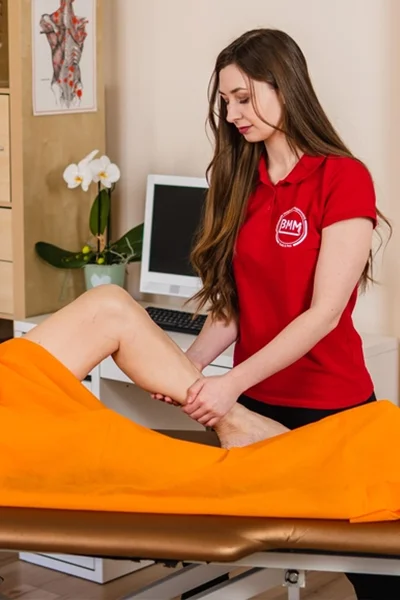
- Manual lymph drainage
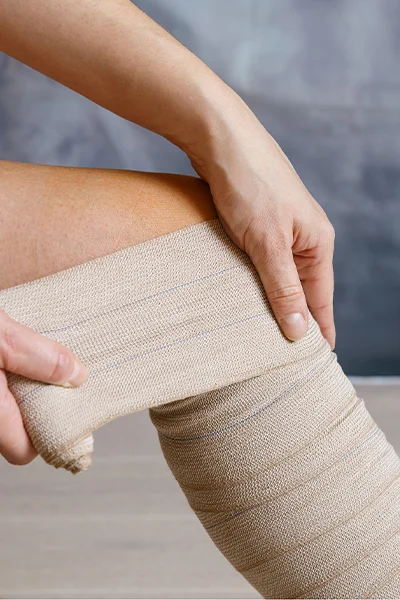
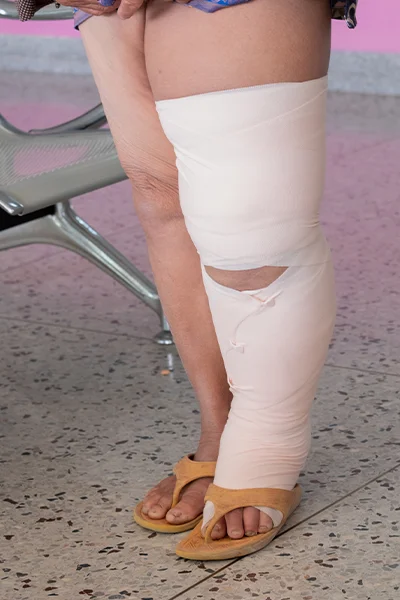
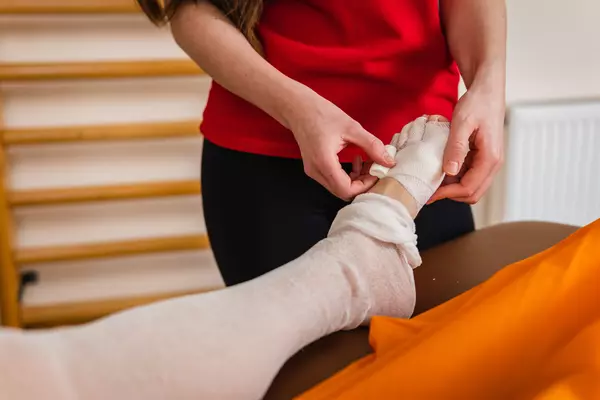
- Compression treatment with elastic straps
- Specialised physiotherapy
These elements are not substitutes for each other, as a complex whole, the most optimal result is achieved, a state free of oedema. Neither manual lymphatic massage nor therapeutic gymnastics to increase lymphatic circulation are effective on their own.
How to achieve an oedema-free state?
Anti-oedema in the case of an oedematous limb by woodcutting we can achieve, which we can maintain with compression stockings! So, it is forbidden to put compression stockings directly on an oedematous limb, as the fluid cannot be compressed and can even lead to ulceration.
Initially, the it is advisable to wear the fashli 23 hours a day, can be removed for bathing to speed up the results. If the limb becomes oedema-free, a specialist will prescribe compression stockings, which should be worn during the day, and at night, if the limb swells slightly, a bandage can be applied.
How is lymphoedema treated and how long does it last?
Anti-oedema treatment is optimally 1 hour in total. The treatment starts with manual drainage (about 30 minutes), followed by the application of a special bandage (10-15 minutes), which both the patient and the relatives have to learn (information booklets are provided to help with learning). The treatment ends with physiotherapy, which takes about 15-20 minutes.
Manual lymphatic drainage is contraindicated in the following cases:
- Edema of heart or kidney origin
- Malignant process with skin metastasis (metastatic malignancy)
- Exacerbated skin metastases
- Acute deep vein thrombosis
- Clotted varicose veins (thrombophlebitis)
- Acute skin inflammation (e.g. cellulitis, nasolabial folds)
- Infectious skin diseases
- Untreated decompensated heart disease
- Severe heart rhythm disturbance
- Untreated high blood pressure
- Severe, untreated asthma
- Untreated hyperthyroidism
- Pregnancy
What else is important to know:
- You will need to bring any lymphoedema-related findings with you to your first appointment.
- Discharge of lymphoedema due to cancer can only be started if a negative result is presented within 3 months.
- In the case of active cancer, the treatment can cause the spread of tumour cells, so in this case therapy is contraindicated.
- We will discuss in detail the course of therapy, the expected duration of treatment and the required amount of medication.
- The therapy is only effective in a course of treatment, min. 5 sessions are required (may vary depending on the severity of the oedema), which should be given on consecutive days. A relative may be present to facilitate the learning of the home skin care.
- Flexible harnesses are prescribed by a specialist and are subsidised by the social security system.
These elements are not substitutes for each other, as a complex whole, the most optimal result is achieved, a state free of oedema. Neither manual lymphatic massage nor therapeutic gymnastics to increase lymphatic circulation are effective on their own.
What can be prescribed with a social security allowance?
1 foot every six months:
- 5 elastic straps
- 2 stockings
- 2 foot pegs
Every six months for 1 arm:
- 5 elastic straps
- 2 stockings
- 2 gloves can be prescribed with aid
The following specialists are authorised to prescribe:
- Surgeon, paediatric surgeon, vascular surgeon
- Clinical oncologist
- Radiotherapy specialist
- Dermatologist
- Internal medicine
- Orthopaedic traumatologist
What can NOT be prescribed with a social security allowance?
Other additional straps and compresses are at cost price, they are not subsidised by the state, but can be purchased in our clinic.
Elements of lymphoedema treatment
- Manual lymphatic drainage, lymphatic massage
- Compression treatment with flexible polyak
- Specialised physiotherapy treatment
- Intermittent pneumatic machine compression, wave massage
- Dietary advice, weight control
- Group therapy, psychological counselling
- Making the treatment outcome sustainable, prevention
What are the complaints and symptoms of lymphoedema?
- Increase in the volume of the limbs, swelling of the hands and feet (shoe-like feet)
- Limb becomes heavy: heavy leg/lead foot hernia
- Fatigue on exertion (e.g. long hours of work)
- Skin lesions: dermatitis, itching, peeling
- Returning orangutans
- The patient with oedema cannot put on shoes due to thickening of the limbs, and movement is restricted
Nowadays, lymphoedema has been there is a truly effective treatment and the improved status is sustainable. This is called complex oedema-relieving treatment. It is important to know that can only be carried out by a qualified, experienced professional this therapy, otherwise symptoms and the disease may worsen.
Our physiotherapists
Major Rita
Physiotherapist

Call us

Online booking