Knee swelling


There are many causes of knee swelling and pain, but one thing is true for all of them: they cause a lot of suffering and difficulty in movement. There is no reason to lose hope, however, as the therapeutic tools and methods of medicine can help to relieve the pain and restore the pleasure of movement.
What injuries and diseases cause knee swelling? What does it mean if the outside or inside of the knee swells? What are the treatment options?
In this article, you will find all the relevant medical information about this common, painful symptom and the underlying lesions.
Causes of knee swelling
There are many different reasons for a swollen knee. Injuries and illnesses can both be involved. Diagnosis of the lesion rheumatologist or orthopaedic specialist. In our private clinics in 3 locations in Budapest, In Buda, Pesten and In Óbuda our highly qualified specialists with many years of experience, fast and accurate diagnosis and the most modern treatments are waiting for patients who want to recover.
Knee swelling due to injuries
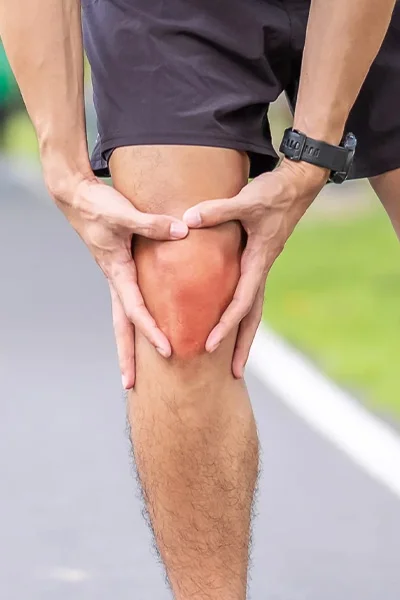
The knee is a very complex and sensitive joint, so it can be easily injured during recreational sports, which is often accompanied by swelling of the knee. Some common knee injuries are:
Meniscus injury
Menisci are C-shaped cartilages found in the knee joints. Their function is to stabilise the joint. Their cells receive oxygen and nutrition from the knee joint fluid and, because they lack an independent blood supply, they heal with difficulty, often with inflexible scar tissue. If there has been a lot of microtrauma to the meniscus in the past, even a minor force can damage or tear it. This usually happens when the knee suddenly twists or dislocates. Symptoms of a meniscus injury include pain that increases with movement, a clicking sensation, and swelling of the knee. Meniscus injuries are common in active athletes at a younger age and are caused by knee instability in older people. The cartilage ring is unable to regenerate, so the detached part is replaced by a arthroscopic knee surgery must be removed as part of.
Running knee syndrome (also known as patellofemoral stress syndrome)
The running field an overuse injury, is characterised by pain that is initially felt mainly on exertion, but can become more persistent over time. This is particularly likely to occur if the joint is subjected to long periods of repeated stress. In addition to pain, the knee may also swell. The disease is named after the fact that it often affects runners. In addition, anatomical abnormalities, weakness of the thigh muscles, a specific fall or other injury and certain anatomical abnormalities of the foot may also contribute to its development.

Dr. János Bartha
Orthopaedic-traumatologist, robotic surgeon
Online booking:
Budafoki Road clinic:Tuesday, Wednesday
Bokor street surgery: Friday
Please select the appropriate service
Control fee: 25 000 HUF, for 3 months after the initial examination, for the same complaint.
- 1. Select the service you need from the drop-down box!
- 2. Use the calendar to choose a date that suits you!
- 3. Enter your details to register or login with your previous registration!
- 4. If you would like to make a reservation on behalf of someone else (e.g. your child), please let us know at the location provided.
- 5. Briefly describe your complaints!
- 6. Select the type of consultation: initial examination, control examination or prescription.
- 7. Click on the button to book your appointment. Thank you for choosing BMM!
If you are unable to make the appointment you have already booked, please, at least 24 hours before notify us of your intention to withdraw. This gives other patients the opportunity to get the medical care they need in time. Thank you for your cooperation and understanding!
Resignation: +36 1 44 33 433
If you cannot find an available appointment for your chosen week, please call our call center on +36 1 44 33 433 for assistance. Our staff will be happy to help you make an appointment with the doctor of your choice or another specialist according to your complaint.
Knee swelling caused by disease
Knee swelling can be caused by a number of conditions, the specific cause can be identified by an orthopaedic or rheumatology specialist. In this article, we describe some of the more common conditions that can cause knee swelling:
Osteoarthritis
It is a very common degenerative wear disease of the articular cartilage, which may also have an inflammatory component. It becomes more common with age and can cause severe pain, mobility difficulties and knee swelling. A characteristic symptom is the so-called “start pain”. This means that in the morning and after prolonged rest, the joint becomes painful and stiff, and then after walking in, these symptoms quickly subside. Osteoarthritis is more common in women. It can also occur in younger people, often developing from a previous knee injury.
rheumatoid arthritis
A disease of autoimmune origin, in which genetics plays a role. It can occur as a result of an infection or following a major stressful event. It can occur in adolescence and often affects people aged 30-40. It is 3-5 times as common in women as in men. The disease is characterised by inflammation of the inner lining of the joints, which produces more fluid. The joints look more swollen as a result. Over time, the inflammation spreads to the cartilage, joint capsules and then to the bones, and this can distort the joints. The disease can also cause severe pain, fever, fatigue and limited mobility. It can be treated with targeted drug therapy.
Gratitude
The gout an arthritis that occurs in attacks and can affect different joints in the body. When it attacks the knee, it causes pain, redness, tenderness and swelling of the knee. Gout is more common in men, but the risk increases in women after menopause.

Types of knee swelling
Knee swellings can be distinguished from each other according to the area of the knee where they occur. The exact location of the symptom can give an indication of the underlying lesion.
Swelling below the knee
Gout is an arthritis that occurs in attacks and can affect different joints in the body. When it attacks the knee, it causes pain, redness, tenderness and swelling of the knee. Gout is more common in men, but the risk increases in women after menopause.
Swelling above the knee
Knee swelling can also occur in the area above the kneecap, and can be caused by inflammation of the popliteal fossae. The lesion is then called prepatellar bursitis. Symptoms include reddening of the skin, tenderness to pressure, and swelling of the knee up to the size of an orange. The condition can be caused by too much kneeling, and cleaners, for example, are more likely to develop it.

Dr. Ferenc Tompai
Orthopaedic and trauma surgeon
Online appointment booking for Budafoki út:
Please select the appropriate service
Control fee: 31 000 HUF, for 3 months after the initial examination, for the same complaint.
- 1. Select the service you need from the drop-down box!
- 2. Use the calendar to choose a date that suits you!
- 3. Enter your details to register or login with your previous registration!
- 4. If you would like to make a reservation on behalf of someone else (e.g. your child), please let us know at the location provided.
- 5. Briefly describe your complaints!
- 6. Select the type of consultation: initial examination, control examination or prescription.
- 7. Click on the button to book your appointment. Thank you for choosing BMM!
If you are unable to make the appointment you have already booked, please, at least 24 hours before notify us of your intention to withdraw. This gives other patients the opportunity to get the medical care they need in time. Thank you for your cooperation and understanding!
Resignation: +36 1 44 33 433
If you cannot find an available appointment for your chosen week, please call our call center on +36 1 44 33 433 for assistance. Our staff will be happy to help you make an appointment with the doctor of your choice or another specialist according to your complaint.
Swelling on the outside of the knee
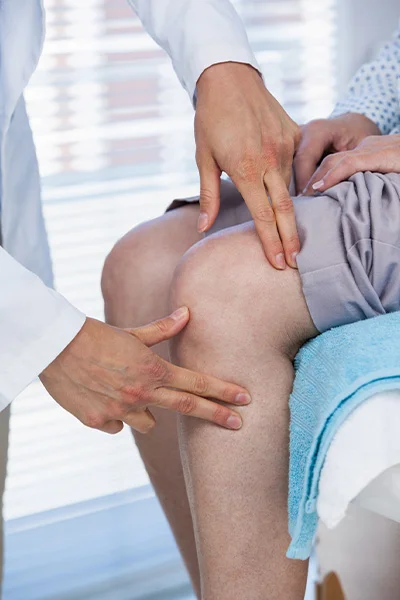
If you have pain on the side of the knee, it may be caused by a condition called ITB syndrome, which is irritation and damage to the strong connective ligament (tractusiliotibialis) running along the outside of the thigh. This ligament rubs against a protruding part of the bone on the outside of the femur every time the knee bends, causing damage. The lesion is characterised by a sharp pain in the outer area of the knee on movement, which may be accompanied by swelling of the knee. Pain and swelling in the outer part of the knee can also be caused by ligament damage and meniscus injuries.
Swelling on the inside of the knee
Swelling on the inside of the knee can be caused by cartilage wear or arthritis, but it can also be caused by damage to the internal collateral ligaments, which typically occurs suddenly during sport.
Knee swelling
It may not be obvious, but it's important to remember that knee swelling is simply another name for knee swelling, and is also a build-up of joint fluid.
Postoperative knee swelling
Knee swelling may occur for 3-4 weeks after knee surgery. However, if you develop a high fever in the days or within a week or two after the operation, it is advisable to see a doctor as soon as possible. This can be a rare complication after the operation and can be infectious. The doctor may then perform a joint tap and determine the type of infection. If necessary, he may also wash the joint.
Knee swelling in children
Children are not spared knee pain and swelling. As with adults, there are many different causes of these symptoms.
The knee injuries are common in children, due to their mobility. Fortunately, most injuries are trivial or heal within a few weeks. However, it is a sign if there is also a lot of swelling in the knee, as this indicates that fluid is filling up the joint, which can only be blood after an injury. And the substances in the blood can damage the cartilage. For this reason, the blood should be drained as soon as possible. So, if your child's knee swells significantly after any injury, get them to a doctor as soon as possible!
Juvenile arthritis can also cause swelling and pain in the knee. Fortunately, it usually heals quickly and well in children.
From Osgood-Schlatter disease we should also mention. This is actually a growth-related cartilage detachment that occurs in children between the ages of 10 and 15, and is also caused by intensive sports. It is more common in boys than in girls. In the past, rest was a key part of the treatment and symptoms disappeared after a few months or 1-2 years. Nowadays, special physiotherapy is used to help recovery, which shortens the recovery time and usually results in a resolution of symptoms in 1-1.5 months.
Symptoms of knee swelling
In addition to knee swelling, the following complaints are also common:
Knee swelling tension
Knee swelling is a build-up of fluid in the joint, which causes a tightness in the knee. Some patients describe this as a feeling of pressure. When the knee swelling is high, it is more difficult to move and it may not be possible to fully extend or bend the knee.
Knee swelling swelling watering
The build-up of fluid in the joint causes the knee to swell, also known as knee effusion.
Knee swelling pain
The intensity of pain associated with knee swelling can vary greatly. If the swelling is mild, the patient may experience minimal pain or no pain at all. If the swelling is more severe, the pain may take the form of a strong feeling of pressure. In addition, depending on the disease causing the swelling, there may be other types of pain (e.g. sharp, shooting pain).
Swelling and pain below the knee
Swelling and pain below the knee is often caused by a condition called bursitis (bursitis). The bursitis is caused by blisters that are fluid-filled blisters designed to reduce friction during movement. It is the inflammation of these tubes that causes this unpleasant symptom. It usually heals well with rest, medication and, rarely, surgery may be needed.

Treatment of knee swelling
Effective treatment of knee swelling is based on accurate diagnosis. Only if we know what the underlying disease is, can we apply targeted and truly effective therapy. If the swelling in the knee persists after 1-2 days of rest, it is worth consulting an orthopaedic or rheumatology specialist.
Medical treatment of knee swelling
The doctor decides on the targeted therapy based on the diagnosis, the severity of the lesion and the patient's condition. This may include medication, rest, compresses, physiotherapy, physiotherapy, injections or surgery.
Knee swelling surgical treatment
Some of the conditions that cause knee swelling can only be cured with surgery. Depending on the particular lesion, the doctor will choose between several surgical options.
The surgical technique may be, for example, a knee joint arthroscopy. This involves “going into” the knee joint under surgical conditions through a very small incision, using a mini camera and a device, and removing the loose cartilage. This is a very effective method, for example in sports injuries of the knee joint.
If you develop swelling and pain in the knee due to a torn ligament, the surgical solution is usually ligamentoplasty. This involves replacing the torn ligament from a tendon in the thigh. In our private practice, we also use a special surgical technique where we insert the cruciate ligament at the original point of origin. We then use a special fixation technique to secure the implanted ligament very firmly. This means that the limb does not have to be unloaded after the operation, which speeds up rehabilitation and healing.
If the swelling in the knee is caused by advanced cartilage damage that is causing very severe pain, and this does not improve with conservative treatment, knee replacement may be an option. In such cases, the patient is typically no longer able to bend and fully extend the knee and can barely walk. There are now prostheses that are designed and made directly for the patient according to their individual anatomy. This way, the knee prosthesis fits very precisely and there is usually less bone loss during surgery. Afterwards, rehabilitation is faster and the patient can regain the pleasure of movement sooner.
Our knee replacement specialists:
Dr. Szabolcs Gáspár
Associate Professor of Orthopaedics, Robotic Surgeon

Dr. Szabolcs Gáspár
Orthopaedic traumatologist, head of department, robotic surgeon

Dr. Gergely Holnapy PhD
Orthopaedic traumatologist, assistant professor, robotic surgeon

Dr. Péter Molnár
Orthopaedic traumatologist, chief operating surgeon, robotic surgeon

Dr Maysam Moghaddam Amin
Orthopaedic-traumatologist specialist, robotic surgeon
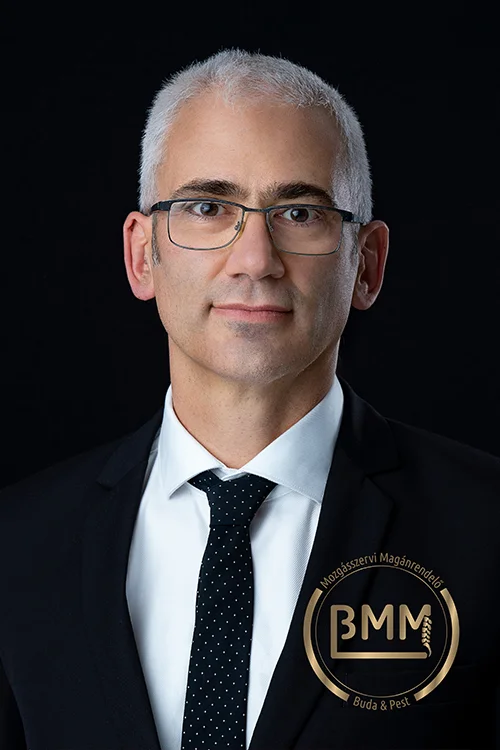
Dr. Kálmán Ferenc Egyed
Orthopaedic traumatologist
Dr. Ferenc Tompai
Orthopaedic and trauma surgeon
Dr. János Bartha
Orthopaedic-traumatologist, robotic surgeon

Dr. Péter Doszkocs
Orthopaedic traumatologist, hip and knee surgeon, lower limb specialist, robotic surgeon
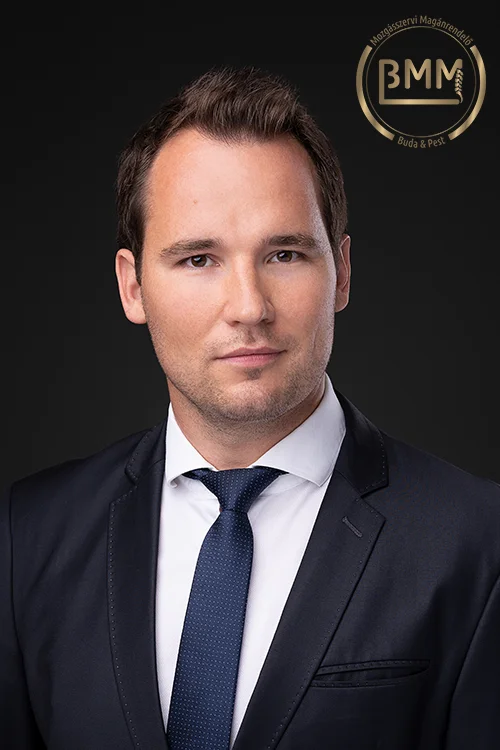
Dr. Dániel Kincses
Orthopaedic-traumatologist specialist, robotic surgeon
Knee swelling and pain? Do you experience other musculoskeletal complaints? Come to the Private Musculoskeletal Clinic in Budapest, where our doctors offer personalised solutions to help our patients recover. Our family-friendly, cosy and high-quality clinics are located in 3 locations in Budapest - Buda, Pest and Óbuda. Our doctors are highly skilled professionals, who are leading doctors of national institutions, teachers and leading doctors. In addition to using the most effective treatments, they are also empathetic, so feel free to ask them any questions you may have!
Make an appointment now by calling +36 1 44 33 433