Isias


Sciatica, also known as sciatica, usually presents as a sudden onset of sharp pain in the lower back. The complaint is triggered by inflammation of the so-called sciatic nerve. It can be caused by a variety of conditions, so it is always worth investigating the cause. It is a common complaint over the age of 40, and sitting may be a contributing factor. The concepts of lumbago and sciatica are often confused, as both are characterised by severe low back pain, but the former is muscular and the latter is neurological.
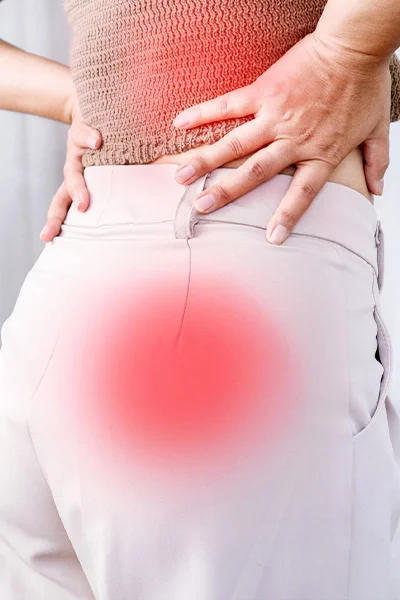
What is sciatica?
Sciatica is an inflammation of the longest peripheral nerve in the body, the sciatic nerve (sciatic nerve). This nerve is made up of nerve roots that exit the spinal cord at the lumbar spine and run down through the pelvis to the legs. It is also responsible for the movement of many muscles and the sensory innervation of the legs. Sciatica is when the sciatic nerve is under pressure or pinched and becomes inflamed. This usually causes severe, sharp pain in the lower back and often radiates to one, less often both, legs.
Although many people think of sciatica as a disease in itself, it is actually a symptom that can be caused by a variety of conditions. That is why, if you notice the characteristic symptoms, you should see an orthopaedic or rheumatology specialist as soon as possible, who will diagnose the condition accurately and recommend a personalised treatment. If the examination is delayed, the sciatic nerve can remain under permanent pressure, which can lead to permanent nerve damage or, in the worst cases, paralysis.
Causes of sciatica
Sciatica is usually caused by a spinal problem. Common cause of lumbar disc herniation. In this case, the disc wall is damaged (protruding or even ruptured) and one or more of the spinal nerve roots that make up the sciatic nerve may be under pressure. In addition to the sharp pain in the lower back, there may be radiating pain in the leg, numbness and, in severe cases, weakness or paralysis of the muscles controlled by the nerve roots. Sciatica can also be caused by spinal stenosis, slipped vertebrae or degenerative lesions of the vertebrae.
Sciatica is not always caused by a spinal disease. It can also be caused by other organ diseases or psychological problems. In such cases, it is up to the orthopaedic or rheumatology specialist to rule out musculoskeletal involvement.
Dr. Dóra Mihola
Rheumatologist specialist
The risk of sciatica
In older age, the condition of bones, cartilage, joints and muscles is not what it was when you were young, so Over the age of 40-50, sciatica is more common. In addition to age, other risk factors include a sedentary lifestyle, scoliosis, heavy physical work, lifting heavy weights and playing sports with unilateral loads. In addition, obesity, smoking and persistent anxiety can also contribute to the development of sciatica.
Symptoms of sciatica
The most common symptom of sciatica is severe, sharp pain in the lumbar part of the spine, which increases with standing and sudden movements. Lower back pain often radiates to the thigh and the foot. There may be pinprick-like sensations, numbness, tingling and, in more severe cases, loss of sensation. Sometimes the pain in the limb is more severe than the pain in the lower back. In very severe cases, paralysis or incontinence may develop.
Treatment of sciatica
Investigating sciatica rheumatologist and orthopaedic specialist also deals with. The Budapest Musculoskeletal Private Clinic has specialised patient journey protocol have been developed to ensure thorough investigation and effective, targeted therapies.
Our mission is to help our patients regain their freedom of movement as soon as possible, and to permanently and long term relief from painful complaints.
Often, sciatica is caused by a serious musculoskeletal disorder - in order to clarify this, it is recommended to identify the underlying disease causing the pain and make a diagnosis. In its absence, only short-term symptomatic treatment is possible.
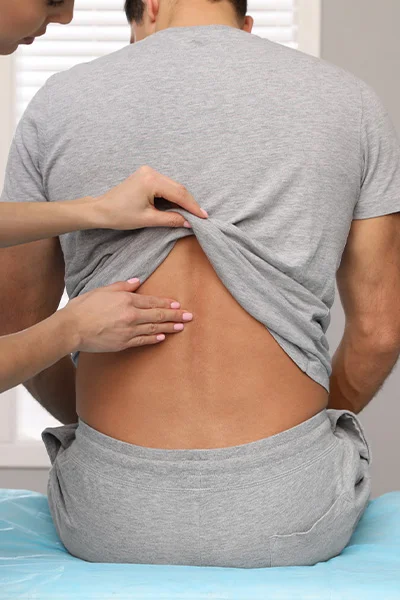
Medical treatment
Building blocks for a successful investigation based on the BMM patient journey protocol:
- The medical history is half the diagnosis, and many diseases can be ruled out by detailed questioning.
- A thorough physical examination by a specialist. On the basis of the physical examination, a specialist will determine the need for any diagnostic imaging tests:
- X-ray examination can confirm bony lesions. X-rays are usually taken of the spine, hip joints, knees and feet. This is often necessary for isolating diagnostic purposes.
- The condition of the soft tissues, discs, articular cartilage, muscles and tendons is accurately assessed by the radiograph.
- In some cases, a CT (computer tomography) or MRI (magnetic resonance imaging) scan is also needed to make an accurate diagnosis.
- In the case of nerve involvement, neurophysiological testing, ENG or EMG is required to determine the extent of suspected nerve damage.
Diagnostic imaging tests can help to visualise and measure anatomical structural changes and reveal the true cause of the complaint.
Neuroconductive neurophysiological examinations (ENG/EMG) are available at BMM's clinics in Pest and Óbuda. The necessary X-ray, ultrasound, CT and MRI examinations are provided by our partner institutions at an external location for an additional fee.
- Based on the medical history, physical examination and imaging diagnostics, the specialist makes an accurate diagnosis.
- A personalised treatment plan is drawn up. We accompany our patients all the way to recovery!
The key to success is doctor-patient cooperation and trust!

Dr. Flórián Szeles
Rheumatologist general practitioner
Treatment options for sciatica
In the case of sciatica, the first symptomatic treatment of acute pain comes into play. Spinal decompression, oral non-steroidal analgesics, possibly steroidal topical anti-inflammatory injections, or medical collagen injection therapy is recommended. During the symptomatic treatment rheumatologist or orthopaedic specialist diagnostic tests recommended by the EU. Based on the test results, an accurate diagnosis can be made and outpatient therapy can be started.
Treating the underlying cause can permanently relieve pressure on the sciatic nerve, to avoid the return of inflammation. Different causes require different treatment protocols, but in most cases conservative therapy can avoid surgery. With personalised, specific physiotherapy and therapeutic massage, and possibly physiotherapy treatments, spinal disorders can be well treated. If the underlying disease causing sciatica is advanced, causes paralysis or does not respond to conservative treatments, surgical intervention is an option. In this context neurosurgical medical consultation needed.
sciatica tournament
Spinal conditions that underlie sciatica (such as scoliosis, herniated disc) can often be well treated with physiotherapy, massage and physical therapy. Regular exercise can often avoid surgery. In our clinic, our dedicated physiotherapists provide personalised therapy to help our patients recover.
After the consultation with the specialist doctor, the patient meets the physiotherapist for a first assessment. They will ask about all your current and past symptoms, lifestyle, and if you have had an imaging scan, they will discuss what they have seen on the scans, and the physiotherapist will then assess the strength of the patient's muscles and the range of motion of the joints. The aim of the physiotherapy is then jointly set and the physiotherapist draws up a treatment plan.
She will select exercises tailored to the patient's condition. Full-fledged exercises are typically shown and taught at the second appointment, and the patient is given homework so that they can do a lot for their recovery by doing the exercises daily in their own home. At subsequent appointments, the physiotherapist will assess how the patient's symptoms and strength have changed as a result of the exercise and may modify the exercise routine accordingly.

What is the difference between sciatica and lumbago?
In the public mind, the term is often confused with lumbago and the isias the concept of. In both cases severe back pain is the main complaint, but they are easily distinguishable by their nature.
In the case of lumbar hernia, it is muscle pain in the lower back, which usually develops suddenly, in due to strain on the spine. In lumbar amputation, there is no nerve involvement, no pain radiating to the limbs, no numbness and no loss of sensation.
Sciatica is a complaint of nervous origin, caused by a serious problem that has developed over a long period of time. Identifying the underlying cause is key to effective treatment, so it is worth consulting a rheumatologist or orthopaedic specialist as soon as possible. Procrastinating a medical examination can cause permanent damage to the nerve and paralysis if the nerve remains under pressure for too long. Identifying and treating the spinal disease that is causing the pressure is necessary to treat sciatica and relieve painful symptoms.
Preventing the development of sciatica
Because the underlying causes of sciatica can be genetic, it cannot always be prevented, but the chances of developing it can be reduced. Regular exercise that is appropriate to your abilities and health can help strengthen the muscles of the spine and relieve the strain on the spine and disc in the long term. Swimming and physiotherapy are very effective.
Sitting a lot is a risk factor for sciatica, so there are a few things sedentary workers should be aware of. It is recommended that you stand up for at least 10 minutes every hour and walk, stretch and move your limbs. You should sit in an ergonomic chair or on a fitness ball, which helps to strengthen and move the muscles in the lower back. Both feet should be on the floor when sitting. Adjust the height of the chair so that the thighs and legs are at a 90 degree angle to each other.
Losing excess weight also helps to prevent the development of spinal conditions such as sciatica. It is also worth noting that it is recommended to lift heavy objects with a straight back, starting from a squat position, and never with a crooked back.
The chances of curing sciatica
The chances of curing sciatica are good. In more severe cases, surgery is an option, but in most cases conservative therapy (painkillers, physiotherapy, physical therapy) can significantly reduce symptoms. As sciatica can be caused by a wide variety of conditions, the first step in targeted therapy is to make an accurate diagnosis as soon as possible.

Common complaints treated by specialists at the Spine Centre
- back pain
- back pain
- scoliosis
- nerve pinching
- back pain
- neck pain
- stiff neck - neck stiffness
- osteoporosis
- back pain
- spinal stenosis
- back pain
- pain in the lumbar spine
- pain in the buttocks
- neglect
- sacral pain
- shoulder blade pain
- morning backache
- pain in the back of the neck
Our spine specialists
Dr. Gréta Sterba
Rheumatologist specialist

Dr Katalin Bán
Rheumatologist specialist

Dr. Bence Moravcsik
Orthopaedic traumatologist
For sciatica symptoms and other musculoskeletal complaints, contact our team of specialists! Our specialists use the most modern and personalised methods to help patients recover.
Register now for a consultation by calling 06/1/44-33-433!