Foreskin constriction


Foreskin stenosis occurs in both children and adults. It is difficult to distinguish in childhood from the foreskin adhesions that occur naturally in infants. Untreated foreskin stenosis can cause serious complications at any age, so it is always advisable to consult a specialist if the situation is in doubt. At the Budapest Musculoskeletal Private Clinic, a highly experienced paediatric traumatologist and surgeon general awaits patients with foreskin stenosis who are seeking a cure.
What is foreskin constriction?
The foreskin is a richly indented, retractable skin covering the acorn. In the case of foreskin constriction, the opening of the foreskin is narrower than it should be, so that it can be pulled back from the acorn only partially or not at all.
Causes of foreskin constriction
Foreskin stenosis can be a congenital condition, in which case the foreskin has never been retracted. Acquired foreskin stenosis can occur at any age. It typically develops as a result of a skin condition, inflammation or infection, which causes scarring of the skin and reduces the elasticity of the foreskin. Acquired foreskin stenosis is more common in young children.

Symptoms of foreskin stenosis
The basic symptom of foreskin stenosis is the inability to pull back the foreskin. The problem can be accompanied by reddening of the skin, pain, inflammation and swelling. More severe cases may include difficulty urinating and hardening of the foreskin. Foreskin stenosis can be partial or total, in which case the foreskin cannot be pulled back at all.
In infants and young children, it is not easy for parents to distinguish between foreskin stenosis and foreskin adhesions. Even in the case of foreskin bruising, the foreskin cannot be pulled back, but it is a natural phenomenon. In foetus, the foreskin and the acorn are fused and gradually separate during the first years of life. In babies, foreskin retraction should not be forced, as it can cause cracking. These tiny injuries can scar, which increases the narrowing of the foreskin. The diagnosis and treatment of foreskin stenosis is the responsibility of the doctor.
Investigation: Specialist paediatric surgery
Treatment: Specialist paediatric surgeon
What can be the consequences of untreated foreskin stenosis?
Untreated foreskin stenosis can lead to serious complications. Urination can become difficult, leading to recurrent bladder infections and, if forced, to the development of hernias of the navel and groin. In the case of foreskin stricture, there is poor hygiene of the foreskin area. Phlegm accumulation in this area can cause recurrent inflammation. Children may also experience bedwetting at night due to foreskin stenosis. In sexually active men, the condition can cause sexual dysfunction.
Foreskin constriction can also lead to a condition called paraphimosis, which means that the foreskin can be pulled back behind the glans, but it constricts the penis, which swells due to venous congestion. This means that the foreskin can no longer be pulled back onto the acorn. This causes a lot of pain and if the foreskin cannot be pulled back, surgery is required as soon as possible.

Treatment of foreskin stenosis
If foreskin stenosis is suspected, it is advisable to consult a doctor. The doctor will decide whether the problem requires a conservative or surgical solution. Conservative treatment includes steroid cream, regular foreskin retraction, foreskin stretching exercises and thorough and regular cleaning of the area under the foreskin.
In childhood
It is a natural phenomenon that the inner part of the foreskin adheres to the acorn's epithelium. A significant proportion of children under the age of 3 have a foreskin that is still partially flattened. However, if large amounts of mucus accumulate under the foreskin, inflammation can develop, which heals by scarring. This in turn can lead to the development of a true foreskin stenosis.
In the case of minor foreskin stenosis in children aged 2-3 years, the complaint can be relieved in some cases by the use of steroid cream. After this, the foreskin should be pulled back as part of daily cleaning to avoid repeated bruising. For more severe foreskin stenosis, surgery is the permanent solution.
Adulthood
Foreskin stenosis can also develop in adults, typically as a result of recurrent inflammation or venereal disease. Diabetes can also predispose you to developing the condition. Adult foreskin stenosis can make intercourse painful, which can have a negative impact on relationships and self-esteem.
Foreskin constriction can also occur because the foreskin opening does not grow as much as the size of the acorn during growth. This causes a tight, painful feeling when erect.
If inflammation is the cause of a foreskin stenosis, treating it can also relieve the symptoms of foreskin stenosis. In more severe cases, or if conservative treatment fails, surgery may be necessary.
Surgical treatment of foreskin stenosis
In childhood
For the youngest children, you should try to avoid surgery, as anaesthesia can be dangerous for them. So the lesion should be treated primarily by manual methods. If this fails and there are serious complications of the stenosis, or in slightly older children, surgery is an option. There are several techniques. A common solution is foreskin surgery, which involves removing the narrowed part of the foreskin. After surgery, in a small percentage of cases, the stenosis may reappear. The other commonly used surgical technique is circumcision.
The specialist at the Budapest Musculoskeletal Private Clinic not only selects and implements the most optimal treatment for the child with great care and thoroughness, but also makes sure that the little patients are as comfortable as possible during the examinations and interventions. She is happy to answer all questions from children and parents in detail.
Adulthood
The solution to adult foreskin stenosis is often surgical. Many people feel uncomfortable going to the doctor with a complaint in sensitive areas, but it is not worth delaying. Foreskin surgery in adults does not usually require hospitalisation. The procedure takes about 20-30 minutes and can be done under local anaesthetic. After the operation, it is recommended to wash the surgical area daily with Betadine solution. Sexual activity and sport are not recommended for a few weeks after the operation. Afterwards, the patient can return to their normal lifestyle - without any of the unpleasant symptoms!
BMM helps
Foreskin stenosis occurs in both children and adults. It is difficult to distinguish in childhood from the foreskin adhesions that occur naturally in infants. Untreated foreskin stenosis can cause serious complications at any age, so it is always advisable to consult a specialist if the situation is in doubt. At the Budapest Musculoskeletal Private Clinic, a highly experienced paediatric traumatologist and surgeon general awaits patients with foreskin stenosis who are seeking a cure.
Our paediatric specialists
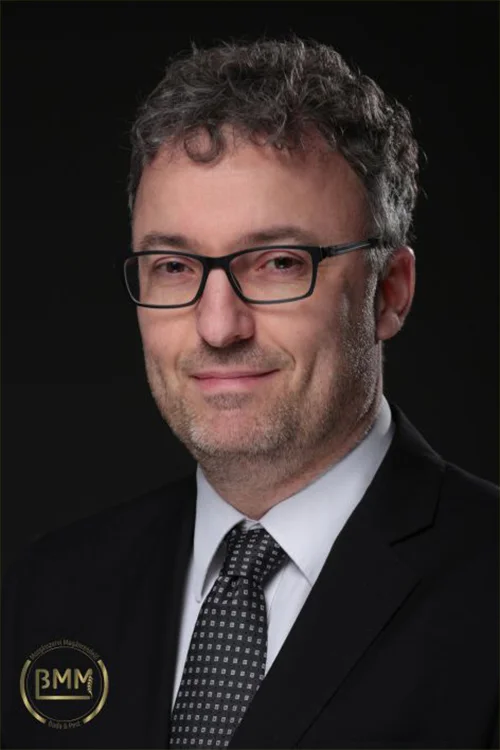
Dr. Zoltán Ringwald
Paediatric traumatologist, paediatric surgeon general