Cause and most effective treatment for heel pain


What are the symptoms of heel pain?
If the foot, sole and heel are subjected to a high level of stress, you may experience severe heel pain as soon as you get up in the morning. The pain can be stabbing or dull, constant or intermittent. Heel pain may increase with exertion, although there are cases where it may decrease with daily exercise. In more severe cases, however, you may feel heel pain without exertion, even when resting. These symptoms can have a significant impact on your daily activities and can reduce your ability to walk and be active.
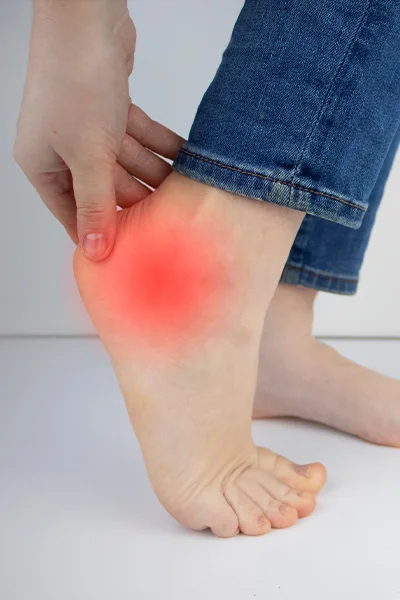
What could be the cause of heel pain?
Causes of heel and toe pain include overuse: sports, being overweight, age, or even wearing inappropriate shoes. Heel pain can lead to inflammation of the periosteum, which can result in the body's defence mechanism triggering extra bone formation, leading to the formation of a bone tumour (spur). The exact cause of the pain in each person can be determined by an orthopaedic or rheumatological specialist.
What treatment can help with heel pain?
After an accurate diagnosis, physiotherapy can begin.
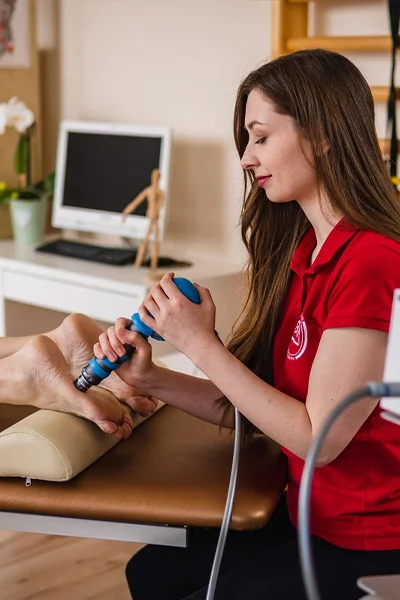
The most effective treatment for heel pain is shockwave therapy, which has a success rate of between 85-90 %. Moreover, there are no side effects during or after treatment, no complications and the effects of shockwave therapy can last for months or even years. The ability to heal remains enhanced for 2-3 months, as the shockwave triggers the body's ability to heal itself, thus naturally aiding recovery.
What other orthopaedic problems can shockwave therapy solve?
- Heel pain
- Spurs
- Bone cancer
- Muscle pain, muscle tears
- Tendon pull
- Achilles tendon pain
- Shoulder pain
- Hip pain
- Tennis elbow
- Golf books
- Sports injuries
- Jumping knee
Is shockwave therapy painful?
Minimal pain may occur in some cases during treatment. In case of individual sensitivity, the treatment area may become red and possibly develop small haemorrhages, which will disappear within a short time.
How much treatment is needed for a full recovery?
Shockwave therapy does not promise immediate pain relief, but it can be a long-term solution for heel pain. It depends on the individual and the problem, how many times it is recommended for each person, but we generally recommend 5 sessions (maximum 10 sessions), usually once a week. This is the amount of time the body needs for the self-healing mechanism to kick in and the inflammation in the body that is causing the pain to disappear. The effects of the shockwave treatment may continue to intensify for months and the pain may not return to the area for years.
Up to today, tomorrow or Saturday to Sunday we can also arrange an appointment