Hip pain




Want to know what causes your hip pain? What tests are needed to find out? How can hip pain be treated and what is the recovery time?
With the help of the hip replacement specialists at the Budapest Musculoskeletal Private Clinic, we have summarised the most important things to know about it
Structure of the hips
The hip joint is made up of the spherical head of the femur and the hemispherical depression of the pelvis, the diaphragm. Each is covered with cartilage, and these cartilaginous surfaces can easily slip over each other during movement if the hip joint is healthy. The hip is a ball and socket joint that can move freely, stretching and flexing as well as extending and moving the limb closer and closer and rotating it. The hip is a fairly stable joint with strong ligamentous connections.
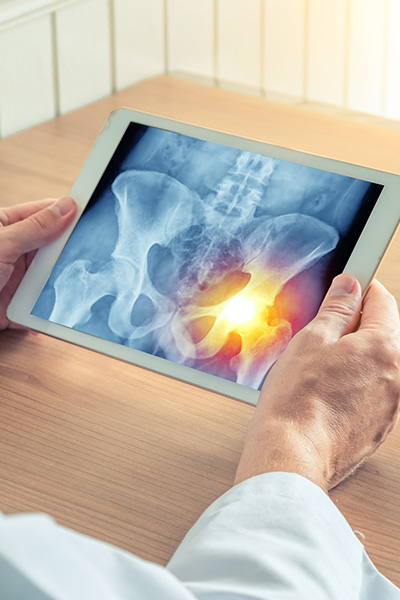
How is hip pain treated in our practice?
When a patient comes to us with hip pain, our orthopaedic specialist will first diagnose the condition through a thorough medical examination. This may involve imaging tests in addition to physical examinations. He will then draw up a treatment plan. For milder problems, conservative treatment may be sufficient. This may include cartilage-strengthening products and physiotherapy, and, if necessary, prescription of pain and anti-inflammatory medication. For more severe hip pain hyaluronic acid injection which can extend the time for hip replacement by up to years. The so-called Lipogems with stem cell therapy treatment and can also help cartilage regeneration. This is recommended if hip replacement surgery is not yet indicated, but other conservative treatments are no longer bringing significant improvement.
If the hip pain and the underlying disease are so severe that conservative treatment methods no longer work, then hip replacement implantation which is an outstanding achievement of 20th century medicine. In most cases, hip pain can be completely eliminated and patients regain freedom of movement. Our specialist orthopaedic surgeons use the latest surgical techniques, which make post-operative rehabilitation faster and less painful.
Our orthopaedic specialists for hip pain
Our orthopaedic specialists are leading doctors of national institutions, who are highly experienced, provide fast and accurate diagnosis, personalised treatment plans and the most modern surgical solutions for our patients.

Dr. Péter Molnár
Orthopaedic traumatologist, chief operating surgeon, robotic surgeon

Dr. Szabolcs Gáspár
Orthopaedic traumatologist, head of department, robotic surgeon

Dr. Zoltán Bejek PhD
Associate Professor of Orthopaedics, Robotic Surgeon

Dr. Gergely Holnapy PhD
Orthopaedic traumatologist, assistant professor, robotic surgeon
Causes of hip pain - medical causes
The complaint is very often caused by cartilage wear, which affects nearly a quarter of the population in the country. More common in women over 50. In addition to cartilage damage, pain can also be caused by fractures, bursitis, tendonitis, muscle or ligament strain, bone death, rupture of the joint capsule and cancer.

- For vaginitis: Tendonitis is most commonly a problem in the wrist and hand joints, but it can also occur in any overused joint, including the hip. Anti-inflammatory medication and rest can reduce symptoms.
- Because of dust damage: The cause of cartilage wear is not always known. Sometimes it occurs on its own, but it can also be caused by other hip joint conditions. They can be caused by injuries to the hip, congenital hip sprains and excessive or unilateral loading of the joint. An X-ray can be used to determine the stage of cartilage damage. In the first two stages, the cartilage is just softening and the structure is weakening. In the third stage, signs of wear are already clearly visible on imaging, and in the fourth stage, even walking causes the patient very severe pain.
- Muscle or ligament strain: Overuse can also cause muscle or ligament strain in the joint, which can lead to severe pain. Resting, icing and padding the limb can alleviate the problem. Painkillers may also be needed.
- Due to a bone fracture: Hip fractures often occur in the neck of the thigh. They can be caused by an accident or even a simple fall - this is common in older patients with osteoporosis. It is associated with severe hip pain and an inability to walk. Resolution is surgical if the patient's general condition allows, often operated on the day of the fracture
- For pelvic inflammatory disease: Spinal cushions are connective tissue formations whose role is to cushion bony surfaces and “oil” surfaces that friction during movement. Inflammation is usually caused by overuse and is common in athletes. Rest, compresses, pain and anti-inflammatory drugs and ointments can relieve the pain, but a permanent solution requires lifestyle changes.
- Because of a rupture of the articular wall: Rotating the hip can tear the joint capsule. Some sports, such as golf, ice skating and hockey, and running, which put a lot of stress on the hip, are at increased risk.
- Cancer: Joint pain can sometimes be caused by cancer. A tumour affecting another part of the body can metastasise to bones, including the hip bone. In the case of bone cancer, the tumour can form in the bone cells and can be either benign or malignant.
- Due to necrosis of the bones: Osteonecrosis, or bone necrosis, can also cause hip pain. The disease most commonly occurs in the head of the femur. The disease is caused by a local blood supply disturbance, which may be due to injury, Perthes' disease of unknown origin in childhood and steroid medication. If the disease is advanced, hip replacement surgery may be necessary.
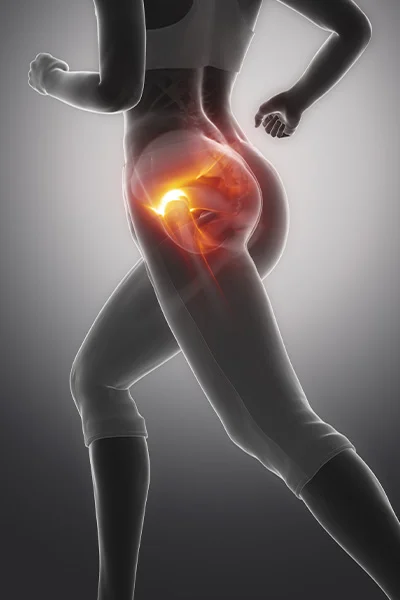
Lifestyle causes of hip pain
Lifestyle habits can also play a role in the development of hip pain: for example, a sedentary lifestyle, but also excessive, one-sided or inappropriate exercise. Ongoing stress can also aggravate joint pain. Constant stress can also cause joint pain, because muscles tighten and tight muscles put pressure on the joint. Under stress, we are more sensitive to pain, which can be exacerbated.
- For running: Many amateur runners experience intermittent or constant hip pain, so it's worth paying attention to your body's signals. Examples of causes of hip pain associated with running include muscle strain, bursitis, overuse and weakness of the hamstring muscles. The chances of running-related injuries are reduced by a thorough warm-up, gradual increase in load and regular stretching of the muscles.
- Yoga: Yoga has a beneficial effect on the muscular system, relaxing muscles and reducing a wide range of aches and pains through muscle stretching, breathing exercises and relaxation techniques. However, in some cases it can also cause joint pain. If we do not follow the principle of gradualness or if we do exercises that are not appropriate for our abilities and current condition, pain can be the result.
- At night: Hip pain at night causes severe sleep disturbances for patients. Inflammation of the joints, tendons and lymph nodes can also cause nighttime hip pain, but muscle strain or weakness can also be the cause.
- Ageing: With age, there is an increasing chance of hip pain, and consequently reduced mobility and limited mobility. Hip pain in older age is very often caused by cartilage wear and tear, which, although a natural part of ageing, can be prevented if detected early. For this reason, it is not recommended to wait months for a medical examination. Conservative treatment for mild cases consists of cartilage-strengthening agents, while for more severe symptoms, good results can be achieved with courses of hyaluronic acid or medical collagen injections, and stem cell therapy (LIPOGEMS) is now available in our practice.
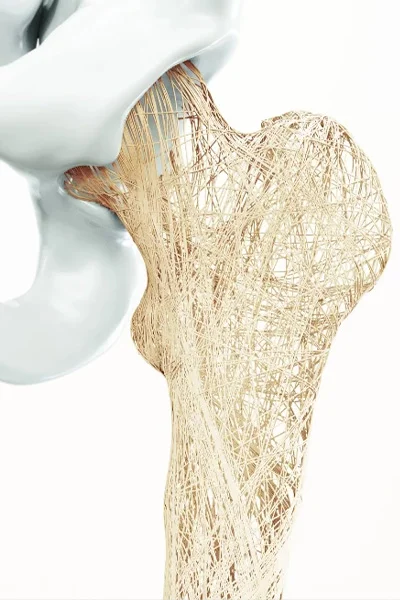
- After training: Hip pain after exercise can be caused by weakness in certain muscles, such as the core muscles. Another cause may be when the knees are bent during running or strength training, because the hip position is not optimal. Failure to warm up and stretch can also cause joint pain and injury.
- Osteoporosis: Osteoporosis is a disease involving a reduction in bone mass and calcium content, which is associated with an increased risk of bone fractures. It is more common in women than in men and is much more common in older age. In osteoporosis, a simple fall can result in fractures of the bones around the hip, with severe hip pain.
- After surgery: Thanks to modern medical pain relief solutions, patients no longer have to deal with severe pain during hip replacement surgery. This also has the advantage that patients can get back on their feet and start their rehabilitation as soon as possible.
- Mental okai: Hip pain can also have psychological causes. For example, not being able to move forward in an area of life and feeling blocked can also cause joint pain. Prolonged stress can increase symptoms, so it's a good idea to relax regularly.
Types of hip pain
Hip pain is a slightly different sensation for each person. The exact area of the hip where the pain is felt varies, as does the activity and posture in which the pain occurs.
- When setting up: A common complaint of sedentary workers is hip pain when standing up. Sitting in a stooped posture for long periods of time weakens the muscles around the hips and can also cause pain.
- At the meeting: It is also caused by too much sitting, which causes shortening and weakening of the hip flexor muscles. A physiotherapist can help to correct this problem by teaching personalised exercises.
- When lying down: Inflammation, broken bones, strains and muscle spasms can also cause pain when lying down. If you did not do much sport before the pain started and the complaint does not go away within a day or two, a comprehensive specialist examination is recommended.
- Side: Arthritis and tendonitis can also cause this complaint. It is usually treated conservatively with injections or medication.
Symptoms of hip pain
Hip pain can also take the form of pressure, stabbing, throbbing, radiating pain, and can occur in different areas of the hip. This is all important information for the specialist during the examination.
- Hip pain discharge: Hip pain can also radiate to the thigh, shin and groin area. At the same time, diseases in other parts of the body can cause pain radiating to the hip, such as herniated discs and sciatica.
- With thigh pain: Hip pain in the form of thigh pain is usually caused by a pinched nerve. Treatment may include painkillers and physiotherapy.
- Lower back pain Hip pain: Lower back pain radiating to the hip can be caused by sciatica (i.e. sciatic nerve pain). It may be caused by a herniated disc or by wear and tear on the joints between the vertebrae.
- Herniated disc hip pain: A herniated disc is a protrusion of the discs between the vertebrae that make up the spinal column, which puts pressure on the spinal cord and the nerve roots that exit from it. Pressure on the nerve running through the hip can also cause hip pain.
- Pain on the inside of the hip joint: If the pain is felt in the inner part of the hip, it may be a sign of a hip joint disease, but it can also be caused by, for example, flat feet.
- Pain on the outside of the hip joint: This type of pain is usually not joint-related, but soft tissue-related. It can be caused by muscle fever or inflammation of the hernia, for example.
- Hip pain in the pelvis: Various diseases of the hip joint often present as pain around the groin. This may be due to cartilage wear, arthritis or nerve entrapment.
- Pain in the buttocks: The most common cause of buttock pain is muscle fever, but it can be caused by more serious problems. For example, it is often caused by a contraction and spasm of the piriformis muscle, which is treated with a combination of drug therapy and physiotherapy. Buttock pain can also be caused by sciatica and arthritis.
Hip pain treatment
The way hip pain is treated depends on the disease causing it and how advanced the condition is. The therapeutic options range from rest and cartilage-strengthening medication, to hyaluronic acid injections and hip replacement. The treatment plan is always set by the specialist.
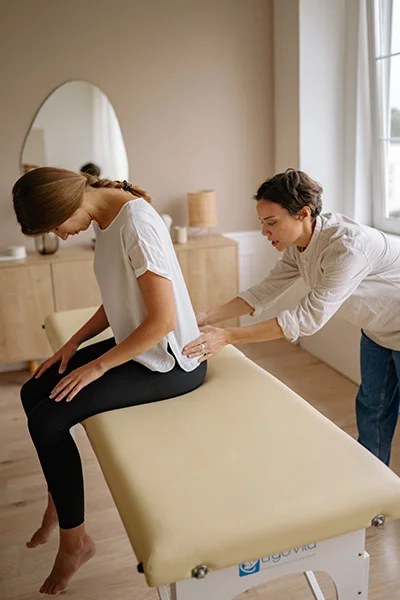
- Home management: At home, hip pain can be relieved by resting, icing the joint and taking cartilage-strengthening products. It is very important to seek medical advice as soon as possible if the symptoms worsen or do not subside within a few days.
- Treatment with medication: Pain is important because it draws attention to diseases in our bodies. At the same time, we should not tolerate excruciating pain. Joint pain can be relieved with painkillers and anti-inflammatory drugs, physiotherapy and surgery.
- Gymnastics - physiotherapy: Physiotherapy always focuses on the patient's problem in a personalised way. It is suitable for reducing pain, increasing range of motion and strengthening muscles. The most effective element is active gymnastics.
- Medical treatment: The specialist may recommend conservative and surgical therapy for hip pain. The former typically consists of the administration of cartilage strengthener, medication, ointments and physiotherapy. Hyaluronic acid injections and Lipogems stem cell therapy treatment are also available at the Budapest Musculoskeletal Private Clinic to help regenerate cartilage. If conservative treatment no longer helps, hip replacement surgery is recommended.
Which doctor should I see?
If you have hip pain, you should consult a rheumatologist or orthopaedic specialist. Both specialise in musculoskeletal conditions, i.e. pain and stiffness in the muscles, tendons, joints and bones.
Recovery time
Recovery time depends on the type and severity of the condition causing the hip pain. Muscle fever and overuse can take 1-2 days to recover. Inflammatory diseases can take a few weeks to heal. Broken bones usually heal in 6 weeks. After hip replacement surgery, lighter sports can be done 3 months after surgery, but it is recommended to wait 6 months before doing more intense exercise.
Our solutions
At Budapest Musculoskeletal Private Practice, we offer comprehensive treatment solutions for hip pain. Among other things, we help to cure hip pain by prescribing medication, physical therapy, physiotherapy, hyaluronic acid injections, LIPOGEMS stem cell therapy and, in severe cases, hip replacement surgery and hip replacement implantation.
Our physiotherapists treating hip pain
At the Budapest Musculoskeletal Private Clinic, the most dedicated therapists provide personalised therapy for patients with musculoskeletal complaints.

Tímea Szentpétery
Physiotherapist

Dorottya Lilla Sándor
Physiotherapist

Major Rita
Physiotherapist

Csilla Szabóné Bora
Physiotherapist

Krisztina Tatai
Physiotherapist