Bokaficam


In the case of ankle sprains, sprained ankles, sprained ankles, what should be done to heal? When should you consult a specialist?
When should you see a physiotherapist?
What do we mean by ankle sprains?
The ankle sprain, or ankle sprain one of the most common musculoskeletal injuries. This is because it only takes one accidental misstep to twist the ankle joint, which can result in a mild sprain or even a torn ankle ligament. Ankle sprains can cause the ankle ligaments to stretch and even tear along with the surrounding blood vessels. A minor sprain may go unnoticed, but repeated occurrences can have serious consequences for the ankle joint's ability to bear weight. In the case of a larger sprain, the consequences are immediately noticeable: sharp pain, swelling of the ankle, haemorrhaging and even an unnatural ankle angle. The symptoms typically depend on the extent of the injury.
Anatomy of the ankle
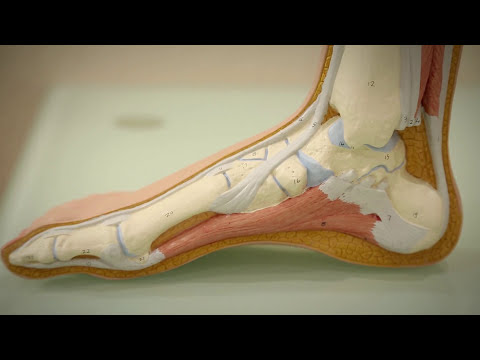
The ankle joint is located at the junction of three bones: the tibia and fibula, which form the shank of the foot, and the talus, which forms the top of the foot. The three bones are called the metatarsals. the inner and outer ankle ligaments of which the outer ligament is the more fragile. The ankle joint provides the flexor-tensor (spica-pipa) movement of the foot, which is essential for walking and running. The ankle is basically a heavy-duty joint, as it carries our entire body weight when we walk or run, and also acts as a kind of “shock absorber”. Therefore, an ankle injury can cause serious problems in your daily life and in your ability to participate in sports activities.
Incidence and risk of ankle sprains
Most ankle sprains occur during sport, when muscles and joints are subjected to greater stress. However, it can also happen during a simple walk, for example, when stepping on uneven or slippery ground, or when climbing stairs.
The ankle sprain should never be underestimated! Although this is one of the most common musculoskeletal injuries and can happen to virtually anyone at any time - it's almost an everyday occurrence - it's important to deal with it and avoid further trouble.
Symptoms of ankle sprains: pain, restriction of movement, swelling, haematoma; in the same way may indicate a bone injury or even a fracture rather than “just” an ankle ligament injury. Ligament injuries also have different degrees of severity: in some cases the ligaments are only stretched, but in others there may be partial or complete ankle ligament tears. Ankle joint immobilisation and rest are always the first priority, but it is worth consulting an orthopaedic specialist to assess the degree of injury. Even a mildly sprained ankle is permanent can lead to ankle instability without proper treatment.

Treatment of bokaphicam
Treatment of ankle sprains depends on which part of the ankle joint is damaged and to what extent. For mild ankle sprains, when there is no bone damage or ligament tear, just stretching of the ankle ligaments, basic treatment may be sufficient: a few days rest, intermittent icing, painkiller medicine and/or application of ointment, padding, fixing with ankle orthosis. The ankle joint can usually be re-loaded after 7-10 days, at which time the ankle can be treated for instability caused by stretched ankle ligaments. joint stabilisation physiotherapy.
Partial ankle ligament tear the course of treatment is practically the same as described above, but recovery time is much longer: 3-4 weeks of rest After rehabilitation and stabilisation physiotherapy is also necessary.
Total ankle ligament tear in general surgical intervention is necessary to repair the ankle ligaments. After surgery, rest, gradual weight bearing and rehabilitation physiotherapy needed.
Ankle joint bone injury the situation is more complicated. Bone damage can be diagnosed with certainty by X-ray and is a problem that requires very thorough diagnostics. Based on the type, extent and location of the bone injury, the orthopaedic traumatologist can decide conservative treatment or surgical intervention is. A special physiotherapy in both cases is key to full recovery.
Testing of ankle spica
In the case of ankle sprains, depending on the extent of the trauma to the ankle and the severity of the symptoms, you may worth Specialist orthopaedic traumatologist visit, to accurately determine the nature and extent of the injury. The symptoms are very similar in ligament and bone injuries, but the healing process can be very different. An examination by an orthopaedic traumatologist is necessary to make an accurate diagnosis and determine treatment.
At the Budapest Musculoskeletal Private Clinic we have developed a specific patient journey protocol, based on which the basic steps of an orthopaedic examination for ankle sprains are as follows:
- Establishing the medical history: detailed questioning about the circumstances of the trauma and any history of previous injuries.
- In-depth a specialist physical examination, movement and movement tests. On the basis of the physical examination, a specialist will determine the need for any diagnostic imaging tests. X-rays are usually recommended for bokaphicam, and in some cases ultrasound diagnostics may be considered. Diagnostic imaging tests can help to visualise and measure anatomical structural changes and reveal the true cause of the complaint.
- On the basis of the medical history, physical examination and imaging diagnostics, the specialist makes an accurate diagnosis.
- Personalised treatment plan is being made. We accompany our patients all the way to recovery!
The key to success is doctor-patient cooperation and trust!