Recurring kneecap sprain?
How to get rid of kneecap instability for good


What is a kneecap fuck?
- Causes and symptoms of kneecap dislocation
The knee-cap fuckam a musculoskeletal injury in which the the kneecap moves laterally out of the joint socket. This condition most often occurs as a result of playing sports, sudden changes in direction, a fall or a bad step on uneven ground.
A dislocation during the joint ligaments are stretched or partially torn, so the kneecap loses its natural stability. Certain anatomical conditions, such as a flat articular wall, loose ligaments or imbalances in the thigh muscles, may increase the risk of developing a patellar dislocation.
It is important to know that kneecap dislocation not just a one-off injury: if the kneecap has moved out earlier, there is a greater chance of a backslip. Therefore accurate investigation and appropriate treatment are essential, which not only relieves symptoms but also helps prevent further damage.
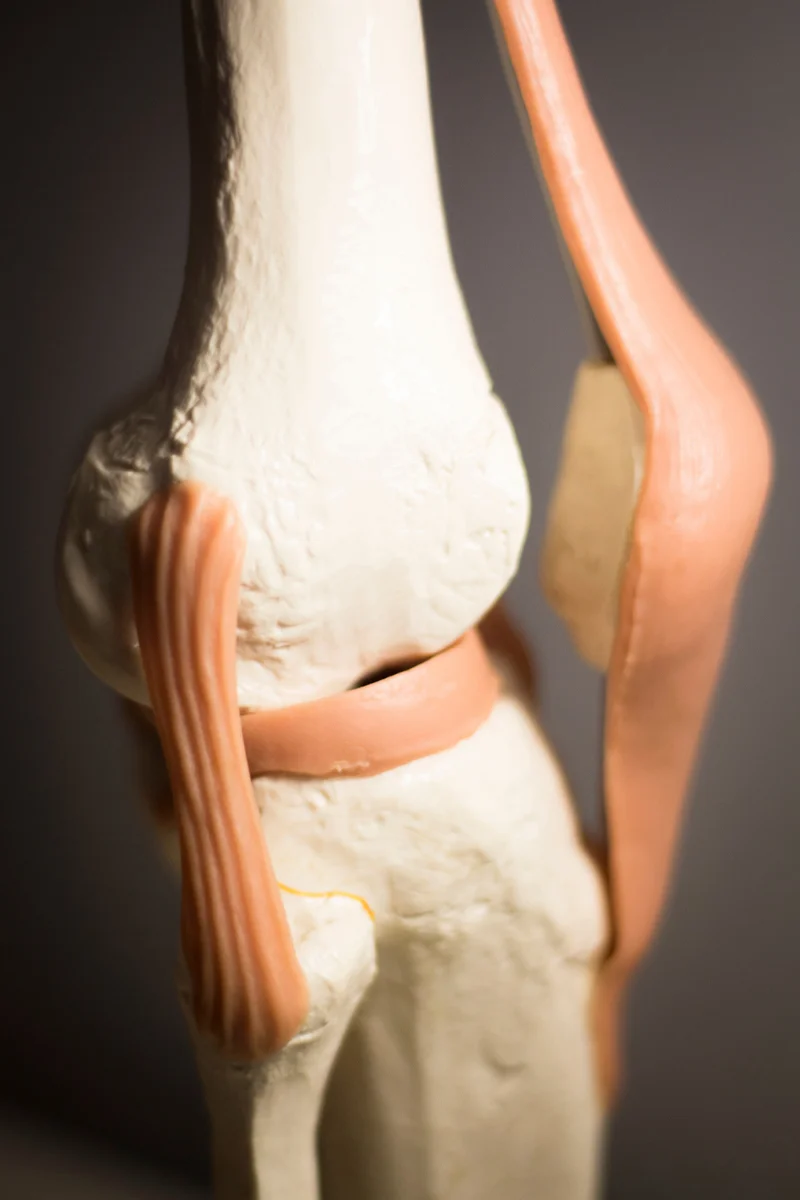
Symptoms of patellar luxation
- When should you see a doctor?
The kneecap fuck symptoms usually occur suddenly and dramatically, so that the patient immediately senses that something is wrong with the knee. One of the most common complaints is severe pain around the kneecap, often accompanied by a cracking or clicking sound at the moment of injury. The kneecap moves laterally and the lesion is often visible visually.
Symptoms may include:
- sudden, sharp pain in the front of the knee, often after a wrong movement, sudden turn or jump,
- you can see or feel that the kneecap has “slipped” laterally,
- knee swelling, sometimes haematoma (due to damage to the soft tissues and ligaments around the kneecap),
- limited mobility, difficulty in fully extending or bending the knee,
- a feeling of unsteadiness or instability - the knee seems to “buckle” or cannot support the weight of the body.
A medical examination is still needed, if the pain eases over time, because the underlying ligament damage, cartilage damage or a tendency to recurrent sprains may also exist. The sooner an accurate diagnosis is made, the more effective the treatment can be and the shorter the knee cap sprain healing time.

Dr. Péter Doszkocs
Orthopaedic traumatologist, hip and knee surgeon, lower limb specialist, robotic surgeon
Online booking:
Budafoki Road clinic: Thursdays
Bokor Street clinic:other weekdays
Please select the appropriate service
Control fee: 25 000 HUF, for 3 months after the initial examination, for the same complaint.
- 1. Select the service you need from the drop-down box!
- 2. Use the calendar to choose a date that suits you!
- 3. Enter your details to register or login with your previous registration!
- 4. If you would like to make a reservation on behalf of someone else (e.g. your child), please let us know at the location provided.
- 5. Briefly describe your complaints!
- 6. Select the type of consultation: initial examination, control examination or prescription.
- 7. Click on the button to book your appointment. Thank you for choosing BMM!
If you are unable to make the appointment you have already booked, please, at least 24 hours before notify us of your intention to withdraw. This gives other patients the opportunity to get the medical care they need in time. Thank you for your cooperation and understanding!
Resignation: +36 1 44 33 433
If you cannot find an available appointment for your chosen week, please call our call center on +36 1 44 33 433 for assistance. Our staff will be happy to help you make an appointment with the doctor of your choice or another specialist according to your complaint.
What can cause kneecap pain and instability?
Pain and instability in the kneecap are often caused by previous kneecap fuck, loose ligaments or muscle imbalance. If the kneecap does not move stably in its socket, it can lead to recurrent micro-injuries, inflammation or for cartilage damage can lead to.
Common causes:
- weak hamstring muscles,
- inappropriate movement pattern,
- congenital anatomical anomalies.
An unstable kneecap not only causes pain, but also clicking or „popping out” sensation can also cause. These signs are warning symptoms that, if persistent, require expert investigation.
The relationship between patellofemoral sprain and cartilage injury
During a kneecap dislocation, the displacement of the kneecap can easily damage the articular cartilage, especially if the dislocation is severe or repetitive. The damage to the cartilage surface often goes unnoticed, but in the long term it can cause pain, clicking and cartilage damage.
The presence of a cartilage hernia has a major influence on the treatment plan after a knee cap dislocation and the expected time of recovery. It is therefore important that the doctor also checks the condition of the cartilage thoroughly during the examination, recommending cartilage-building treatments or targeted rehabilitation if necessary.

How is patellar luxation treated?
- Advanced solutions in BMM
The treatment of patellofemoral sprains always depends on the severity of the lesion and the condition of the damaged tissue. At the Private Musculoskeletal Clinic in Budapest, a personalised treatment plan is prepared for each patient under the guidance of Dr. Péter Doszkocs.
The first step in treatment is accurate diagnosis: modern imaging tests (X-rays, MRI) will help the doctor to map the extent of the dislocation and any accompanying injuries, such as a herniated disc or torn ligament.
Details of further treatment options - such as conservative care, knee surgery, knee cap stabilisation or rehabilitation - will be discussed in the following sections.
Conservative treatment and gymnastics after patellofemoral sprain
For milder patellar dislocations - especially after the first dislocation - it is often sufficient to conservative treatment, which aims to restore stability to the kneecap.
This usually includes:
- knee fixation (with knee brace or splint),
- anti-inflammatory therapy,
- followed by a professionally constructed post-knee-concussion exercise.
Physiotherapy plays a key role in strengthening the muscles and restoring the joint's function, thus reducing the chance of re-dislocation. Rehabilitation is always individualised and based on the advice of an orthopaedic specialist.
When is knee surgery justified?
The knee surgery becomes necessary if the patellar sprain is repetitive, if there is a torn ligament, cartilage herniation or significant instability. After repeated dislocations, conservative treatments often no longer provide a permanent solution.
The aim of the operation is to correct the position and movement of the knee cap and restore stability. Dr Péter Doszkocs uses the most modern procedures, using minimally invasive techniques and a careful rehabilitation plan to allow the patient to return to daily activities as soon as possible.
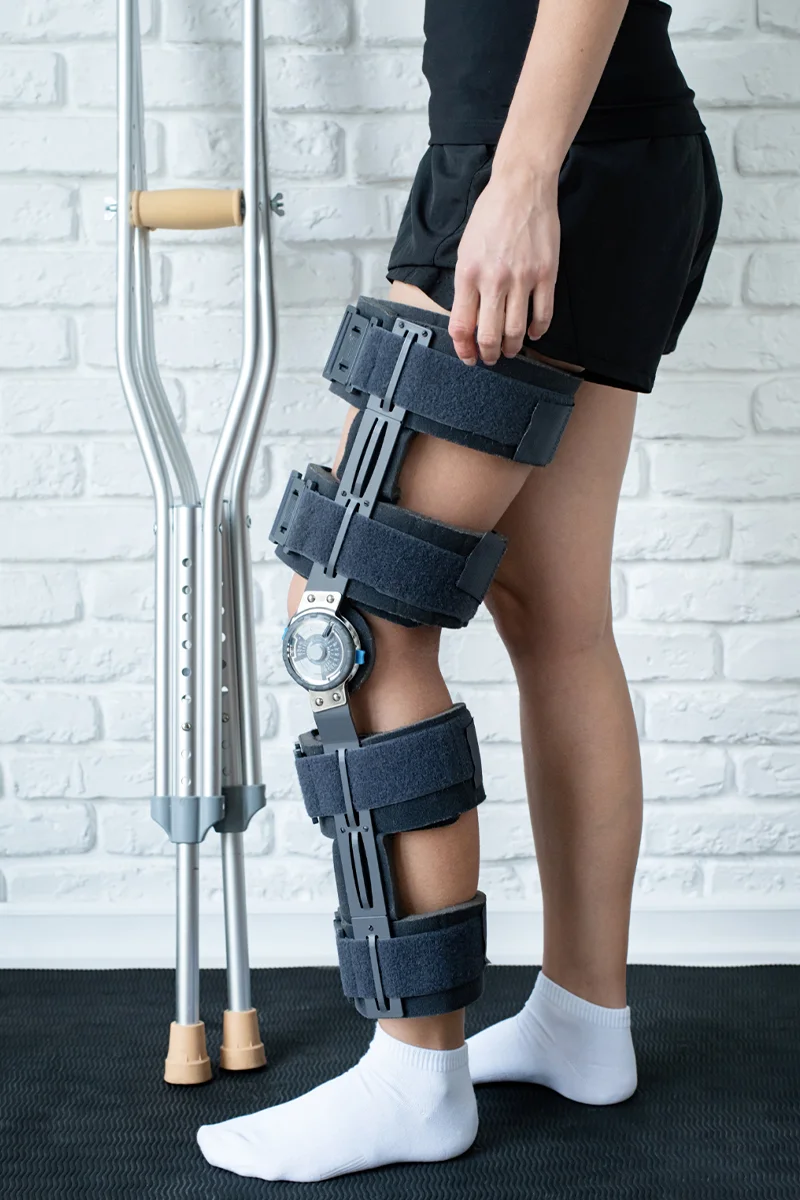
Kneecap stabilisation by surgery - how does it help?
The aim of stabilising the kneecap is to the kneecap remains in the correct position during movement, and prevent further sprains. During the operation, our specialists will reinforce or reconstruct the affected ligaments - such as MPFL plasty - and, if necessary, will also perform a bony correction to ensure optimal knee cap alignment.
This surgery is mainly recommended for recurrent knee sprains, and aims to reduce the long-term symptoms of instability to support a return to a safe, active life.
If the kneecap dislocates regularly, it is worth considering surgery as soon as possible. Repeated dislocations increase the risk of cartilage surface damage, which can lead to cartilage wear and long-term pain. Stabilisation surgery can therefore not only help to treat instability but can also play an important role in protecting the cartilage.
It is important to know that the degree of knee pain often depends not only on the instability, but also on the condition of the cartilage. If there is already a herniated disc, stabilisation surgery alone may not always eliminate the pain completely. After the operation, an individualised rehabilitation programme will assist recovery, contributing significantly to functional improvement and quality of life.
Cartilage building treatments to preserve knee function
Kneecap sprains often result in cartilage surface damage, which can lead to long-term joint wear. To prevent this, various cartilage-building treatments are used to support cartilage regeneration and reduce inflammation.
Such treatments may include:
- hyaluronic acid injections,
- PRP (autologous blood therapy),
- collagen or other regenerative procedures.
The choice of the right therapy always depends on the extent of the injury, the condition of the cartilage and the needs of the patient. These treatments can often be used as an adjunct to surgery or, in milder cases, can be used effectively on their own.
Patellofemoral sprain recovery time and rehabilitation
- What can the patient expect?
The healing time of a patellar sprain depends on several factors: the severity of the sprain, the treatment used (conservative or surgical) and the quality of rehabilitation.
In general:
- With conservative treatment, full recovery can take 6-8 weeks.
- Recovery after surgery can take 3-6 months, with gradual weight bearing and professional physiotherapy.
The rehabilitation aims to restore stability to the joint, restoring muscle strength and range of motion. Sparing and gradual mobilisation is recommended in the first period, followed by functional training and, on return to sport, targeted load control.
A well-constructed follow-up not only speeds up recovery, but also reduces the risk of recurrent knee dislocation.
The stages of recovery from injury to full load
Recovery from a knee cap sprain involves several steps. The stages build on each other, each serving a different purpose:
- Acute phase (0-2 weeks): pain relief, inflammation reduction, joint relaxation.
- Early rehabilitation (2-6 weeks): gradual movement recovery, muscle activation with physiotherapy.
- Functional phase (6-12 weeks): range of motion, muscle strengthening, stability development.
- Full load (from month 3): a gradual return to sporting activity with a controlled workload.
Progress is at an individual pace, but skilful management is key to a safe and lasting recovery.
The role of physiotherapy in stabilising the kneecap
The physiotherapy of stabilisation of the kneecap is one of the most important tools, whether surgery has been performed or conservative treatment is being used. The aim of a properly structured movement therapy is to:
- strengthen the muscles surrounding the kneecap, especially the hamstring muscles,
- restore the knee's range of motion,
- improve coordination and joint sensation (proprioception).
Regular, professionally guided physiotherapy reduces the chance of recurrent dislocation and ensures long-term stability and pain-free knee function.

What should we look out for in the future to prevent kneecap sprains?
Targeted muscle strengthening and maintaining knee stability are important to prevent recurrence of patellar tendonitis. The most important things to do are:
- regular physiotherapy or sport-specific strengthening,
- maintaining the balance of the thigh and hip muscles,
- learning correct movement techniques when playing sport,
- wearing appropriate footwear, especially on unstable ground.
Regular check-ups are also recommended after surgery or serious injury. The key to prevention is conscious movement and relieving the knee joint in everyday life.
Dr. Péter Doszkocs
Orthopaedic traumatologist, hip and knee surgeon, lower limb specialist, robotic surgeon
Why choose Dr. Péter Doszkocs for a kneecap sprain?
Treating a kneecap dislocation requires a lot of experience and precision - especially if it is a recurrent dislocation, a herniated disc or an unstable kneecap. As an orthopaedic surgeon, Dr. Péter Doszkocs is a renowned specialist in musculoskeletal injuries, particularly knee joint problems.
What your patients highlight:
- a personalised treatment plan for each case,
- modern surgical techniques and precise workmanship,
- great experience in stabilising the kneecap,
- attentive, thorough patient care throughout the recovery process.
The Budapest Musculoskeletal Private Clinic provides state-of-the-art diagnostics and fast appointment booking, so you can get the treatment you need as soon as possible.
Book an appointment now - Return to pain-free movement
Don't let kneecap sprains limit your daily life or sports activities! Starting the right treatment early can significantly shorten the recovery time and prevent further complications.
Dr. Peter Doszkocs and the team at the Budapest Musculoskeletal Private Clinic are committed to helping you make a full recovery - with state-of-the-art solutions, experience and care.