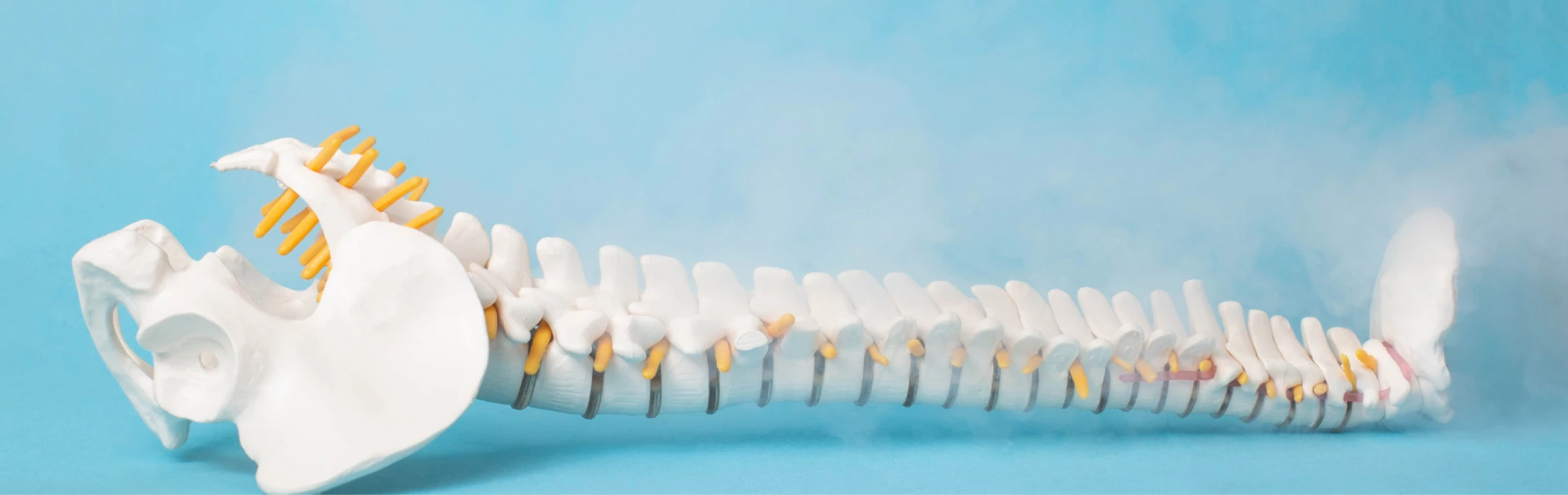
What you should know about ankylosing spondylitis
Author Dr. Dóra Mihola | 2018.11.09.


Ankylosing spondylitis or ankylosing spondylitis (SPA for short) is an inflammatory disease of the spine. Its onset, with the initial symptoms appearing at a younger age, is more common in men than in women. It should be suspected mainly in cases of rest pain in the lower back at rest and in the morning before the age of 40. Dr. Dóra Mihola Mihola, a specialist rheumatologist at the Budapest Musculoskeletal Private Clinic, will tell us what to look out for in relation to Bekhterev's disease.
Bekhterev's disease
In this rheumatological pathology, inflammation between the segments of the spine leads to a process of calcification and ossification that can result in a spine with very limited mobility, even stiffness. If the mobility of the spine is already severely limited, the range of motion of the shoulders and hips is usually reduced as a result of the abnormal posture.
As the inflammation persists even when the ribs are attached to the spinal column or sternum, the chest becomes less expandable, so the breathing capacity may be impaired. Pain at the point of attachment of tendons and ligaments to bones is characteristic. In a group of patients there are also marked signs of inflammation in peripheral joints.
Similar musculoskeletal abnormalities and spinal lesions may develop in the presence of certain comorbidities, such as inflammatory bowel disease (Crohn's disease, ulcerative colitis), psoriasis, certain eye inflammations (uveitis).
What are the main symptoms and complaints?
Back pain is typically experienced at rest. The key is the involvement of the sacroiliac joint, the initial symptoms are usually related to inflammation of this joint: the patient is awakened at dawn by pain in the sacrum area radiating towards the buttocks and thighs, which usually eases slightly with movement. It causes symptoms of varying intensity, but can become persistent over weeks or months. Later, stiffness in the waist makes it difficult to lean forward, turn the head, and the curvature of the backbone may increase. The chronic inflammatory condition affects the whole body, causing loss of appetite, weight loss, shortness of breath and even an increased risk of cardiovascular disease.
How can a diagnosis be made?
It is an insidious disease, often thought to be just „banal” lower back pain, so unfortunately there is still sometimes a shamefully long time between the first symptoms and diagnosis. For typical symptoms a rheumatological examination is needed as soon as possible, as appropriate imaging tests (X-ray, MRI) and laboratory results, possibly detecting HLA-B27 gene carriage, can help in early detection.
During the physical examination, certain measurements are used to characterise the functional status of the spine (such as the distance of the patient's toes from the ground when leaning forward, the change in chest circumference when exhaling and inhaling, the distance between vertebrae in the standing and forward leaning positions), and inflammatory activity is inferred from the patient's completion of disease-specific questionnaires in the absence of laboratory findings.
Treatment of ankylosing spondylitis
It is a chronic disease that will follow the patient for the rest of his or her life. However, this does not mean that we do not have the means to improve the patient's condition. Regular physiotherapy is an essential part of the treatment to maintain mobility. It is important for the patient to understand and accept that physiotherapist special exercises to improve posture, movement and breathing, taught by you need to be persistent at home.
Not so long ago, we had to rely on the use of non-steroidal anti-inflammatory drugs to relieve pain, which in most cases was not sufficient, and did not stop the disease process and the resulting functional deterioration. A biological therapy period, a new horizon has opened up for patients, since by targeting the molecule that plays a central role in the inflammatory process, it is indeed possible to achieve a reduction in disease activity and a full life.
The joint work of the patient, the rheumatologist and the physiotherapist, who feel responsible for their own condition, is the key to managing the disease.
We believe that free, pain-free and enjoyable exercise is for everyone!
At the Budapest Musculoskeletal Private Clinic, the most qualified orthopaedic specialists and physiotherapists, as well as providing you with the most modern therapeutic treatment options. In Budapest - 3 locations - we welcome you in a pleasant environment every day of the week.
To register, call +36 1 44 33 433
BMM - Outstanding expertise, a demanding environment and targeted therapy in one place!