Irén Károlyné Tukacs hip replacement surgery - with Dr. Szabolcs Gáspár
Author Dr. Szabolcs Gáspár | 2022.03.21.


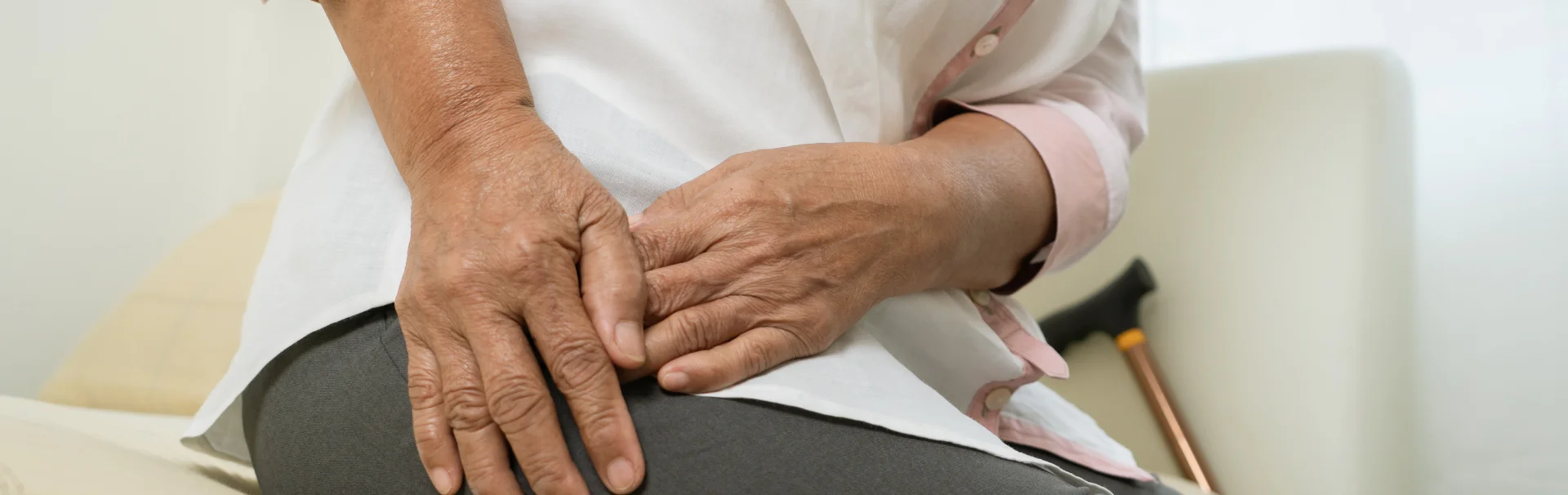
Mrs Irén Károlyné Tukács was in a lot of pain due to wear and tear of the hip joint. The only solution was hip replacement surgery, but due to the long waiting list, the operation could only take place after a year of waiting. Irén's daughter found the Budapest Musculoskeletal Private Clinic, where hip replacement surgery was performed about 6-8 weeks after the initial examination. Irén was operated on by Dr. Szabolcs Gáspár, the orthopaedic traumatologist in charge of the private clinic. You can read the story of Irén's recovery, who now lives without hip pain and can do all the household chores she used to do.
Unbearable hip pain
Irene experienced extremely severe hip pain, which made it difficult for her to walk. This made her daily life much more difficult. She contacted her GP, who referred her to the nearest hospital. An X-ray there revealed that hip replacement surgery would be needed to relieve the unbearable pain.

Long hip replacement waiting list
Because of the long waiting list, Irene would have had to wait a year for hip replacement surgery. With significant pain, this seemed like a long time, so she sought other solutions with the help of her family. Her daughter showed her a video in which Dr. Szabolcs Gáspár, a specialist orthopaedic traumatologist at the Budapest Musculoskeletal Private Clinic, shared useful information about hip replacement surgery. Irén lives 280 kilometres from Budapest, but as they found the doctor sympathetic on the basis of the video, there was no question of visiting him. Doctors at the Budapest Musculoskeletal Private Clinic perform hip replacement surgery 6-8 weeks after the initial examination, giving Irén the chance to get rid of her nagging pain in a shorter time.
Hip replacement video with Dr. Szabolcs Gáspár
You can also watch the story of Mrs Irene Tukacs Károlyné's recovery in the video below. In the video, the elderly lady herself tells the story of her hip replacement surgery and subsequent rehabilitation. Dr Szabolcs Gáspár explains the details of the hip replacement surgery from a medical point of view.
Hip joint wear
Dr. Szabolcs Gáspár concluded that hip joint wear was the cause of Irén's complaints and confirmed that hip replacement surgery was indeed necessary:
Irene came to us for a specialist check-up in September. She was examined, x-rayed and the scan showed advanced wear and tear of both hip joints.
He developed what is called a protrusion abrasion. This means that the head of the femur is pushed into the pelvis, and both surfaces of the articular cartilage are worn away: the cartilage covering the head of the femur and the cartilage covering the pelvis. This has led to the development of such painful complaints, for which hip replacement surgery is the solution.
Time of hip replacement surgery
At the Budapest Musculoskeletal Private Clinic, the time it takes to perform the surgery depends on how quickly the pre-operative examinations are completed. In the private sector, this does not take long. They can perform the hip replacement surgery about 6-8 weeks after the initial examination. Irene could have had the operation 2 weeks later, but she thought it was too early, so the operation was delayed by a month.
Preparing for surgery
Like all operations, an internal medicine and anaesthesia examination is required before hip replacement surgery. For patients with no other internal medicine or surgical co-morbidities, the internal medicine examination consists of a comprehensive laboratory test, with bleeding and coagulation parameters. In addition, a urinalysis, a dental check-up, an ECG and a chest X-ray are also required.
Many people are afraid of hip replacement surgery, but being well-informed can ease fears. Before the operation, Irene was focused on finally getting rid of her excruciating pain:
I had no fear before the operation, because I decided that I had to get rid of this pain, and this was the way to do it. I got what I wanted, I woke up after the operation with no pain.
Hip replacement surgery without muscle transection
Dr. Szabolcs Gáspár performed the hip replacement surgery without muscle transection:
This means that we don't cut the muscles around the hip during surgery, we just pull them aside to access the hip socket. This allows rehabilitation to start sooner after surgery and recovery to be faster.
We implanted a cementless prosthesis for Irene. The main feature of this type of prosthesis is that it has a special surface structure so that the bone can grow on it. For this reason, no bonding material is used between the prosthesis and the bone during the procedure. This type of prosthetic system can be implanted very quickly.
Dr. Gáspár does not use drains to drain the mucus or blood from the surgical wound in hip replacement surgeries, as there is no need for them. Instead, at the end of the operation, a cocktail of drugs is injected into the tissues around the prosthesis to reduce bleeding and pain. This minimises post-operative bleeding and reduces the risk of infection.
Rehabilitation after hip replacement surgery
After hip replacement surgery, the patient rests in bed that day, but the next day, with the help of a physiotherapist, they get out of bed and start moving around with the help of an assistive device. This was the case for Irene, who found that his previously significant left hip pain has virtually disappeared. The physiotherapy continued in Irene's home.
Acknowledgements
Irén is very grateful after her hip surgery and feels that it was well worth the 280 kilometres she travelled to find a trustworthy team of doctors:
By the second week after hip replacement surgery, I'm cooking lunch from the things I've packed under my arm and doing almost everything around the house myself. I would not have been able to do that before the operation. For those of you who are experiencing similar pains to mine, I would highly recommend visiting the Budapest Musculoskeletal Private Clinic. I would highly recommend Dr. Szabolcs Gáspár, because his attitude towards his patients and his helpfulness are outstanding.
For hip problems, choose our team of specialist doctors!
Give us a call and we'll help you decide which specialist clinic you should book an appointment with. We have the diagnostic tools to find the cause of your symptoms as soon as possible. Our in-house physiotherapists, therapists and massage therapists can help relieve your symptoms. We also offer complementary therapies, and if surgery is required, we use the most modern techniques to help you recover.
Register now for a consultation by calling 06/1/44-33-433!